Why mental health is important?

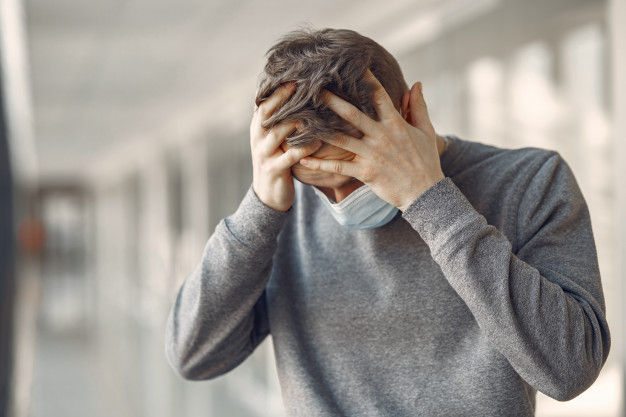
Photo by cottonbro on Pexels.com

Mental health is very interesting and underrated topic. People always care and think about their physical illness and usually cares about physical health. but mental health is as important as any other health issue. because without a good mental health, no one can be happy in their life.

According to WHO,” Mental health is state of well being in which the indivisual realizes his/her abilities”.it includes our emotional and social well being . it affects our thinking and how we react to a particular situation. but if these health issues are not taken seriously they can led to many serious diseases, such as depression. Any other person cannot predict or realize about your mental health because he cannot know what is going on in our mind, and the best way to overcome this problem is to share that problems with others. We can share it with our parents, brother ,sister or even friends ,if we are not comfortable with family members .

Factors that cause mental health problems

There can be many factors that are responsible for our mental health problem such as:-

1.Loneliness -it can be a factor of mental illness. neglecting a particular person , feeling him lonely everywhere can be a cause of mental illness.

2.Trauma or any bad experience of childhood: if a person has suffered a huge loss or have experienced any abuse or something else, it is very difficult for him to forgot it and move on. some move on with it but some are not able to forget it which led to mental illness.

3.genetics: mental illness can also be passed through genes. If a family member like father , grandfather or any other member has already experienced mental health problem, it can be passed into others.

4. Due to poverty or employment: mental problems can be also due to poverty in ones’ house or unemployment like if a young man has responsibility to feed his family members but he is not able to find a descent job, it can led to mental illness of that man.

5. a person having a long term physical health problem since many years can be affected by mental illness.

There are many other reasons of people having mental illness , one more reason nowadays is experienced by students due to studies and exam pressure. they are not able to cop up with that stress.

Different ways to overcome mental health issue:-

there are several ways to fight against mental illness some of the mare:-

1. Meditation : it is considered as a very powerful weapon against mental illness.

2.We should learn how to response to particular situation:- we should make our mind ready for any situation without panicking much. it will make our mind strong.

3. We should act wisely wherever our patience is tested and we should always avoid self criticism because it will have a adverse effect in our process to overcome mental health issue.

4. We should always surround ourselves with good people who understands us to whom we ca share our life problems and other things.

5. But if we are not able to cop up with it, we should immediately talk to family members and consult a doctor.


Mental Health should be given Importance

In todays time with the ongoing pandemic, mental health should be the concern for everyone. It can affect every aspect of a person’s life.

Photo by Maksim Goncharenok on Pexels.com

Mental illness can have a negative impact on daily life, relationships, and physical health.


This link, however, also works in the opposite direction. Mental health issues can be caused by a variety of causes, including personal circumstances, interpersonal relationships, and physical conditions. Stress, despair, and anxiety can all have an impact on a person’s mental health and disturb their daily routine.

Taking care of one’s mental health can help one’s ability to appreciate life. To do so, you must strike a balance between your daily activities, duties, and efforts to improve your psychological resilience.

Mental health, according to the WHO, is “more than merely the absence of mental diseases or disabilities.” Peak mental health entails not only avoiding active mental illnesses but also maintaining overall well-being and happiness.”

They also underline the need of protecting and repairing mental health on an individual level, as well as in many groups and societies around the world.

Mental health is essential to our ability to think, emote, interact with others, earn a living, and enjoy life on a collective and individual level. On this basis, mental health promotion, protection, and restoration might be considered a critical concern for individuals, communities, and societies all over the world.

What does mental health basically mean:


Mental health is a condition of well-being in which a person recognizes his or her own potential, is able to cope with typical life challenges, is able to work efficiently, and is able to contribute to his or her community.

Photo by cottonbro on Pexels.com

The early signs of Mental Disorder can be :

There is no reliable physical test or scan that can determine whether or not someone has developed a mental disorder. However, the following are probable indications of a mental health condition that people should be aware of.

1)Avoiding activities that they would typically like withdrawing from friends, family, and coworkers sleeping too much or too little

2)Too much or too little food

3)Feeling despondent

4)Having low energy levels on a regular basis

5)Using mood-altering substances such as alcohol and nicotine on a more regular basis

6)Expressing negative feelings

7)Being perplexed

8)Having persistent thoughts or memories that resurface on a frequent basis being unable to execute daily duties, such as commuting to work or cooking a meal

9)Considering harming yourself or others physically

10)Recognising voices

11)Having hallucinations

SELF HELP IS IMPORTANT

A person dealing with mental health issues will almost always need to make lifestyle modifications in order to be well.

Reducing alcohol consumption, sleeping more, and eating a well-balanced, healthy diet are examples of such adjustments. People may need to take time from work or handle personal relationship issues that are negatively impacting their mental health.

Relaxation techniques such as deep breathing, meditation, and mindfulness may be beneficial to people suffering from anxiety or depression.

Having a support network, whether through self-help groups or close friends and family, is extremely important for mental illness rehabilitation.

Photo by Madison Inouye on Pexels.com

TREATMENT AND CARE OF MENTAL HEALTH

Suicide prevention, the prevention and treatment of mental problems in children, the prevention and treatment of dementia, and the treatment of substance abuse disorders all have a number of successful interventions. The mental health Gap Action Programmed (MH GAP) has developed evidence-based guidelines for non-specialists to help them better identify and manage a variety of mental health conditions.

In the framework of national efforts to design and execute mental health policy, it is critical to not only safeguard and promote citizens’ mental well-being, but also to address the needs of people with specific mental diseases.

Have you been struggling from social media anxiety?

Maybe you may have been a modest social media user prior to the lockdown, but do you find yourself hooked to your phone, browsing Instagram and Facebook constantly for updates and seeking out on Whatsapp for news or a connection because of the COVID-19 issue swept over our lives? You could be struggling from social media stress without realising it.

First and foremost, recognise that this is an unusual reaction to an unprecedented circumstance. The overwhelming bulk of us have rarely been subjected to a pandemic, let alone one which necessitates such restraint. Our brain wants to make any sense of the confusion — it’s a natural human need — and we do it by gathering more and more content; therefore, the constant browsing on social media platforms.

It’s a method of relieving stress. Many make use of social media to relieve the psychological stress that has built up. People are anxious because the future appears to be ambiguous right now. It is not anxiousness with a specific objective in mind. It is a dispersed anxiousness caused by uncertainty. This type of anxiety requires a continual diversion in order to be kept under control.

As a result, we resort to social media because of its addictive qualities of providing something which captures our interest every few moments, every time we browse.

How does it affect us?

What began as a diversion strategy has evolved into a vicious mood loop in which all information, fact and fiction, serves to increase our anxiety, resulting in mood swings and irritation. It has been thoroughly investigated in study, which discovered that excessive media use dramatically increased social media anxiety and tiredness, which subsequently resulted in heightened stress.

What can we do to avoid feeling anxious as a result of social media?

  1. To combat FOMO, do this test: turn off your phone for two hours. Sure, you will have the want to glance at it every few moments, but resist. We don’t actually lose out on much by avoiding social media for a few hours, but it seems like we do since we are constantly overwhelmed with incoming news at all times.Our minds are constructed by nature to filter material so that we may apply selective attention; nevertheless, we are currently eroding that filter, that may have long-term consequences for cognitive performance.
  1. Recognize and accept your addiction. There is no point in denying that you may be hooked to social media since that is how it is built. You’re not the only one. Accepting, on the other hand, is the very first step towards reclaiming control. Remind yourself that this is a ‘fix’ every time you go for the phone. 
  1. Encourage surfing. Our impulses, especially the ones that cause us to pick up our phones, occur in waves, with each wave ranging around 20-30 minutes, regardless of whether we indulge in it or not. When you sense the need to indulge in these kind of activity, you may feel powerless if you don’t, but remember that the impulse will fade away.

When we are deprived of exterior stimuli such as socialising, commuting to work and vacationing, it is normal to resort to social media for enjoyment. But keep an eye on whether you’re just using or allowing it to dominate you.

Memories – The unforgettable demons

Memories are reminders of what you have lost. They remind you of a good time in a bad way. They are out there challenging you to face them, to remember them and to be devastated by them. They hurt you sometimes and sometimes they don’t. You can’t control them. Nobody can. They break your heart, they hurt you in a way nobody does and probably nobody can and you don’t even know it. They remind you of what you can’t have anymore. They make you suffer. They remind you of what happened. Or they silently accuse you of what you did to lose it all. They cover you in so much guilt that you can never get out of it. They hurt you in more ways than you can imagine. They attract you with the hope of remembering everything in a beautiful way. Instead they set you up for hurt, for betrayal, for lies. Lies you didn’t know were not true. And you fall into their trap, thinking there is still hope for something good.

Photo by KoolShooters on Pexels.com

They make you addicted to them in such a way that you can’t stay away from them ever. They bind you with such a strong rope of expectations that maybe someday you can have it all back, even if it is all in your head. For a long time or maybe forever, they haunt you, they never leave your back, never let you go off them. You are forever bound to them whether you know it or not, whether you like it or not. You always come looking back for them, for more good times, for happy moments, even if you suffer even more. They make you believe that maybe you can live with the idea of what could have happened.

Memories are the unforgettable demons living in our minds. They don’t go away. They eat you alive and let your mind rot. They are like the uninvited guest in your house. They live rent free in your mind and create chaos to remind you of everything. They clog your mind with the thoughts of the past and that hinders your thinking for the future. They don’t let you live in the moment, in the present. Memories force you to regret your bad deeds when all you want is to let them go. When you try to move on from something, memories come back rushing and fill your mind. Don’t let them overpower you. Don’t let them control your thoughts. Control yourself from walking straight into their trap hole. They will suck you right into the past and will hold on to you for eternity. You don’t hold onto memories instead the memories hold onto you. You want to let go but they have such a strong hold on you that you can’t find the strength to run away from them.

They will always and forever be with you no matter what. But this is not in a good way. They will never let you out of that hole you fell in. Sometimes they will not let you live in the present or think about your future, without having to deal with your past. Just don’t let them ruin you. Try to take control of yourself as much as you can.

DOPING

To continue the fight against doping - Fondazione Gianni Benzi Onlus

Doping is not new to the people . In ancient Greece, there were specialists who used to offer athletes nutritional ingredients in order to enhance their physical performance. Those specialists may be compared to the current sports medicine specialists . During the Olympic Games in the third century BC, the athletes tried to increase their sports performance by taking mushrooms and opium . In the Ist centaury AD, the Greek runners used to drink a herbal beverage to increase their strength and become capable to run long distance races. Gladiators are also reported to use various substances for enhancing strength . In the modern era , the use of performance enhancing substances and techniques by the top sportspersons across the world has been a presistent issue in the world of sports for nearly four decades. Since the beginning of the 21st century, many athletes have been engaged in taking such substances. Some of them have been tested positive such as Tim Montgomery, Marion Jones, swimmer Phelps, etc.

Concept of Doping

‘Doping’ is the word, which is used in the field of sports, to refer to the situation when athletes use prohibited substances or methods to unfairly improve their sporting performance. In general terms, doping is the use of performance enhancing substances or methods by athletes to gain an advantage over their competitors . In fact , some athletes take illegal substances to enhance their performance . This activity is known as ‘doping’ . Doping in sports is the deliberate or inadvertent use by an athlete of a substance or method banned by the International Olympic Committee. In fact, the ban or prohibition on such substances is necessary to protect the athletes from the unfair advantage which may be gained by those athletes who use prohibited substances or methods to enhance their performance and also from the possible harmful side effects which these substances or methods can produce. The following definitions of doping may help in understanding its exact meaning:

According to International Olympic Committee, ‘‘Doping is the use of any method or substance that might harm the athlete, in a quest to gain an unfair advantage, over his/her fellow competitors”. In fact, doping is the use of prohibited substances or methods designed to enhance an athlete’s physical or mental abilities or to mask the use of such substances or methods during preparation for or participation in a sports competition .

According to World Anti-Doping Agency (WADA) ,” Doping is defined as the occurrence of one or more of the anti-doping rule violations set forth in Article 2.1 through Article 2.8 of the code.”

What Happened When I quit Social Media for a week!

Photo by Tracy Le Blanc on Pexels.com

As technology gets advanced, we as humans also get advanced and updated with all the latest techniques which we implement in our daily lives. In particular, the era in which we are all living is also known as: “The Era of Pandemic”, or  “The New Normal” or famously known as the “Tech World”.

It’s a fundamental phenomenon as a Human being since civilization that, we tend to find positivity and relieves from our stress when we are in any sort of social activity. Profoundly our youngsters who usually had “Friday nights enjoying with friends” or maybe going on a long drive with loved ones or maybe just chilling around in a beach with their homies is always their favorite part. Unfortunately, the world got standstill and the world collapsed out from the deadliest pandemic ever which changed all our lives.

Living in a situation where we are restricted to go out of the house, we find social media as the best way to be socially active with our friends and loved ones who are far away from us, and in this scenario, the meetups are done through face call, Chats, video calls which are little relief in these days.

According to my personal experience: when lockdown started, then my usage for social media increased and this growth of interest for social media became my addiction in the end. Imagining a life without social media made me felt anxious and depressing whenever I got this notion. This Notion was a state of perplex and also was a phase of my life when I was frightened of my addiction.

Technology brought both Bliss and discontent into our lives, which is also a major part of concern if we look into the darker side of how it is affecting every human, especially at the time when everyone is bounded to be inside their homes.

The secret of Detoxing My Social Media Addiction :

Out of wonder, I tried an experiment of myself which brought an unexpected but successful result for controlling my Social Media addiction.

To control addiction is never an easy job, but all we can do is to strive upon ourselves and one must be having faith in themselves only then they can accomplish their goals.

Things happened with me when I quit social media for a week, here are my accomplishments :

  • Sometimes Fewer Interactions are good for an Individual: Living in the world of social media, every individual feels like being active to gain a lot of attention and become popular among their friends and communities. But it is always not necessary to interact with people, sometimes not using social media and less interaction is essential as an individual should spend some time with themselves and forget the glittering life of social media. As it is a form of self-care which will help us to understand ourselves by introspecting the inner us.
  • You are less Anxious and Live a happy life: When a person becomes an addict of SM ( social media)world they tend to feel SM as the “Second Home”, which ultimately put them into a pit of anxiety and lowers their self-confidence, Watching other people who are glorious with all types of luxurious life and wearing a fancy dress makes them feel unwanted and people try to imitate their idols by watching their profile. Sometimes people find themselves useless in front of the bigger celebs who are having all sorts of materialistic things and compare their lives with the celebs.

This itself is a sign when people belittle themselves and there comes anxiety in their minds. When we are using less SM than we live a happy life because all we are focused on is with ourselves and we won’t compare our lifestyles with others. Especially the youngsters should keep this in mind that their lives are not meant for comparing,  as everyone has their own life which is beautiful in their ways.

  • Detoxing is a way for self-care/ self-love: As we can look that the people who usually spend more time on social media are often depressed and sad by scrolling things that are not available in their situation and environment. There are several contents which show us the negative side which provides a negative feeling to the people.

Cutting off social Media also helps to focus on yourself as it is a way of caring for yourself and caring for your health. Being addicted to anything destroys our sanity and deteriorates our health. So it’s better to avoid SM as much as possible.

Instead, explore yourself and find things that you love about yourself. “Before knowing the world, one must know about themselves as knowing the inner self is a way of understanding the world”.

  • We come out of the unrealistic / counterfeited world: Social Media is a world where everyone is living a fake life. There is no reality, everyone tries to show how perfect they are, but in reality, they are not even confident about themselves. So, it is better to avoid social media and switch on to the real world and live an adventurous life where the world is real and your experiences are real.
  • It helped me to find my real self: After Removing my social media for a week I realized one thing that I felt confident about myself as no one was there to judging me and no one passed comments, rather living in a real-world where I was the critic of my own life and explored my real self.

The time which I used to spend on SM for hours, were now invested in growing my inner self and keeping my body healthy by some workout and meditation, this helped me to focus on my personal growth.

This was the time when I explored myself and found my passion and hobbies which were realistic.

Social Media is not a bad place, but one must always remember that everything we do should be within limits. As social media is not the real world and we should know the difference between the real world and the unrealistic world.

Mental Health Awareness

Mental health is a major concern worldwide and India is not far behind in sharing this. If we evaluate developments in the field of mental health, the pace appears to be slow. Dr. Brock Chisholm, the first Director-General of the World Health Organization (WHO), in 1954, had presciently declared that “without mental health there can be no true physical health.” More than 60 years later, the scenario has not altered substantially. About 14% of the global burden of disease is attributed to neuropsychiatric disorders. The burden of mental disorders is likely to have been underestimated because of inadequate appreciation of the inter-play between mental illness and other health disorders. There remain considerable issues of priority-setting based on the burden of health problems and of addressing inequalities in relation to determinants and solutions for health problems.

Progress in mental health service delivery has been slow in most low- and middle-income countries. Barriers include the existing public-health priorities and its influence on funding; challenges to delivery of mental health care in primary-care settings; the low numbers of those trained in mental health care; and the lack of mental health perspective in public-health leadership. There have been numerous calls for invoking political will, for enhancing advocacy and for galvanizing community participation; all with scant improvement in outcomes.

Thus, it becomes now opportune to explore the paradigm of mental health awareness as a means of combating stigma, enhancing prevention, ensuring early recognition, and also stimulating simple and practical interventions within the community. Today there are opportunities in terms of growing acknowledgement of mental disorders as key targets of global health action, as well as of leveraging new technologies particularly internet, big data and cell phones in amplifying simple field interventions found successful in primary care and other echelons.

Mental health awareness campaigns have yielded positive outcomes. Some of the strategies undertaken to target awareness and address stigma around mental illness include participation by family members, sensitization to treatment and social inclusion. Lack of knowledge about the mental illnesses poses a challenge to the mental health care delivery system. Research has highlighted the role of community-based systems in low-income countries and has also yielded positive results in creating awareness, thereby impacting participation.

Awareness and health literacy are two sides of the same coin. Stigma and discrimination are negative consequences of ignorance and misinformation. There are a few studies which have measured mental health literacy in the Indian context. One study found mental health literacy among adolescents to be very low, i.e. depression was identified by 29.04% and schizophrenia/psychosis was recognized only by 1.31%. Stigma was noted to be present in help-seeking.

These findings reinforce the need to increase awareness of mental health. Mental health literacy is a related concept which is increasingly seen as an important measure of the awareness and knowledge of mental health disorders. Health literacy has been described as “ability to access, understand, and use the information to promote and maintain good health.” Mental health literacy encompasses recognition, causes, self-help, facilitation of professional intervention, and navigating the information highway. Attitudes which hinder recognition and appropriate help-seeking can be counter-acted by information which is already readily available in the public domain. There are plenty of examples of awareness positively impacting mental health outcomes like the Norwegian campaign to reduce the duration of untreated psychosis.

MENTAL HEALTH AWARENESS: ALL ABOUT INDIA

Mental health is a vital matter all around the world and our country India is also a bit close in sharing this. Evaluating the spread in the area of mental health, the momentum seems to be lagging. Dr. Brock Chisholm stated the “where there is no mental health there will be no true physical heath”- WHO first Director-general, even after 60 years, the scene seems to be stagnated considerably. Around 14% of the worldwide load of illness is ascribe to neuropsychiatric disorders. The weight of unbalanced mind is more probably to be underrated because of insufficient acknowledgement of the interrelation among mental illness and health disorders.

The campaigns on mental health awareness have given the optimistic results. Dearth of awareness about mental illness constitute trouble to mental health care delivery system. Awareness and health are opposite sides of same coins. Some of the few analyses have estimated mental health education in the Indian context. One study gave the result that mental health literacy among teenagers to be very less, i.e., depression was recognized by 29.0 percent. This data emphasizes on the need for the spread mental health in India.

MENTAL HEALTH AWARENESS: BLUEPRINT

As very large Indian population is indulged in mental health, the only progressive way is through uplifting the mental peace awareness which can build its own demand. With increasing in the alertness, it can be anticipated that advance understanding and approach to therapy can be done. It is predicted that dimensions of the awareness contributions can be passed from these following objectives.

  • Conventional media
  • Government programs
  • Educational system
  • Internet, social media & phones
  1. The Conventional Media

Media has been the foundation of the earlier efforts in the area of mental health education. Indian celebrity like Deepika Padukone in recent shared the depression battle fought by her.

Short brief taglines of commercials and description which are rich in content and documentaries; are considered the pillars of media drives so far.

  • Government Programs

Despite some crumble about the measures, the Indian government continue to offer their time to resolve this problem in the mental health sector. Alone with this, the National Rural Health Mission is on its route for delivering mental peace as a chunk of consolidated foremost awareness at the knife-edge for the healthcare of the public.

  • Educational system

Most long term and weakening mental illnesses leave their impact before 24 years of age when most of the children are part of the educational system, the educational system gives multiple chances for uplifting the mental health awareness.

  • Internet, social media & phones

Hand used gadgets and the social media can really be a turning point in the generation of effective mental health and mental peace interference by focusing expansion, and not in spreading the facts and data. With help of big data and sympathise of subtle and distributed design above the big volumes shall brief the decision taking.

CONCLUSION

And the conclusion is that most of these strategies are to enhance and uplift oneself from the mental illness or depression. Its been six decades or more, that these ideas have not been succeeded in less developed countries, it is high time that new approaches are needed to be taken to fight and cope with the mental illness or depression.

Mental Health amidst Covid

Mental health is health too.

The pandemic has taken a toll on mental health across the globe. Cases of depression and suicide have increased manifold ever since this coronavirus abruptly interfered with our daily life, and left us on house arrest with never-ending thoughts and endless fear. This speck of RNA has changed the entire outlook of the dynamic world we live in. Be it trade, finance, education or tourism everything seems to stand still for a while, as a consequence of which unemployment skyrocketed, which leads to utter despair and curtailed hope even further. History has never witnessed such a destructive catastrophe till date.

It was just the first wave summarised so far because the damage done by the second wave in India is nothing less than a nightmare in which hundreds and thousands of people lost their lives and scarcity of oxygen came into the picture. With deaths comes grief, anxiety, pain etc that is detrimental to mental health beyond the scope of one’s imagination.

Here are some ways to look after your mental health in these trying times:

Priorities Yourself:

Give yourself priority and listen to your instincts. Do not let others set a line for you because you’re the one who knows yourself the best. But it doesn’t mean to turn a blind eye towards others. It okay to be in your little bubble for a while. Take your time and relax.

Express your Feelings:

It’s not necessary to be expressive all the time, but try to communicate if there is something inside your head that is eating you alive. Communication is the key. Express your feelings in whatever way you want to. Be a loner but don’t be lonely.

Rebuild your routine:

Since we are still stuck with the online education situation, it’s necessary to have a profound morning routine. It will help you to align for the rest of the day and less likely to have a chance to sit ideally and overthink.

Control Overthinking:

Thinking before making any decision is appreciable but continuously thinking about something in endless circles is exhausting.
While everyone thinks over a certain point of time, but “What if and should” dominates the thinking of chronic overthinkers which is mentally draining and can put your health and total well-being at risk.
Rather than getting lost in the thoughts of what you could have, would have and should have done differently, try to become self-aware and connect to your immediate world.

Ask for help:

Be strong enough to ask for help. There are lots of counsellors and therapists available online. They will hear you out and validate your emotions. All you need to do is to summon your courage and accept yourself.

Ways To Reduce Stress

Many individuals nowadays have lost sight of their hobbies, interests, and passions as a result of their stressful lives. As a consequence, individuals suffer from stress as a result of overwork and weariness. 

Stress is really intense. It could have a detrimental influence on both your physical and emotional health. Whenever you think, your mind is in continual contact with your body. Your ideas generate feelings and emotions, which can be impacted by environmental stresses. This demonstrates how intimately the mind and body are linked, making it critical to identify the role stress tends to play in your daily lives.

Sadly, despite the evident negative impacts of stress, many individuals continue to ignore it. Nevertheless, properly combating stress requires prioritising your own needs. It’s time for action if you’d like to reclaim your rhythm after being stressed out. 

While it is difficult to escape stress in life, you can learn how to manage it efficiently. There seem to be measures you could do to help you cope with daily pressures more effectively so you can get back into your flow easily.

1. Recognize The Sources Of Stress 

One of the primary causes of stress is a hectic and unhealthy lifestyle, however this varies from person to person. Make a list of the things in your life that are giving you stress. Is it effective? Is it a personal issue? This is the first and most important step in properly combating stress. The more you understand what causes your anxiety or concern, the better you will be able to handle or combat stress.

2. Cultivate Mindfulness

When you are worried, your brain and body’s normal reaction is to fight or flee. Meditation and breathing techniques, on the other hand, have also been shown to perform marvels in terms of stress relief and perhaps even improvement in mental health. Find a few periods of solace each day when you can relax and make some time for yourself to get through your concerns and cleanse your thoughts.

3. Prioritize self-care

Why aren’t you taking care of yourself the same way you take care of your house with regular upgrades or your car with planned maintenance? Among the most essential realisations is that no one can take more care of you than yourself. Ignoring oneself makes you increasingly vulnerable towards the dangers of stress. While scheduling time for self-care, keep the following in mind:

  • While it may seem self-evident, it bears repeating: eat well, exercise frequently, and get enough sleep. Many individuals do not realise this, yet it may have an impact on how you felt during the day. If you eat poorly and don’t get enough sleep, it’s simple to notice indications of stress in your body.
  • Many individuals feel uneasy about investing money on self-care items or services. If you have troublesome skin, arrange for a consultation with an expert who can help you clean your skin. If crystals provide you a burst of mental and physical vitality, purchase that citrine bracelet and make yourself happy

4. Rise Up and Begin Moving

Getting up and moving about is among the best methods to combat stress and feel better. Although it may be tough to find opportunities for proper exercise once you have a career and a home to look after, you should make an attempt if you’d like to regain your flow. Endorphins are hormones that make us feel good while you workout. You will feel much better on the inside if you feel happy about your physique.

5. Align Yourself with Positive People

Understand that you are not alone in your battle against stress. You should surround yourself with individuals who can help you manage your stress levels in check so it doesn’t spiral out of control. Stress may cause feelings of loneliness, so make an effort to spend more time with your loved ones. 

Seek comfort and guidance from reliable loved ones. There are also several support systems available, so if you don’t feel at ease approaching anybody about your stress issues, you can always join any of them just for added help. Spend time around individuals who make you happy and do activities which bring you joy.

It can also be difficult to determine where to start when attempting to combat stress. Although stress is a normal part of life, it may sometimes become excessive and cause physical and mental issues. Joy and comfort are within your grasp—try either of these tactics and you’ll see that you can definitely battle stress and reclaim your flow!

Overthinking (The Beauty and the Beast)

Mannat Sandhu

“Rule number one is, don’t sweat the small stuff. Rule number two is, it’s all small stuff.”
– Robert Eliot

Now imagine this , after a tiring day at work , you’re finally getting to sleep on that oh so soft mattress of yours. But wait , the moment you’re ready to surrender yourself to 6 hours of sleep ( if you’re lucky ! ) , you suddenly remember, “Did I turn off the gas stove ?” ” What if the entire house just explodes and there I am dreaming about how I am going to answer the questions at Koffee with Karan ( yes I also have a struggle to talk about ! ), and many such more fake,over the top scenarios are being flashed in front of your eyes.

Over-thinking Cartoons and Comics - funny pictures from CartoonStock

THE BEAST

This constant feeling of your head being constantly overburdened with unwanted thoughts, the ones you’re being involuntarily surrendered to , is my friend ,the beast.Often you put yourself under a lot of pressure , and you consider yourself responsible for every little thing happening around you. You overthink about a situation to such an extreme extent , that you’re no longer able to differentiate between reality and delusion.You want to stay in the reality but at the same time have one foot dangling in the realm of delusion.

Its that constant battle in your head between trying to stay the same and trying to stay sane.

THE BEAUTY

Sometimes thinking about any particular situation, whether in the past or future, helps you give a different perspective towards it and life as a whole.I mean the fact that Newton really over thought about a fallen apple, was pretty useful.But the key is to know when to stop.

I often think about a saying by Sylvia Plath

If i didn’t think, I’d be much happier.

and most of the times I resonate with it so much.This beautiful brain of yours which holds this massive power of creativity and imagination often turns into this beast you never could’ve expected.

THE PANACEA

1.Meditation

If I tell you that meditation is going to help you, I’d be only 50% correct. Just because you sit down, cross your legs and close your eyes , does not mean that you’re meditating; because your mind is still at loggerheads with your thoughts.So to begin with, whenever you feel like you need to calm down , take a deep breath and try to clear your mind. Then slowly try to give your mind enough space to breathe ( Yes it needs to! ). I know its easier said than done , but hey you got to begin somewhere.

2. Binge watch something

Well, well well..if it isn’t the solution to all our problems. I’m not even going to lie how many times I’ve resorted to this option ! And i just love it. Even if it temporarily helps you to distract your mind, then go for it.

3. Walk it out

Whether on your terrace, in your verandah or outside in a park, there’s nothing a quiet peaceful walk cannot solve .

4. Sleep it off

Sometimes i just feel ,I use this option as an excuse to get out of everything.

Feeling stressed ; Go to sleeep

Don’t feel like doing anything ; Go to sleep

There’s a fire ; Go to sl….NO WAIT..Buddy you got to run!

Maybe you’ll be at the same stage after you wake up , but hey at least you got a few hours of peaceful sleep, and boy that’s rare.

5. Call a friend

Sometimes talking to a friend really helps you either find a solution or help you take your mind off it.And if you don’y feel comfortable , you can seek professional help or contact at the official helplines.

Overthinking does not sound like a disorder , but don’t wait for it to become one.

6. Let go off things you cannot control

The most difficult one on the list yet the most effective. Take a minute and ask yourself, will I be able to do something to solve the situation,

If yes ; then work on a solution.

If no ; then remind yourself,

It is not your job to be everything to everyone.

– Paulo Coelho ( The Pilgrimage )

A penny for your thought ? If only it was a penny for every time I over thought, I’d be a millionaire, no wait a billionaire, no wait…you know what let me just go think about it.

Mental Health- still a taboo?

Just because no one else can heal or do your inner work for you, doesn’t mean you can, should or need to do it alone.

Lisa Olivero

Have you ever felt the stark desire to inevitably scream in a room full of people, hoping they just care enough to notice the signs you have been leaving regarding your deteriorating mental state and how desperately you need help? But instead, you just accept your solitude in an empty chair and try to repress your bottled-up emotions deep within the realms of your consciousness.

A lot of us might have gone through the same situation at a certain point in our lives. The primary reason behind this subconscious aversion to the expression of thoughts is the mere fact that humans have been conditioned to do so throughout their lives. Men are typically the most vulnerable victims of this detrimental mindset. From an early age, they are frequently instructed to not cry like a girl. According to a survey, a significant percentage of men in the nation are currently depressed, and they themselves admitted that they lack a support system.

Mental health is still a deeply rooted stigma that people aren’t ready to accept. In order to understand the concept one needs to broaden the perspective of understanding humans and follow certain ways like-

  1. Instead of asking,”How are you?” ask,” How are you, really?”
  2. Look for obvious signs in a person- whether they feeling low from abnormal no. of days.
  3. Asking your closed ones to describe their day in detail and be a good listener.
  4. Do not mistreat someone who is already going through some sort of trauma.
  5. Treat people with kindness, you never know what someone is going through.

Additionally, in India, therapists continue to be overlooked as a useful resource for treating a person’s mental health. A person is called a “lunatic” if they see a therapist. In light of the increased public awareness during the pandemic’s lockdown time, these issues are being explored on social media, and many people now see psychology as a crucial component of the educational system. People have now started considering mental health as being equally essential as physical health as because of an alarming spike in suicide incidents during this period.
Still, awareness needs to be assured at ground level and there is still a long way to go to see the day when all of us are not reluctant to lend a helping hand to our fellow humans.

A fundamental aspect of any society should be understanding, accepting, and embracing each and every emotion one feels which makes them human.

Toxic Positivity in an age of Nowhere

Positivity is a fad all around the place. Instagram, Twitter, the daily newsletters and what not – all have only one single message to convey – stay positive. Is that a bad message now? Bad enough to have an article against it? Well, no. And well, yes.

Positivity is important. Being hopeful is important. They are important to have the strength to move on. They are important to have the strength to carry forth with what lies at hand. If a person loses hope, then there is seldom a lot that can be done. This idea is quite agreed upon by psychologists as well as general health experts. But then what does the topic of this article convey? Positivity is something that drives a person forward. Then there is a situation where positivity becomes the only emotion a person knows. And most of the human race would agree that they are pushed into this state. If any other emotion – sad, angry, aghast or tired – tries to come, the person is told to let go of it and stay positive, to try to be happy about what lies with him or her or them. This is toxic, say many psychologists. The person is forced to accept positivity even when he/she/they are trying to cry, trying to be angry or trying to express any other emotion.

Expression is very important for mental health. There is no tool as strong as expression for the human mind. That expression can be verbal, through music, art, dance or in any other physical or art form – as long as it does no harm to another being, that expression is good and, important.

Toxic positivity can lead to the locking of emotions, mental degeneracy or probably depression, anxiety and a host of other issues. Psychologists argue that no emotion is ever fully suppressed. Suppressing of emotions locks those emotions deep in the brain, only to come out stronger and probably more harmful in situations of trauma or a sudden exposure to a stimulating environment.

In the present, all of us are struck in a nowhere – a world of our own in our houses or offices or work spaces with limited human contact. This has statistically led to an increase in cases of extreme isolation, anxiety and depression and a host of other mental health problems. This is certainly not a time to be positive all the time. And certainly not a time to try to do something positive. The important thing is to strike the balance. Give all your emotions a moment. And yet, try to do something positive each day. It is alright if you cannot. The contentment is to understand that you tried.

How To Avoid Toxic Positivity And Use Positive Thinking Healthily
Stay positive and away from becoming toxic positive. (image courtesy : Women’s health magazine)

DISABILITY ETIQUETTES

Disability Etiquette - United Spinal Association

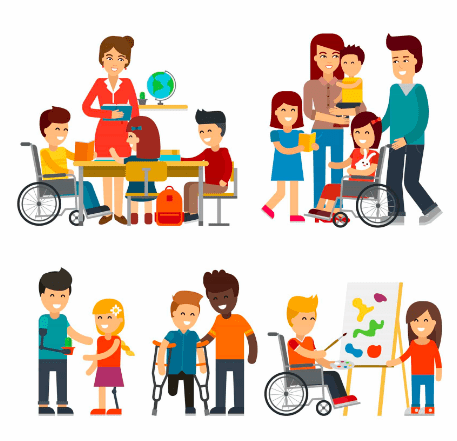
Disability etiquette is a set of guidelines dealing specifically with how to approach persons with disabilities . Before knowing about disability etiquettes , it is essential to understand certain basic things such as if someone has a disability don’t assume he/she needs help . In fact , adults with disabilities wants to be treated as an independent persons , So offer help only if the person with disability seems to need it . Physical contact should be avoided . Always speak directly to the person with a disability , not to his/her friend . Persons with disabilities are the best judge of what they can or can’t do .

General Disability Etiquettes

Disability Etiquette | OSU TOPS Program

The general disability etiquettes are stated below :

  • Always put the person first , i.e., say ‘person with disability ‘ rather than ‘disabled person’ . Always avoid the outdated words like handicapped , retarded , physically challenged or differently – abled . For example , refer to ‘person who are blind ‘ rather than ‘ blind person ‘.
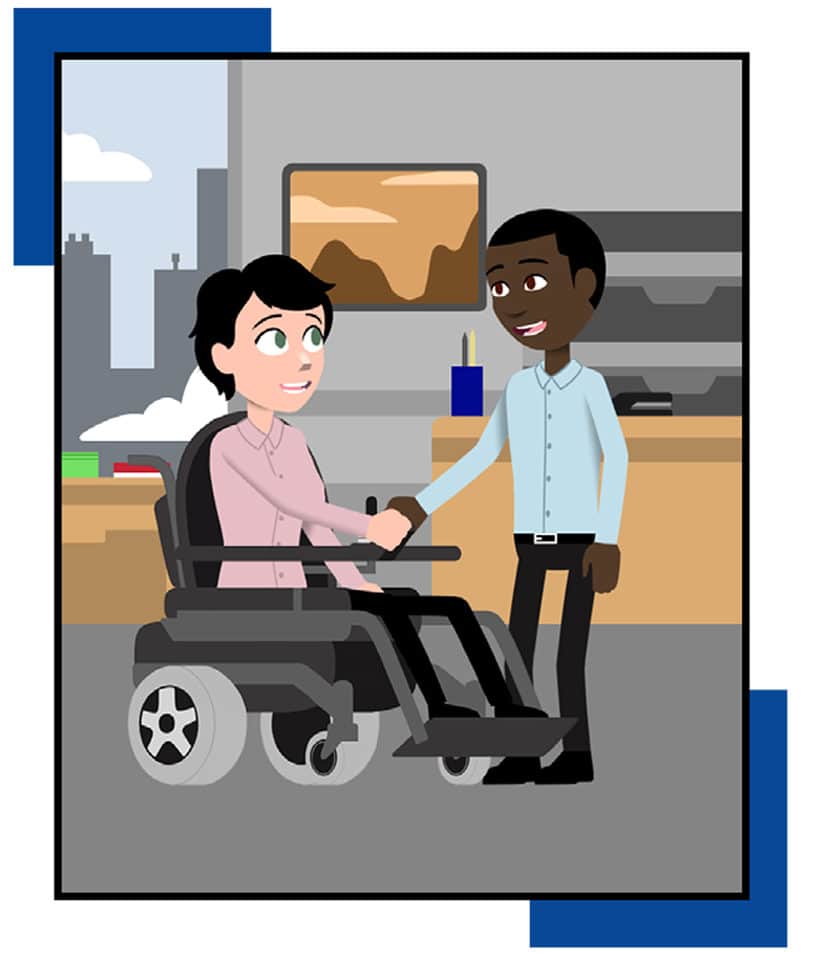
  • In case of introduction to a person with a disability , it is appropriate to shake hands .
  • When you meet a person with a visual impairment , always identify yourself and others who may be with you .
  • Leaning or hanging on a person ‘s wheelchair should always be avoided because such act is generally considered annoying . In fact , the chair is the part of the personal body space of the person who uses it.
  • Always listen carefully as well as attentively when you are having conversations with a person who has difficulty in speaking . Have patience and wait for the person to finish rather than correcting or speaking for that person . Generally , ask short questions that require short time .
  • When talking with a person who is on a wheelchair or person who uses crutches , keep yourself at eye level in front of the person to facilitate the talk .
  • To get the attention of a person who is deaf or having hearing impairment , tap the person on the shoulder or wave your hand . You should look directly at the person and speak clearly .
  • Never patronize person who use wheelchairs by patting them on the head or shoulder .
  • Always introduce yourself to persons who are blind using your name .
  • Always avoid asking personal questions to an individual who is differently-abled .
  • Always give additional time to a person with any disability to do or to say something .
  • Always have conversation at a normal tone of voice . Don’t talk in high pitch to such individuals .
  • Don’t pretend to understand if you are facing problem in doing so .
  • If you need to leave a person who is blind , inform him that you are leaving and ask him if he needs anything before you leave .

What Is Survivor’s Guilt?

Some of us thank our lucky stars when tragedy happens, those we cherish while we remain unharmed, while others feel guilty. “Why should I be the only one? “What could I have done differently to avoid this?” we wonder. ” These are the defining characteristics of survivor guilt, an unofficial but very real condition.

Survivor guilt occurs when a person believes they have done something wrong by surviving a catastrophic incident in which others have died or otherwise succumbed. It can take many forms, ranging from bittersweet emotions to outright sadness. It is most frequently associated with large-scale disasters (such as combat casualties or plane accidents), but it can also manifest itself in unexpected ways.

The term “survivors’ guilt,” according to experts, has its origins in the Holocaust. There are people, for example, who refuse to forget and  instead feel obliged to ‘remember’ by an inner sense of responsibility; they purposefully deny and refuse themselves any happiness in living. Some wish to erase the memories but are unable to do so.

Most psychologists agree that survivors’ guilt is not a medically diagnosable syndrome, but it appears emotionally and physically in those who survive a terrible incident; guilt has traditionally been associated with war veterans, survivors of natural disasters, catastrophes, and sicknesses.

Survivor’s Guilt often falls into one of the the three overarching themes:

  1. Feeling guilty over one’s survival – When we think about survivor guilt, we usually think of this: if you were unharmed while others have been injured, you may believe you didn’t deserve to be protected and should’ve been hurt as well. You doubt the world’s fairness and justice.
  1. Feeling guilty over what you could have done – You’re regretful that you didn’t go above and beyond. You should’ve known better, and you should’ve tried harder. Perhaps you attempted but failed to save someone. There’s an exaggerated feeling of disappointment or blame: “If only I’d done things differently.”
  1. Feeling guilty over what you had done – You could also feel bad about something you did, such as shoving people out of the way to flee an armed gunman or abandoning your family for greater chances abroad. Alternatively, you may experience a great deal of guilt over things that happened by chance.

HOW TO COPE WITH SURVIVOR’S GUILT

  1. Embrace and let yourself feel the emotions – Survivor’s guilt is a known response to trauma, even if it is not particularly rational. Embrace and allow yourself to feel the emotions that emerge. Allow yourself time to absorb the feelings of guilt, sadness, anxiety, and sadness that often come with a traumatic incident and the death of a loved one. It is critical to get treatment if these feelings become overpowering or do not become more tolerable with time.
  1. Build relationships with others – Share your emotions with your loved ones. Search for an appropriate support group if loved ones are not able to comprehend your feelings. Survivors may interact with others, vent emotions, and offer advice in both face-to-face support groups and online forums.
  1. Make use of mindfulness exercises – People who have experienced tragedy may benefit from mindfulness, particularly amid flashbacks or moments of strong and unpleasant emotions. Focusing on the breathing, touching close fabrics, and hearing sounds both within and outside the space are some grounding strategies to try.
  1. Practicing self-care – It is terrifying and upsetting to see a loss or potential loss of life. Survivors can benefit from engaging in pleasurable activities. It is also critical for a person to get adequate sleep, maintain a well-balanced diet, and start exercising on a regular basis.
  1. Do something good towards others – Survivors of traumatic incidents might feel much better if they help others in some manner.

According to studies, some individuals experiencing survivor’s guilt and other symptoms  get better without therapy during the first year of the occurrence. Yet, at least one-third of individuals will experience the symptoms for three years or more. If an individual feels they would be unable to manage on their own, or if the symptoms are getting worse or becoming persistent, then it is critical to seek help.