
Answers to your questions on mental health !

” What mental health needs is more sunlight, more candor, and more unashamed conversation.” – Glenn Close

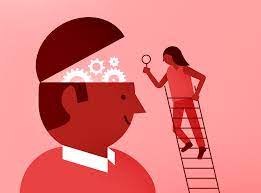
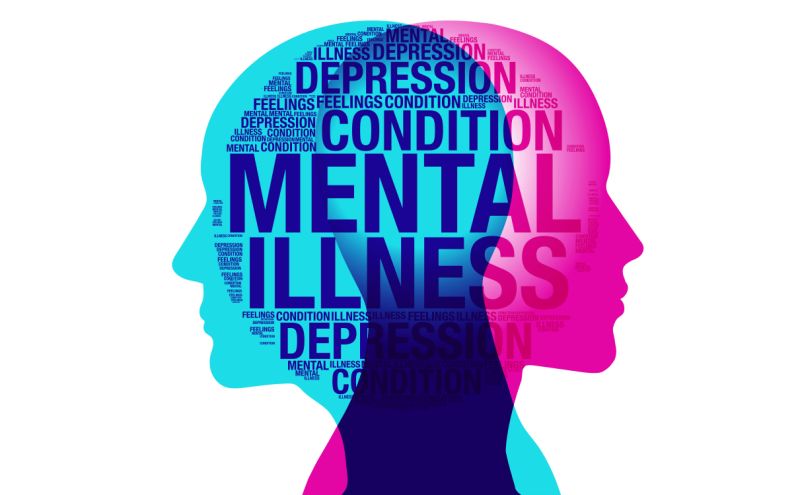
Mental health plays a supreme role in everyone’s life . It is mental health only which affects how we think , how we behave , how we feel , & how we cope up with life . It also help us determine how we cope up with stress , relate to others & make choices . It is important at every stage , from childhood to adulthood & aging . This includes our physical , psychological & social well being .

WHAT CAN AFFECT OUR MENTAL HEALTH ?

Many factors affect our mental health , some of them are , biological factors , such as genes & brain chemistry , family history & mental health problems in the family . This affects a lot , because they are present already in you , they are biological factors & outside factors have no affect hand & effect on you mental health . Sometime your very own experience in your life make you mentally ill , experiences such trauma , abuses , accidents leads to poor mental health . Not only biological factors , family history or bad experiences affect our mental health , but our way of living the life decides the how our mental health is . Our diet , food habits , physical activity also tells us our state of mental health . you can improve your mental health by meditating , doing yoga , by involving in physical activities .

What are the signs that I might have a mental health problem?

When it comes to your emotions, it can be hard to know what is normal and what is not. There are warning signs that you may have a mental health problem, including

  • A change in your eating or sleeping habits
  • Withdrawing from the people and activities you enjoy
  • Having low or no energy
  • Feeling numb or like nothing matters
  • Having unexplained aches and pains
  • Feeling helpless or hopeless
  • Smoking, drinking, or using drugs more than usual
  • Feeling unusually confused, forgetful, angry, upset, worried, or scared
  • Having severe mood swings that cause problems in your relationships
  • Having thoughts and memories that you can’t get out of your head
  • Hearing voices or believing things that are not true
  • Thinking of harming yourself or others.
  • Not being able to perform daily tasks like taking care of your kids or getting to work or school

WHY IS MENTAL HEALTH IMPORTANT ?

Mental health is very important , it tells you how to behave to a particular situation , how to cope up with stress . It helps us to stay physically fit & mentally strong . By being in good mental health one can carry good relationships with everyone . It increases your work productivity , helps you to contribute a handsome amount of efforts for the community . It makes you realize your full potential & caliber with which you can outshine anywhere & everywhere.

Positive Psychology

Positive psychology is one of the newest branches of psychology to emerge. This particular area of psychology focuses on how to help human beings prosper and lead healthy, happy lives. While many other branches of psychology tend to focus on dysfunction and abnormal behaviour, positive psychology is centered on helping people become happier. Positive psychology is designed to “complement and extend the problem-focused psychology that has been dominant for decades,” explained the late Christopher Peterson, author of “A Primer in Positive Psychology” and professor at the University of Michigan, in a 2008 article published in Psychology Today. “Positive psychology is…a call for psychological science and practice to be as concerned with strength as with weakness; as interested in building the best things in life as in repairing the worst; and as concerned with making the lives of normal people fulfilling as with healing pathology,” Peterson wrote.

According to leading authorities in the field, Martin Seligman and Mihaly Csikszentmihalyi, positive psychology will help achieve “scientific understanding and effective interventions to build thriving in individuals, families, and communities.” In order to understand the field of positive psychology, it is essential to start by learning more about its major theories, applications, and history.

History of Positive Psychology

“Before World War II, psychology had three distinct missions: curing mental illness, making the lives of all people more productive and fulfilling, and identifying and nurturing high talent,” wrote Seligman and Mihaly Csikszenmihalyi in 2000. Shortly after WWII, the primary focus of psychology shifted to the first priority: treating abnormal behavior and mental illness. In the 1950s, humanist thinkers like Carl Rogers, Erich Formm and Abraham Maslow helped renew interest in the other two areas by developing theories that focused on happiness and the positive aspects of human nature.

General interest in positive psychology has grown tremendously since the concept was introduced. Today, more and more people are searching for information on how they can become more fulfilled and achieve their full potential.

Uses

Positive psychology can have a range of real-world applications in areas including eduction, therapy, self-help, stress management, and workplace issues. Some of the major topics of interest in positive psychology include: Character strengths and virtues, Flow, Gratifications, Gratitude, Happiness, Pleasure, Helplessness, Hope, Mindfulness, Optimism, Positive thinking, Resilience .

Impact of Positive Psychology

Some of the major findings of positive psychology include: Money doesn’t necessarily buy well-being, but spending money on other people can make individuals happier, People are generally happy, Some of the best ways to combat disappointments and setbacks include strong social relationships and character strengths, While happiness is influenced by genetics, people can learn to be happier by developing optimism, gratitude, and altruism, Work can be important to well-being, especially when people are able to engage in work that is purposeful and meaningful.

Potential Pitfalls

Positive psychology is often confused with positive thinking, and misconstrued as self-help tactics rather than research-backed theories. Positive thinking is a way of thinking ourselves into better behavior and greater resilience, rather than behaving our way into a different frame of mind. Positive psychology, on the other hand, is the scientific study of what makes people thrive. It focuses on behaviors that can lead to a more optimized frame of mind as well as on thought patterns that lead to more functional behaviors.

PTSD through Harry Potter

“The conflict between the will to deny horrible events and the will to proclaim them aloud is the central dialectic of psychological trauma.”
― Judith Lewis Herman, Trauma and Recovery: The Aftermath of Violence – From Domestic Abuse to Political Terror

PTSD is short for post-traumatic stress disorder, which is a psychiatric disorder that may occur in people who have experienced or witnessed a traumatic event such as a natural disaster, a serious accident, a terrorist act, war/combat, or rape or who have been threatened with death, sexual violence or serious injury.
But how do we know that harry potter had PTSD?
In short, Harry lost his parents at a very young age. He had extremely abusive foster parents, who forced him to work for them and called him names.
Even when he started school he was bullied quite a lot of times as he was the chosen one. His friend Cedric Diggory, his favorite professor – Albus dumbledore, his godfather, and numerous of his friends die in front of him. He was tortured by Voldemort and dementors.
In The book cursed child we see that Harry tells his son Albus that he’s afraid and while most everyone would think it’d have something to do with Voldemort or his trauma through Hogwarts, it’s even more emotional.

He tells Albus that he’s afraid of the dark and small spaces. While some people do not instantly recognize the significance, the line shows that Harry’s time with the Dursleys is, unfortunately, what has stayed with him the longest.

The dark and the small space he’s referring to? That’s the cupboard under the stairs that the Dursleys made him live in while he was growing up. With plenty of space and money to give Harry a happy childhood, they refused and threw him into their cupboard and made him cook and clean for them.
Let’s look at PTSD symptoms and compare them with the symptoms that harry displayed
Some PTSD symptoms are behavioral they are – Agitation, irritability, hostility, hypervigilance, self-destructive behavior, or social isolation. We do see some irritability (sometimes), but not so much hostility or agitation or self-destructive behavior or social isolation in harry.

there are Psychological symptoms too like – flashbacks, fear, severe anxiety, or mistrust. He has a lot of flashbacks, but He does have some fear but not a whole lot of anxiety or mistrust.

Mood-related symptoms can be – Loss of interest or pleasure in activities, guilt, or loneliness. He seems to enjoy most activities that people should enjoy, but he does seem to feel guilty a lot. He appeared to be very lonely before he was a wizard but he made some friends at Hogwarts

symptoms relating to Sleep are- Insomnia or nightmares. He seems to have some nights where he can’t sleep, but not to the point of insomnia. But he seems to have a lot of nightmares.

When you have PTSD, it might feel like you’ll never get your life back. But it can be treated. Short- and long-term psychotherapy and medications can work very well. Often, the two kinds of treatment are more effective together.

PTSD therapy has three main goals:

Improve your symptoms
Teach you skills to deal with it
Restore your self-esteem

Cognitive Processing Therapy
(CPT is a 12-week course of treatment, with weekly sessions of 60-90 minutes. At first, you’ll talk about the traumatic event with your therapist and how your thoughts related to it have affected your life. Then you’ll write in detail about what happened. This process helps you examine how you think about your trauma and figure out new ways to live with it.)
Prolonged Exposure Therapy
(If you’ve been avoiding things that remind you of the traumatic event, PE will help you confront them. It involves eight to 15 sessions, usually 90 minutes each. Early on in treatment, your therapist will teach you breathing techniques to ease your anxiety when you think about what happened. Later, you’ll make a list of the things you’ve been avoiding and learn how to face them, one by one. In another session, you’ll recount the traumatic experience to your therapist, then go home and listen to a recording of yourself.)
Eye Movement Desensitization and Reprocessing
(With EMDR, you might not have to tell your therapist about your experience. Instead, you concentrate on it while you watch or listen to something they’re doing — maybe moving a hand, flashing light, or making a sound.
The goal is to be able to think about something positive while you remember your trauma)
Medications
Fluoxetine (Prozac)
Paroxetine (Paxil)
Sertraline (Zoloft)
Venlafaxine (Effexor)

HOW TO READ SOMEONE EASILY

In today’s world it is very difficult to read people as we have skilled the ability to hide our emotions. Sometimes it gets difficult to either show emotions or draw them in our minds about others. Let it be helping someone you love or someone you are not so close with, learning to read people’s mind is such a boon!

Here are few tips that hep you to understand others easily.

1) BE UNBIASED

You have to be able to accept people for who you are. Being unbiased and non-judgmental will help the people around you to stay comfortable. That will lead you closer to understand them. You have to let other impressions about them to leave so that you can now who the person really is.

2) STAY TRUE TO YOUR GUT FEELINGS

Even though we might appear open minded it is very necessary that we stay true to our instincts and obey our gut feelings. Sometimes your first impressions can be true based on how the person acts, poses and presents themselves. Its better to keep first impressions.

3) NOTICE THEIR POSTURE

If they have their head held down they might have low self esteem. If they have their head held high or their chest puffed out then they are either confident or have immense amount of ego respectively. They could be trying to regain from the last day as well, therefore look out it they are actually tired or are struggling silently.

4) NOTICE THEIR OUTFITS

There could be times when people are trying to portray a different version of themselves. It could be that they are trying to be someone who they verbally explain the audience to, or it could be the real them! If they feel good in what they are wearing then it is true that they are being true to their personality. People sometimes do feel low when they are wearing something they don’t want.

5) PAY ATTENTION TO THEIR NORMAL PERSONALITY

People often behave a different way when they are in their normal behavior. There might be someone who is used to tapping their feet and it is their regular behavior. But there might be some who tap their only when they are anxious or are hiding something from you. Noticing the person’s behavior will solve most of the confusion and will help you to read them better.

6) NOTICE THEIR FACIAL EXPRESSIONS

We unconsciously work with our facial expressions when are feeling certain emotions. For example, we frown when we are upset, we purse out lips tight when we are angry, we have our eyebrows up when we are confused, we give a genuine smile when we feel happy, and we clench our jaw and have our eyebrows wrinkled when we are i tension or are thinking deeply. Noticing people’s facial expression will help us in detecting their moods and emotions and we will be of good use when we make ourselves available for them.

Don’t make it too obvious that you are reading the people. Try being normal ad play your laws in your mind.

Article by : Haniah MIrza

Story – I see you

I always look forward up to the nights. Because that’s when we meet, right? I never felt myself until I met you. Like the day, I don’t feel the need to hold up a bright smile before you; I don’t feel the need to turn back and look at my shadow(s). With you, they go nowhere but into an invisible bin in space but come back again the following day. But with you, I am ready to embrace it all. With you, even the silence feels comfortable, and it doesn’t creep in into every vein in my body. With you, it’s all easier, easier to live, to breathe, to laugh, talk and have fun. Whenever the thoughts in my mind get a bit louder than the silence the night holds, you’re there to hear me out. You never say much, it’s always me rabbling on things, and you hear it all without complaints. With you, I feel like I’m being listened to. With you, I don’t feel judged; like the night sky, you have seen me cry.

Is it only me who felt warm last night?

The nights are often cold and frigid, but with you, they’re warm and cozy. I feel safe when you place your right arm on my right shoulder, and I lay my head on your chest – your language of telling me not to worry and life’s momentary; this shall pass too. But I don’t want this to pass away just like that. I want to lie against your chest a bit longer. I want you to hold me this way a bit longer.

But that’s when mum stepped in and invaded our personal space. As she switched on the lights, you were nowhere, as if you disappeared in the thin air.

Mom: Siya, who are you talking to?

Siya: I’m talking to Ajay. Please leave my room mom and don’t interrupt our talk.

Mom: Who Ajay? Our neighbour’s child? But, I can see no one here.

Siya: But he is right here (pointing towards the left), can’t you see him?

Mom: I can see no one here. You gotta sleep.

Siya: Fine.

*While walking back to her room, Siya’s mom was in a riddle. How could Siya talk to someone who died a week ago?*

The following day, Siya was drawing while chit-chatting with someone asking how was the drawing. Her mom when peeped at the paper, it was a guy aged as same as Ajay and wearing clothes similar to his style. When asked to Siya, she said that Ajay liked her drawing too and later she went to play chess in her room. Siya’s mom followed her to figure out the situation and realised Siya’s just 13, who taught her to play chess, that’s when she remembered Ajay; he was a state-level champion of chess. Siya’s mom was concerned about her daughter, so along with her dad, she took Siya to a child psychiatrist. The psychiatrist came up with a conclusion that she’s affected by a major psychiatric illness – schizophrenia. The disease is called “early onset” schizophrenia when it occurs before the age of 18. And this is the reason she’s been seeing visuals of things/ peoples that ain’t actually there.

What happens next once your child is diagnosed with schizophrenia?

Siya’s parents were quite distressed if there was a treatment to this or lifelong she’ll have to deal with the positive or negative symptoms. Further, the psychiatrist explained to them that there is no permanent cure for this but they could try reducing the severity of symptoms. The next step is developing a mutually agreed-upon treatment plan — incorporating psychotherapy, medication, and school and community support — that works for you, your child, and your family.

How do we treat schizophrenia?

As you addressed this early, the treatment might turn out more successfully. Your clinician will prescribe treatment methods that may include medication, psychotherapy, specialized educational or activity programs, and support groups. Siya’s parents supported the treatment as advised by the clinicians, which obviously freed Siya from often repercussions.

So, this is just a request to all the parents to address thier child’s mental health every once in a while and support the treatment procedures too. If addressed early, it’s better for everyone, the child, the parents and for the family too. Ignoring the symptoms might just worsen the symptoms and make the recovery impossible.

Helpful Links:

For parents:

20/20 Presents: Stories of children with schizophrenia

For teens:

CopeCareDeal

Mental Health amidst Covid

Mental health is health too.

The pandemic has taken a toll on mental health across the globe. Cases of depression and suicide have increased manifold ever since this coronavirus abruptly interfered with our daily life, and left us on house arrest with never-ending thoughts and endless fear. This speck of RNA has changed the entire outlook of the dynamic world we live in. Be it trade, finance, education or tourism everything seems to stand still for a while, as a consequence of which unemployment skyrocketed, which leads to utter despair and curtailed hope even further. History has never witnessed such a destructive catastrophe till date.

It was just the first wave summarised so far because the damage done by the second wave in India is nothing less than a nightmare in which hundreds and thousands of people lost their lives and scarcity of oxygen came into the picture. With deaths comes grief, anxiety, pain etc that is detrimental to mental health beyond the scope of one’s imagination.

Here are some ways to look after your mental health in these trying times:

Priorities Yourself:

Give yourself priority and listen to your instincts. Do not let others set a line for you because you’re the one who knows yourself the best. But it doesn’t mean to turn a blind eye towards others. It okay to be in your little bubble for a while. Take your time and relax.

Express your Feelings:

It’s not necessary to be expressive all the time, but try to communicate if there is something inside your head that is eating you alive. Communication is the key. Express your feelings in whatever way you want to. Be a loner but don’t be lonely.

Rebuild your routine:

Since we are still stuck with the online education situation, it’s necessary to have a profound morning routine. It will help you to align for the rest of the day and less likely to have a chance to sit ideally and overthink.

Control Overthinking:

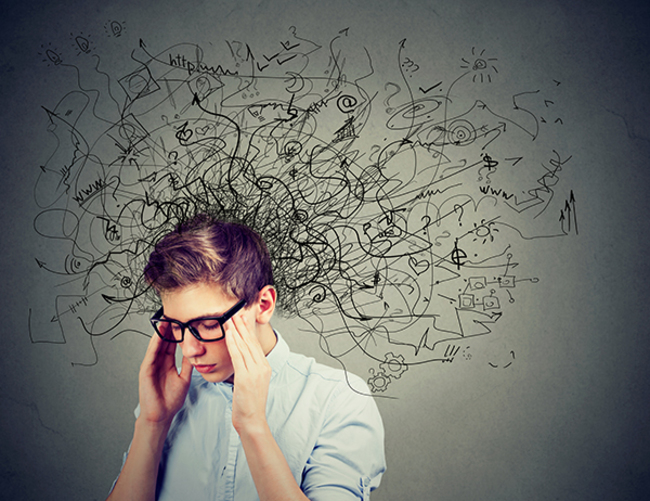
Thinking before making any decision is appreciable but continuously thinking about something in endless circles is exhausting.
While everyone thinks over a certain point of time, but “What if and should” dominates the thinking of chronic overthinkers which is mentally draining and can put your health and total well-being at risk.
Rather than getting lost in the thoughts of what you could have, would have and should have done differently, try to become self-aware and connect to your immediate world.

Ask for help:

Be strong enough to ask for help. There are lots of counsellors and therapists available online. They will hear you out and validate your emotions. All you need to do is to summon your courage and accept yourself.

Taking Care of your Mental Health during a Global Pandemic

“A soft reminder: not everything that weighs you down is yours to carry.”

The term “Mental Health” focus on our emotional, psychological and social wellbeing. It affects the way we perceive things, the way we feel and the way we react. It plays an important role in every stage of our lives from our childhood to our adulthood. Your health is more than what you are eating. It is also what you are thinking, saying and believing. We often tend to underestimate the importance of our mental health but, taking care of it is important, more than it is rewarding.

We began to hear about the virus outbreak in China during the last month of 2019, little did we all know that it would be identified as a global pandemic. On 25th of March,2020 the first lockdown was imposed in the country. The seriousness of the pandemic had intensified and the world was paused. During the lockdown everyone was paranoid and careful. A large number of people were stuck, they were away from their homes and families, there was a huge wave of unemployment and everything was falling apart. The only news that was telecasted was about how rapidly the virus is growing and it started to make people anxious. Every body was perplexed and overwhelmed.

 At the beginning of the outbreak, we were told to be isolated and strengthen our immunity, exercise at home and focus on our physical wellbeing, but what we kept neglecting was our emotional wellbeing. The most common feeling that millions of people are experiencing is loneliness. Being confined to a particular place and following the same monotony made a lot of people feel empty and lifeless. we weren’t focusing on how to take care of our emotions during the time and that has left us being on an emotional roller coaster with each day. All of us are in the midst of a global pandemic currently and it is undeniable that fear and anxiousness has spread rapidly among ourselves as well.

 This pandemic has given our lives a different meaning and has been recreational for a lot of people. We continue to build new normalcy during these times. Social media platforms have progressively churn out productivity contests every now and then, it is essential to remind ourselves that this is no competition that we are a part of, it is important to replace the feeling of guilt and let it go.

 Before corona virus had hit us, working from seemed like a cake walk but it has certainly caused a huge disbalance between work and personal space, one should allow themselves to give them breaks and assure that you are giving your mind and body some rest. Indulge in activities like cooking, reading, watching a movie, pursuing your hobbies or doing something that you’ve always wanted to do but never found the time to during these times. Start finding happiness in the small wins like being without your phone, cleaning the dishes, cooking something which you thought you never could and so on. If you feel that there is a lot going and it is constantly making you feel hopeless, take a step back and try to calm yourself if that doesn’t help talk to someone, express what you’re feeling. Resist yourself from checking the news and find a distraction. While video calling has helped creating a bridge between the people who are far from you, it is completely normal to crave for human touch.

During these hard times, an individual who is dealing through stress should make it a point to turn to the people who are optimistic and good listeners. Try to understand that your feeling is valid, in order to keep your mental health stable, it is important to acknowledge your feelings for that you can write it down, let it out or do something that relieves your stress. It is scientifically proven that exercising helps in reducing anxiety, negative emotions and boosts self-esteem. One of the main advantages of exercising regularly during a pandemic is having a proper sleep schedule.

An individual should practice mindfulness and gratitude during such challenging times. Its very important to count your blessings and make time for things that make you happy. Lastly, we should give ourselves credit for the days we made it when we thought we couldn’t have.

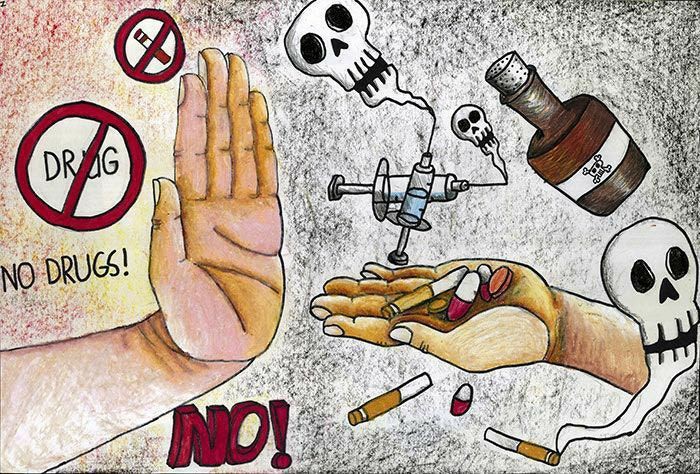
Drugs : you choose , you loose .

Addiction is just a way of trying to get at something else. Something bigger. Call it transcendence if you want, but it’s a rat in a maze. We all want the same thing. We all have this hole. The thing you want offers relief, but it’s a trap.

DRUGS ” A five letter word that is destroying human race. A word that could get you to the cloud nine and than kick you from the top.

What do you think it is ?

Is it a pleasure or a pain ?

Some says ‘it gives you wings ‘, others says ‘it makes you insane ‘ . What would you do , if someone is taking drugs ? Well , I would fly (its a joke ).

Ok , Let’s just get over with the topic .

Introduction

All the suffering, stress, and addiction comes from not realizing you already are what you are looking for.

– Jon Kabat-Zinn

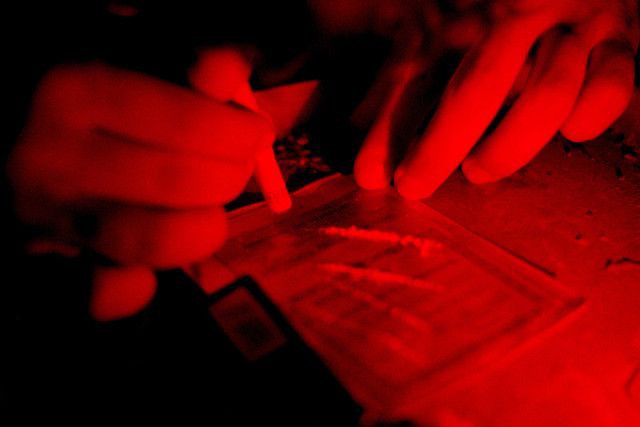
Drugs are substances that change a person’s mental or physical state. They can affect the way your brain works, how you feel and behave, your understanding and your senses. This makes them unpredictable and dangerous, especially for young people.

Drug addiction is a chronic brain disease. It causes a person to take drugs repeatedly, despite the harm they cause. Repeated drug use can change the brain and lead to addiction. That can destroy one’s life .

Signs that shows someone has a drug problem

  • Changing friends a lot .
  • Spending a lot of time alone.
  • Losing interest in favorite things.
  • Not taking care of themselves – for example, not taking showers, changing clothes, or brushing their teeth.
  • Being really tired and sad.
  • Eating more or eating less than usual.
  • Being very energetic, talking fast, or saying things that don’t make sense.
  • Being in a bad mood.
  • Quickly changing between feeling bad and feeling good.
  • Sleeping at strange hours.
  • Missing important appointments.
  • Having problems at work or at school.
  • Having problems in personal or family relationships.

If a person shows these signs than he / she is using drugs . But it’s not , it’s a probability . The person may or may not be using drugs . For the assurance you have to ask the person (well they can lie ) . Take them for the blood test . It will show if the person is taking drugs or not . It’s a simple procedure .

Why can’t people stop using drugs on their own?


Repeated drug use changes the brain, including parts of the brain that give a person self-control. These and other changes can be seen clearly in brain imaging studies of people with a drug addiction. These brain changes explain why quitting is so difficult, even when an addicted person feels ready.

Many people are compelled to enter treatment by the pressure of their family, friends, or a court system. People of all ages with substance use disorders live in fear of what will happen if their drugs are taken away.

Due to the addiction , they experience a variety of physical and emotional withdrawal symptoms, including depression, anxiety, and other mood disorders; restlessness, and sleeplessness . It may lead you to the death bed .

Treatment :

Counseling and other behavioral therapies are the most commonly used forms of treatment. Medications are often an important part of treatment, especially when combined with behavioral therapies. Treatment plans must be reviewed often and modified to fit the patient’s changing needs.

  • Rational Emotive Behavior Therapy.
  • Cognitive Behavioral Therapy.
  • Detoxification.
  • Treatment with Medication.
  • 12-Step Facilitation.

One of the hardest things was learning that I was worth recovery.

Link

Therapy – Need of the hour

The worldwide widespread has changed how counselors bolster patients, counting bookkeeping for a surge of COVID-19 related uneasiness and discouragement. This open wellbeing emergency has driven counselors to create unused approaches and adjust inaccessible innovations to supply fitting care inside social segregation and security guidelines. Counselors involvement the same COVID-induced fears and disappointments as their patients. Numerous must adapt with losing clients, family and money related hardships, and enthusiastic stretch that the infection has unleashed. This direct investigates the ways in which counselors’ parts and duties have changed since the COVID-19 flare-up. Keep perusing for a few ways counselors can oversee push in their proficient and individual lives.

The COVID-19 infection has made a open wellbeing emergency of uncommon extents. Since the pandemic’s onset, counselors have seen an uptick in patients managing with the misfortune of regularity in their day by day lives. Counselors give data and bolster for patients encountering work disturbances and related budgetary misfortunes, school cancellations, concerns almost the wellbeing of their relatives and themselves, and melancholy at losing family and companions. GinaMarie Guarino, a authorized mental wellbeing counselor who works with patients influenced by the infection, watches that the widespread “has definitely changed how the world capacities, and as a result numerous have experienced extreme responses to their mental wellbeing. Conditions of uneasiness, discouragement and melancholy have all spiked impressively in response to COVID-19.” Stephanie Waitt, a authorized counselor whose hone centers on eating clutters, injury, misery, and uneasiness addresses the challenges the widespread has set on counselors as they adjust to meet their patients’ mental healthcare needs:

“A open wellbeing emergency like this has as it were uncovered people’s injuries and tensions and advisors are required presently more than ever. We are approving a parcel of people’s battles right presently and giving individuals consent to be a small messy…” In these times, she recommends that counselors ought to prioritize making a secure space for patients.

benefits of online counseling

  1. Increased access

Online therapy can be a solution for patients who live in remote areas. They do not have to travel great distances (or lose a whole day) every time they have a session. It is also ideal for those with a physical condition that limits mobility or who do not have adequate transportation.

  1. Reduced travel costs

If your therapist is not nearby, you could spend a lot of time in the car traveling to and from sessions. That adds up to miles on your vehicle and more stops for gas. There is no cost when “traveling” to an online session.

  1. More consistent therapy

Traffic, bad weather, and illness are just a few reasons why patients miss therapy sessions. Online therapy presents a solution to these hurdles, allowing patients to continue care on a more consistent basis and increasing their chances of improvement. 

  1. More frequent sessions

Because there are fewer issues with travel, taking time off work, and juggling schedules, patients can schedule more frequent sessions if the need arises. This is extremely valuable for patients with acute issues or those that have a sudden need to speak to a psychologist. 

  1. Increased progress

Due to the ability to schedule more sessions, you may start to feel better faster. You do not have to wait a week or two between appointments. 

  1. Better access to specialists

Online therapy provides access to anyone in almost any part of the country. You can connect with specialists who may be in another office or even another part of the state.

  1. More comfortable for patients

Some patients like that they can experience a session in the comfort of the environment of their choosing, whether it’s the living room couch or the nearby park bench. Many feel more at ease than they would in a clinical setting. It is also possible to eliminate some of the social stigma that still surrounds mental health counseling.

  1. Safety without sacrificing care

The COVID pandemic and fear of being in public settings has caused millions of Americans to avoid in-person care. Online therapy lets you practice social distancing – protecting your physical health without sacrificing or limiting your mental health care.

  1. Flexibility with scheduling

Since everything is done online, you can schedule sessions that fit your life. You can schedule therapy around your work schedule, family obligations, or caring for a loved one. The convenience and flexibility are ideal for making therapy a comfortable part of your routine. 

Understanding your Mental state during the Pandemic

Introduction

The second wave of COVID-19 started from the middle of March 2021 and peaked in April with a shortage of oxygen cylinders and hospital beds. Now when the numbers have gone down again, people will start venturing outside and the reason for this eagerness is understandable because of the impact this pandemic has had on all of us, we just need ways to cope with it. Although mental health has been discussed a lot since the beginning of the pandemic and the lockdown, it is important to understand what changes we have been experiencing and how we can cope with them.

Impact on Mental Health

As we know, this pandemic created an economic crisis but along with that it also negatively impacted the mental health of people all across the world. People have been facing trouble with sleeping, eating, and alcohol consumption also went up. But the major mental health issues that are identified are stress, anxiety, depressive symptoms, insomnia, denial, anger, and fear. And the people with existing mental disorders became more sensitive to their symptoms. The rate of suicide also increased, a suspected Covid-19 patient committed suicide in fear of the result of his test, and later it was found that he tested negative. Adding to that the level of concentration has drastically gone down.

On a normal day if you search for symptoms, you might be experiencing during the pandemic, it would lead to the diagnosis of depression but don’t get confused between depression and the COVID-19 blues. The symptoms of COVID-19 blues include:

  • Feeling of sadness, emptiness, and hopelessness
  • Restlessness
  • Guilt
  • More than normal anger and irritability
  • Withdrawal from things you normally enjoy
  • Avoiding talking to friends and family
  • Change in sleep pattern
  • Change in appetite.

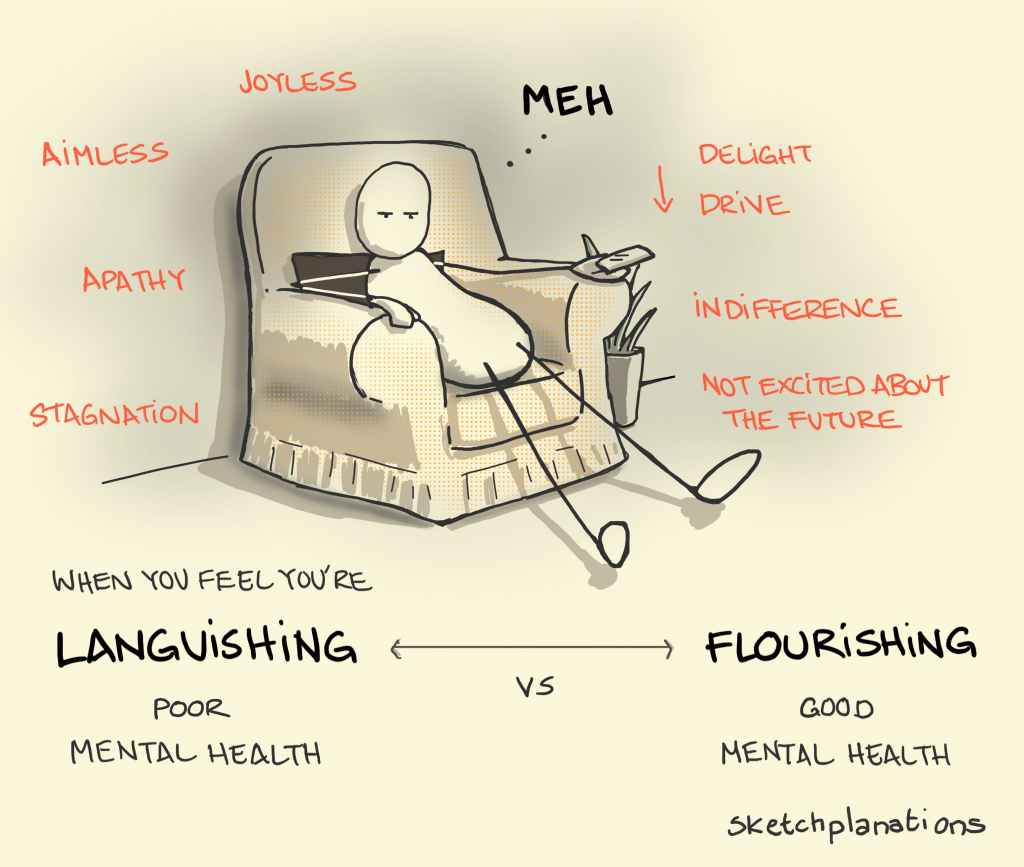
This is not the only thing, the feeling of eternal aimlessness that has started ever since the pandemic is known as languishing, and remember that you are not alone in this, even the practiced psychologists feel the same way. Languishing can be defined as a state of stagnation when you feel like the days are just passing by but you are not doing anything, you are just living through it. Not being able to focus on things is also a symptom of this.

Issues with Online

While most of the things have been shifted to the online forum and the work is being done in this new way, there are still side-effects of this change. The college students who started the online semesters with motivation have lost all of it as they can no longer focus or pay attention to the lectures, it all feels like background noise to them at this point. They cannot connect with their peers in the same way anymore. The distinction between personal and work time has disappeared, this isn’t just for college students but also adults working from home, everyone is working at any time and the expectation to get work done has increased using the reason “you are at home, you have time”. No one feels any kind of connection with their colleagues which brings troubles in the workflow. Moreover, people have lost any sense of time.

Solution

Here are some solutions to deal with this feeling:

  • Create a routine, divide your time for housework and job-related work. A routine will help you maintain a sense of normalcy. It will also help you from feeling lost because of too many things to do at the same time.
  • Try an at-home exercise routine to keep up with your physical health.
  • Declutter your home, it will help you in feeling productive and in control.
  • Set small daily goals, even small achievements count.

There is a concept of flow which means the state of absorption. The people who are immersed in some project avoid languishing, solutions for this are:

  • Even a Netflix binge helps as you connect with the characters of the show and your focus shifts to that.
  • Keep a goal of setting uninterrupted time for yourself, remove all kinds of distractions and focus on the one work you need to finish. There are applications that make sure you don’t use your phone for how much ever time you fill in.

Conclusion

This has been a very hard time for people all across the world, being scared for physical health was one thing but on the path to that our mental health is in danger and we need to take care of it. Remember to not blame yourself for feeling this way, take things slowly, do things that bring you peace. There is no need to hesitate from consulting a psychologist, if you think you are facing symptoms of depression, consult a psychologist to stay on top of your mental health.

References

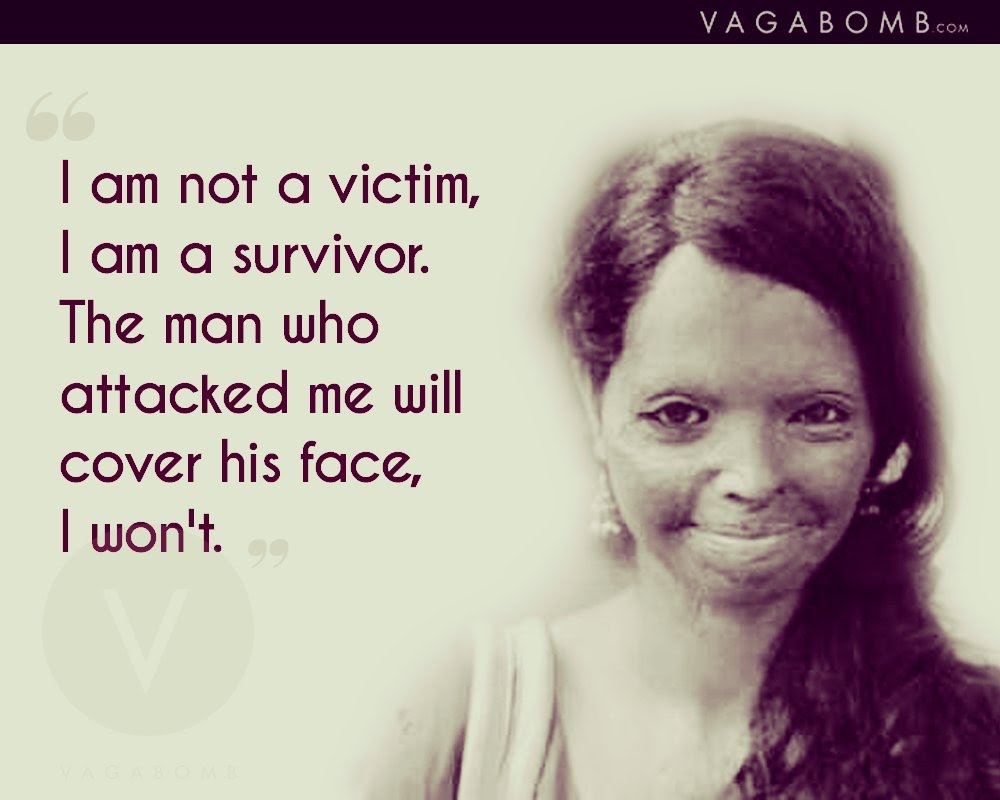
A Survivor : The Story of Lakshmi Agarwal

She was just a 15 year old girl . A girl , full of life . But what happened to her .

It’s her story . A story of a survivor.

She was powerful not because she wasn’t scared but because she went on so strongly, despite the fear.”

– Atticus

At the age of 15 , when a girl or a boy makes happy memories and learn about life . She was attacked in the market full of people . She was attacked because she rejected an old jerk of 32 years old.

A 32 year old proposed a marriage proposal to a 15 year old girl , who lives near the neighborhood. She ignored and rejected him and he planned an acid attack .

Her name is Lakshmi Agarwal , she was attacked at the age of 15 in 2005 in New Delhi after rejecting the romantic advances of Naeem Khan . She didn’t inform anyone about the scenario because she believed her parents and society would have blamed her and stopped her study .

After 10 months , Lakshmi was in the market and Naeem asked her again through message about the marriage proposal but she didn’t respond . And in no time , Kamran (Naeem’s older brother ) and his girlfriend attacked her with acid . He was in the motorcycle and his girlfriend Rakhi threw acid on Lakshmi , when Kamran called her name and she looked behind for response.

She fainted on the road and when she regain consciousness she went middle of the road asked for help and met with multiple accidents but no one stopped to help her . She was burning in fire and her skin was melting.

A man named Arun Singh called PCR and told police about the situation . Someone threw water to help her but it turned out opposite and the acid burnt her neck . Arun think it might be late , so he helped her on the backseat of his car , later the seat cover turned into black hole due to the acid .

Arun admitted her in the hospital , called police and her family . Lakshmi went through many surgeries and operations including eye surgery. Four days later Naeem Khan got arrested but was bailed after a month later .

Protests and media attention.

After many protests and media attention Naeem got life imprisonment .

Lakshmi’s story was one of the series in the Hindustan Times. Lakshmi was scared after the attack because most of her face and body parts were not same as before . But she didn’t loose hope ,she fought for justice , asked for help for the victims of acid attacks and pleaded the law for the ban on sale of acid.

Meanwhile government failed to frame policies on acid sale and chemical attacks .

Seriousness is not seen on the part of the government in handling the issue,” the bench headed by Justice RM Lodha.

In 2013 , the plea of Agarwal was heard and later claims that “ Acid is freely available in shops. Our own volunteers have gone and purchased acid easily. In fact, I have myself purchased acid,” she said. “We have launched a new initiative called ‘Shoot Acid’.

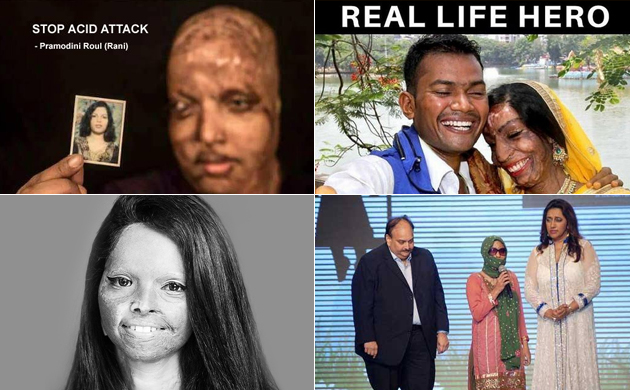
After , the law passed by Supreme court . Lakshmi founded NGO named Chhanv Foundation to help acid attack survivors in India.

In 2019, she was honored with the International Women Empowerment Award from the Ministry of Women and Child Development, the Ministry of Drinking Water and Sanitation and UNICEF for her campaign of Stop Acid Sale. In 2014, she received the International Women of Courage award at the hands of First Lady Michelle Obama.

And the movie Chhapaak is based on her life and stars Deepika Padukone in her role.

“And one day she discovered that she was fierce, and strong, and full of fire, and that not even she could hold herself back because her passion burned brighter than her fears.”

– Mark Anthony

Link

MENTAL HEALTH AND LEARNING!

In India, Mental issues has been considered as a bane since ages. An issue which should ideally be concerned over more than any other diseases and problems in an individual’s life was always overlooked by each and everyone here. Instead what happened was without knowing the inner feelings and situations of someone, considering him/her mentally ill and making fun of their condition, discarding them out of social groups, insulting them in every possible ways. From children to elders; behaviors were all the same, because the root cause was the wrong learning which each one of us received. Calling someone “Mad” for some unusual pattern of theirs’ was and is taught as a very casual, funny thing to every kid. The problem is our society being so obsessed with their typically illogical norms set up by some Orthodox and unlearnt people. God knows how many lives had been destroyed beacuse of these stupid things people does, how many killed themselves till date just because they expected someone to understand them, but were disappointed.

Why are these norms even more important than a person’s whole life? Since, when did humans became so selfish to not care about anyone until they are either dead or devastated?

Be it a kid, teenager, adult each and everyone has a right to be understood and it’s a responsibility of all to understand. To answer the questions above I could suggest only one word ‘Respect’. Everyone here, is taught to care about society more than oneself. Be it our own parents and family at times, all would teach us to stop being different because it wasn’t respected enough and just close our eyes follow the illogical path to living. While Lord himself has made each one of us unique with different looks and features, why can’t we just respect and accept all what a person is and beautifully embrace the diversity of human kind. Let the person be free and do what makes Them happy and not just the society. Give a chance for everyone to express well and. not judge them unnecessarily. Be trust worthy and loving enough to make someone feel comfortable in sharing, rather than choosing death as a better option. However, finally when the world was at break in these lockdowns due to Covid is when everyone as a whole started gaining an in depth knowledge of mental health and a necessity to understand it, as of course it wasn’t easy to live caged in the same place and space everyday. The understanding came when all the people themselves beared the burden on their heads.

But, as said ” Better late than never”. The Mental Health consideration came into existence and the spread of a proper knowledge onto this utterly important topic started. Mainly initiated by Social media influencers to becoming a trending topic among common people, to celebs. It has finally came up to the government’s notice.

THE FIRST STEPPING STONE…

Taking it to consideration, CBSE (Central board of secondary education) has finally come up with a plan to spread a proper mental health awareness within the kids aged 9-11 years. News report from A reliable source states that, “CBSE has launched a new Mobile app for students and parents. The new app ‘Dost for life’ is an exclusive psychological counselling app for students and parents of Case affiliated students. The new app will simultaneously cater to students and parents from different cbse- affiliated schools in different geographies accross the World”.

This app is easily available for download on play store and is already affiliated with all the CBSE schools. Under this, students can fix their time slots according to their convenience and sit and attend sessions on mental health awareness three days a week. This would not only help students and parents understand and respect their own mental state and each other’s but also acknowledge them with the facts on how to be a help to people suffering through related issues arround them. Being known with facts and consequences of this issue, they could also be stopped from exaggerating their own problems, understand the true meaning of these terms and how to contribute their part in saving others from it. It will fulfill the agenda of making ‘Mental health’ an open and foremost significant topic to learn and talk about. Hopefully, it would contribute to the future of our country in the best way possible.

A NOTE TO ALL.

Remember, that fear of being judged and Unaccepted is the biggest enemy of a person. Thus, Self worth and Respect for others are the two main weapons you could use to curb this fear to build in you and others as well. Learn to accept yourself and others, take advices from good people around when confused, give them if Experienced but , “Never Ever Give Up”.

Here are some Lifehacks to keep you calm and happy in every situation for you to learn and suggest to your loved ones and to people in need for help; Find serenity in little things.