No Judgement Club

Being out of the box and not following being a part of the rat race is the new black.

Being trapped inside the box of “log kya kahenge” is something that we all have faced and we still do even if we deny it. With the parents and guardians being supportive and the youth being overtly conscious and aware of their rights, we, as a generation, as a club of the 2000’s, the “gen-z club” are trying to freely reign the things that we want to do ignoring any type of judgement and pushing away the people who pull us down.   

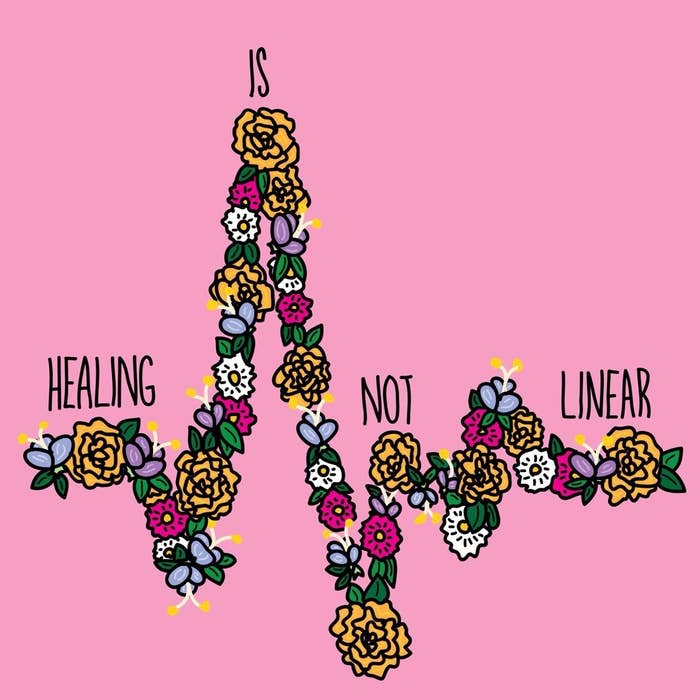
We are conquering the world of nonlinear growth pattern and not focusing on the aligned growth pattern which means that we do not focus on just the “conservative” idea of growth. We do not indulge into working like a robot but focus on a nonaligned growth pattern which means that we not only love to work but also focus on our mental health. We understand that we are not in a rat race and believe in living our lives in a comfortable manner.

Why is mental health important? 

There is a clear connection between mental health and academic
performance. Mental health is important for person’s growth just like
a person’s physical health. Imagine working with a broken arm, will
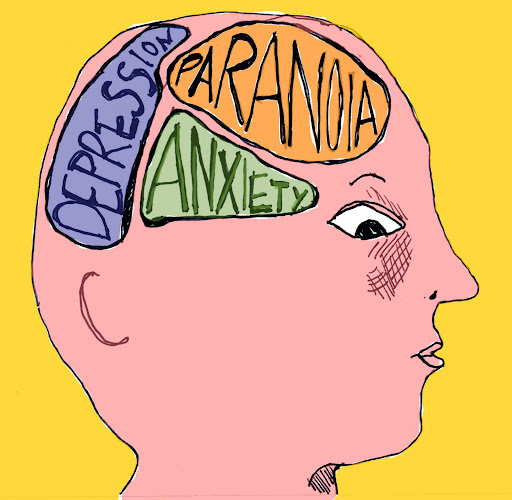
you be able to work? No. Then why should someone with anxiety
disorders, paranoia, depression, etc., are expected to work efficiently
when they can’t even process their mind the way they want to.

Social media and positivity 

Being a generation with extreme activeness on the social media, we have made social media a happy, comforting place for everyone. Social media positivity helps us bear things. With innumerable creators creating content that helps us ignore the negativity and LIVE. 

Log kya hi keh lenge! 

When we start, when we initiate, the paradigm shifts, the pattern starts changing. We have to hold hands and work together. We all can shift the attention from “log kya kahenge” to “log kya hi keh lenge” and then see how the world changes, how we conquer the art of living and being a generation that creates better adults. 

How Psychology has affected my life?

 by Shashikant Nishant Sharma 

(Photo: EduAdvisor)

It takes the
innocence out of everything. You don’t see love (or any other feeling) as love
but dig deep to uncover a subconscious need. Of course, that usually turns out
to be true, in which case it worsens the lack of spontaneity. A psychologist
will define it or forever be in pursuit of the meaning behind it. Some people’s
brains are like that. They’re good at it. But nobody likes to be under a
scanner all the time. It’s unnerving.

 Psychology softens
one’s understanding of oneself.  But the same distance or unattached
empathy has to be maintained to achieve that. At first, psychology and its
study is a way to answer personal conflicts. Studying psychology has affected
and taught me to recognize and check my biases. I used to think that I was fair
and unbiased in how I viewed other people and myself. I have learned about
various psychological errors and biases which made me realize how wrong I was.

 Psychology is all
about observing how we behave and why behave that way in every situation of our
life. It changes your way of approaching a problem or situation drastically and
you can find a solution easily to any problem. It changed my way of thinking
and increased my maturity level to better standards. Now I’m able to receive
people as they are without judging them and able to find out the root causes of
my emotional problems and carefully editing my emotions.

 It’s an old saying:
For the world, a psychologist is crazy; for a psychologist, the
whole world is crazy
.” This is so true. We consider a psychologist as
a mental. We fail to understand the benefits which we can derive from a
psychologist or simply by studying psychology. In today’s world of rush, it’s
hard to keep yourself calm and your mind in peace. Psychology helps you to deal
with that. So, it is very much needed in today’s world. 

 They say that
knowledge is power, and indeed it’s true that studying certain subjects gives
you an edge over others, and in life in general. Psychology proved to be one of
those. It helps in inculcating various skills that are relevant in today’s
world. Along with my problem, psychology has helped me in developing five major
skills which are: communication skills, critical thinking skills, insight into
people’s behavior skills, research skills, and understanding skills.

 In a nutshell, a
mind is a powerful tool, and psychological insight can hone it into something
invincible. It has the power to change your perspective and outlook. It has the
power to change you into a better person. Studying psychology has proved to be
a blessing for my life and it has affected my life positively.


POSITIVE THINKING- THE ESSENCE OF LIFE

POSITIVE REASONING

Positive deduction assists with pressure on the board and can even work on your wellbeing. Work on conquering negative self-talk with models gave. Is your glass half-unfilled or half-full? How you answer this well-established inquiry regarding positive reasoning might mirror your point of view, your demeanor toward yourself, and regardless of whether you’re idealistic or negative — and it might even influence your wellbeing.

Without a doubt, a few examinations show that character qualities, for example, good faith and cynicism, can influence numerous spaces of your wellbeing and prosperity. The positive reasoning that normally accompanies idealism is a critical piece of successful pressure on the executives. Also, viable pressure on the executives is related to numerous medical advantages. In the event that you will, in general, be cynical, don’t surrender — you can master positive reasoning abilities.

SELF TALK

Positive reasoning doesn’t imply that you keep your head in the sand and disregard life’s less wonderful circumstances. Positive reasoning simply implies that you approach disagreeableness in a more certain and useful manner. You think the best will occur, not the most noticeably terrible.
Positive reasoning regularly begins with self-talk. Self-talk is the unending stream of implicit considerations that go through your mind. These programmed contemplations can be positive or negative. A portion of your self-talk comes from rationale and reason. Other self-talk might emerge from misinterpretations that you make on account of the absence of data.

On the off chance that the musings that go through your mind are, for the most part, adverse, your point of view is more probable skeptical. On the off chance that your musings are generally certain, you’re probably a confident person — somebody who rehearses positive reasoning.
It’s indistinct why individuals who participate in certain reasoning experience these medical advantages. One hypothesis is that having an uplifting perspective empowers you to adapt better to unpleasant circumstances, which decreases the hurtful wellbeing impacts of weight on your body. It’s likewise believed that positive and hopeful individuals keep an eye on carrying on with better ways of life — they get more active work, follow a better eating routine, and don’t smoke or savor liquor overabundance.

NEGATIVE REASONING

Not certain if your self-talk is positive or negative? You amplify the negative parts of a circumstance and channel out the entirety of the positive ones. For instance, you had an extraordinary day at work. You did your jobs early and were commended for doing fast and exhaustive work. That evening, you center just around your arrangement to do significantly more assignments and disregard the commendations you got. When something terrible happens, you naturally fault yourself. For instance, you listen to that an evening with companions is dropped, and you accept that the adjustment of plans is on the grounds that nobody needed to associate with you. You naturally expect the most noticeably terrible. The drive-through coffeehouse gets your request wrong, and you consequently imagine that the remainder of your day will be a catastrophe.

You see things just as one or the other fortunate or unfortunate. There is no center ground. You feel that you must be awesome, or you’re an absolute disappointment. You can figure out how to transform negative speculation into positive reasoning. The cycle is basic, yet it sets aside time and practice — you’re making another propensity, all things considered.


TOWARDS THE END


Recognize regions to change. Assuming you need to turn out to be more hopeful and take part in more sure reasoning, first recognize aspects of your life that you, as a rule, contemplate, regardless of whether it’s work, your everyday drive, or a relationship. You can begin little by zeroing in on one region to approach in a more sure manner. During the day, pause and assess you’re’s opinion in the event that you find that your contemplations are basically regrettable, attempt to figure out how to put a positive twist on them. Allow yourself to grin or chuckle, particularly during troublesome occasions. Look for the humor in ordinary happenings. At the point when you can chuckle at life, you feel less worried.

Intend to practice for around 30 minutes on most days of the week. You can likewise split it up into 10-minute pieces of time during the day. Exercise can emphatically influence temperament and decrease pressure. Follow a sound eating regimen to fuel your psyche and body. Also, learn methods to oversee pressure. Encircle yourself with positive individuals. Ensure those in your life are positive, strong individuals you can rely upon to offer accommodating guidance and criticism. Antagonistic individuals might build your anxiety and make you question your capacity to oversee pressure healthy.

In the event that you will, in general, have a negative standpoint, don’t anticipate turning into a self-assured person short term. Yet, with training, ultimately, your self-talk will contain less self-analysis and more self-acknowledgment. You may likewise turn out to be less reproachful of your general surroundings.

How to seek happiness in life.

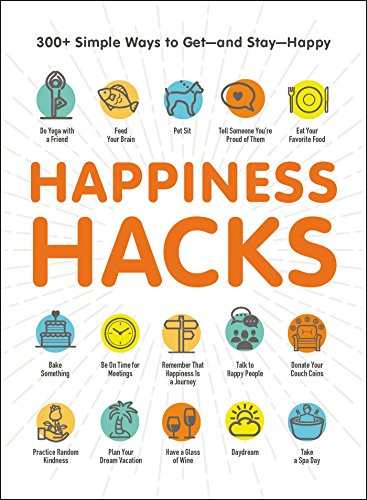
Staying happy is way more difficult than we think it is. Life is full of ups and downs, highs and lows and a never-ending cycle of work and the pressure of society. In between all these things we need to find happiness as well that gives meaning to our life. Without staying happy we can not live our life to the fullest.

Try out something new or something different from your daily life and incorporate certain habits in your life that will help you to stay satisfactory and earn happiness in life.


Avoid comparing yourself to others
This is easier said than done, but try to avoid comparing your social life to anyone else’s. It’s not the number of friends you have or the frequency of your social outings that matters. It’s what works for you.

Remember, you really have no way of knowing if someone with a bunch of friends and a stuffed social calendar is actually happy.

Take a phone break
Noticing a theme here? Cellphones and social media have undoubtedly changed the concept of being alone.

Is anybody really alone when they can pick up their phone and text or call just about anyone? Or check in on what that high school acquaintance is up to without even having to talk to them?

Take a step back from social media
Social media isn’t inherently bad or problematic, but if scrolling through your feeds makes you feel left out and stressed, take a few steps back. That feed doesn’t tell the whole story. Not by a long shot.

You have no idea if those people are truly happy or just giving the impression that they are. Either way, it’s no reflection on you. So, take a deep breath and put it in perspective.

Perform a test run and ban yourself from social media for 48 hours. If that makes a difference, try giving yourself a daily limit of 10 to 15 minutes and stick to it.

Harness the Power of Optimism.

In the given situation, the provided topic could seem a little absurd like how can we search for positivity in the present scenario. But once you start finding happiness in day to day life, you will end up counting thousands of blessings that will develop a sense of gratitude. The more you look deep into your life, the more satisfied you feel.

Not everyone’s life is the same and ups and downs are parts and parcel of life. Life isn’t a fairytale that we assume as a kid. It’s pretty much living in practicality with low or no expectations. To top it all, the pandemic is here to create havoc and causing distress, which is challenging and quite difficult to cope with.

To deal with such situations we need to be prepared to strengthen up ourselves to tackle the grim situations. And for that matter, we need to harness positivity, that isn’t a walk in a park, I presume.

Looking for positivity is quite challenging because it’s not like you will just sit and think like what all things do I’ve to be grateful for rather you need to develop few disciplines that will make you feel grateful and help in sighting positivity in every aspect. Moving on to the disciplines, that I mentioned before, it could be waking up early in the morning, accomplishing your little morning devotions, working out, meditating or just going for a walk early in the morning.

The aforementioned methods might sound a little too dramatic like who does that for real, but trust me it is very effective and equally helpful that change your entire perspective and will offer an astounding viewpoint to relive your existence.

Confliction of one's mind

We all are well aware of the different conflicts in our minds. They arrive like impatient thunderstorms,  one right after the other. The times when there’s isn’t any hope to hold onto, we may thrive by words that might explain our mental states. Although, we often fail to do so and start drowning ourselves into the darkest depths of nothingness. 

One thing that never gets old in such situations is writing down your rough thoughts somewhere away from the eyes of anyone, and reading it later at a better stage or when you start feeling yourself again. 

WAYS TO CLEAR YOUR MIND

In a generation where social status depicts one’s nature and affects their state of mind, we often find ourselves getting lost in the world which we created for others to see us like. We should be capable of creating a difference between what’s imaginary and real, that not only helps us stay sane but provides a boundary to the inevitable confusions.

When we invariably replay a situation and can’t stop thinking about it, or think how we messed up; the more we delve into it the more that situation seems to tighten the blank spaces in our mind and start congesting it.

It’s normal to get stuck in the past and have a lot many things playing in your mind at the same time, our mind has a tendency to work funnily.

Instead of putting yourself in a self-inflicting pain, try performing the enlisted activities which will probably distract the course of your mind for the time being:

  • reconnect with an old friend
  • play and spend time with your pet
  • don’t force yourself to be productive
  • go easy on yourself and do some pampering
  • cook yourself an elaborate meal
  • watch youtube, movies and listen to an upbeat music
  • take a long drive to nowhere 
  • take a walk in nature
  • go out with a friend and hangout
SELF VALIDATION

We are forced to put ourselves in a position where it’s tough to concentrate on peace of mind, by comparing ourselves to the person who is superior to us. But we need to understand the concept of self-satisfaction and being content in what we already have.
We should stop comparing ourselves to others because we are unaware of the life that they have behind the scenes, or away from the eyes of the world. It’s natural to get inferiority complexes but that shouldn’t mess with one’s mind.
The positive motivation or the rush and drag to push ourselves to a better position is healthy, but if it makes one sulk and questions their existence then it won’t take long into turning toxic and harmful for the mental peace. 
You have had enough of the taunts and opinions that society has for you, you don’t have to necessarily add yours to it too. If not others, make yourself so focused and proud in what you do that even your conflictions think twice to reoccur in your mind. 
“Be who you are and say what you feel, because those who mind don’t matter, and those who matter don’t mind.”
― Bernard M. Baruch

DREAMS


 YOUR DREAMS ARE POSSIBLE


We may be rich or poor, kind or cruel, beautiful or ugly, smart or weak but still we can accommodate a dream. Most importantly don’t ever have a small dream:)Some people may not agree with this rather they would like to criticize on this.


IT IS POSSIBLE EVEN IN THE HARDSHIPS:

The biggest fear is how to face the dream because of the present situations we might have right now or the threat of the future, but not let the tomorrow’s dream destroyed by today’s situation because of the fear. The biggest fear is how to face the fear. At once, if we face it with full potential, we will able to shape our future. It is all about the small things which creates a great impact on the future.


PAINT YOUR DREAMS:

Painting our dreams is the best way we can do! At once when we come to know what we want at the right time we will be knowing how to get it also. Dreams should be balanced with the holistic vision. With the millions of the resources in the world, plenty of opportunities which we have in the world behind us and it really becomes silly when we start making small or selfish dreams. No one would like to carry waste things in the Audi right! Even though it has the capacity to withstand it, we won’t do it as it does not perfectly. If some things are accepted by many it is not that we are also supposed to do that. Check out your time, area of interest and do great things because we are having power to do that.


DISCOVER YOUR DREAM:

When we come to know about what dream is actually, we can start realizing the true power of it. We start living in it to the maximum. Sometimes, we never realize the amazing talent inside us, we are all only learnt to see others talents and admire them which makes us to behave small and worthless before others. This kind of attitude is to be removed once when you realize at once.

Passion is what your dream is! We are able to distinguish between the real and the fake dream. If so, then we are also able to find the way for our dream. Successful persons are those who have a burning passion with dream inside them and that’s why they are successful today and that success should not be a narcissistic one. 

Make a little star in you to shine bright in the darkest times. You are still unique even though we live in the mid of varied of varied people. It is good to dream, but better to dream and work. Faith is might but action is mightier. This is because action speaks louder than words.


NOTHING IS OVER UNTIL YOU RACE!


If you have decided to grow and not ready to face challenges and hard times, there is no liveliness in that. No bird goes to a dry land, no cattle go to the empty field, no human can face a dream without the challenge and this is the bitter truth.

Make your environment suitable for your dream. Have likeminded people around you. No matter how hard the life goes or how people comment on your attitude, it is still good to achieve your powerful dream with broad vision.

Don’t work your boss or leader, work for your dream because that can only give you satisfaction.

Don’t wait for your winter, work to change your summer a super cooled one.

“A gem cannot be polished without fiction, nor man without trials”, start facing your challenges and achieve your dreams.


Positive Psychology

Positive psychology is one of the newest branches of psychology to emerge. This particular area of psychology focuses on how to help human beings prosper and lead healthy, happy lives. While many other branches of psychology tend to focus on dysfunction and abnormal behaviour, positive psychology is centered on helping people become happier. Positive psychology is designed to “complement and extend the problem-focused psychology that has been dominant for decades,” explained the late Christopher Peterson, author of “A Primer in Positive Psychology” and professor at the University of Michigan, in a 2008 article published in Psychology Today. “Positive psychology is…a call for psychological science and practice to be as concerned with strength as with weakness; as interested in building the best things in life as in repairing the worst; and as concerned with making the lives of normal people fulfilling as with healing pathology,” Peterson wrote.

According to leading authorities in the field, Martin Seligman and Mihaly Csikszentmihalyi, positive psychology will help achieve “scientific understanding and effective interventions to build thriving in individuals, families, and communities.” In order to understand the field of positive psychology, it is essential to start by learning more about its major theories, applications, and history.

History of Positive Psychology

“Before World War II, psychology had three distinct missions: curing mental illness, making the lives of all people more productive and fulfilling, and identifying and nurturing high talent,” wrote Seligman and Mihaly Csikszenmihalyi in 2000. Shortly after WWII, the primary focus of psychology shifted to the first priority: treating abnormal behavior and mental illness. In the 1950s, humanist thinkers like Carl Rogers, Erich Formm and Abraham Maslow helped renew interest in the other two areas by developing theories that focused on happiness and the positive aspects of human nature.

General interest in positive psychology has grown tremendously since the concept was introduced. Today, more and more people are searching for information on how they can become more fulfilled and achieve their full potential.

Uses

Positive psychology can have a range of real-world applications in areas including eduction, therapy, self-help, stress management, and workplace issues. Some of the major topics of interest in positive psychology include: Character strengths and virtues, Flow, Gratifications, Gratitude, Happiness, Pleasure, Helplessness, Hope, Mindfulness, Optimism, Positive thinking, Resilience .

Impact of Positive Psychology

Some of the major findings of positive psychology include: Money doesn’t necessarily buy well-being, but spending money on other people can make individuals happier, People are generally happy, Some of the best ways to combat disappointments and setbacks include strong social relationships and character strengths, While happiness is influenced by genetics, people can learn to be happier by developing optimism, gratitude, and altruism, Work can be important to well-being, especially when people are able to engage in work that is purposeful and meaningful.

Potential Pitfalls

Positive psychology is often confused with positive thinking, and misconstrued as self-help tactics rather than research-backed theories. Positive thinking is a way of thinking ourselves into better behavior and greater resilience, rather than behaving our way into a different frame of mind. Positive psychology, on the other hand, is the scientific study of what makes people thrive. It focuses on behaviors that can lead to a more optimized frame of mind as well as on thought patterns that lead to more functional behaviors.

Insecurity

Everyone feels a little unsure at times. As humans, we constantly think, and some of our thoughts can be filled with doubt. This can lead to thoughts of insecurity. Too much insecurity can lead to other problems — in relationships and in your everyday life. However, there are ways you can work through your insecure thoughts and live life more confidently.

What Is Insecurity?

Insecurity is a feeling of inadequacy (not being good enough) and uncertainty. It produces anxiety about your goals, relationships, and ability to handle certain situations. Everybody deals with insecurity from time to time. It can appear in all areas of life and come from a variety of causes. It might stem from a traumatic event, patterns of previous experience, social conditioning (learning rules by observing others), or local environments such as school, work, or home. It can also stem from general instability. People who experience unpredictable upsets in daily life are more likely to feel insecure about ordinary resources and routines.On the other hand, insecurity can have no definite, external cause. Instead, it can appear as a quirk of personality or brain chemistry. Understanding the nature of insecurities can help you manage your own and offer others the support they need.  

Types of Insecurity:

There are almost limitless areas of potential insecurity. Moreover, insecurity often bleeds over from one area of life into another. However, there are some types of insecurity that appear frequently.

Relationship Insecurity: One of the most common kinds of insecurity concerns relationships or “attachments.” Attachment theory originated out of a desire to connect the attachment patterns of early childhood to later relationship patterns and expectations. When a child’s “attachment figures”, often parents or guardians, aren’t reliably available and supportive, the child often feels insecure, forms a negative self-image and relationship models, and experiences greater emotional distress and maladjustment later in life. Relationship or attachment insecurities don’t need to begin in early childhood. They can arise wherever previous experience or personal insecurity undermines someone’s security in their closest relationships.

Job Insecurity: Job insecurity occurs when you are anxious about your continued employment or about the continuation of certain benefits attached to your employment. It can be triggered by anxiety over your own job performance or anxiety over factors beyond your control, such as the economy, industry trends, workplace conflict, or the danger of company restructuring or failure. High rates of unemployment and temporary work increase job insecurity on a national scale and contribute to widespread mental health problems.

Body Image Insecurity : A common source of insecurity is body image. Many people feel insecure about the way they look and question whether they measure up to an imposed ideal. There is no necessary connection between actual body health or appearance and body insecurity. People of all body types can experience this type of insecurity.

Social Insecurity/Anxiety : Another common type of insecurity surrounds the way we are perceived by our peers and the ease with which we interact with them. This insecurity can be a recurring, low-level problem or can blossom into full-blown social anxiety disorder or social phobia.

Signs of Insecurity:

Signs of insecurity are as variable as the condition itself, but there are some common tendencies you can look out for.

Low or Superficial Self-Esteem : One sign of insecurity is low self-esteem or negative self-image, particularly when that image seems to be inconsistent with external observation. Low self-esteem means you think badly about yourself or your abilities. It can lead to other problems, especially concerning mental health. Talk to a doctor if your self-esteem is very low.Because the measurement of self-esteem generally relies on self-report, insecurity can lead to superficial self-esteem. People with insecurity often want to appear secure, and their explicit comments may be at odds with their automatic responses to certain stimuli. Deliberate self-misrepresentation or false behavior/information on social media can also be a sign of social anxiety. The act of faking then reinforces the social insecurity.

Perfectionism : The inability to be satisfied with progress and need to control and refine projects until they’re perfect can be a sign of insecurity. It stems from the sensation that you or your performance is never enough. It can appear as a manifestation of insecurity in any area of life but is frequently found in cases of job insecurity and body insecurity. Eating disorders, for example, often appear along with both harmful perfectionism and attachment insecurities.

Self-Isolation : Social insecurity can lead people to avoid social interactions, isolating themselves. Sometimes these people prefer to interact virtually in internet situations they feel they can control.

Anxious or Avoidant Attachment Styles : Attachment insecurities often result in problematic attachment styles, or dysfunctional approaches to relationships. The two most common are anxious or avoidant attachments. Anxious attachment styles are characterized by emotional dependence (relying on someone else for your emotional well-being), a fear of being alone, and fantasies of perfect relationships that can never be fulfilled. Avoidant attachment styles also stem from insecurity but go in the other direction. People with this style tend to keep relationships superficial and disengage from more intimate connections.

Poor Job Performance : Job insecurity (not having a stable job) can work to motivate some people, but it more often results in poorer performances. It can lead to absenteeism (avoiding work), turnover intention (wanting to change jobs soon after starting), disengagement from colleagues and in group projects, and poor work attitudes.

Depression or Anxiety : All types of insecurity can lead to decreased mental wellness. Depressive or anxious behavior or thinking is often an effect of insecurity, particularly when that insecurity produces (or is accompanied by) erroneous beliefs and patterns of thought.

Dealing with Insecurity :

Occasional insecurity is a natural part of life. For deeper and more longer-lasting feelings of insecurity, however, professional therapists can help you sort through your emotions and develop strategies for everyday life. In dealing with insecurity, there are a couple of helpful tips to keep in mind.

Social Networks Matter : Broad and meaningful social networks — frinedships, relationships with coworkers, and more — help to lessen both insecurity and its negative effects. There’s an inverse correlation between healthy social networks and insecure attachment styles. Having a wide circle of friends and many close connections allows you to develop the tools and confidence to engage in deeper adult relationships.Developing good friendships both in and out of the workplace also has a proven record of success as a coping strategy that helps prevent job insecurity, depression, and general anxiety. People who disengage from colleagues in response to job insecurity more frequently suffer in their mental health and job performance.

Trust Takes Practice : While having an overly trusting behavior creates its own problems, ask yourself if you have any reason to distrust expressions of affection or liking from others. People with insecurities sometimes express doubt and perceive rejection in everything from partner relationships to new acquaintances. These expressions can be self-fulfilling. Practice taking displays of interest at face value, something that can be easier in more casual relationships. You can build up the confidence to accept deeper affection and intimacy.


7 powerful ways to change your life

 LIFE CHANGING TIPS


1.EXPECT NOTHING, ACCEPT EVERTHING


The only way to not get disappointed is to expect nothing from others. Now-a-days whoever we ask the question How are you?
They give the answer as I am stressed, I have faced many disappointments for the past  days and so on from which we can analyze that they being stressed. When disappointment comes, start believing yourself, as nothing cannot be changed in one night. Stay calm for few seconds Breathe., Don’t let the problems consume your mind. Because ones it is consumed by our mind and should it disturbs our dreams and we are unable to paint our dreams.
Make a clear vision and move forward.

2.SEEK GOOD IN OTHERS


start seeing good things in others which helps you to boost your energy without knowing yourselves. start now, start small. which seems to be small can do great things. Do not make things complicated and overlook on actions. Make corrective actions and control your life. Keep your own promise and make affirmatives and do good things each day. Trust your instincts as it may convey you something. Do things in great way.


3. FOCUS ON WHAT MATTERS YOU

Pursue your dream, it is still important to sit and draw and make your own budget to build something. But people whose destination is excellence, do not retire with a dream. They turn their dream into reality. Happy are those who dream dreams and are ready to pay the price to make them  come true. All dreams come true only if you have the potential to pursue it. Don’t wait till the winter or don’t wait for anyone. Start early, do it  right now.

4.MONEY IS THE ILLUSION


Looking rich is not being rich or look poor is not actually being poor. The rich people are those who have good health and freedom. Money does not buy you happiness. Money only buys you time, which gives you freedom. But the road to the excellence only depends on you.


5.MASTER YOUR EMOTIONS:


You are very precious. Don’t get lost in people and waste your time. Before going to sleep, forgive everyone, don’t get mad. Once you struck in this it takes time to get recover. Anger blurs our vision. We will be defeated if we are become addict to someone. Time heals everything. Focus on things which you can control. Future is the fruit of happiness. The best is yet to come.


6.TAKE CARE OF YOUR THOUGHTS:


Pain is unbearable. Psychology says if we become far away from the person who is close to our heart that pain is equal to the physical pain. You need to adapt and move on, pass through, this too shall pass. But most of the pain comes only by our thoughts. So, once if we control our thoughts, we would be able to control our mind. Have faith and keep going.

7. ATTITUDE MATTERS:


Reframe things. Do it alone, do it scared, do it .. start building your future. Control your actions and reactions. Though some bad things happen, you will always be able to control your reactions. It all starts in your mind. Once you control you don’t react too much. This will not be reflected and that is how one can reframe his attitude. Don’t you dare stop anything because we are today!


TAKE CARE OF OUR RIGHT SEEDS!


Everyday is a new beginning

Every Day is a New Beginning
No matter how bad was yesterday, it has passed and today is a new beginning and we have the opportunity to make good of what we have failed to achieve yesterday, so that we could achieve a better result in the future.

Every day of your life is a new beginning, not just the first day of the year. You can make Daily Resolutions, not just New Year Resolutions. Any day is suitable for making them. Regard every day as the beginning of your new, better, and happier life. Start every day of the year with feelings of happiness and with the anticipation that great and wonderful things are going to happen.

Every day when we awake, it is a different day than the one before. Another brand-new 24-hour day to explore and experience! By accepting each new day with a fresh, enthusiastic attitude, you can empower your life and make it more joyful. What could be blocking our realization of a new day? It stems from our ideas about ourself, others and the world around us.

When dealing with yourself, there are two things you can do — change your beliefs and change your behavior. If you believe that you are always late (and want to change that), then stop saying that you are always late. When you tell yourself “I’m always late,” the body and mind takes that as an instruction. In the same fashion, if you start affirming “I’m always on time,” that is taken as a directive and your subconscious and conscious mind will work at creating your new reality.

So start each day as a new day. Wipe the slate clean of grudges and any opinions you carry about yourself and others. Give people (including yourself) a chance to change. Give peace a chance! Realize that everyone is growing and evolving every day. We can assist in that process by seeing possibilities in people rather than limitations.

Each day truly is a gift and some people don’t even wake up to see the light of a new day! When most people do wake up and hear the alarm, they hit the snooze button and turn over to catch a few more z’s. Before they even get out of bed, they are avoiding the gift of the new day.

Don’t take the day for granted, and even this in itself will give you a new perspective. How we start our day in the morning can set the tone for the rest of the day. If you “get out of the wrong side of the bed”, have a negative attitude, grumble and complain while getting ready in the morning, and don’t eat a healthy breakfast, don’t be surprised if the rest of your day is less than satisfactory. 

Give yourself a chance! Give everyone the room to grow by expecting the best from them. Rather than assuming people will behave ‘negatively’, give them the benefit of the doubt. Trust in the highest nature of everyone.

If we want to be a better person, if we want loving relationships, we start by changing our beliefs, our expectations. Then we change our actions. Behave more lovingly. Flavor our encounters with people to reflect more acceptance and love.

Expect the best! See people as the Divine Beings that they are. Visualize ourself and the world as a loving, peaceful, harmonious place. Give power to the best that we desire…

It’s all possible! After all, it is a new day. Treat yourself to a new perspective every day. Start to expect miracles and they will happen!

EVERY CLOUD HAS A SILVER LINING

“With the dawning of a new age, after pandemics have done their work, we may find ourselves at the watershed of singular considerations about how to handle the changes that revolutionize our lives, and trace the silver lining in a new reality. (What do they think behind their dirty aprons?)”
― Erik Pevernagie

TASTE THE POWER OF THE ‘PROVERB’

Clouds are the symbol of grave period of life and the silver lining as mentioned refers to the bright, contented, or enjoyable times. It is very obvious that the entire proverb is about optimism. If an individual is positive even in the murkiest of periods, then indeed things will ultimately be in his/her favour. However, if the individual has a pessimistic approach towards life, then no opportunity in his/her life can ever make him/her gratified and he/she will end up in difficulties. Ups and Downs are part and parcel of life. In fact, if these did not exist, life would have been boring and meaningless. All these understandings enhance us in some way or the other and help us to become strongminded individuals. In fact, all the hardships and difficulties we face in life have the effect of making us richer in experience and educate us to embark upon adverse situations. Therefore, it can be appropriately said that ‘Every Cloud has a Silver Lining’.

HOW DARKNESS PENETRATES OUR LIVES

To elucidate the above, let us analyse the problems of a person called Kamal. He was an average person, coming from a middle-class family. His parents, who were well-educated themselves, wanted him to have the best education and so he was admitted to the best school in the city. As a student, he outshined neither in academics nor in sports and was always placed in the middle of his class in both. Even in extra co-curricular activities Kamal did not leave behind any distinctive mark. Being an obedient child, he was always guided by parental advice, which prevented the development of his personality and as a result, he lacked self-confidence.

AN IRON DETERMINATION PAVES THE WAY

However, Kamal’s life went disordered with the sudden demise of his father in an accident. The family was staring at imminent poverty because his father was the sole bread-winner and the pension that they were to get was not enough to fund the education of both Kamal and his younger sister. All of a sudden, the entire burden of the family descended on Kamal’s young shoulders, but that was a blessing in disguise because the misfortune made him resolute. He developed into a very strong-willed individual who was ready to take on the world legitimately. Kamal took stock of the situation and started providing private tuitions to supplement the family income. In doing so, he realized that his actual calling in life was to be an academician. Gradually, he cleared all the examinations with flying colours and at a very young age joined an elite institution as a there has been no looking back since then. Had the disaster never occurred, Kamal might have followed and done what his parents believed fit for him instead of realizing his own potential and aptitude in life and society would have been left without a very good teacher.

SO…BE OPTIMISTIC

Like Kamal, there are millions of such individuals who suffer major hindrances in their lives but still manage to pull through. So, one should never feel hopeless because of problems, as no individual in this world leads an uncomplicated existence. Whenever clouds of worries appear, they always carry an indication of something better that might happen.So, we must be inspired from such events and should always move frontward in life even if it is hard for us to do so. Strong willpower and undying hope pave the way for success to be achieved. Every single problem in life is like a riddle which hides some solution and a mindful search for that solution open many closed doors of achievements.

Bhagvad Gita

The Bhagavad Gita or the Song Celestial is one of the most sacred Scriptures in the world. It is a constant companion to men in every walk of life. It is a string of verses which were spoken by Bhagwan Krishna to Arjuna at the battlefield. It is a part of the epic Mahabharata.

The Bhagwad Gita is the most widely read and revered religious text of the world. The State of Haryana is proud of the fact that this legendary epic was orated by Lord Krishna at Jyotisar (Kurukshetra), which is located here.

Further, it was also compiled by Veda Vyasa on the bank of river Saraswati, which was once a perennial river of this State. Hence, the greatest philosophy of life is associated with Haryana because Lord Krishna had given the Supreme Sermon to Arjuna on this land.

This poem is long poem, which, in fact, describes the gist of life, karma and duties of an individual. Lord Krishna narrates to Arjuna how he should do his duty and become a part of the Ultimate Soul. This poem forms the sixteenth chapters (adhyayas) of the Mahabharata, written by Veda Vyasa. It is in the form of. Sanskrit hymns (Shlokas). Let us study, in brief, what The Bhagwad Gita tells every human form of the world.

People of modern generation are increasingly finding that in spite of the material comforts abundantly available, there is a void in their life which cries to be filled in. The crisis is psycho – spiritual and it exists whether we realize it if not. There is no other book like the holy Bhagavad Gita, which fills in the void. All the teachings are suited to the modern inquisitive mind.

I also Read Gita whenever I get time

The Bhagavad Gita teaches socially oriented positive action. The theme is Lok Sangraha, which means integration, regulation, protection, and preservation of the society.

Gita is among the three main scriptures of Hindu Dharma, others being The Upanishads and The Bhrahmasutras. These three are together known as Prashthayanas. There are 18 chapters in the Gita, and it contains 700 verses. The Mahabharata contains a canto titled as Bhishma Parva and chapters from 25 to 42 of this Parva constitute the Gita. Gita Jayanti falls in the month of December ( Mrigashirsha ) . The Gita was spoken by Lord Krishna to Arjuna in Dwapar Yuga. And in the Hindu calendar, the Kali Era, the present era, is dated with reference to the day of Gitopadesha.

Krishna, presented in the poem as Vishnu in the flesh, is the spiritual teacher who recited the Gita. Most of The Bhagwad Gita consists of a dialogue between Krishna and Arjuna on the battlefield on Kurukshetra.

That is where the armies of the royal cousins, the Pandavas and the Kauravas, face each other for the decisive battle to end their feud. The Bhagwad Gita debates the right and wrong of conflict. It also discusses a person’s duty to himself, or herself, his or her fellow human and God.

It explores God’s relationship with humans. It shows how people can begin to understand God and thus, free themselves from the burden of Karma (deeds done in previous lives and in this present life).

Krishna instructs Arjuna about three ways to have union with God. The first is Karma Yoga (the Way of Action). Every person should do his or her duty according to caste, without hope of personal benefit or ambition, but with faith in God. Those who go through the motions of performing rituals without care or interest, or do their work only for profit, will never be released from the cycle of birth, death and rebirth.

The Bhagavad Gita is the Crown-jewel of India’s spiritual wisdom.

The Bhagwad Gita provides a summary of the Hindu religious thought and practice; much of it is based on the Upanishads. These are part of the Vedas, the oldest sacred books of Hinduism. It gives a methodology for developing belief as well as for forging a personal relationship between the deity and his/her worshipper. It offers a new approach to the full perception of, and absorption in, Brahman.

The Bhagavad-gita is such an important scripture that it can help us to get out of the cycle of birth and death. Anyone who recites Bhagavad-gita with devotion will go to the spiritual world at the time of death. If one reads Bhagavad-gita sincerely the reaction of one’s past deeds will not act upon one.

According to me everyone should read Bhagvad Gita whenever you feel low and cannot find a reason to live. By reading Gita you will be able to see your life in a positive way. You’ll know about your soul needs and whatever situation you are facing today that is earned by your past life karma nobody else is responsible for that. If you focus on your karma and keep a check when you are creating negative karma it will save you from increasing your negative karma. By surrending to Bhagwan and focusing on your soul you can definately change your life for better.

Overcoming failure

Each one of us has failed at least once in some aspect of our lives. But that is never the end, you must try again. But, if the particular field that you failed in, does not interest you and you are doing it because of peer pressure only, then you should find something else that interests you and someday you will succeed in that field. What some people may consider success other people may consider failure so it depends on person to person and their ideology of success and failure.

Sometimes the fear of failure stops us from even trying something for the first time. For example, some kids who might have been rejected at school competitions may feel the fear of failure for the rest of their lives. Some people are not able to cope up with failure and they choose to drop that field forever, that happens because a fear of failure develops in them. They fear the judgment of society, and society does not help much, there are more people to discourage you than people who encourage you. But, you need to see that these people do not matter, you must ignore them and move on with your journey.

When you think that you should quit because you failed once or twice, you should think positively, and imagine the scenario where you achieve your goal in the next try. Give it a try once again, what could be the worst outcome?

Play practically, you should always have a backup plan too. If you are giving it your last try then plan B will make you feel more secure and safe that even if you fail you will have another plan. Set smaller goals, it will help you in achieving your final goal more efficiently.

When you experience the fear of failure, you procrastinate a lot, your anxiety levels are increased and you become reluctant to try new things. However, if your goal is important to you, you must not give up on it no matter how many times you have failed, no matter how many people say negative things to you.

SOME QUOTES BY FAMOUS PEOPLE TO MAKE YOU FEEL BETTER:

  1. “Many of life’s failures are people who did not realize how close they were to success when they gave up.” —Thomas Edison
  2. “A person who never made a mistake never tried anything new.” —Albert Einstein
  3. “Success consists of going from failure to failure without loss of enthusiasm.” —Winston Churchill
  4. “Success is most often achieved by those who don’t know that failure is inevitable.” —Coco Chanel
  5. “Failure after long perseverance is much grander than never to have a striving good enough to be called a failure.” —George Eliot
  6. “When you take risks, you learn that there will be times when you succeed, and there will be times when you fail, and both are equally important.” —Ellen DeGeneres
  7. “It’s fine to celebrate success but it is more important to heed the lessons of failure.” —Bill Gates

LIFE LESSONS FROM COVID-19

Everybody was stuck in shock when we all heard about CORONAVIRUS. But we didn’t think that it would have such a worst impact on our lives. In fact, we didn’t realize its seriousness at first. When the coronavirus slowly started to spread all over our country, we started to realize the seriousness. As we all know, due to the pandemic, the whole of India was kept shut for many days. Every company went through its worst phase. Gradually, we accepted the scenario and started doing the unthinkable. Schools started taking classes online, IT and other companies functioned through work from home and many others remained pathetic not knowing what to do. Many families couldn’t get enough money for daily necessities. Moreover, they had to spend more than normal for the pandemic made us spend more on medicines and sanitation. With all these, on one hand, we got to learn a lot of new things.

First, we learned to spend time with our family. Before the pandemic, we would live in our own way. We don’t spend time without family. We had our own reasons like returning home after tight schedules either from school, college, or work, and even after that, we had certain tasks to be accomplished. We would spend most of our time in the outside world and only had time to freshen up and relax ourselves to start off the next day. Due to this lockdown, we were not allowed to step out of our houses which made us spend quality time with our family. Also, by this, we realized the value of family and relationships. Not only this, we learned to value life. We realized that life is the biggest gift one has been bestowed with. After losing our loved ones, and seeing our near and dear losing their loved ones, we started being grateful for being alive at least. These were the biggest lessons life taught us through this pandemic.

Lockdown restricted us from using vehicles and this paved the way to reduce air pollution. Now, we see and hear that our EARTH is healing. Holes in the Ozone layer are disappearing. As a result, the environment changed in a good way. We are now released from breathing the poisoned air and the quality of the air has increased. 

Another one, we started believing in our natural Indian medicine. Although we have many allopathy medicines for boosting immunity, we all made decoctions using Tulsi leaves, turmeric, pepper, ginger, lemon, honey, and so on. These were the traditional medicines prescribed by our ancestors to prevent our bodies from a virus attack. Literally, every good thing which was ignored before was given place and priorities. As time went by, we started to know how to maintain a healthy lifestyle and good hygiene. We started eating healthy food to sustain this pandemic. We all realized the importance of regular exercises and yoga. They create such a beautiful impact on our bodies. We learned one main lifesaving thing which is very much essential no matter whatever the situation may be, positivity. Positivity plays a crucial role in our life behind the scenes. Researches show that positivity helps in increasing the chances of recovery from any disease. It makes us feel good, boosts our energy and confidence. It is said to enhance mental productivity and inner strength.

We explored the new side of ours. We got to know more about ourselves and self-love and care. Last but not the least, we all understood the pain and struggles of spending our whole life inside the house as faced by all the housewives and mothers only when we were forced to confine ourselves inside the four walls of the house. We started sharing household chores and other work equally with our family. This definitely gave our mothers some relaxation for which they earned for many days. 

Going by the quote, “Every evil has its good and every ill an antidote”, we also had many good things that happened in this pandemic. All I would say is be happy with all the goodness around us and stop complaining about the problems.