One needs to aim for the sky, to achieve as much as a mountain in the bargain Success in life comes only to those who are ready to work hard for the same. The key to success is to have an aim in life and the earlier you attain this aim, the better.
In spite of all the new options in today’s times, there are those age-old professions that are a favourite with most of the youngsters all the time. These include, the profession of a doctor, an engineer and that of a teacher or an advocate. I too, wanted to be part of one of these noble professions. If my memory proves me right, I always wanted to be a teacher. What is exciting about teaching is that this is one of the few professions where you are actually dealing with living beings. To make a difference to a child’s life or to positively influence a child in such a way as to bring about good change, is a great achievement in itself. Somewhere, along the path, we are also the product of the reinforcements made by our parents and teachers, one way or the other.
However, even our Puranas reinstate that the teacher or the guru’ comes above God. The reason being that teacher is the person who shows you the way to God, or teaches you, what God is all about. So, if the enlightenment of God and the things around you comes from one particular force, then that is the person to be revered, first.
The responsibility being immense, it’s not an easy job either. If the young minds have to look forward to you as a source of knowledge, then you need to be one. With the quantum of knowledge increasing day by day, it’s a difficult task to keep abreast of the upcoming information. Apart from all this, what is more important in this profession is whole hearted dedication and willingness to work beyond the restrictions of time and assigned duties.
With all this view in mind, I would like to pursue my ambition to be a teacher. It’s anyhow of least importance to assert which subject I would specialize in because subject is not as important, as to know, how to effectively teach it. Be it Maths. English or Science, to develop a flair and love for the subject is a teacher’ s greatest challenge. A bad teacher can always generate an aversion towards the subject in the minds of the children, just by not giving the subject a proper treatment. My ultimate aim would be to be such a teacher who would make a difference in the lives of young minds and bring about their overall development.
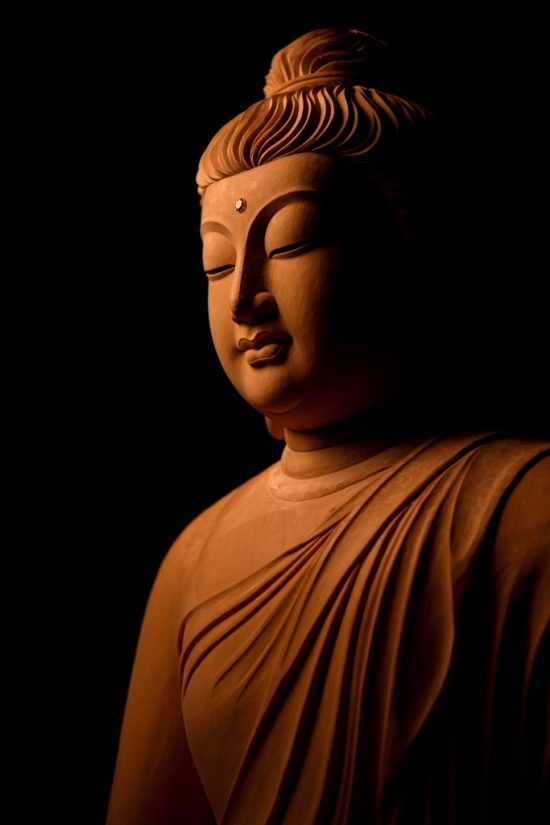
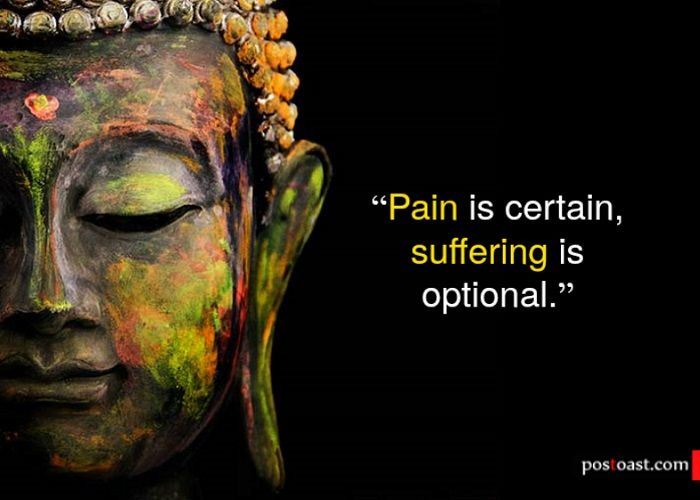
We are what we think. All that we are arises with our thoughts. With our thoughts, we make the world. Peace comes from within. Do not seek it without.
Lord Buddha
Introduction.
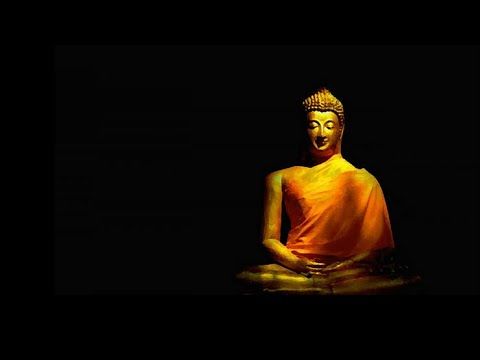
He was a spiritual personality . An ancient teacher and enlightened many . A founder of world religion Buddhism . He was popularly known as Gautama Buddha (also known as Siddhattha Gotama or Siddhārtha Gautama or Buddha Shakyamuni ) .
The Enlightened One who rediscovered an ancient path to release clinging and craving and escape the cycle of birth and rebirth. He taught for around 45 years and built a large following, both monastic and lay. His teaching is based on his insight into the arising of duḥkha (the unsatisfactoriness of clinging to impermanent states and things) and the ending of duhkha—the state called Nibbāna or Nirvana (extinguishing of the three fires).
Buddhism
Buddhism, one of the major religions and philosophical systems of southern and eastern Asia and of the world. Buddha is one of the many epithets of a teacher who lived in northern India sometime between the 6th and the 4th century before the Common Era.
The title buddha was used by a number of religious groups in ancient India and had a range of meanings, but it came to be associated most strongly with the tradition of Buddhism and to mean an enlightened being, one who has awakened from the sleep of ignorance and achieved freedom from suffering.
According to the various traditions of Buddhism, there have been buddhas in the past and there will be buddhas in the future. Some forms of Buddhism hold that there is only one buddha for each historical age; others hold that all beings will eventually become buddhas because they possess the buddha nature (tathagatagarbha).
According to Buddhist doctrine, the universe is the product of karma, the law of the cause and effect of actions, according to which virtuous actions create pleasure in the future and nonvirtuous actions create pain.
Your work is to discover your world and then with all your heart give yourself to it.
Lord Buddha
History
Gautama Buddha ( born c. 6th–4th century BCE, Lumbini, near Kapilavastu, Shakya republic, Kosala kingdom [now in Nepal]—died, Kusinara, Malla republic, Magadha kingdom [now Kasia, India]).
Buddha is one of the many epithets of a teacher who lived in northern India sometime between the 6th and the 4th century before the Common Era.
Learnings from Gautama Buddha.
1. “Three things cannot be hidden: the sun, the moon and the truth.”
2. “You will not be punished for your anger; you will be punished by your anger.”
3. “You can search throughout the entire universe for someone who is more deserving of your love and affection than you are yourself, and that person is not to be found anywhere. You, yourself, as much as anybody in the entire universe, deserve your love and affection.”
4. “We are shaped by our thoughts; we become what we think. When the mind is pure, joy follows like a shadow that never leaves.”
5. “Believe nothing, no matter where you read it, or who said it, no matter if I have said it, unless it agrees with your own reason and your own common sense.”
Every individua ‘s life and work are closely related to his environment . Man has progressed in various fields of life such as industrialisation , mechanisation, transport and science, etc. Therefore, this age is called an electronic age or space age. But on the other hand, this development has created such conditions that a person may get injured anywhere and at anytime.
In spite of good measures aimed at industrial safety and the development of safety devices and techniques, the number of accidents is still high in industries and specially in day to day life. Indeed, there is no definite time of such injuries. These can happen to anyone, anywhere and at anytime. Injuries usually occur in industries and on the farm, during the repair, maintenance and operation of vehicles of various kinds, during games and sports and in various situations everyday. These often happen by accident, so it is impossible to anticipate the time and place of an accident. Someone may get fractured, another may be bitten by snake. So, it can be said that every individual is trapped in one way or the other by accidents. In fact, it is very difficult ton get medical aid to victims at the sport of the accident. At that moment, some immediate possible aid is required to the victim. So, first aid is the first help which is given to the wounded or accidental victims before the arrival of the doctor.
In other words, ” It is an immediate and temporary care given to a victim of an accident or sudden illness before the services of a physician is obtained.”
In can also be said that first aid is that aid is that aid which is provided to the injured in case of an accident, injury or sudden illness. It enables the trained persons to render the help to preserve life, promote recovery of the injury until the arrival of the doctor.
In fact, the area of field of sports and games is such a field, where getting injured is very common. Any player can be injured at least once during his/her sports career. The facilities of a qualified doctor are available in national or international level competitions but usually such facilities or services of a doctor are not available during practice, training or competitions of normal levels. The teacher of health and physical education should also have enough knowledge of first aid so that he may provide first aid to the players at the time of training and competitions.
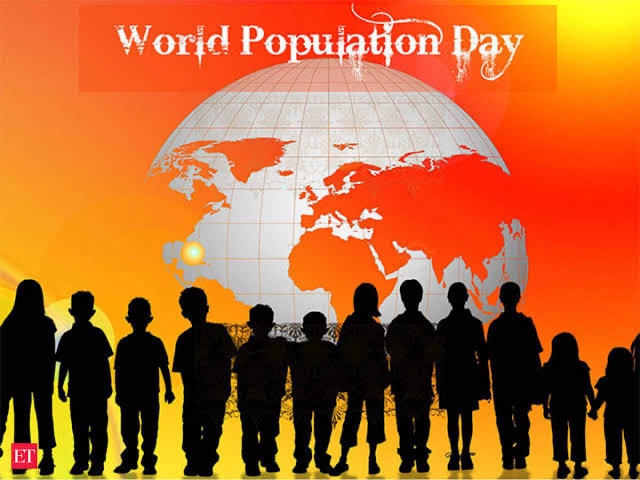
Today, July 11, is celebrated as World Population Day each year and this was established by United Nations Development Programme with an attempt to address the issues faced by global population.
Photo Credits: E Times.
This day is very important to India as our country is one of the few in the world to have a massive increase in population in the past few years. With growing population, demands and needs of the public also increases.
Uttar Pradesh, a state in India has a population of about 220 million, larger than that of many of the developed countries in the world. As increasing population is a growing concern, the Government of Uttar Pradesh has proposed a bill to control the population growth and any suggestions that would improve the bill are also welcomed and the last date for public opinion is July 19.
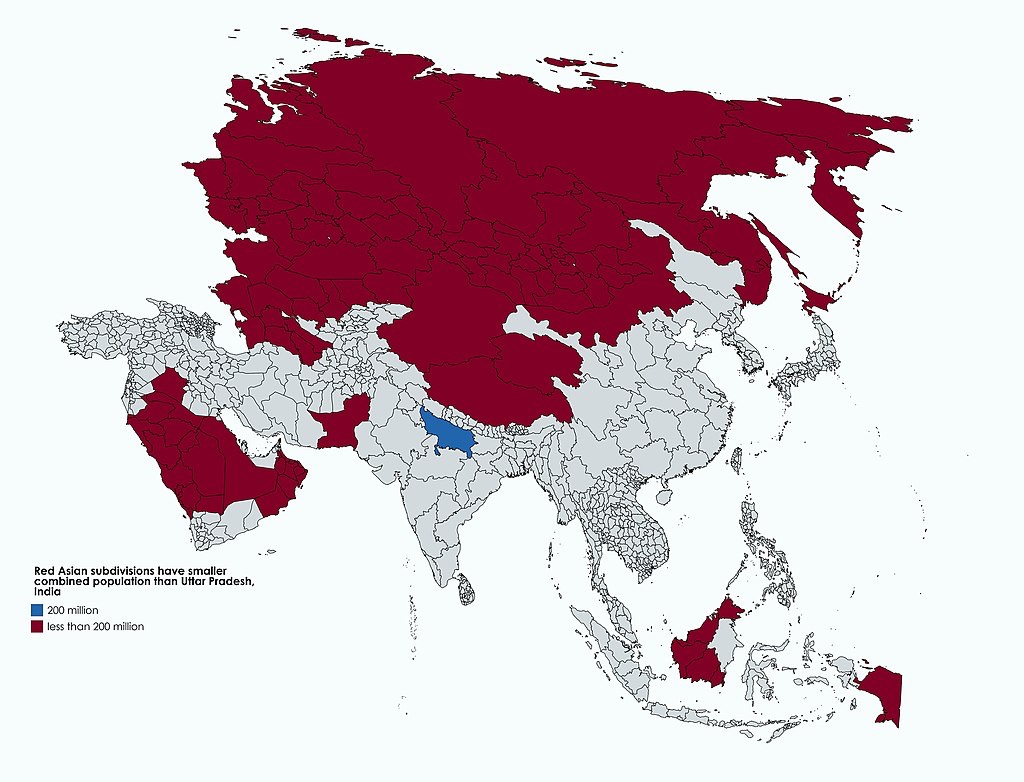
Blue Area: Uttar Pradesh.
The Blue Area, marked on the picture above is Uttar Pradesh and the blue area has more population than the entire red area combined. This shows the seriousness of the situation regarding the population in Uttar Pradesh.
Let us know some of the important facets from the Population Control Bill Draft of Uttar Pradesh which voices for a “two-child norm” in Uttar Pradesh.
The Government Duties:
1) A State Population Fund will be made for the purpose of implementation of the act.
2) Maternity Centres will be established at all primary health care centres. All centres and related NGOs will have to distribute contraceptive pills, condoms and like.
3) The Centres and NGOs will also have to educate people about proper family planning methods and record the information about pregnancies, deliveries, births and deaths.
4) The Government will also ensure that there’s a separate subject regarding population in all secondary schools.
5) The Government would also ensure to stabilise and provide welfare to the population of the state by implementing and promoting two child norm.
6) In the Bill it is also mentioned that public servant who adopt the two child norm would be entitled to several benefits such as increments throughout lifetime, maternity leaves and paternity leaves for 12 months (according to the case) with full salary and allowances and three percent increase in the Employer’s Contribution Fund under National Pension Scheme.
Citizen’s Responsibilities:
-The Bill has also made it clear that anyone violating the two child policy will be debarred from contesting local bodies elections, from applying or getting promoted in Government jobs, and receiving any kind of Government subsidy.
-As responsible citizens, the bill expects us to abide by the laws contained in the bill or suggest any improvements until July 19 and also encourages us to promote sustainable development with more equitable distribution.
After it’s first launch , thousands of programmers and users got attracted towards LINUX . Today we can say that Linux is the first choice of millions of people all over the globe . It is different from other operating systems as it comes with a host of positive developments . This is because of what LINUX offers to users and programmers , such as scalability , security , consistency , user friendliness , freedom and non pirated enterprise software . Many of the advantages of Linux are an aftermath of its origins , deeply rooted in UNIX .
Linux is Free : Linux is a freely distributable operating system . The first thought that comes to mind is what does free means . When we say Linux is free that does not mean it is always free of cost . Here , free implies the freedom to work . You can download the Linux for free from Internet , without registration and without going into per user per year kind of licensing . You are free to use , free to customize , free to modify , free to distribute and also free to brand your modified variant . Modification is possible because its source code is freely available . This makes the Linux free . It has already been explained that no licensing is required for Linux . Again , this does not mean that there is no license . Like any other software Linux also has a license . Linux comes with GNU Public License (GPL) . The license states that anybody who may want to use and apply Linux can do so . Anybody has the right to change Linux and eventually redistribute a changed version , on the condition that he makes available the code after redistribution . In other words we can say that you are always free to grab a kernel image , for any of your functionality as long as your client can still have a copy of that code .
Linux is Hardware Independent : Linux is compatible with nearly all available hardware . As mentioned in the previous section , its source code is freely downloadable and that also comes with the GPL license , you are free to follow the documentation available and customize so as to work with your unsupported hardware . This makes the Linux hardware independent .
Linux is Secure : Linux has proven , beyond doubt , the sound security level it offers . This security aspect is the key feature of Linux and its security model is entirely based on UNIX , which we all know is very robust and of proven quality . In Linux , security is not only restricted to the security from internet threats but it is also very much secure from other system related breaches or malpractices . Linux offers security at all levels , such as User level , Application level , System level , Device level , Inner threats , External threats .
Linux is Scalable : When Linux was in the gestation process , its creators wanted to make an operating system that was extensively suitable for any application , any hardware , and any process . They wanted it to work with computers with high power and capacities like of super computers , mainframes , and with computer for personal use like PCs , laptops and even with computers of limited resources like Palmtop , PDAs , etc., so that Linux fits everywhere .
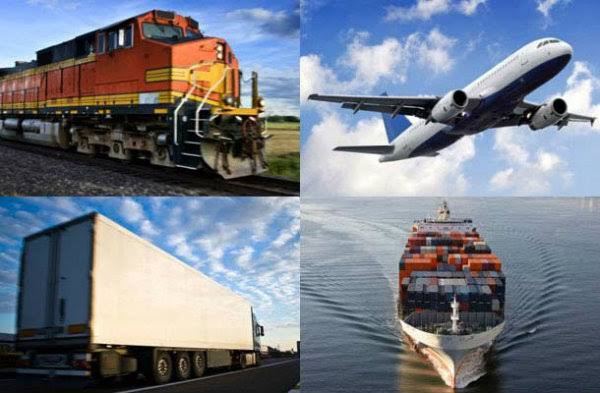
India’s transport sector is large and diverse; it caters to the needs of 1.1 billion people. In 2007, the sector contributed about 5.5 percent to the nation’s GDP, with road transportation contributing the lion’s share.
Good physical connectivity in the urban and rural areas is essential for economic growth. Since the early 1990s, India’s growing economy has witnessed a rise in demand for transport infrastructure and services.
However, the sector has not been able to keep pace with rising demand and is proving to be a drag on the economy. Major improvements in the sector are therefore required to support the country’s continued economic growth and to reduce poverty.
Roads. Roads are the dominant mode of transportation in India today. They carry almost 85 percent of the country’s passenger traffic and more than 60 percent of its freight. The density of India’s highway network — at 0.66 km of roads per square kilometer of land – is similar to that of the United States (0.65) and much greater than China’s (0.16) or Brazil’s (0.20). However, most roads in India are narrow and congested with poor surface quality, and 33 percent of India’s villages do not have access to all-weather roads.
Rural Roads-A Lifeline for Villages in India: Connecting Hinterland to Social Services and markets
Railways. Indian Railways is one of the largest railways under the single management. It carried some 19.8 million passengers and 2.4 million tonnes of freight a day in year 2009 and is one of the world’s largest employer. The railways play a leading role in carrying passengers and cargo across India’s vast territory. However, most of its major corridors have capacity constraint requiring capacity enhancement plans.
Ports. India has 13 major and 199 minor and intermediate ports along its more than 7500 km long coastline. India’s seaborne foreign trade being 95% by volume and 67% by value, the ports play a very significant role in improving foreign trade in a growing economy. These ports serve the country’s growing foreign trade in petroleum products, iron ore, and coal, as well as the increasing movement of containers. Indian ports handled cargo of 850 million tonnes and about 9.0 million TEU container traffic in year 2010. Over the last decade, the average annual growth rate of port cargo volume has been about 10%.. The future potential for port sector, particularly container ports is huge considering that the container traffic is projected to grow to 40 million TEU by 2025. Inland water transportation also remains largely undeveloped despite India’s 14,000 kilometers of navigable rivers and canals.
Aviation. India has 128 airports, including 15 international airports. Indian airports handled 142 million passengers in 2010-11 and 1.6 million tonnes of cargo in year 2009-10. The CAGR for the domestic passenger and freight growth over the last decade has been 14.2% and 7.8% respectively. The dramatic increase in air traffic for both passengers and cargo in recent years has placed a heavy strain on the country’s major airports. Passenger traffic is projected to grow more than 15% annually over 2011-13 and it is estimated that the aviation industry, currently 9th largest in the World, will require 30 billion USD investment in the next 15 years to keep pace with the growing demand.
Urban Transport. India is experiencing rapid urbanization with the present urbanization levels at 30% translating to a population of roughly 340 million living in urban areas. The number of million plus cities is presently at 42 and the urban economy accountd for roughly 60% of the GDP. Motorisation rates in India are in double digits as in most developing economies. Only about 20 cities out of 87 cities with a population in excess of 500,000 and state capitals have any kind of organized transport and only 3-4 cities could lay claim to a mass rapid transit system. The share of public transport in cities with population sizes over 4 million has declined from 69% to 38% between 1994 to 2007. Accident and fatality rates are one of the highest in the world affecting primarily the poor and vulnerable without their own means of transport.
Transport infrastructure in India is better developed in the southern and southwestern parts of the country.
The major challenges facing the sector are:
• India’s roads are congested and of poor quality. Lane capacity is low – majority of national highways are two lanes or less. A quarter of all India’s highways are congested. Many roads are of poor quality and road maintenance remains under-funded. This leads to the deterioration of roads and high transport costs for users.
• Rural areas have poor access. Roads are significant for the development of the rural areas – home to almost 70 percent of India’s population. Although the rural road network is extensive, some 33 percent of India’s villages do not have access to all-weather roads and remain cut off during the monsoon season. The problem is more acute in India’s northern and northeastern states which are poorly linked to the country’s major economic centers.
• The railways are facing severe capacity constraints. All the country’s high-density rail corridors face severe capacity constraints. Also, freight transportation costs by rail are much higher than in most countries as freight tariffs in India have been kept high to subsidize passenger traffic.
• Urban centers are severely congested. In Mumbai, Delhi and other metropolitan centers, roads are often severely congested during the rush hours. The dramatic growth in vehicle ownership during the past decade – has reduced rush hour speeds especially in the central areas of major cities.
• Ports are congested and inefficient. The average annual growth of cargo volume in the ports in the last decade was close to 10%, However, capacity utilization in some of the major ports remain as low as 58-60% Both bulk and containerized traffic is expected to grow at a much faster pace in future and by some estimate the container traffic is projected to grow to about 4.5 times of the current volume by 2025. India’s ports need to significantly ramp up their capacity and efficiency to meet this surging demand.
• Airport infrastructure is strained. . Air traffic has been growing rapidly leading to severe strain on infrastructure at major airports, especially in the Delhi and Mumbai airports which account for more than 40 percent of nation’s air traffic.
ELON MUSK, the famous and most successful person in the tech world, who played many roles and faced many struggles to become what he is today. Elon Musk was born and raised in South Africa.
We all know him as an entrepreneur, businessman, CEO of Tesla and spacex, but he is also a skilled investor, software developer, designer, inventor, rocket scientist, actor, film producer, one of the richest man in the world.
During his school days, he was a victim of severe bullying. At the age of 12, he created a video game(blaster) and sold it to a computer magazine. Elon Musk is the founder of X.com (later it became paypal), spacex, Tesla motors.
Recently Elon Musk turned 50, over the past decades Musk managed to become CEO of Tesla and spacex, founder of the boring company, co-founder of OpenAI, Neuralink. He also played a vital role in space rockets, electric cars, solar batteries.
“”Failure is a option here, if things are not failing then you are not innovative enough.””. – Elon Musk
“” I think it’s possible for ordinary people to choose to be extraordinary.”” –Elon Musk
UNIX is a multi-user and multitasking operating system. in a multi-user environment. the computer can receive the commands from a number of end users programs, access files, and print documents simultaneously.
The host computer, which has a UNIX operating system, provides services to the terminal, such as file access services. four terminals are connected to one host computer and all the terminals are sharing resources from the host computer.
Features of UNIX
The general and additional features of UNIX operating system are :
File and Processes : file and process are two entities that are supported by UNIX. A file contains information, such as text, code or directory structure that you need to save in the computer, The file is stored in the hard disk of the computer at a particular location, which can be easily remember whereas a process is the name given to a file or a programs that is currently running . UNIX provides various tools that enable you to control a process, change the sequence of the process, and kill the process.
Multi-user system: UNIX supports multitasking system as the kernel is designed to handle multiple processes. A single user can run multiple process simultaneously. For example, an end user can print a file and edit another file simultaneously. The kernel handles the multiple processes as foreground and background process. The current process runs in the foreground and the other processes run in the background. This multitasking feature is an advantage for the programmers, as they do not have to close the editor and run the program; this can done simultaneously.
UNIX toolkit: The UNIX toolkit provides various tools that are enable you to perform different tasks in UNIX as kernel alone cannot perform every task. The tools that are included in the UNIX toolkit are:
1:- General purpose tools , such as vi editor
2:- Text manipulation utilizes filters that are used to retrieve the output from two or more commands simultaneously .
3:- Compiler and Interpreter .
4:- Network administration and system tools , such as mailx and pine.
Pattern Matching :- UNIX supports pattern matching feature that enables you to retrieve the output according to the required pattern . Pattern matching in UNIX can be implemented using a special characters , such as * known as metacharacter .
Programming Facility :- UNIX provides a programming facility known as shell that is developed specifically for programmers and not for the users .
“Humankind has not woven the web of life. We are but one thread within it. Whatever we do to the web, we do to ourselves. All things are bound together. All things connect.”
~ Chief Seattle
What is environmental pollution ?
Is it degrading our lifestyle ?
How can we improve our environment ?
Let’s get through the topic .
Introduction
One of the greatest problems that the world is facing today is that of environmental pollution, which is causing grave and irreparable damage to the natural world and human society with about 40% of deaths worldwide being caused by water, air and soil pollution and coupled with human overpopulation has contributed to the malnutrition of 3.7 billion people worldwide, making them more susceptible to disease.
Environmental pollution is defined as “the contamination of the physical and biological components of the earth/atmosphere system to such an extent that normal environmental processes are adversely affected.”
From: Environmental Management, 2017
We all are well known about the word Environmental pollution . It is not some kind of new phenomenon , yet it is a greatest problem facing by our society . Still , people are avoiding the topic to its utmost.
Environmental pollution is one of the most serious global challenges. Wild-type organisms have a slower degradation rate of hazardous materials.
Both developed and developing nations share this burden together, though awareness and stricter laws in developed countries have contributed to a larger extent in protecting their environment.
Reasons behind environmental pollution
The Burning of Fossil Fuels. Industrial Emission.
Indoor Air Pollution.
Wildfires.
Microbial Decaying Process.
Transportation.
Open Burning of Garbage Waste.
Construction and Demolition.
Urbanization and industrialization. Since the era of industrial revolution, man has continued to introduce hazardous materials into the environment at an alarming rate.Mining and exploration.
Agricultural activities.
Particulate matter.
Plastics.
Energy production.
Deforestation.
Mining.
Over population.
Increase in global average temperature.
Effects of environmental pollution
Environmental pollution is an incurable disease . It can only be prevented.
Barry commoner
1. Effects on Humans. The effects of environmental pollution on humans are mainly physical, but can also turn into neuro-affections in the long term. The best-known troubles to us are respiratory, in the form of allergies, asthma, irritation of the eyes and nasal passages, or other forms of respiratory infections. Other rarer diseases include hepatitis, typhoid affections, diarrhea, and hormonal disruptions.
2. Effects on Animals . Environmental pollution mainly affects animals by causing harm to their living environment, making it toxic for them to live in.
3. Effects on plants . As for animals, plants, and especially trees, can be destroyed by acid rains (and this will also have a negative impact on animals as well, as their natural environment will be modified), ozone in the lower atmosphere block the plant respiration, and harmful pollutants can be absorbed from the water or soil.
Solutions for environmental pollution.
Evironment planning.
Shifting to eco-friendly transportation.
Air pollution must involve moving away from fossil fuels, replace them with sustainable fuels .
Solar power .
Wind power.
Go green.
Storage facilities for solid waste.
Environmental friendly products.
Policies implimentation for environmental pollution.
We also need to work on electromagnetic radiation (ER) reduction.
Awareness through mass media.
More green parks and areas.
Environmental education, etc,.
“We say we love flowers, yet we pluck them. We say we love trees, yet we cut them down. And people still wonder why some are afraid when told they are loved.”
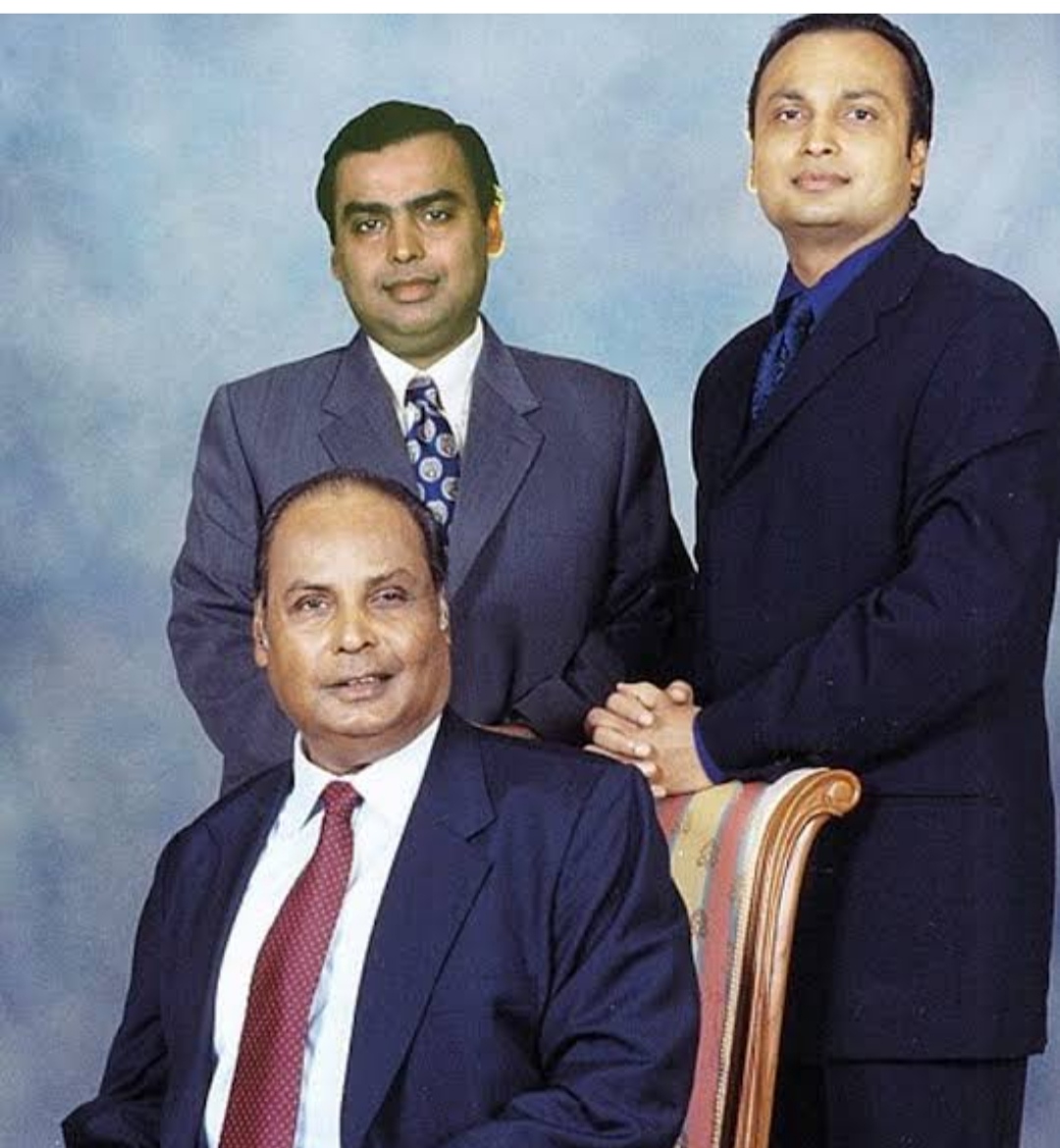
Dhirajlal Hirachand Ambani, popularly known as Dhirubhai Ambani. He is the father of Mukesh Ambani and Anil Ambani
Dhirubhai Ambani was a successful Indian business tycoon who founded Reliance Industries.
Dhirubhai Ambani,Indian industrialist,the founder of Reliance Industries, a giant petrochemicals, communications, power, and textiles.
Reliance is the biggest exporter in India and the first privately owned Indian company.
Dhirubhai Ambani passed away in 2002, before his death itself in 1980’s he handover the reliance corporation to his sons Mukesh Ambani and Anil Ambani.
Reliance Power Limited (R-power), formerly known as Reliance Energy Generation Limited (REGL) is a part of the reliance Anil Ambani Group. It was established to develop, construct, operate and maintain power projects in the Indian and international markets.
Mukesh Ambani runs Reliance industries which has interests in petrochemicals, oil and gas, telecom and retail.
Reliance industries limited, diverse businesses include petrochemicals, natural gas,retail, telecommunications,mass media and textiles. Reliance is one of the most profitable companies in India.
Reliance’s Mukesh Ambani and Nita Ambani are the owners of the second most expensive home in the World, ANTILIA, Mumbai.
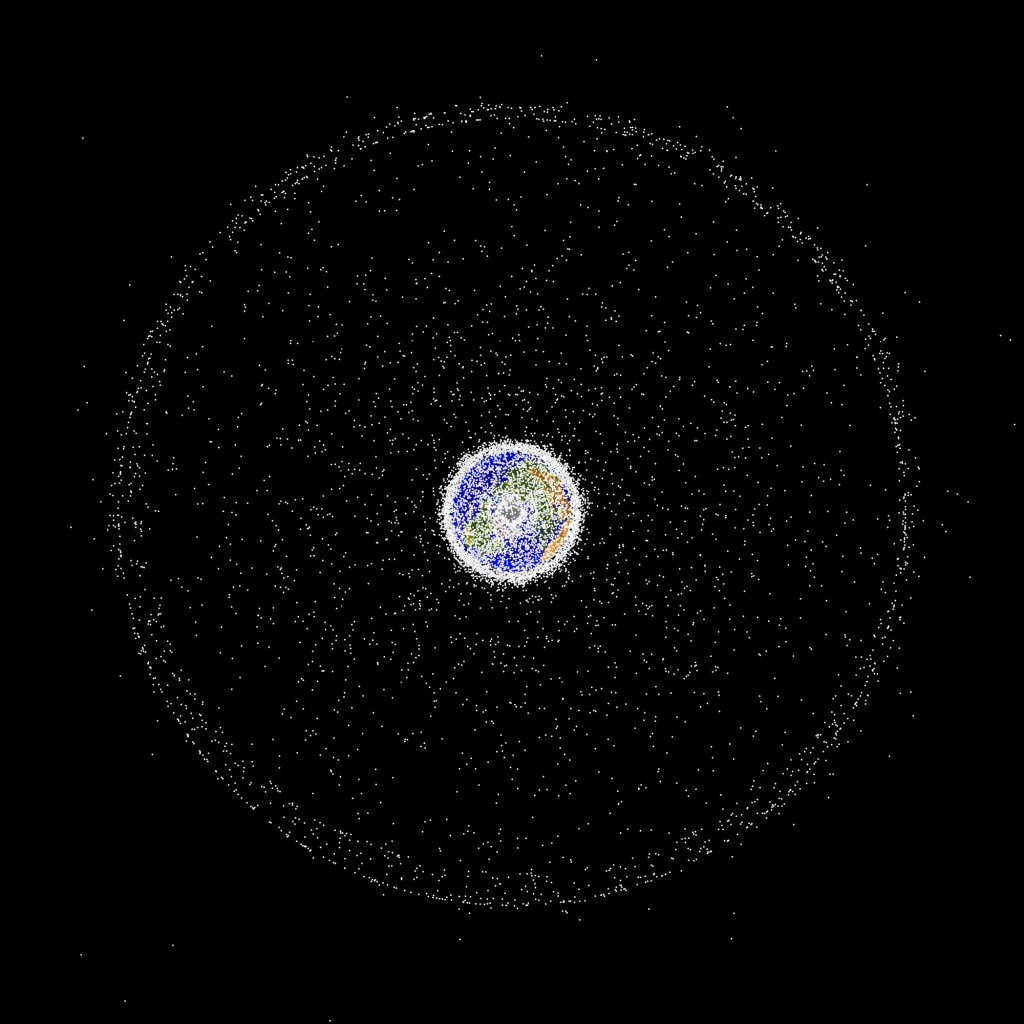
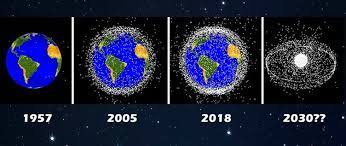
Space debris is the combination of natural(meteoroid) and artificial(man-made) particles. Natural debris orbits around the sun and artificial debris orbits around the earth. Hence they are called Orbital Debris. This can be any man-made object in the orbit moving in the earth’s orbit. Such debris includes nonfunctional spacecraft, abandoned launch vehicle stages, mission-related debris, and fragmentation debris.
In this article, we are going to focus on Artificial Debris, the Reason for its cause, and its prevention.
Space debris
What is Artificial space debris?
Any non-functional man-made object in space is called Artificial debris.
They come from
Satellites and spacecraft which are failed.
Satellites whose life has ended.
Rocket dismantle stages during the launch.
Hardware like nuts, bolts, payload covers, etc.
Solid propellant slag.
Cast aways during space activities like human wastes.
Fragments due to battery explosions, collisions, etc.
When two satellites collide they produce thousands of particles that are dangerous and can cause further destruction which makes Earth’s orbit unfit for satellite launches.
Artificial means man-made satellites
The number of satellite and rocket launches as of April 2021 is given below:
Number of rockets launched(excluding failures) since 1957
5560
Number of satellites carried by rockets launched
11139
Number of satellites still in space
7389
Number of satellites still functioning
3170
Let’s have a look at the number of satellites launched only in 2020 and 2021(April)
Satellites launched in 2020
1283
Satellites launched in 2021 (April)
853(65% of 2020)
History
In the year 2009, 19,000 debris over 5 cm in size were tracked.
In July 2013, more than 170 million debris smaller than 1 cm(0.4), around 670,000 debris of 1 to 10 cm in size, and approximately 29,000 larger debris were detected.
By July 2016, nearly 18,000 artificial debris were orbiting the earth.
In October 2019, nearly 20,000 artificial objects including 2,218 were tracked.
The speed with which the debris travel is more than 28,000 kph(23 times the speed of sound).
Have you heard of Kessler syndrome?
NASA scientist Donald Kessler in 1978, proposed that more launches could increase the junk around the earth which results in the chain reaction of collision of objects in space and further making the earth’s orbit unfit for satellites.
This situation would be extreme, but some experts worry that a variant of this could be a problem one day, and precautionary steps should be taken to avoid the problem.
How do they track space debris?
The USA and Russia have set up tracking networks to monitor the orbital space object population. The European Union is also starting to develop its ways to track debris.
Powerful lasers are used to measure the distance of these objects, like radar or sonar. When a laser beam hits the debris and bounces back to Earth, ground crews can measure how long it takes to figure out where they are and where they are going it alerts the ground stations in case of collisions. But usually, laser technology is used to detect the movement of satellites and if the same technique is used to detect the debris then continuous monitoring should be there since debris are found randomly in space.
Detection of objects through laser technology
India’s status on tracking debris
NETRA(Network for space Objects, Tracking, and Analysis)
Till now, ISRO was dependent on NORAD(North America Aerospace Defense Command) data,
which is available in the public domain, to keep track of space debris and monitor our active and passive satellites. However, this global data is not accurate but NORAD keeps accurate data available for those who are members of its network. Therefore, ISRO cannot access the data.
But now, ISRO has decided to set up telescopes and radars in four corners of the country to get accurate data and avoid unwanted collisions of the satellites.
In September 2019, India launched the early warning system NETRA to secure satellites and other assets in space.
Can satellites be protected from space debris?
There are two ways in which the satellites and spacecraft can be protected:
Computer programs can search for possible collisions between large debris. This system is used in the International Space Station to detect. These operations are expensive and can disturb delicate experiments. Space tracking networks can only track objects more than 100 mm in size. Even a 10 mm object can cause big trouble this cannot be called 100% effective.
A debris shield can be designed to provide additional protection for a spacecraft. One way is to increase the thickness of the craft but that can increase the mass of the craft/satellite. Hence, a specially designed shield called the Wipple shield was used. It was made of two thin walls separated by some space. It was observed that this wall was more resistant to debris. The outer layer absorbs a lot of debris energy so that the inner wall is not punctured.
Protection of satellites through shields
Space debris Removal
Removing space junk, especially larger pieces before they fragment is not easy. The best way to do this is retarding the force and deorbiting the junk. When it drops in altitude less than 400 km above the earth it is burnt.
For years NASA, ESA, and other space agencies are studying debris removal technologies. Some of the ideas include the usage of nets to gather junk and robotic arm. Japanese are now developing a type of satellite that uses magnets to catch and destroy the debris. Last year, UK has successfully cast a net around a dummy satellite.
Clearspace one
Clearspace-1 will be the first space mission to remove debris from the Earth orbit, it was planned to launch in 2025. The technology demonstration satellite was first developed by the Swiss Federal Institute of Technology in Lausanne.
Clearspace one
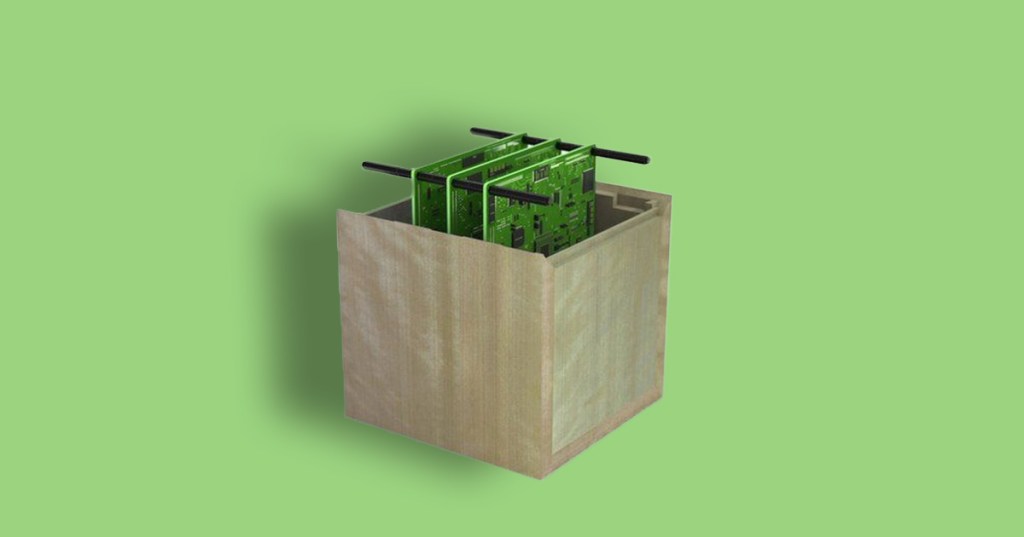
Many countries are trying to invent new technologies to reduce the threat of debris. Russia invented a Self Destroying Satellite. Australian researchers are developing the Hunter-Killer satellite to neutralize space junk. Finland has developed a Wooden Satellite and planning to launch this year.
When tillage begins, other arts follow. The farmers, therefore, are the founders of human civilization.”
— Daniel Webster
Introduction
It all started thousand of years ago , when the human civilization came into existence . Agriculture was a key to survival . People were farming for there domestic purpose , not for the others .
As the civilization started to grow accustomed of agriculture , they grew food in surplus that enabled people to live in cities. Plants were independently cultivated in at least 11 regions of the world.
The development of agriculture enabled the human population to grow many times larger than could be sustained by hunting and gathering.
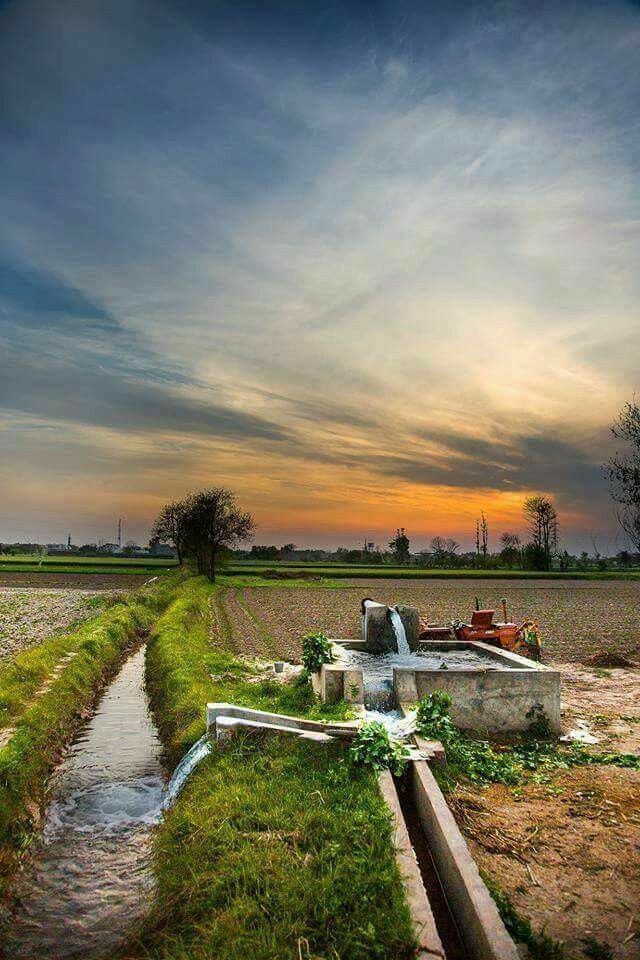
It was the beginning of different civilization in different parts of the World. From those civilizations , one of them was our’s The Indus Valley Civilization . Vedic literature provides some of the earliest written record of agriculture in India. Rigveda hymns , describes plowing, fallowing, irrigation, fruit and vegetable cultivation.
Some of the ancient and historical evidence suggests rice and cotton were cultivated in the Indus Valley.
Agriculture : In India and World today .
India ranks second worldwide in farm outputs. As per 2018, agriculture employed Indian work force and contributed 17–18% to country’s GDP.
In 2016, agriculture and allied sectors like animal husbandry, forestry and fisheries accounted for 15.4% of the GDP (gross domestic product) with about 41.49% of the workforce in 2020.India ranks first in the world with highest net cropped area followed by US and China.The total agriculture commodities export was US $ 3.50 billion in March – June 2020.
Agriculture is the primary source of livelihood for about 58% of India’s population. Share of agriculture and allied sectors in gross value added (GVA) of India at current prices stood at 17.8 % in FY20.
During 2019-20 crop year, food grain production reached a record of 296.65 million tonnes. In 2020-21, Government of India is targeting food grain production of 298 million tonnes.
India is among the 15 leading exporters of agricultural products in the world. Agricultural export from India reached US$ 38.54 billion in FY19 and US$ 35.09 billion in FY20.
Agriculture is an important industry in the United States. The agriculture industry, which includes both crops and livestock, is responsible for producing most of the world’s foods and fabrics. Agriculture impacts so many things that it’s hard to imagine a world without this important industry.
Schemes and Initiatives
Due to the high requirement of agriculture . It is important for the government to take initiatives and provide better infrastructure to the farmers. However , the required level of investment for the development of marketing, storage and cold storage infrastructure is estimated to be huge.
The Indian Council of Agricultural Research (ICAR), established in 1905, was responsible for the search leading to the “Indian Green Revolution” of the 1970s. The Union Minister of Agriculture is the president of the ICAR. The Indian Agricultural Statistics Research Institute develops new techniques for the design of agricultural experiments, analyses data in agriculture, and specialises in statistical techniques for animal and plant breeding.
Schemes by government for Indian agriculture :
Dairy Entrepreneurship Development Scheme.
Rainfed Area Development Programme (RADP)
Paramparagat Krishi Vikas Yojana (PKVY)
Pradhan Mantri Krishi Sinchai Yojana (PMKSY)
National Agriculture Market (e-NAM)
Pradhan Mantri Kisan Maandhan yojana.
Pradhan Mantri Fasal Bima Yojana (PMFBY)
Kisan Credit Card (KCC) scheme.
Pashu Kisan Credit Card Scheme.
PM-Kisan Scheme.
Conclusion
Agriculture sector is one of the prominent sector in India as well as all over the world . India is becoming self – sufficient in pulses and other crops .
Gone are the days , when India was unable to provide sufficient amount of food to the citizens . Gone are the days , when people used to think agriculture was not as important as other sectors . Gone are the days , when people used to think less of farmers . And gone are the days , when people were less educated about agriculture.
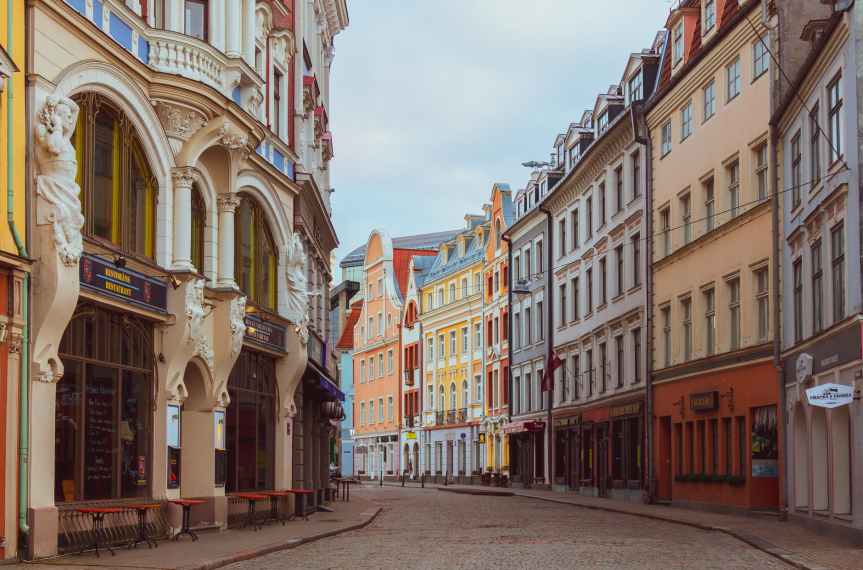
Baltics, also known as the Baltic States is comprised of three countries including Latvia, Lithuania, and Estonia. The three countries are situated on the eastern shores of the Baltic Sea. In 1991 the regional governments of Lithuania, Latvia, and Estonia declared independence from the Union of Soviet Socialists Republics (USSR). Three countries have a collective population of just over 6 million. The three have been one of the better examples which have been progressing well after the breakup of the USSR. Many other former Soviet republics have been suffering the disarray of corruption and political instability.
In 2002 Baltic countries applied for membership in the European Union (EU) and by May 2004 all the three countries joined the EU. They also gained membership in NATO by March 2004.
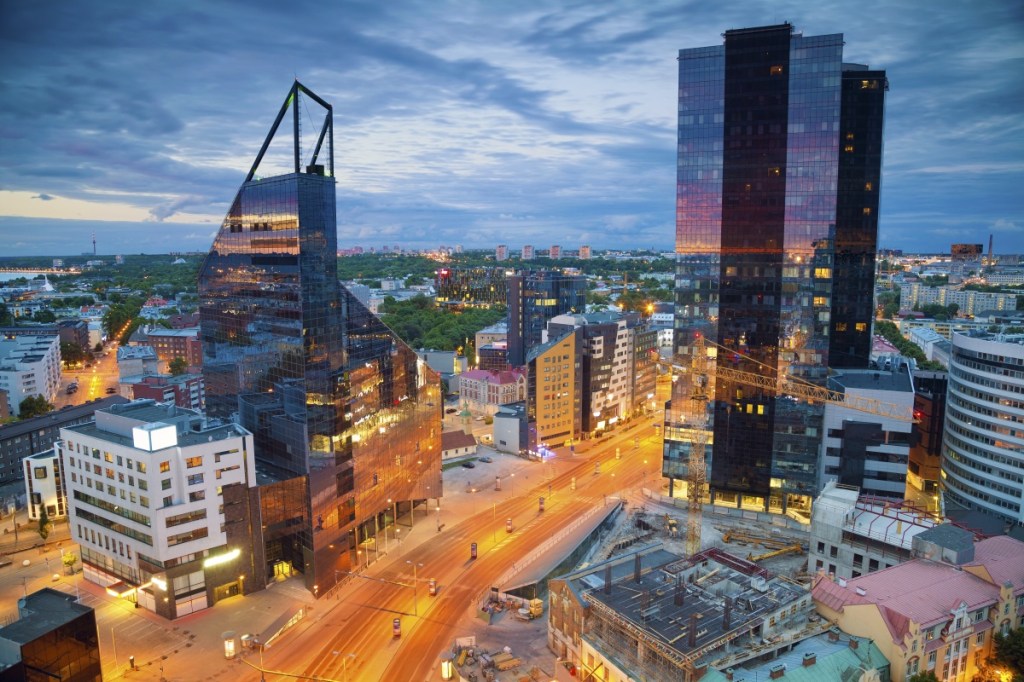
Downtown Tallinn
Baltic independence in 1991
It’s truly astounding how the three countries have developed since 1991. None of them were independent since 1940. The three countries had large Russian minorities and many Soviet soldiers were still stationed there. There were no major national institutions and banking infrastructure with a crumbling economy. There was a growing homegrown national moment against the ruling government since the 1980s. The homegrown fronts won the republican parliamentary election against the ruling party in early 1990 and were allowed to govern but with limited power. The Russian president at that time, Boris Yeltsin had not contested their newly declared independence in 1991. The Baltic also witnessed no violence when the three governments had declared their independence.
The three nations also had almost no natural resources, unlike USSR which was resource-rich. They were still in a very vulnerable situation with a small population and no military of their own. Even though the countries were linguistically distinct with different languages, but people in all three countries had a united drive to strive for a better future. The three had implemented reforms with a shared vision. The governments of the three shared many policies, ideas, and experiences. The Baltic States also valued their new independence with a lot of enthusiasm and didn’t take it for granted. The other ex- USSR countries often had to ask for assistance from Russian Federation and also formed new alliances with the Russian government. Baltic countries on the other hand tried to stay away from joining the post-Soviet Commonwealth of Independent States. In the subsequent years, all the three countries adopted radical economic policies and Estonia was the first mover and Latvia and Lithuania would follow suit. In 1994 Estonia introduced a flat income tax at just 24 percent and the other two also implemented the policies. Currently, Lithuania has a tax rate of just 15 percent which is one of the lowest. With early and fast deregulation and privatization, the Baltic countries were able to capture a large amount of foreign direct investment. Estonia also radically transformed its public sector with various digitalization implementations and less reliance on paperwork. Latvian and Lithuania’s transformation in this area was not as drastic but after some time both of them followed Estonia’s footsteps. Transparency International ranks Estonia No. 17, Lithuania 37, and Latvia 42 out of 175 countries on its Corruption Perception Index for 2020. This is a commendable ranking considering they all the three are a relatively new entrant to the EU and many other EU countries have lower ranks than the three.
Success attributions
The success can also be attributed to the generous support that the three countries received from the international community and funds granted by the EU, World Bank, and the IMF. In 2008 Baltic suffered from the global economic crisis. The three soon adopted the Euro as their currency to avoid any future liquidity freeze issues that they experienced at that time. The economies al the Baltic rebounded quickly and due to good monetary measures, the three have a very low public debt. Baltic governments have also made swift progress in the Education sector and the three have attained commendable rankings in the Program for International Student Assessment (PISA) of the Organization for Economic Cooperation and Development (OECD). Estonia has done a very commendable task in this area with top 10 rankings in many assessments. But the Baltics also face many challenges with population loss due to low birth rate and emigration. Proximity and hostility with Russia still is a challenge that the tiny nations have to endure.
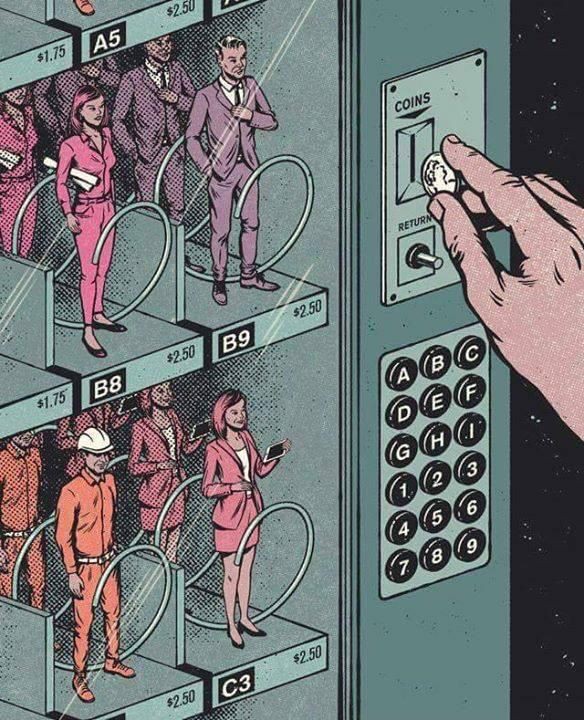
Welcome to the anti-meritocratic world, this world. What are you going to do about it? Will you stand back and watch while cronyism, nepotism, the old school tie, the private club, the right university, the right accent, the right background, the right secret society, the right religion, the right family, destroy merit so that their chosen ones can prosper at your expense. It’s time to smash the conspiracy. Break up all the mechanisms that allow privileged groups within society to rig the system in their favour and penalise anyone who doesn’t belong to their insidious cliques.
Michael Faust, The Meritocracy Party
Well , Its a very complicated questions . In the world, where one’s knowledge didn’t get recognition .
What would you do , when you get acknowledged not on the basis of your knowledge but on the basis of your relation with the owner ?
What would you do , if you don’t get promoted because you are not his /her relative ?
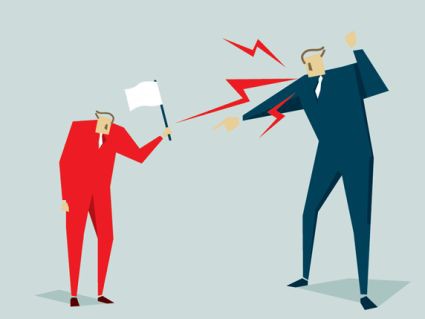
Do you ignore the fact that you are not the one , whom your boss approves?
Well , if you think it’s favouritism than you are absolutely correct . You may also come accross the word NEPOTISM and if you don’t than start reading the passage . (I did as well )
This 8 letter word is destroying everyone in today’s world. And who is responsible for creating such a hypocrite. We the people have to repose this curse and make sure to control it with our coming generations, else it will destroy the whole world. And there’ll be no humanity left in this world” –
Ikramul Hannah.
Introduction
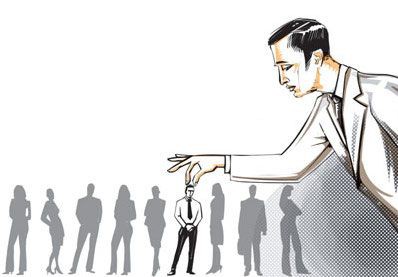
Nepotism is a the practice among those with power or influence of favouring relatives or friends, especially by giving them jobs.
Nepotism is generally defined as “the bestowal of patronage by public officers in appointing others to positions because of blood or marital relationship”.
Nepotism is found in almost all the fields but it is practiced most in business, politics, sports and entertainment sectors. It has been in practice since time immemorial, but some special cases have made it to the limelight in the past few decades.
Nepotism in India :
India has it’s fair share in the field of NEPOTISM . Well , have you ever expected that . I say , YES . Because being one of the largest country , people might become more thirsty for power . “When constantly reaching out for more, you forget what you have” Christine Szymanski.
Nepotism can be characterized as ‘the demonstration of utilizing force or impact to get out of line preferences for individuals from one’s family’.
You must be conflicted , why does nepotism exist even today ? We are living in 21st century , than why we have such orthodox thinking ? Who says no one can define what is going on in one’s mind ( well I say , isn’t is obvious ) .
From the politics to the Entertainment , from the owner to the customer, from the Bollywood to the Judiciary ; Nepotism is everywhere .
Like in OJO -MOJO , After the submission of writing competition , OJO’s class teacher asked him who wrote better . Is it MOJO or OLLY , what do you think whom he would choose . MOJO thinks OJO will choose OLLY because he likes her . But when the result announced MOJO was astounded because OJO choose MOJO’s writing . So , what do you think is it nepotism or not . Think and you will know the answer .
Bias has become the first qualification to join a party, and extreme bias the virtue to become a leader.
“Your mind will answer most questions if you learn to relax and wait for the answer.”
—William S. Burroughs
Am I losing my mind or its just my mind playing tricks ?
In the world , where people are ready to fight against their competitor . What will happen when you loose ?
Or didn’t get what you desire the most ?
Would you accept the reality or choose to mourn for your loss.
Introduction
Do you ever feel anxious about going to the new place or meeting with new people ?
Do you ever feel the numbness in your body when you lost something or someone ?
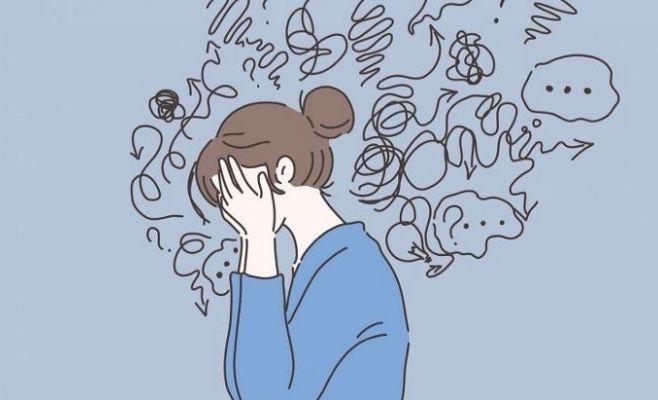
Have you ever get overwhelmed by your fears ?
So what do you call it .
Is it an anxiety disorder?
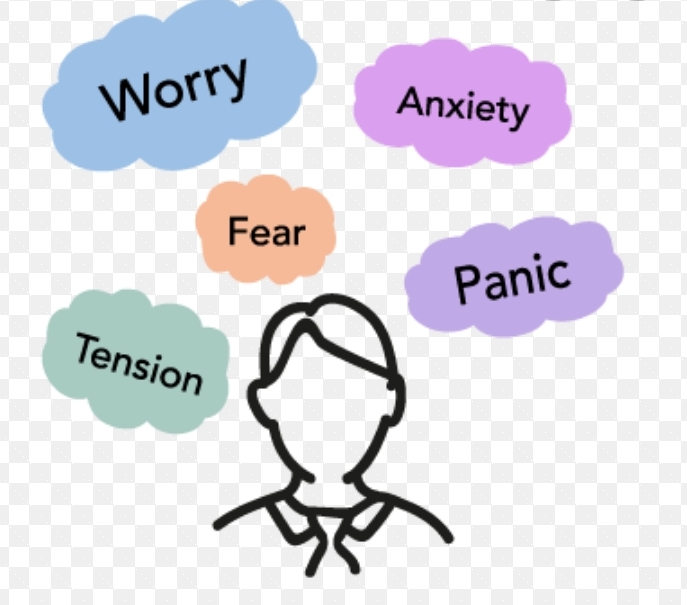
Well hold your horses because it’s not . Like really we all feel anxious , hesitation , numbness , fear in our life . But if you think it’s an anxiety disorder . It’s a big NO .
If you want to know what is anxiety disorder and how to differentiate it from normal anxiety . You have to ask me .
SO . ASK . ME .
Well if you don’t ask me then also I will tell you .
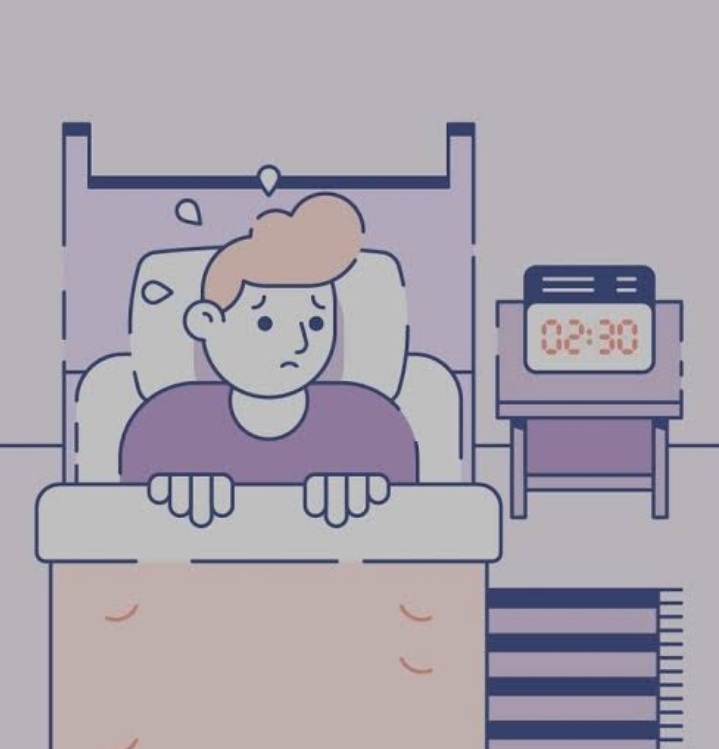
When we feel something is crawling on our leg but didn’t find a thing . Instead of sleeping peacefully , we think of possible aspects that will make our night hell .
Well it happened with me and guess what , I always wake up middle of the night and try to find the invisible ghost ( is it only me who thinks about these weird things or it happened with you as well .)
Anxiety is when these types of situations happened only single time , maybe 2 or 3 times. But when these kind of situations happened every time whenever you sleep than maybe you have Anxiety Disorder.
What is Anxiety Disorder?
Let’s get to know about the Father before we get to know about the Son .
Anxiety is a feeling that comes and goes, but does not interfere with your everyday life.This type of anxiety is unpleasant, but it may motivate you to work harder and to do a better job.
But what about Anxiety Disorder . Well I am explaining just have some patience . You know patience is the virtue of life .
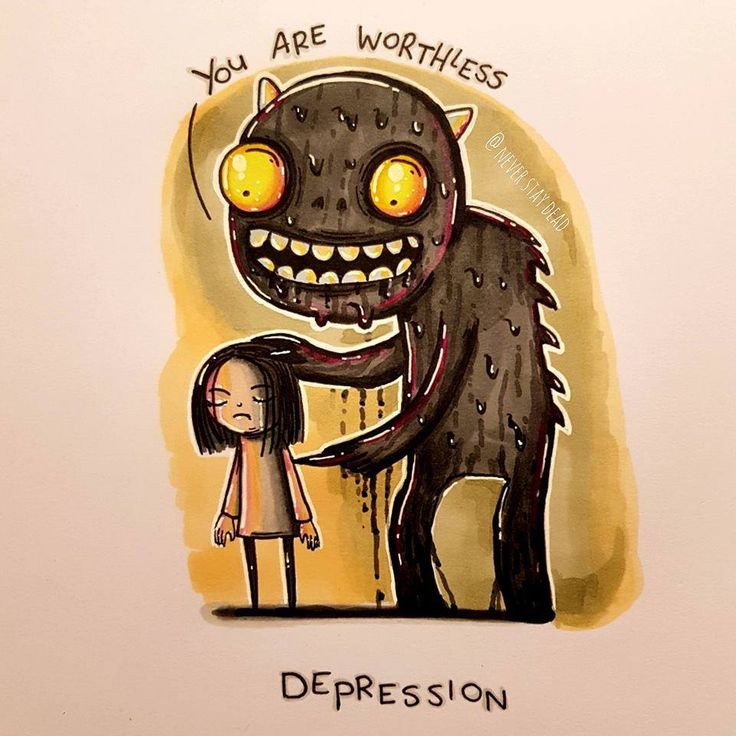
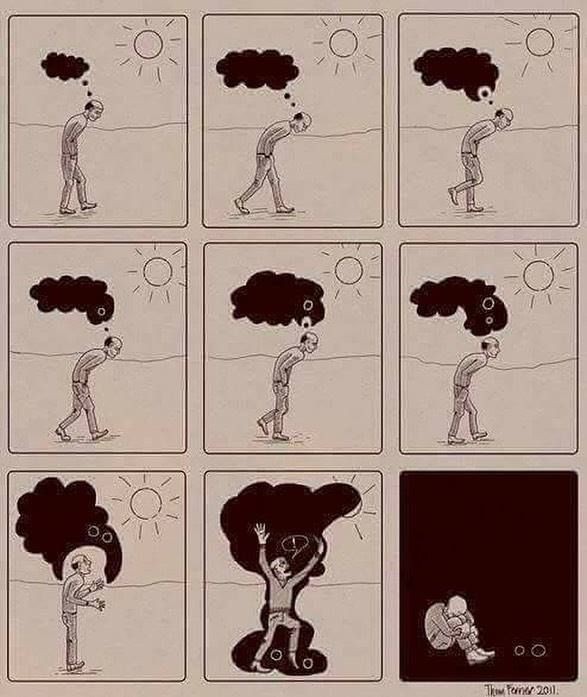
Yes , we were talking about the Son . I mean Anxiety Disorder . It is the feeling of fear may be with you all the time. It is intense and sometimes debilitating. These type of anxiety can cause more damage than you think about.
You will stop enjoy everything . In extreme cases you stop socialising with other and if it left untreated, it may be worse like you will kill yourself.
According to the APA ( American Psychiatric Association) , women are more likely than men to be diagnosed with an anxiety disorder.
Types of Anxiety Disorder
Panic Disorder .
Phobia .
Social Anxiety Disorder.
Separation Anxiety Disorder.
PTSD (Post Traumatic Stress Disorder.)
Illness Anxiety Disorder .
In present world , PTSD is most likely to be found in the women rather than men. It happens when a person goes through some traumatic experience.
Symptoms:
Increased heart rate.
Rapid breathing.
Restlessness.
Trouble concentrating.
Difficulty falling asleep.
Stop trusting.
Worried about small things .
Remedies :
Getting enough sleep.
Meditating.
Staying active and exercising.
Eating a healthy diet.
Staying active and working out.
Avoiding alcohol.
Avoiding caffeine.
Quitting smoking cigarettes.
Conclusion :
Anxiety Disorder can be found in anyone from 5 year old boy to 80 year old woman or from 15 year old girl to 50 year old man. It may be cured , only if it treated properly . If not , it can cause some serious issue .
What lies behind us and what lies before us are tiny matters compared to what lies within us.














 Eduindex
You must be logged in to post a comment.