10 Stress-Reducing Activities For Students To Chill Out!

Anyone can get stress from any situation. Dealing with stress does not have to be a boring routine. Stress-reducing activities are simple, relaxing, and you can do them anywhere. Find out why Stress, Anxiety, and Depression in students increased since COVID-19, and ways to stop them!! 

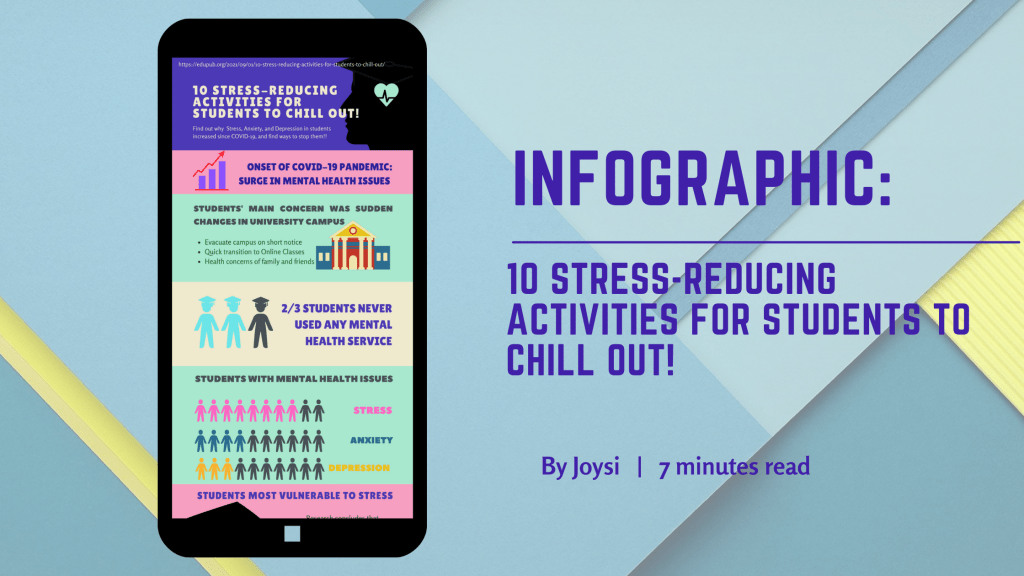
Stress is your body’s response to the physical, mental, and emotional pressure beyond your coping ability. Stress is a silent killer which is responsible for 60% of health issues in your body. Students are more prone to stress since the pandemic.

Let’s see the severity of mental health issues on students.

Onset of Covid-19 Pandemic: Surge in Mental Health Issues

Covid-19 has brought stern changes in our lives. People avoid areas of heavy public congestion to stay safe from any contagious virus. 

If you are a student you will know the effects pandemic has brought in your life. You are expected to change your mode of education and take online classes to continue your semester. Many students have seen the demise of their loved ones in the pandemic. 

Because of these sudden changes, students have faced extreme mental and emotional pressure.

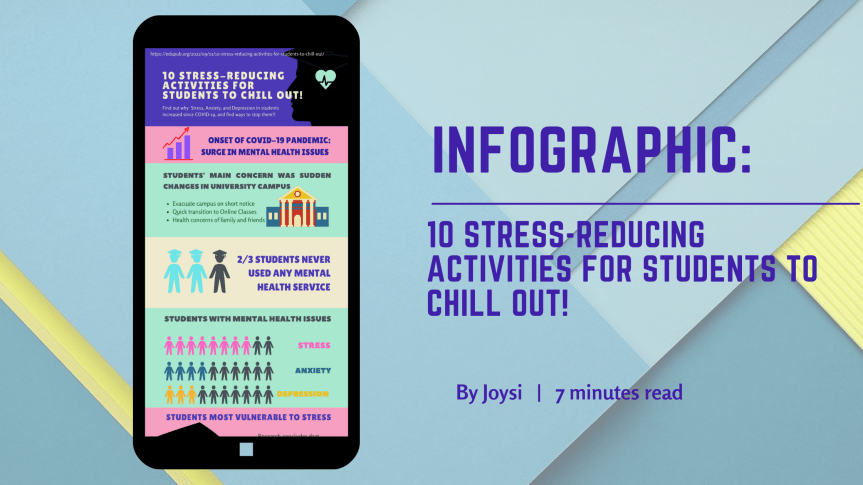
Lee, Jeong, and Kimshows in their research show that in the US alone, the early stage of Covid-19 pandemic has marked increased stress in undergraduate students.

The research concluded that about two-third of students never used any mental health services. Moreover,

  • 88% students had moderate to severe stress
  • 44% students had moderate to severe anxiety
  • 36% students had moderate to severe depression

The students that were most vulnerable to these mental health issues were female, rural, low-income(below 22K), and academically underperforming students(cgpa<2.0).

The infographic shows the the need for mental health education in students and 10 Stress-management strategies for students to relax.

Want to display this infographic on your site?

Copy this code to attribute https://edupub.org/.

<a href="https://edupub.org/2021/09/01/10-stress-reducing-activities-for-students-to-chill-out/"><img style="width:100%;" src="https://eduindex.org/wp-content/uploads/2024/04/7a1b4-2a445-10-stress-reducing-activities-infographic-joysi-1.png"></a><br>Made by : Joysi7 from <a href="https://edupub.org/">EDUPUB</a>

INFOGRAPHIC: 10 Stress-Reducing Activities For Students To Chill Out!  Coping with stress; stress management
Infographic:10 Stress-Reducing Activities For Students To Chill Out!

Coping with Stress

Stress is called a silent killer. Why??

Because stress affects your hormones, blood pressure, memory, sleep pattern, appetite, immune system, and cholesterol. That’s a lot of damage to your health.

But you don’t have to worry about it. Managing stress at the initial level is FREE, EASY, and you can do it ANYWHERE. Stress management at the initial level is done by altering your physical, mental, and emotional status, even without taking any medications. Yay!!

Managing stress in the initial level is your best health investment.

Reduce Your Stress with 10 Easy Activities

1. Take a deep breath

This is a simple breathing exercise. Sit still, relax your body, and try to forget your anxieties. Now, take a deep breath count till 5. Exhale and repeat.

This exercise relaxes you in minutes. When you breathe slowly your heart slows down, signaling your nervous system – it’s time to calm down man.

2. Write yourself a motivational letter

You think no one understands you? Why not write a letter to yourself?

Make an inspiring note. You may add affirmations of your choice, and end the letter with motivation you want.

Just add your name here if you don’t have any clue:

Dear (Your/Name)

I know you are going through a lot. But I know you will be great(insert what you want to be) some day. Keep it up and never give up.

Keep a bunch of self motivating notes somewhere. Whenever you are stressed out, pop one out and read it. You will feel calm and composed.

This is a self motivation technique to calm you. It is your words pushing you to get up on your feet and face that day!

3. Brush up dance moves

If you feel no interest in doing any paperwork then this step is for you. Gen Zs are blessed with all the viral(and cringey) dance moves.

Take 5 minutes to practice a crazy step. Take up a viral challenge(safe, ofcourse). This might sound goofy, but it works brilliantly.

Dancing helps your body release endorphins and finishing a challenge motivates you. The result is positive energy and good vibes!

4. Snacks to help

Certain foods are mood boosters. Your empty stomach makes stress worse. So grab a healthy snack, sip your tea and see magic happen.

Try out variations in your snack including dark chocolate, bananas, oats, and berries. These foods release stress-reducing hormones that will elevate your mood. Stress managing activity sounds delicious.

5. IMAGINATION

Find out which visuals make you happy. Feeling calm starts with your mind. Here check the following steps to reach your calm space:

  1. Plug in your favorite soundtrack
  2. Get into a comfortable position
  3. Close your eyes
  4. Visualize your happy place
  5. Enjoy

This step will manage your stress in an hour, and you’ll end up sleeping like a baby. Visualizing is a guided imagery technique that helps to shift your focus from stress to something peaceful.

6. Keep a Happy Face

You have been told to keep a stiff upper lip to compose your emotions. Many, like me, feel an outburst of emotions that are difficult to control. What is needed is a big laugh. Do you need to force it? Yes you do. 

Force smiling releases a stress-reducing hormone that boosts your happiness level, and it’s also free.

7. Clean rooms

Your room mirrors your personality. A cluttered room shows a cluttered personality.

Start by arranging your desk, flipping bits of paper in bins, and re-ordering your books from frequently read to least. Then move to the other areas of your room.

This stress-reducing technique releases endorphins, burns your calories, cleans your room and leaves you with a calm mind.

8. Nature’s touch

A study on the impact of plant’s touch on our body shows:

that active interaction with indoor plants can reduce physiological and psychological stress compared with mental work. This is accomplished through suppression of sympathetic nervous system activity and diastolic blood pressure and promotion of comfortable, soothed, and natural feelings.

doi: 10.1186/s40101-015-0060-8

So bring in the greens in your house, keep a small sapling on your desk. Touching leaves is a great stress buster to gently reduce your blood pressure. Go green thumb.

9. Coloring

People find a variety of activities calming. There are many adult coloring resources available in the market. Coloring is a stress-reducing technique that is a fun and fantastic pre-bed time ritual. 

Creativity makes you happier and relaxed.

10. Nap time

Your health is related to your sleep pattern. Sleeping makes your mind to rejuneivate all the lost strength. Loss of sleep can cause altered blood pressure, fatigue, low concentration, and dull skin. 

And we haven’t even started talking about chaos when you are sleep deprived.

But taking midday sleep, even for 15 minutes, will change your mood game. Mid-day sleep or power naps is a stress reducing activity you can do at your station. You will feel fresh and stress free.

Final thoughts

Your health is the outcome of all the positive efforts you make.

Pro Tip: Tired doing all the activities? 

If you have done all you can to feel better, and still find no change in your mood. Do seek help from your Psychologist. You can also take help from your friends, family or Minister. Frequent mood changes signal an underlying problem. Stress can be more deadly if hidden for a long time.

Stay safe. Eliminate stress for a better life!! 

References:
  1. Jungmin . Hyun Ju . Sujin Kim, “Stress, Anxiety, and Depression Among Undergraduate Students during the COVID-19 Pandemic and their Use of Mental Health Services“, Innovative Higher Education, Springer, 2021. doi: 10.1007/s10755-021-09552-y
  2.  Min-sun . Juyoung . Bum-Jin . Miyazaki, “Interaction with indoor plants may reduce psychological and physiological stress by suppressing autonomic nervous system activity in young adults: a randomized crossover study” J Physiol Anthropol. 2015; 34(1): 21.doi: 10.1186/s40101-015-0060-8
  3. Sclhealth.org/blog/2019/06/the-real-health-benefits-of-smiling-and-laughing/

TAKE A STRESS REDUCTION BREAK ! DO THIS…

” Don’t stress the could haves , if it should have , it would have “

Above thought is the thing which we all understand & will praise & will say that it is right . BUT , what happens to us when we have to apply this above thought ? We as a human being are much concerned about the could haves , the could haves which are not even certain , their uncertainty gives us stress . Why we don’t understand that taking stress for things which are not even certain in our lives would affect out health . And because of this we can suffer from health issues that would result severe in their future lives .

Every one wants to get relief from stress , but very few work on reducing stress . Let me tell you the fast & quick way to relive from your stress

MEDITATION IS THAT WAY !

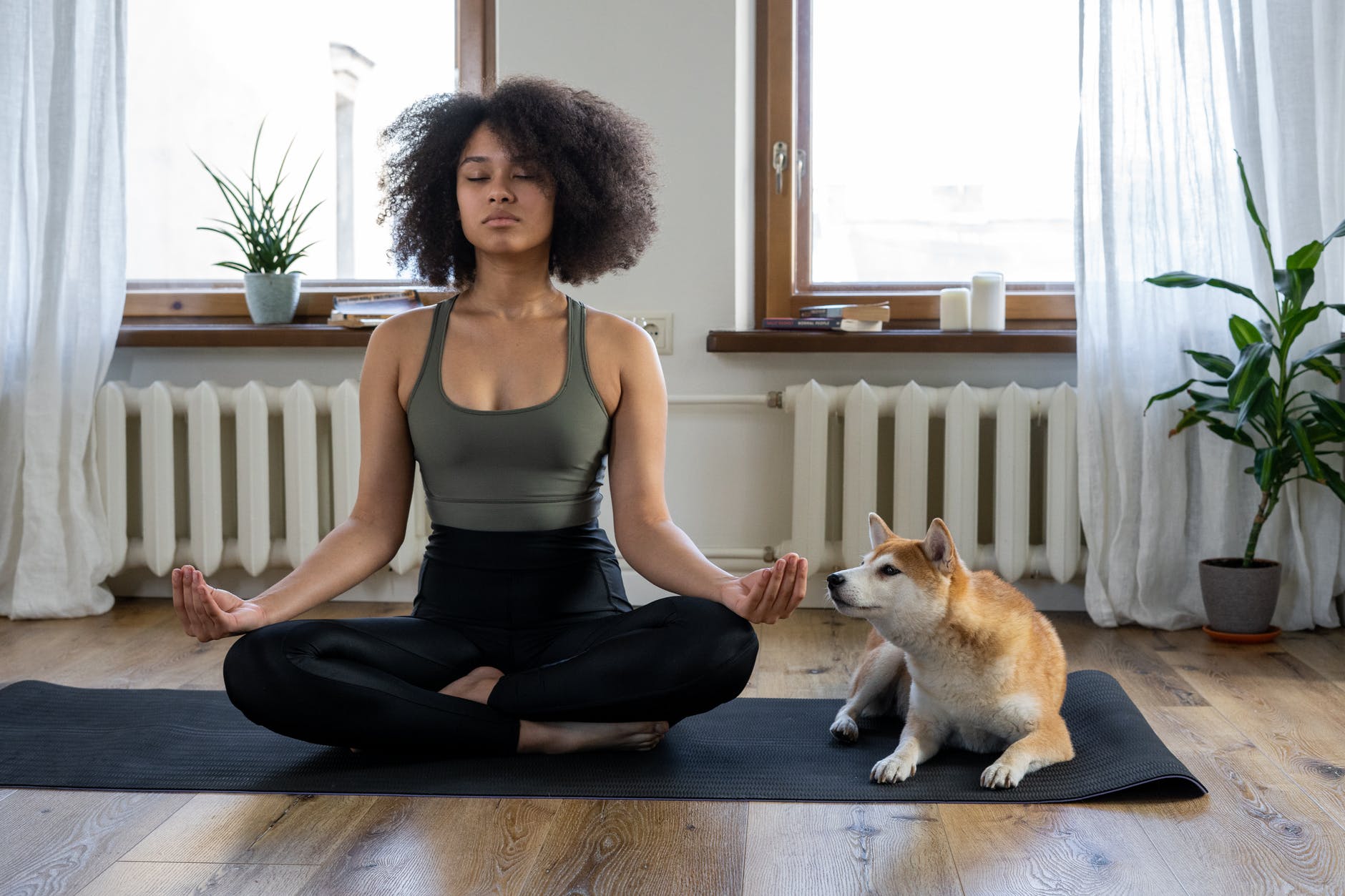
If stress has you anxious, tense and worried, consider trying meditation. Spending even a few minutes in meditation can restore your calm and inner peace. Anyone can practice meditation. It’s simple and inexpensive, and it doesn’t require any special equipment. And you can practice meditation wherever you are — whether you’re out for a walk, riding the bus, waiting at the doctor’s office or even in the middle of a difficult business meeting, or while studying .

During meditation you have to be n full attention , close your eyes & should try to concentrate , it will work out best when you will do it with Chinese flute . It will fill your eyes , ears & mind with relaxation , & hence you will forget all your stress . Doing such meditation for just 10 mins in a day will fill you with energy & enthusiasm & also you will feel relief from your stress . Meditation can give you a sense of calm, peace and balance that can benefit both your emotional well-being and your overall health. And these benefits don’t end when your meditation session ends. Meditation can help carry you more calmly through your day and may help you manage symptoms of certain medical conditions. Meditation might also be useful if you have a medical condition, especially one that may be worsened by stress.

While a growing body of scientific research supports the health benefits of meditation, some researchers believe it’s not yet possible to draw conclusions about the possible benefits of meditation. With that in mind, some research suggests that meditation may help people manage symptoms of conditions such as: anxiety, asthma , cancer ,chronic pain , depression, high blood pressure , sleep problems , tension headaches , etc. Don’t let the thought of meditating the “right” way add to your stress. If you choose to, you can attend special meditation centers or group classes led by trained instructors. But you can also practice meditation easily on your own. And you can make meditation as formal or informal as you like, however it suits your lifestyle and situation. Some people build meditation into their daily routine. For example, they may start and end each day with an hour of meditation. But all you really need is a few minutes of quality time for meditation.

As we always says , ” its not the quantity but the quality that matters . Hence you should spend the quality time doing mediation , & give you body a boost instead of stress .

Let’s Relieve Stress [part 2]

[Bhoomika Saini]

When stress becomes overwhelming, or it’s chronic, it can take a toll on your well-being. That’s why it’s important to have effective stress relievers that can calm your mind and your body. 

And what works for you at home might not be an option when you’re at work or in the community (dancing around your living room might be helpful but dancing in the grocery store might not be). 

So it’s important to have a variety of stress relief tools at your disposal. Then, you’ll be able to pick a strategy that works best for your current circumstances. 

Long-Term Stress-Relief Strategies for Lasting Health

Certain habits can promote resilience to stress, as well as increase overall wellness. For example, those who exercise or meditate regularly tend to become less stressed in the face of a difficult challenge.

So it’s important to create a lifestyle that will help you ward off stress and deal with challenges in a healthy way. 

Eat a Balanced Diet

A poor diet can bring greater reactivity toward stress. Emotional eating and reaching for high-fat, high-sugar foods can provide a temporary sense of relief that adds to your long-term stress.

Refined carbs, like cookies and potato chips, can cause a spike in blood sugar. When your blood sugar crashes, you might experience more stress and anxiety.

Consuming a healthy diet can help you combat stress over the long haul. Foods like eggs, avocado, and walnuts support mood regulation and energy balance. 

Make Time for Leisure Activities

Leisure activities can be a wonderful way to relieve stress. Yet, many people feel as though their lives are too busy for hobbies, games, or extra fun.

But building time for leisure into your schedule could be key to helping you feel your best. And when you feel better, you’ll perform better, which means leisure time may make your work time more efficient.

Whether you find joy in caring for a garden or you like making quilts, hobbies and leisure are key to living your best life.

Develop a Positive Self-Talk Habit

The way you talk to yourself matters. Harsh self-criticism, self-doubt, and catastrophic predictions aren’t helpful. If you’re constantly thinking things like, “I don’t have time for this,” and “I can’t stand this,” you’ll stress yourself out.

It’s important to learn to talk to yourself in a more realistic, compassionate manner. When you call yourself names or doubt your ability to succeed, reply with a kinder inner dialogue.

Positive self-talk can help you develop a healthier outlook. And an optimistic and compassionate conversation can help you manage your emotions and take positive action. 

Practice Yoga

Yoga combines physical movement, meditation, light exercise, and controlled breathing—all of which provide excellent stress relief.

And while you’re likely to reap immediate benefits from a single yoga session, you’re likely to receive long-term benefits if you incorporate it into your life in a consistent way. 

Yoga offers a variety of physical, psychological, and spiritual benefits. To get started, you might take a class, enroll in an online program, or use an app to help you begin practicing.

Express Gratitude

Gratitude helps you recognize all the things you have to be thankful for. Whether you’re grateful for a sunny day or thankful you arrived at work safely, think about all the good things you have in life.

Gratitude also reminds you of all of the resources you have to cope with stress, which can be quite empowering. 

Studies also show grateful people enjoy better mental health, lower stress, and a better quality of life.

So whether you decide to make it a habit to identify what you’re grateful for as you sit around the dinner table or you decide to write down three things you’re grateful for in a gratitude journal every day, make gratitude a regular habit. 

Prioritize Exercise

Physical activity is key to managing stress and improving mental health. And the best news is, there are many different kinds of activities that can reduce your stress.

Join a gym, take a class, or exercise outside. Keep in mind that there are many different ways to get more physical activity in your day too.

Walking, strength training, kayaking, hiking, and spin class are just a few different examples of ways you can get stress relief.

Strategies That Engage in Problem-Focused Coping

Most stress relievers focus on changing your emotions. But sometimes, you won’t necessarily get relief until you change the environment. 

This is referred to as problem-focused coping (as opposed to emotion-focused coping). Problem-focused coping involves taking steps to remove the stressor from your life (as opposed to changing how you feel about the stressor).

Reassess Your To-Do Lists

If you’re trying to squeeze 20 hours worth of work into 16 hours, you’re going to feel stressed. Reducing your workload could be key to helping you get through the day feeling better.

Whether that means stepping away from a committee you joined or it involves hiring someone to complete some of your household chores for you, 

Honing your time management skills can allow you to minimize the stressors that you experience, and better manage the ones you can’t avoid.

When you are able to complete everything on your “to do” list without the stress of rushing or forgetting, your whole life feels easier.

Obtain Social Support

Having supportive people in your life is the key to stress management. If you lack emotional support and friendship, it’s important to get it.

That may mean reaching out to your existing network. Perhaps confiding in a family member or distant friend can help you become closer and it may give you the social support you need.

You may also need to expand your network. Join an organization, attend a support group, or get professional help if you lack supportive people in your life. 

Cut out Things That Add to Your Stress

Sometimes, the best way to reduce your stress is to cut something out of your life. Get rid of the things that are adding to your stress so you can experience more peace. 

Watching the news, being constantly connected to your digital devices, drinking alcohol, and consuming too much caffeine are just a few of the things that may add more stress to your life. Making some changes to your daily habits could be instrumental in helping you feel better.

A Word From Verywell

Finding the best stress relief strategies may take some experimenting. Some strategies may take practice too.

But it’s important to keep looking for the tools that will help you manage life’s inevitable ups and downs in a healthy way. Keeping stress at a manageable level is important for your overall well-being.

Achieve Balance in Life Through Sahaja Yoga

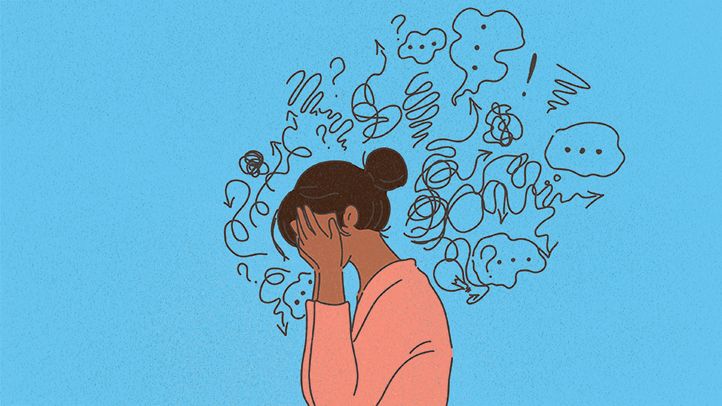
Stress, Anxiety, Load, Pressure, Depression, Overthinking, etc have became the friends of human beings these days. All these things have became the daily routine of all of us. We are so much engaged in these that we have lost our pure joy, our inner self. Where is our inner peace gone? Also the another part of this is that different kinds of diseases that we have never heard about them are coming in front of us and some of us are suffering form them. We are running behind money, yes it’s our duty to earn for our living but we are striving for more and more money, but people having money are they really happy, Joyful ? Many of us have got everything in our life but still, we are not happy with it we want more, we are not satisfied. Where is this satisfaction gone ? Have we came on this earth to suffer all these things? Have we taken birth to run after money, Job, Business, Girlfriend/Boyfriend, etc ? or there is something else for which we have came here ?

How does this Stress, Anxiety,Depression, Overthinking, etc come in us ?

Usually a human being keeps thinking about his past or about his future. When he thinks about his past he keeps on torturing himself why this happened to me? Why did behaved like that? When he thinks about the future he keeps worrying about What will happen? Will I get that or not? all these things leads to imbalance and gives rise to all the stress, anxiety, depression, overthinking within us and it grows very seriously in us that it becomes impossible to get out of it and it becomes our behavior. But to get out all of these things is possible though Sahaja Yoga.

What is Sahaja Yoga Meditation?

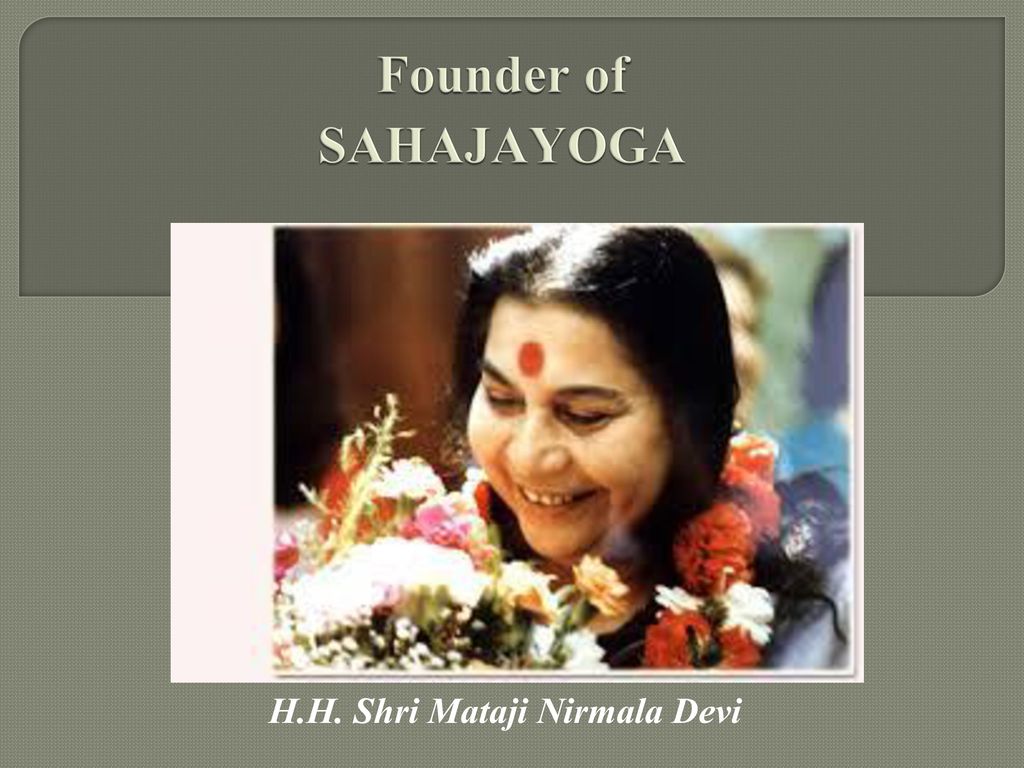
In a smaller sense Sahaja yoga meditation is the technique of meditation but in the larger sense it is the way of living. Sahaja Yoga is a very simple technique of meditation which connects us to our inner being to the all pervading power that created us. This meditation is a cognitive science in which each and every thing can be proven. This meditation is scientifically proven. Sahaja yoga meditation technique is founded by H. H . Shri Mataji Nirmala Devi in 1970 for the well being of the whole humanity.

“You cannot know the meaning of your life until you’re connected to the power that created you.”

-H. H. Shri Mataji

Founder of. SAHAJAYOGA. H.H. Shri Mataji Nirmala Devi.

How Sahaja yoga Meditation helps in balancing our lives?

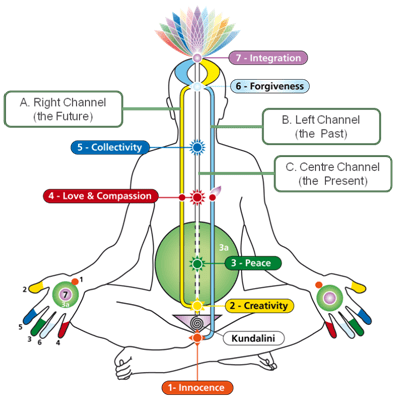
The meditation itself starts with balancing. There are two sides of our subtle system that is left, right and centre. The Left side is all about our emotions or the ‘Ichha Shakti’, our past activities. While the right side is all about our work also called as ‘Kriya Shakti’ and our future. And the central path is all about our present, about the truth, it is the path of our evolution. It gives us the absolute peace. In the lower part of our the abdomen, in the triangular part of our secrum bone is the Kundalini, it is the power of pure desire within us. When it rises, it passes through our central channel and peerses out of the fontanel bone area at the top of our head and gets connected to the all pervading power in the whole universe. We feel the cool breeze at the top of our head and on our hands. This moments gives us complete thoughtless awareness state and absolute peace.

How to practice Sahaja Yoga Meditation?

You can try the steps given below right now, just have the pure desire of getting your self realization and try this practically.

You may seat on the floor, or on the chair but make sure that your legs are touched to the mother earth. Take out your specks, shoes and close your eyes while doing the below steps.

Sahaja Yoga Meditation is open for all, for the person of any religion, cast, creed, etc. Because the energy is within every human being. Sahaja Yoga Meditation is Free Of Cost because, the value of raising the power within you cannot be returned in any amount of money.

For More Information Click on the links below

Stress: a social issue

We thrive on performance, competitiveness, and perfection in today’s culture, which leads to an insidious increase in stress. Stress produces harm that is frequently underestimated, and it is a social phenomena that should be thoroughly investigated and assessed.

What is Stress?

Stress is our bodies’ reaction to pressure. Stress may be caused by a variety of conditions or occurrences in one’s life. It is frequently triggered when we encounter something novel, unexpected, or threatening to our sense of self, or when we believe we have little control over a situation. We all react differently to stress. Our capacity to cope can be influenced by genetics, early life experiences, personality, and social and economic conditions. When we are stressed, our bodies create stress hormones, which cause us to fight or flee and activate our immune system. This enables us to react swiftly in risky circumstances.

This stress reaction can be beneficial at times: it can help us overcome anxiety or pain in order to run a marathon or make a speech, for example. When a stressful incident is done, our stress hormones typically return to normal soon, and there are no long-term consequences.

However, excessive stress might have a detrimental impact. It can keep us in a constant state of fight or flight, leaving us exhausted or unable to cope. This can have a long-term impact on our physical and emotional health.

Stress: The Bane Of Modern Existence

Our forefathers used to claim that “work is health,” but we now know that this is no longer the case. People are subjected to unprecedented levels of stress in today’s society and job. The symptoms of stress are everywhere, and the repercussions are diverse. The stress we feel on a daily basis is mostly produced by a number of phenomena that are inherent in today’s culture, including, but not limited to:

  1. Increased workload to boost productivity improvements
  2. Continuous pursuit of perfection;
  3. Obsession with winning;
  4. Balancing job, personal life, and family life;
  5. Significant shifts in attitudes and societal standards.

Stress affects all social groupings and age groups; no one can fully escape it. However, depending on their personal, psychological, professional, and health background, some people are more severely affected by its repercussions.

What is the source of our anxiety? Stress is the body’s natural reaction to everyday occurrences. There are several sources of stress and numerous strategies to deal with it. Fundamentally, stress is a human defensive mechanism, but it is critical not to allow it to take control.

Stress may originate from a variety of factors, including physical, psychological, emotional, social, and so on. A stressful occasion might be either joyous or sad (wedding, birth, travel, etc). (getting fired, going through a divorce, the loss of a loved one, etc.). The stimulus might be modest or large, and it can be brief or persistent. Because we do not all react the same way to stressors, it is critical to understand your stress triggers in order to effectively deal with them.

Signs of Stress:-

When confronted with a stressful circumstance, the human body responds by producing a variety of chemicals, including adrenaline. Stress can induce symptoms such as palpitations, a lump in the throat, worry, discomfort, and so on in its early stages. These symptoms are generally transient. Uncontrolled stress, on the other hand, may be damaging to one’s well-being and health over time; symptoms can then be physical, emotional, psychological, or behavioural in character. Here are a couple such examples:

  • sleep disorders
  • muscular tension
  • digestive disorders
  • irritability
  • agitation
  • depression
  • anxiety
  • burnout
  • increased isolation
  • relationship problems
  • work absenteeism
  • lower performance
  • loss of self-esteem

Aside from such obvious short-term consequences, stress leads to the development of a number of chronic illnesses, including heart disease, vascular disease, and cancer.

Obviously, stress has a bad impact. However, when correctly handled, it may have a positive impact. Indeed, it can assist to improve attention, contribute to creativity, enhance productivity, and aid in the development of new abilities. However, in order to do so, you must first learn to regulate and manage it.

How you might behave:-

  1. Withdraw from others or lash out at them
    be unable to make a decision or be flexible
    be moved to tears
  2. have difficulty falling or staying asleep
  3. encounter sexual issues
  4. More than usual, you smoke, consume alcohol, or use drugs.

How can you help yourself?

  1. Recognize when stress is a problem.
  2. Review your lifestyle.
  3. Build supportive relationships.
  4. Eat healthily.
  5. Be aware of your smoking and drinking.
  6. Exercise.
  7. Take time out.
  8. Be mindful.
  9. Get some restful sleep.
  10. Don’t be too hard on yourself.

Ways to Manage Stress

Stress is part of being human, and it can help motivate you to get things done. Even high stress from serious illness, job loss, a death in the family, or a painful life event can be a natural part of life. You may feel down or anxious, and that’s normal too for a while. Talk to your doctor if you feel down or anxious for more than several weeks or if it starts to interfere with your home or work life. Therapy, medication, and other strategies can help. In the meantime, there are things you can learn to manage stress before it gets to be too much. Consider these suggestions:

Exercise : To start with, physical activity can help improve your sleep.  And better sleep means better stress management. Doctors don’t yet know exactly why, but people who exercise more tend to get better deep “slow wave” sleep that helps renew the brain and the body. Just take care not to exercise too close to bedtime, which disrupts sleep for some people. Exercise also seems to help mood. Part of the reason may be that it stimulates your body to release a number of hormones like endorphins and endocannabinoids that help block pain,  improve sleep, and sedate you. Some of them (endocannabinoids) may be responsible for the euphoric feeling, or “runner’s high,” that some people report after long runs. People who exercise also tend to feel less anxious and more positive about themselves. When your body feels good, your mind often follows. Get a dose of stress relief with these exercises: running, swimming, dancing, cycling, aerobics.

Diet : The benefits of eating health foods extend beyond your waistline to your mental health. A healthy diet can lessen the effects of stress, build up your immune system,  level your mood, and lower your blood pressure. Lots of added sugar and fat can have the opposite effect. And junk food can seem even more appealing when you’re under a lot of stress. To stay healthy and on an even keel, look for complex carbohydrates, lean protiens, and fatty acids found in fish, meat, eggs and nuts. Antioxidants help too. They protect your cells against damage that chronic stress can cause. You can find them in a huge variety of foods like beans, fruits, berries, vegetables, and spices such as ginger. Stick to a healthy diet with a few simple tips. Make a shopping list. Carry healthy snacks with you when you leave the house. Stay away from processed foods, and try not to eat mindlessly. Scientists have pinpointed some nutrients that seem to help lessen the effects of stress on the body and mind. Be sure to get enough these as part of a balanced diet: Vitamin C, Magnesium, Omega-3 fatty acids.

Sleep : A common side effect of stress is that you may struggle to fall asleep. If this happens three times a week for at least 3 months, you may have insomnia, an inability to fall and stay asleep. Lack of sleep can also add to your stress level and cause a cycle of stress and sleeplessness. Better sleep habits can help. This includes both your daily routine and the way you set up your bedroom. Habits that may help include: Exercise regularly, Get out in the sunlight, Drink less alcohol and caffeine close to bedtime, Set a sleep schedule, Don’t look at your electronics 30-60 minutes before bed, try meditation or other forms of relaxation at bedtime. The role of your bedroom in good sleep hygiene also is important. In general, your room should be dark, quiet, and cool — 60-65 degrees is thought to be an ideal temperature to stay asleep. Your bed also plays an important role. Your mattress should provide support, space and most of all, comfort.

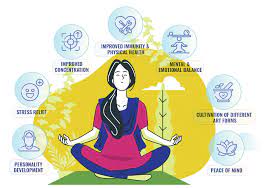
Meditation : It has been around for over 5,000 years for a reason. Meditation works well for many people and has many benefits. It can lower stress, anxiety, and chronic pain as well as improve sleep, energy levels, and mood. To meditate, you will need to: Find a quiet place, Get comfortable (sitting or lying down), Focus your attention on a word, phrase, object, or even your breath, Let your thoughts come and go and do not judge them.

Deep breathing: When you practice deep breathing, you turn on your body’s natural ability to relax. This creates a state of deep rest that can change how your body responds to stress. It sends more oxygen to your brain and calms the part of your nervous system that handles your ability to relax. Try belly breathing. Get comfortable, close your eyes, and place one hand on your stomach and the other on your chest. Take a deep breath in through your nose. You should feel your belly rise more than your chest. Now, exhale through your nose and pay close attention to how your body relaxes. Repeat.

Stress Management

Nowadays people have become fascinated about their money and beauty but they are not giving due care to their mental health. Stress is a mental tension caused by demanding ,taxing , burdensome circumstances and our increasingly busy lives.A life full of stress is something which is not acceptable and desirable by a person because when a person is in stress the hormones called CORTISOL and ADRENALINE are released into the blood stream thereby suppressing the functioning of the immune, digestive and reproductive system.

Also we need to understand every stress is not considered the bad one because stress is actually the survival response, when our body thinks that it is in danger it is also called as fight or flight response. The problem arises when the situation is constantly prevailing causing stress in the lives and a person don’t know how to manage it. That’s why stress management is tremendously important for our health, quality of life and relationships.

Migraines due to stress

Ways to Overcome Stress

1- Avoid Caffeine , Alcohol and Nicotine:

Many people try to overcome their stress by consuming alcohol , nicotine and rich in caffeine drinks but this is the big mistake people are committing which needs to be stopped first. Caffeine and Nicotine are stimulants which increases the level of stress rather than reducing it. Also alcohol is not ultimately helpful as it is a depressant when consumed in large quantities and a stimulant in small quantities. Herbal and other natural drinks must be consumed for keeping a person hydrated and to avoid these harmful stimulants.

2-Get more sleep:

Sleep plays an important role in maintaining a well being of an individual both physically and mentally. Lack of sleep is also an ultimate cause of stress. The environment of the bedroom must be calming and relaxing for a person so that they can have a sweet sleep also it is important to make sure that the bedroom is a tranquil oasis with no items of causing stress. There must be a fixed schedule for a person to sleep everyday so that the body get used to a predictable bedtime routine.

3-Talk to someone:

Communication allows a person to either distract them from their stressful situations or helps in reducing the built up tension by discussing it . In most of the situations a good friend and a colleague or a family member can guide us in a better way and also can provide us with the best solution for our stress.

4-Stress Diary:

In order to overcome stress the most significant thing is to understand what is the situation causing it so a person must have to maintain a stress diary in which they can write about their feelings and different situations along with their date ,time and the people they were with . This will eventually let them know what triggers them. It is basically a effective stress management tool to avoid stressful situations and to handle them with ease.

5-Physical activities:

Accompanying the daily life with proper exercises ,games and meditation will also help in avoiding stress as they can be used as a surrogate to metabolize the excessive stress hormones and restore the body in more calm state.

Stress Management Through Sahaja Yoga Meditation

Introduction

Stress is unavoidable in the current scenario, where the entire world is facing the Corona virus pandemic. With the toll of deaths and positive cases of Corona virus on rise, every person in this world is under stress and anxiety. Higher levels of stress adversely affect the physical as well as psychological health of the individuals concerned. Therefore, it becomes highly essential to manage stress at initial stages, so as to avoid severe consequences of high stress on health. The present article focuses on the management of stress through a unique form of meditation, i.e, ‘Sahaja Yoga’. Sahaja Yoga is a scientifically proven technique of meditation which involves the awakening of the dormant primordial energy- the Kundalini, and integrating it with the all-pervading cosmic energy. Regular practice of Sahaja Yoga meditation leads to the inner transformation of an individual, whereby one becomes more moral, integrated, balanced and healthy.

What is Stress?

Stress refers both to the circumstances that place physical or psychological demands on an individual and to the emotional reactions experienced in these situations. It leads to severe effects on the physical as well as psychological health of the individuals concerned such as frequent headaches, heart disease, myocardial infarction, cardiovascular disease, musculoskeletal disorders, diabetes, high anxiety, depression, post-traumatic stress disorder and so on. Since, stress is a psychological phenomenon, its management can be best realised by treatment focused at the mental level. Thus, the present article aims at spreading awareness about the stress management technique called ‘Sahaja Yoga’ and highlighting its significance in the improvement of overall health, especially, psychological health.
Sahaja Yoga Meditation

What is Sahaja Yoga?

The word ‘Sahaja’ means ‘spontaneous’ and ‘Yoga’ means ‘union with the self’
Sahaja Yoga was founded in 1970 by Mrs. Nirmala Srivastava, more widely known as ‘Shri Mataji Nirmala Devi’. Shri Mataji was spiritually enlightened since birth and granted en-masse realisation to people free of any materialistic consideration. For 40 years since 1970, she travelled tirelessly across the globe to teach Sahaja Yoga meditation world-wide at her own expenses 

Human Subtle System

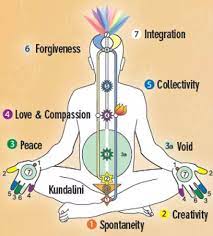
The process of Sahaja Yoga meditation works through the subtle system which comprises of three energy channels (nadis) and seven energy centres (chakras). At the root of this system lies a protective power – Kundalini. Amongst the three channels (Nadis), the left channel called Ida Nadi represents our desires (Ichha shakti); the right channel called Pingla Nadi represents our working ability (Kriya shakti); and the central channel called Sushumna Nadi represents our assent. The seven energy centres in the body correspond to the seven nerve plexuses: the pelvic plexus (Mooladhara Chakra), the aortic plexus (Swadhistana Chakra), the solar plexus
(Nabhi Chakra), the cardiac plexus (Heart Chakra), the cervical plexus (Vishuddhi Chakra), the optic chiasma (Agnya Chakra) and the limbic area of the brain (Sahasrara Chakra). These energy centres are responsible for maintaining their surrounding physical organs in the body.
When Kundalini rises it crosses all the six energy centres and emits from the seventh centre (Sahasrara Chakra) and unites the individual consciousness with universal consciousness. An individual rise above the three channels of the subtle system and reaches a timeless state beyond the past, present and future – a state of thoughtless awareness. This process is referred to as Self-realisation. As an evidence of self-realisation, an individual feels cool breeze of vibrations on the head and palms of hands .

How Sahaja Yoga Meditation Helps in Stress Management?

It is imperative to understand how stress arises and how is it managed through Sahaja Yoga meditation. The central channel (Sushumna Nadi) is the path of rising Kundalini and a channel of balance. An individual having too many desires and always thinking about the past deviates from the central channel and puts his left channel under pressure. On the other hand a workaholic person, always working and planning for the future puts his right channel under pressure. The left-sided individuals become highly emotional, conditioned and day dreamers while right-sided people become highly egoistic and harsh on others. Stress is the result of such an imbalance between the two energy channels and deviation from the central channel.
Therefore, one should always keep his attention on the central channel and remain in the balanced state in order to be stress-free. Thus, Sahaja Yoga helps in managing stress effectively by attaining and maintaining the balanced state through regular meditation, since by focussing on the central channel one remains in present rather than thinking about past or future events.


Sahaja Yoga in the present Coronavirus Scenario

As many as 200,000 people across 60 countries have attended online meditation sessions since 16 March 2020 with the commencement of lockdown, according to the information published nation-wide from H.H. Shri Mataji Nirmala Devi Sahaja Yoga Trust (National Trust). The Youtube channel – Pratisthan, Pune of the Trust has seen around 2 million views with 7.31 lakh watch hours and over 13.2 million impressions in the lockdown period. Each viewer attended an average of 8.6 session and spent average of 23 minutes per visit, which is substantial as people look towards meditation to overcome anxiety during COVID19 lockdown.

Conclusion

Sahaja Yoga meditation activates and nourishes the parasympathetic nervous system which relaxes both body functions and the brain by reducing thinking functions Thus, regular meditation everyday cleanses the subtle system, relaxes body and mind, and gradually one starts experiencing physical, mental and emotional benefits also, apart from gaining stress relief Thus, the Indian government should focus on building resilient citizens which can adjust with the pressures of the present stressful scenario.

LEISURE HIDES THE SECRET OF PRODUCTIVITY

“Guard well your spare moments. They are like uncut diamonds. Discard them and their value will never be known. Improve them and they will become the brightest gems in a useful life.”
― Ralph Waldo Emerson

WHY NECESSARY?

Leisure means respite from work. It is essential for men tired with work. A little leisure refreshes the tired limbs and makes him fit for another period of work.

VARIOUS WAYS OF SPENDING SPARE TIME

Modern life is full of cares and worries. We have to work very hard with little or no success. Some work in factories from morning till night, some work in offices for seven, eight or nine hours a day every person has to work hard to earn his or her living. But human body is not a machine. It cannot work continually for hours together it requires some rest. Even a machine is given rest. Otherwise, it breaks down. That is why leisure is so essential. Like machines, our health will break down completely if we have no regular leisure. It always helps us regain our lost energy and refreshes so that we may continue to do our work next day with more vigour both mental and physical.

ITS USE AND MISUSE

So, leisure we all must have. But it does not mean complete cessation of work. Our limbs may stop working; but our mind is never idle. Once the tension of physical labour is gone mind has time to relax and engage itself in finding enjoyment in some entertainment or recreations. Leisure does not mean idleness. It can be utilised by engaging oneself in recreations. All work and no play makes Jack a dull boy. So, work must be followed by recreations that brace up the mind and spirit.

CONCLUSION

Leisure varies from one person to another. Some utilise it in light reading, while other in their particular hobbies, like playing at cards, or at instruments there are some who go to the stress or cinemas for entertainments, while there are others who take evening walks. There are some who simply sit tight and enjoy the pleasure of doing nothing Whatever may be the mode of enjoying leisure, we must have it. Otherwise our life would become dull. We will lose interest in life. Life has to be lived and lived fully and joyfully.

Healthy Foods To Avoid Stress!

[ By Bhoomika Saini ]

Feeling Stressed?

Maybe Healthy Eating Is The Key.

It's not about eating. It's about using the food to deal with anxiety and stress.

Staying at home during the time of this pandemic invited a lot of stress and anxiety for every individual. Since, many of us had become lazy during this time. We have stopped eating healthy as it is easy to order unhealthy food from online stores rather than cooking healthy and learning at home. This habit made us unhealthy, also it is harming our health day by day. Stress along with unhealthy eating is like inviting problems in your own home.

A healthy diet builds a solid, more enduring foundation for your body by reducing oxidation and inflammation and by helping to reduce weight gain.

There are many ways that can reduce your stress and make you feel better. Here, we’ll be discussing about one of them. And it’ll begin from eating healthy during the time of stress. Healthy food can bring wonders to oneself, so stop eating unhealthy food and start eating healthy today. One step to drive away your stress shall begin from here.

Also, there’s a huge difference between eating healthy during stress and stressful eating. One can be beneficial and other one could bring huge disadvantages to you. Moreover, adding some exercise in the routine wouldn’t hurt much.

So, here are some foods that can help you to avoid unhealthy eating and to drive your stress away.

Stay healthy , stay fit
Stay healthy ,stay fit

  1. Sweet Potato– To calm down the stress, sweet potato might work well as it contains potassium, beta-carotene and other vitamins that also reduces the urge to eat carbohydrates and sweets, thus helping you to avoid the urge to eat more.
  2. Eggs- They are packed with vitamins, minerals, amino acids and antioxidants that play an important role in relieving stress.
  3. Chickpeas- They are packed with stress-fighting vitamins and minerals, including magnesium, potassium, B vitamins, zinc, selenium, manganese, and copper that can help in stress reduction.
  4. Dark Chocolate- Many experts say that it helps in reducing stress as it contains flavonoids and magnesium that may reduce the depression symptoms too.
  5. Turmeric- Curcumin in tumeric may help lower anxiety by reducing inflammation and oxidative stress that often increase in people experiencing mood disorders, such as anxiety and depression.
  6. Yogurt- It contains healthful bacteria, Lactobacillus and Bifidobacteria. There is emerging that these bacteria and fermented products have positive effects on brain health.
  7. Green Tea- Theanine in green tea has anti-anxiety and calming effects and may increase the production of serotonin and dopamine.
  8. Warm milk- It has loads of B vitamins that reduce anxiety and improve mood. For instance, vitamin B6 (pyridoxine) raises serotonin levels to perk you up.
  9. Nuts- Nuts are full of nutrients, including B vitamins, along with healthy fatty acids. B vitamins are an important part of a healthy diet and can help reduce stress.
  10. Citrus foods- Flavonoids found in citrus fruits have anti-inflammatory capabilities that are thought to help protect against the chain of events that causes the nervous system to deteriorate.
  11. Oatmeal- Oatmeal is warm and comforting-and it also helps your brain generate the destressing neurotransmitter serotonin.
  12. Green Leafy Vegetables- Green leafy vegetables like spinach contain folate, which produces dopamine, a pleasure-inducing brain chemical, helping you to keep calm.

Start eating right today to nourish your body. So, first step to drive your stress away starts today.

Work-life balance in the present scenario

It is evident that like all things, advancement in technology also has its pros and cons. With time and technological advancements, employees all around the world become easily accessible even after work hours. Due to this, it has become very difficult for employees as well as their organisations to differentiate between work and life outside work, especially as the ‘work from home’ concept gains popularity due to the pandemic.

For some employees work begins even before they reach their workplace. They do not even get the opportunity to start the day they want to. Checking messages and making calls first thing in the morning can be very stressful. Some do not get to spend enough time with their children and family, due to the exhausiting demands of their jobs. For some, vacation isn’t really time off.

Work to live, not live to work

It is important for both the parties, the employees and their organisations to understand the ‘work to live, not live to work’ ideology. As an individual, the employee must not let their work define them. There are various other aspects of life that are equally important. It is crucial to maintain a balance and not overlook the other aspects even if work provides them with recognition, power, status or money.

Otherwise, one day, if they were to lose their jobs due to unforeseeable circumstances (the pandemic for example) or even retire, they wouldn’t be left with anything substantial like human connections, hobbies or personal interests. To conclude, an individual shouldn’t be dependant on their jobs to the extent that they feel lost if they were to lose it, no matter how passionate they are about their work. Balance is very important.

Nowadays, it is very easy to get lost in the race of establishing oneself and earning more. Due to this, one never realises that they reached their initial goal years ago. It is human nature to always want more. However, it is important to be grounded and introspect from time to time so it doesn’t become a never-ending process.

As an organisation, it is equally important to respect their employees’ boundaries and preach and implement a healthy work-life balance. Although technology makes it very easy to reach people, it is important to use it professionally and set some boundaries. This will also benefit the organisation in the long run as employees who are not overburdened and overwhelmed with work and have a good work-life balance with frequent days off or vacations in the year, tend to be more creative and energetic and more importantly, feel cared for.

Therefore, it will not only increase the performance and productivity of the employees of the organisation but also help it retain its employees.

It is extremely important for an employee to be well-rested, have a good social life outside work to give their 100% at work. Studies show that overwhelmed and overworked employees are less productive and creative. Fatigue might result in low morale and zeal and takes a toll on the mental and physical health of the employees of the organisation which would lead to high employee turnover rates.

An organisation should promote healthy work life balance and days off for their employees so the employees feel like an integral and valuable part/asset of the organisation. This would boost the organisational citizenship behaviour of its employees which would ultimately help the organisation retain its employees.

10 Simple ways to deal with stress

Photo by Pixabay on Pexels.com

Tips to manage stressful situations

It might surprise you to learn that biological stress is a fairly recent discovery. It wasn’t until the late 1950s that endocrinologist Hans Selye first identified and documented stress.

Symptoms of stress existed long before Selye, but his discoveries led to new research that has helped millions cope with stress. We’ve compiled a list of the top 10 ways to relieve stress.

Listen to music

If you’re feeling overwhelmed by a stressful situation, try taking a break and listening to relaxing music. Playing calm music has a positive effect on the brain and body, can lower blood pressure, and reduce cortisol, a hormone linked to stress.

We recommend cello master Yo-Yo Ma playing Bach, but if classical really isn’t your thing, try listening to ocean or nature sounds. It may sound cheesy, but they have similar relaxing effects to music.

Talk it out with a friend

When you’re feeling stressed, take a break to call a friend and talk about your problems. Good relationships with friends and loved ones are important to any healthy lifestyle.

They’re especially important when you’re under a lot of stress. A reassuring voice, even for a minute, can put everything in perspective.

Talk yourself through it

Sometimes calling a friend is not an option. If this is the case, talking calmly to yourself can be the next best thing.

Don’t worry about seeming crazy — just tell yourself why you’re stressed out, what you have to do to complete the task at hand, and most importantly, that everything will be okay.

Eat right

Stress levels and a proper diet are closely related. When we’re overwhelmed, we often forget to eat well and resort to using sugary, fatty snack foods as a pick-me-up.

Try to avoid sugary snacks and plan ahead. Fruits and vegetables are always good, and fish with high levels of omega-3 fatty acids have been shown to reduce the symptoms of stress. A tuna sandwich really is brain food.

Laugh it off

Laughter releases endorphins that improve mood and decrease levels of the stress-causing hormones cortisol and adrenaline. Laughing tricks your nervous system into making you happy.

Our suggestion: watch some classic Monty Python skits like “The Ministry of Silly Walks.” Those Brits are so hilarious, you’ll soon be cracking up, rather than cracking up.

Drink tea

A large dose of caffeine causes a short-term spike in blood pressure. It may also cause your hypothalamic-pituitary-adrenal axis to go into overdrive.

Instead of coffee or energy drinks, try green tea. It has less than half the caffeine of coffee and contains healthy antioxidants, as well as theanine, an amino acid that has a calming effect on the nervous system.

Be mindful

Most of the tips we’ve suggested provide immediate relief, but there are also many lifestyle changes that can be more effective in the long run. The concept of “mindfulness” is a large part of meditative and somatic approaches to mental health and has become popular recently.

From yoga and tai chi to meditation and Pilates, these systems of mindfulness incorporate physical and mental exercises that prevent stress from becoming a problem. Try joining a class.

Exercise (even for a minute)

Exercise doesn’t necessarily mean power lifting at the gym or training for a marathon. A short walk around the office or simply standing up to stretch during a break at work can offer immediate relief in a stressful situation.

Getting your blood moving releases endorphins and can improve your mood almost instantaneously.

Sleep better

Everyone knows stress can cause you to lose sleep. Unfortunately, lack of sleep is also a key cause of stress. This vicious cycle causes the brain and body to get out of whack and only gets worse with time.

Make sure to get the doctor-recommended seven to eight hours of sleep. Turn the TV off earlier, dim the lights, and give yourself time to relax before going to bed. It may be the most effective stress buster on our list.

Breathe easy

he advice “take a deep breath” may seem like a cliché, but it holds true when it comes to stress. For centuries, Buddhist monks have been conscious of deliberate breathing during meditation.

For an easy three- to five-minute exercise, sit up in your chair with your feet flat on the floor and hands on top of your knees. Breathe in and out slowly and deeply, concentrating on your lungs as they expand fully in your chest.

While shallow breathing causes stress, deep breathing oxygenates your blood, helps center your body, and clears your mind.

Learn more about stress relief

Stress is an unavoidable part of life, but that doesn’t mean you should ignore it. Too much untreated stress can cause potentially serious physical and mental health problems.

The good news is that in many cases, stress is manageable. With some patience and a few useful strategies, you can reduce your stress, whether it’s family stress or stress at the workplace.

I hope these tips help you.

Thank you.

Too Much Information- Source of your stress?

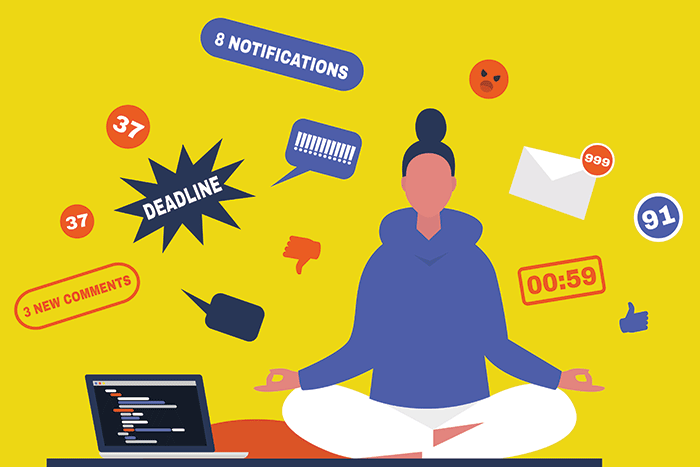
Input overloading. Information overload concept. Young woman running away from information stream. Concept of person overwhelmed by information. Colorful vector illustration in flat style

Too much information is harmful for us, yes you read that right. In this age of internet, we are surrounded by so much information on all sides, its actually adding onto our stress levels. With so many sources of information just at the palm of your hand be it work related, entertainment or political, we do not even realize how little of it is actually important for us.

“We are now so preoccupied with keeping up with the bombardment of new facts, new developments, and new points of view that we have no time to listen to the past, or reflect on even the most recent history, much less to make a judicious reckoning of its significance.”

-Regis McKenna, public relations specialist.

Due to information overload in workplace, the employees have to deal with tension between work colleagues and loss of job satisfaction. This amount of stress is affecting the health of the employees and even their personal relationships suffer.

Having too much information interferes people’s ability to make decisions and most of the time is wasted in collecting and searching information. Many people believe that internet is the prime cause of information overload over the years. Wherever you go on social media, be it a social networking site or even our e-mail accounts, it is all filled with so much content totally irrelevant, but we scroll through it anyway, reading and taking in most of it anyway even after knowing that it would be of no use to us.

We should be smart enough to decide how much information we actually need. The key is to ‘filter’ and be selective in our information intake. We know it very well that it’s impossible to gather and analyze all the information related to your work and doing so would leave us no time to complete our necessary task.

Most of the information we absorb on a daily basis is largely irrelevant, both to our business and to our personal lives. So much of it is either sensational or celebrity focused, earlier most of the people depended on it to kill their boredom, but now when we are already so busy, we don’t even have the time to be bored but yet continue to do so.

All we need to do is a social media detox and save some time by cutting low content media from our diet and make sure the content that we are following is beneficial to us in some way. Keeping only the useful and content of our interest will help us to keep our stress levels in control, after all we use the internet as way to release our stress so it should definitely not be a source of it.

PROCRASTINATION- THE INNER DEMON.

Procrastination is the act of casually delaying decisions or activities. For example, if you need to complete a project, completely end up spending time on the internet even you remember you should be working, that indicates that you’re procrastinating. Procrastination is often pernicious to people’s capacity to triumphantly achieve their goals. Procrastination normally means disregarding an unpleasant, yet likely more significant task, in the inclination of one that is more delightful or more manageable. Etymologically, “procrastination” is derived from the Latin verb procrastinate — to put off until tomorrow. People usually believe that procrastination is solely a topic of the willpower, yet in certainty, the condition is far more complicated than that.

When challenged with a choice to perform or a responsibility to complete, we ordinarily rely on our stability in order to force ourselves to accept tasks fulfilled. Moreover, our impulse, which is based on the expectation of achieving some award for our struggles, can increase our self-control, and get it more possible that we will get everything done appropriately. However, there are also various demotivating circumstances that we can endure, which have an adverse impact than our urge, signifying that they make us more inclined to procrastinate. For example, stress, fear of failure, and other invalidating troubles can cause us to dawdle carelessly. Procrastinators oftentimes put off preparing things, drop them to the extremely end moment, or seldom also waste their time gazing at the wall. Nonetheless, be mindful, procrastination is not a metonym for flagging. It’s a great plan to begin applying the term procrastination rather than applying the word’s negligence or setting something off. It gives a much more precise representation of your state. Simply addressing the correct title to your dilemma, then you start working on it.

How to stop procrastinating? Focus on performing, not withdrawing. Pen down the duties that you require to finish, and specify a time for performing them Switch off your email and social media, and withdraw lying anywhere near a television while you work. The personal concept is one important aspect, it helps you recognize your abilities and priorities, and by building one, you will nevermore think failed in what is it that you desire to do with your life. There are various apps created to assist you to be extra established, use that. If you accomplish a tough assignment on time, reward yourself with a gift. Acquiring new ways is one of the essential details of individual improvement. If we form a manner of creating something, its implementation needs more limited rational energy to do it. Acquiring new practices is, hence, quite significant. So overcome your procrastination to reach greater heights of success.

Factors of Work Stress and its Management : A Practical Case Study

Abstract
This research studies work stress, and how it is related to performance and productivity in an organization. At first,
definitions and types of stress are defined, along with its sources and effect on individual. Then, a demonstration of the
subsequent consequences of individual stress on an organization is discussed, hence showing the importance of stress
management in an organization.
Stress management policies and procedures are then explained and specified for each significant type of a stressor. This
is done using a practical case study of an organization, where it shows how this firm deals with each kind of different
stressors.
Keywords: stress, productivity, time management, conflict management, workplace diversity.

  1. Introduction
    Stress is a dynamic condition in which an individual is confronted with an opportunity, constraint, or demand related to
    what he or she desires and for which the outcome is perceived to be both uncertain and important.
    Organizations are mainly concerned with work stress. Nevertheless, organizations provide training to their employees
    how to manage other personal stresses, since it affects work performance. In addition, organizations always follow up
    with economical, environmental and political stresses, since they all directly affect organizational work and increase
    their internal stress.
  2. Types of Stress
    a) Challenge Stressors (Beneficial stressors): Stress associated with workload, pressure to complete tasks, and
    time urgency. They enhance motivation, energy, alertness, and positive attitude.
    b) Hindrance Stressors (Negative stressors): Stress that keeps you from reaching your goals, and leave a
    feeling of depression, anxiety, or pressure, such as red tape, role ambiguity, role conflict, role overload, job
    insecurity, etc, and they cause greater harm than challenge stressors
  3. Sources of Stress
    a) Environmental factors
    b) Organizational factors
    c) Personal factors

3.1 Environmental Factors
a) Economic uncertainties of the business cycle: many organizations are downsizing, so workers are
afraid of losing their job
b) Political uncertainties of political systems
c) Technological uncertainties of technical innovations, where many technologies are replacing
human forces, and others require high technical education in order to use, which forces
employees to always keep learning and following up with these technologies.

3.2 Organizational Factors
1) Long working Hours
2) Work-Life Balance
3) Manager’s inability to find solutions for stress
4) Security Hassles
5) Retirement Plans
6) Safety Fears
7) Job stability and fear of downsizing.
8) Stress to produce
9) Stress to abide by rules
10) Stress to live up to expectations
11) Task demands related to the job
12) Role demands of functioning in an organization
13) Interpersonal demands created by other employees, stress to interact with co-workers, supervisors, and to do
this without causing hardship to ourselves or others
14) Workplace Diversity
3.3 Personal Factors
1) Family and personal relationships
2) Economic problems from exceeding earning capacity
3) Personality problems arising from basic disposition

  1. Consequences of Stress
    Stressors are additive. High levels of stress can lead to the following symptoms:
    a) Physiological: Blood pressure, headaches, stroke
    b) Psychological: Dissatisfaction, tension, anxiety, irritability, boredom, and procrastination. These effects are
    greater when roles are unclear in the presence of conflicting demands
    c) Behavioral: Changes in job behaviors, increased smoking or drinking, different eating habits, rapid speech,
    fidgeting, sleep disorders
  2. Cost of Stress on Organization
    a) Lowered productivity
    b) Excessive absenteeism
    c) Increased insurance costs
    d) Increased turn over
  3. Case Study: An Organization Implementation of Stress Management
    The following is a demonstration of several kinds of stressors and the solutions that the organization’s management
    implements for them:
    6.1 Long working hours:
    1) Management teaches and trains its employees on the following:
    a) Good time-management techniques, never to delay work for the last minute, etc.
    b) Change employees’ attitudes and encourage positive self-talk: how to think of stressful situations
    as a challenge to your creative thinking, Always say: “I am capable of doing it, it’s good for me to
    enhance my capabilities and learn new tough skills, etc.”

2) Managers give positive reinforcement: they tell their employees when they do a good job, and
complement them on it.

3) The Organization applies recognition and rewards programs

6.2 Work-Life balance
1) Applying Flex-time, especially for females who have children and house responsibilities, where they do not
have to be restricted to come and leave at a specific time, as long as the total sum of working hours still the
same.
2) Establishing nurseries in the organization for day care for employees’ children
3) Applying Labor Law that states to offer paid vacations of minimum 21 days for employees ( this varies
according to each country)

6.3 Technology
1) The Organization employs a specialized IT professional who is only responsible for assisting all employees
on their IT related issues
2) The organization provides specialized training courses on any topic required for work advancement
6.4 Manager’s inability to find solutions for stress
1) The organization encourages communication and always asks for feedback, where the HR manager is always
directly accessible to any employee to listen to.
2) The organization always try to follow up with all corporate and business news, in addition to new studies
published regarding work stress, how to spot it and solve it

6.5 Security Fears
The Organization has done great efforts in making employees and people feel safe by applying laws for security
checks, checking identities of visitors to the firm and not allowing unauthorized people to enter


6.6 Retirement Plans
Applying Social Security system and pension funds, which is a great insurance and relief for employees in order not
to worry about their retirement any more.

6.7 Job stability and fear of downsizing
The Economic Crisis is very complex. Unfortunately, layoffs and downsizing are forced on many organizations, and
there is nothing that management can do internally to stop this issue.

6.8 Task demands related to the job and Role demands of functioning in an organization
1) The organization applies the technique of “Improved personnel selection and job placement” which states
that it is not only enough to assign a task to a person only according to his technical skills, but also his
personality, tolerance of a specific type of stress, should be taken into consideration.
2) The organization also tries its best to set realistic goals and priorities. This is related to goal-setting
motivation theory that states that goals must be difficult, but specific and attainable, and not impossible.
3) The organization implies the “Redesigning of jobs” concept as follows:
a) Taking responsibility: it encourages employees to take responsibility for their own job and for their
contribution to the success of the company as a whole. This encourages a feeling of control over their
life and let them know how important their efforts are to the overall plan.

6.9 Interpersonal demands created by other employees, stress to interact with co-workers and supervisors
The organization tries to apply the most recent and proper Conflict management techniques as follows:
1) Setting ground rules of what is acceptable and what is not, and documenting them formally in the firm’s
policies.
2) Encouraging civilized communication.
3) Applying conflict management that focuses on issues not on personalities
4) Applying conflict management that also focuses on present not on past conflicts.
5) Applying compromising techniques that are a win-win scenario for both parties involved.
6) Applying forcing techniques when necessary after using all previous techniques.
7) Applying penalty rules for breaking any of the ground rules.

6.10 Workplace Diversity
The firm hires all kinds of experiences from all ages, genders, and from all levels of educations.
The following are some major points in managing workplace diversity:
1) Female participation:
a) The organization encourages a lot female participation, not just in entry and mid levels, but also in
executive levels.
b) It hires a large number of females.
c) It forces male co-workers to cooperate, and respect them, and even to abide to their instructions when
they are in higher positions.
2) Experience, age and education diversity:
a) Older employees, executives and managers do not treat younger employees with superiority, instead,
they treat them as their sons, teaching them and advising them.
b) Younger employees should respect older and higher executives and managers and abide to their
instructions and learn from them.

Conclusion
People are the core base of any organization, so, caring and concerning about their individual issues is a pillar for
success, and that is what stress management fulfils, where it is a declaration that an individual’s health is the overall
health of the organization.
This is also an indication that separation among employees’ different life aspects is no longer an option, hence
organizations are becoming responsible and involved in these other life aspects, all in an attempt to reduce levels of
stress as possible, which means improving work productivity as much as possible.

Reference:
Stephen Robbins, Timothy Judge, 2011. “Organizational Behavior”, 14th edition, Pearson