We have been conditioned in such a way that it is believed, that women are supposed to be fragile and sensitive in nature where as men are supposed to be thick-skinned and emotionally numb. However, in reality emotions are gender neutral. It’s not manly to be strong and harsh. And similarly, it’s not feminine to be weak and to cry. The experiences faced by men or women might be different but since they are both humans and have emotions, it is not wrong to express it. (So, the next time someone tells you to man up and stop crying, you know what to say)
SHARING RESPONSIBILITIES AND RESPECTING THE OPINIONS OF YOUR PARTNER DOES NOT MAKE YOU A ‘JORU KA GULAM‘
Understanding, Compassion and Mutual – Respect should be the basis for any healthy relationship. It is the basic need of a human to be heard and acknowledged. Hence, it doesn’t make a man a ‘JoruKa Gulam’ if he is respectful to the opinions of his partner and understands him/her. Society in general tends to question and mock those changes that question their years of belief. In order to avoid their inner-conflict, they discourage the progressive mass so that they don’t have to change and no one can question them. (Yes, kind of like a defence mechanism – Pointing fingers at the other person before they point at you).
FAMILY RESPONSIBILITY SHOULD NOT BE THE SOLE RESPONSIBILITY OF A MAN OR A WOMEN.
Two people form a relationship and they are called partners for a reason. They are part responsible for every aspect of a household. So why should the burden of the entire family fall on the shoulders of a single person. It is normal for a woman to have a successful career and to support a family financially. (No, it doesn’t make him less manly by earning less or letting his wife handle finances). Similarly, household chores should not be the sole responsibility of a women. It doesn’t make a man submissive if he cooks for his partner or does basic household chores. Rather, such relationships are built on mutual respect and compassion which tend to last longer.
STRONG, BRAVE AND INDEPENDENT ARE NOT TERMS SYNONYMOUS WITH MEN.
It is acceptable for a women to be strong yet sensitive, to be scared yet courageous enough to face it. Adjectives like strong, brave are often used for men, whereas it’s completely normal for a women to have each of those qualities. We have women officers who are equally as brave as the men. There are men who prefer household work over finances and it doesn’t make them dependant on their partners or submissive in any way.
A pet, or companion animal, is an animal kept primarily for a person’s company or entertainment rather than as a working animal, livestock or a laboratory animal. Popular pets are often considered to have attractive appearances, intelligence and relatable personalities, but some pets may be taken in on an altruistic basis (such as a stray animal) and accepted by the owner regardless of these characteristics.
Two of the most popular pets are dogs and cats; the technical term for a cat lover is an ailurophile and a dog lover a cynophile. Other animals commonly kept include: rabbits; ferrets; pigs; rodents, such as gerbils, hamsters, chinchillas, rats, mice, and guinea pigs; avian pets, such as parrots, passerines and fowls; reptile pets, such as turtles, alligators, crocodiles, lizards, and snakes; aquatic pets, such as fish, freshwater and saltwater snails, amphibians like frogs and salamanders; and arthropod pets, such as tarantulas and hermit crabs. Small pets may be grouped together as pocket pets, while the equine and bovine group include the largest companion animals.
Pets provide their owners (or “guardians”) both physical and emotional benefits. Walking a dog can provide both the human and the dog with exercise, fresh air and social interaction. Pets can give companionship to people who are living alone or elderly adults who do not have adequate social interaction with other people. There is a medically approved class of therapy animals, mostly dogs or cats, that are brought to visit confined humans, such as children in hospitals or elders in nursing homes. Pet therapy utilizes trained animals and handlers to achieve specific physical, social, cognitive or emotional goals with patients.
People most commonly get pets for companionship, to protect a home or property or because of the perceived beauty or attractiveness of the animals. A 1994 Canadian study found that the most common reasons for not owning a pet were lack of ability to care for the pet when traveling (34.6%), lack of time (28.6%) and lack of suitable housing (28.3%), with dislike of pets being less common (19.6%). Some scholars, ethicists and animal rights organizations have raised concerns over keeping pets because of the lack of autonomy and the objectification of non-human animals.
• After a 70-year effort, China has been awarded a malaria-free certification from WHO.
Malaria
• A life-threatening disease caused by Plasmodium parasites.
• Vector – Mosquito.
• P. falciparum and P. vivax pose the greatest threat.
• 2019: 229 million cases of malaria worldwide.
• Most malaria cases and deaths occur in sub-Saharan Africa. • Also prevalent in South-East Asia, Eastern Mediterranean, Western Pacific, and the Americas.
• 40 countries/ territories are malaria-free -WHO.
• China – first country in WHO Western Pacific Region to be awarded a malaria-free certification in more than 3 decades. Other countries in the region – Australia (1981), Singapore (1982) and Brunei Darussalam (1987).
• India is not yet a malaria free country.
China’s Malaria elimination journey
• 1950s: Chinese health authorities worked to locate and stop the spread of malaria. Provided preventive antimalarial medicines.
• A major effort to reduce mosquito breeding grounds
use of insecticide spraying. • 1967: Chinese Government launched the “523 Project”.
Nation-wide research programme aimed at finding new treatments for malaria. Led to the discovery in the 1970s of artemisinin. Core compound of artemisinin-based combination therapies (ACTs) – most effective antimalarial drugs available today. • 1980s: China – one of the first countries in the world to extensively test the use of insecticide-treated nets (ITNs).
• 1988: more than 2.4 million nets had been distributed in China.
• 1990: number of malaria cases in China fell to 1,17,000; deaths were reduced by 95%
• Funding by the Global Fund to Fight AIDS, Tuberculosis and Malaria, launched in 2002.
• 2021: China was declared as a Malaria free country.
You see the problem is that fat, isn’t just the inch you can pinch known as subcutaneous fat the real danger is the fat that’s in your abdomen and surrounding your internal organs known as visceral fat. Studies have shown visceral fat puts us at higher risk of heart disease, type 2 diabetes and in women it’s even shown to increase the risk of breast cancer.
THE SCIENCE BEHIND THESE EXERCISES AND WEIGHT LOSS:
If done correctly after 6 weeks the study showed a loss of just over 2cm around the waist of the participants which is great and you can do this without any diet change and see a difference. Now these results are good but they’re definitely not as good as the diet change group which I spoke about in the first part of this video who lost 1kg a week and 5cm around the waist after 6 weeks.
And this because the participants who only did the abdominal exercises so no diet change only really improved their muscle tone. Well we know by increasing your muscle tone your essentially holding fat in with muscle so they haven’t reduced the fat around the waist but it does give a thinner appearance hence the 2cm reduction.
Which is why it’s important not be fixated on just doing abdominal crunches to try and lose weight or belly fat. Yes these exercises have been shown to give a 2cm reduction in waste size after 6 weeks. But you also really need to make those dietary changes as explained in part one of this video for maximum impact. If you do the diet correctly you should expect to lose 0.5 to 1kg every week which is great but here’s the best part after 6 weeks the study showed that each individual also reduced their dangerous visceral fat by 14% and they reduced their cholesterol, blood pressure and had a 5cm reduction in their waistline and that’s without any exercise so just imagine the results if you merge these abdominal exercise and diet change.
BMI CALCULATOR:
Before beginning any diet it’s definitely worth checking if you actually need to lose weight as you may already be at a healthy weight and the easiest way to do this is to check your BMI. BMI stands for body mass index. BMI is a person’s weight in kilograms divided by the square of height in meters. It is an inexpensive and easy-to-perform method of screening for weight categories that may lead to health problems.
For children and teens, BMI is age- and sex-specific and is often referred to as BMI-for-age. In children, a high amount of body fat can lead to weight-related diseases and other health issues. Being underweight can also put one at risk for health issues.
A high BMI can indicate high body fatness. BMI does not measure body fat directly, but BMI is correlated with more direct measures of body fat.
BMI Weight Status: Below 18.5 – Underweight 18.5 to 24.9 – Normal or Healthy Weight 25.0 to 29.9 – Overweight 30.0 and above -Obese
It may seem that there’s nothing you can do about your stress level. The bills aren’t going to stop coming, there will never be more hours in the day for all your errands, and your career or family responsibilities will always be demanding. But you have a lot more control than you might think. In fact, the simple realization that you’re in control of your life is the foundation of stress management.
Managing stress is all about taking charge: taking charge of your thoughts, your emotions, your schedule, your environment, and the way you deal with problems. The ultimate goal is a balanced life, with time for work, relationships, relaxation, and fun – plus the resilience to hold up under pressure and meet challenges head on.
Identify the sources of stress in your life-
Stress management starts with identifying the sources of stress in your life. This isn’t as easy as it sounds. Your true sources of stress aren’t always obvious, and it’s all too easy to overlook your own stress-inducing thoughts, feelings, and behaviors. Sure, you may know that you’re constantly worried about work deadlines. But maybe it’s your procrastination, rather than the actual job demands, that leads to deadline stress.
To identify your true sources of stress, look closely at your habits, attitude, and excuses:
Do you explain away stress as temporary (“I just have a million things going on right now”) even though you can’t remember the last time you took a breather?
Do you define stress as an integral part of your work or home life (“Things are always crazy around here”) or as a part of your personality (“I have a lot of nervous energy, that’s all”).
Do you blame your stress on other people or outside events, or view it as entirely normal and unexceptional?
Until you accept responsibility for the role you play in creating or maintaining it, your stress level will remain outside your control.
Start a stress journal-
A stress journal can help you identify the regular stressors in your life and the way you deal with them. Each time you feel stressed, keep track of it in your journal. As you keep a daily log, you will begin to see patterns and common themes. Write down:
What caused your stress (make a guess if you’re unsure).
How you felt, both physically and emotionally.
How you acted in response.
What you did to make yourself feel better.
Look at how you currently cope with stress-
Think about the ways you currently manage and cope with stress in your life. Your stress journal can help you identify them. Are your coping strategies healthy or unhealthy, helpful or unproductive? Unfortunately, many people cope with stress in ways that compound the problem.
Unhealthy ways of coping with stress-
These coping strategies may temporarily reduce stress, but they cause more damage in the long run:
• Smoking • Drinking too much • Overeating or undereating • Zoning out for hours in front of the TV or computer • Withdrawing from friends, family, and activities • Using pills or drugs to relax • Sleeping too much • Procrastinating • Filling up every minute of the day to avoid facing problems • Taking out your stress on others (lashing out, angry outbursts, physical violence)
Learning healthier ways to manage stress-
If your methods of coping with stress aren’t contributing to your greater emotional and physical health, it’s time to find healthier ones. There are many healthy ways to manage and cope with stress, but they all require change. You can either change the situation or change your reaction. When deciding which option to choose, it’s helpful to think of the four As: avoid, alter, adapt, or accept.
Since everyone has a unique response to stress, there is no “one size fits all” solution to managing it. No single method works for everyone or in every situation, so experiment with different techniques and strategies. Focus on what makes you feel calm and in control.
Not all stress can be avoided, and it’s not healthy to avoid a situation that needs to be addressed. You may be surprised, however, by the number of stressors in your life that you can eliminate.
Learn how to say “no” – Know your limits and stick to them. Whether in your personal or professional life, refuse to accept added responsibilities when you’re close to reaching them. Taking on more than you can handle is a surefire recipe for stress.
Avoid people who stress you out – If someone consistently causes stress in your life and you can’t turn the relationship around, limit the amount of time you spend with that person or end the relationship entirely.
Take control of your environment – If the evening news makes you anxious, turn the TV off. If traffic’s got you tense, take a longer but less-traveled route. If going to the market is an unpleasant chore, do your grocery shopping online.
Avoid hot-button topics – If you get upset over religion or politics, cross them off your conversation list. If you repeatedly argue about the same subject with the same people, stop bringing it up or excuse yourself when it’s the topic of discussion.
Pare down your to-do list – Analyze your schedule, responsibilities, and daily tasks. If you’ve got too much on your plate, distinguish between the “shoulds” and the “musts.” Drop tasks that aren’t truly necessary to the bottom of the list or eliminate them entirely.
Stress management strategy #2: Alter the situation-
If you can’t avoid a stressful situation, try to alter it. Figure out what you can do to change things so the problem doesn’t present itself in the future. Often, this involves changing the way you communicate and operate in your daily life.
Express your feelings instead of bottling them up. If something or someone is bothering you, communicate your concerns in an open and respectful way. If you don’t voice your feelings, resentment will build and the situation will likely remain the same.
Be willing to compromise. When you ask someone to change their behavior, be willing to do the same. If you both are willing to bend at least a little, you’ll have a good chance of finding a happy middle ground.
Be more assertive. Don’t take a backseat in your own life. Deal with problems head on, doing your best to anticipate and prevent them. If you’ve got an exam to study for and your chatty roommate just got home, say up front that you only have five minutes to talk.
Manage your time better. Poor time management can cause a lot of stress. When you’re stretched too thin and running behind, it’s hard to stay calm and focused. But if you plan ahead and make sure you don’t overextend yourself, you can alter the amount of stress you’re under.
Stress management strategy #3: Adapt to the stressor-
If you can’t change the stressor, change yourself. You can adapt to stressful situations and regain your sense of control by changing your expectations and attitude.
Reframe problems. Try to view stressful situations from a more positive perspective. Rather than fuming about a traffic jam, look at it as an opportunity to pause and regroup, listen to your favorite radio station, or enjoy some alone time.
Look at the big picture. Take perspective of the stressful situation. Ask yourself how important it will be in the long run. Will it matter in a month? A year? Is it really worth getting upset over? If the answer is no, focus your time and energy elsewhere.
Adjust your standards. Perfectionism is a major source of avoidable stress. Stop setting yourself up for failure by demanding perfection. Set reasonable standards for yourself and others, and learn to be okay with “good enough.”
Focus on the positive. When stress is getting you down, take a moment to reflect on all the things you appreciate in your life, including your own positive qualities and gifts. This simple strategy can help you keep things in perspective.
Stress management strategy #4: Accept the things you can’t change-
Some sources of stress are unavoidable. You can’t prevent or change stressors such as the death of a loved one, a serious illness, or a national recession. In such cases, the best way to cope with stress is to accept things as they are. Acceptance may be difficult, but in the long run, it’s easier than railing against a situation you can’t change.
Don’t try to control the uncontrollable. Many things in life are beyond our control— particularly the behavior of other people. Rather than stressing out over them, focus on the things you can control such as the way you choose to react to problems.
Look for the upside. As the saying goes, “What doesn’t kill us makes us stronger.” When facing major challenges, try to look at them as opportunities for personal growth. If your own poor choices contributed to a stressful situation, reflect on them and learn from your mistakes.
Share your feelings. Talk to a trusted friend or make an appointment with a therapist. Expressing what you’re going through can be very cathartic, even if there’s nothing you can do to alter the stressful situation.
Learn to forgive. Accept the fact that we live in an imperfect world and that people make mistakes. Let go of anger and resentments. Free yourself from negative energy by forgiving and moving on.
Stress management strategy #5: Make time for fun and relaxation-
Beyond a take-charge approach and a positive attitude, you can reduce stress in your life by nurturing yourself. If you regularly make time for fun and relaxation, you’ll be in a better place to handle life’s stressors when they inevitably come.
Healthy ways to relax and recharge
Go for a walk.
Spend time in nature.
Call a good friend.
Sweat out tension with a good workout.
Write in your journal.
Take a long bath.
Light scented candles
Savor a warm cup of coffee or tea.
Play with a pet.
Work in your garden.
Get a massage.
Curl up with a good book.
Listen to music.
Watch a comedy
Don’t get so caught up in the hustle and bustle of life that you forget to take care of your own needs. Nurturing yourself is a necessity, not a luxury.
Set aside relaxation time. Include rest and relaxation in your daily schedule. Don’t allow other obligations to encroach. This is your time to take a break from all responsibilities and recharge your batteries.
Connect with others. Spend time with positive people who enhance your life. A strong support system will buffer you from the negative effects of stress.
Do something you enjoy every day. Make time for leisure activities that bring you joy, whether it be stargazing, playing the piano, or working on your bike.
Keep your sense of humor. This includes the ability to laugh at yourself. The act of laughing helps your body fight stress in a number of ways.
Learn the relaxation response
You can control your stress levels with relaxation techniques that evoke the body’s relaxation response, a state of restfulness that is the opposite of the stress response. Regularly practicing these techniques will build your physical and emotional resilience, heal your body, and boost your overall feelings of joy and equanimity.
Is being a Starbucks fanatic such a big deal that people make it out as?
Objectively speaking, the prices that is associated with the drink stands an international bench mark, it is equated to the dollar-value and thus to create a sense of uniformity, the drinks are priced the way they are, because of it.
But even beyond that, if you are a coffee lover and there aren’t any local shops that cater to such an extensive variety in coffee, sure I’d try that, but majority of shops/cafes have very restrictive and cliché orders, which doesn’t serve me any purpose because that not my drink of choice. The lack of tolerance or control or the displeased expression that people sport when you talk about Starbucks to anyone, is uncalled for, but sure everyone is entitled to their opinion.
Moving on, this isn’t a bitter post towards those who hate Starbucks. But, the when accounting to the fact that I could spend hours there, chatting or just watching a movie, probably working too, and no one would bother interrupting me, nor am I engaging with the hustle bustle of the boisterous town around me, then I don’t see a problem, I can just be an escapist sitting under gloomy, warmly lit walls with sweet heavenly scent of brewing coffee and baked goods, I don’t see why that isn’t a good thing, for me, and that’s important, it is what matters the most.
Lastly, it’s quite redundant to keep on dragging this futile discussion amongst people because it’s sometimes doesn’t need to be about the money, or anything else, it just has to be with what someone is comfortable with and what suits them the best, everyone needs to respect the other based on their discussion where the want to spend their money and time.
There’s nothing boujie or pretenscious about taking care of what you want. And don’t feel guilty about it nor feel obligated about answering to anyone.
No doubt that everyone wants to remain fit and healthy . Food and nutrition play a very vital role in our growth and development . These are helpful for maintaining good health . The requirement of nutrition is essential for every individual but it is indispensable for the individuals who actively participate in games and sports . With the help of appropriate nutrition , sportsperson can enhance their performance . Even some supplements are also required to provide proper nutrition to sportsperson.
Meaning of a Balance Diet
A balanced diet refers to the intake of edibles which can provide all the essential food constituents necessary for growth and maintenance of the body , in definite amount in which they are required by the body .A balanced diet means eating the right amount of foods from all food groups .
“A diet which consists of all the essential food constituents , viz., protiens , carbohydrates , fats , vitamins , minerals and water in correct proportion is called a balanced diet.”
In other words , ” Balanced diet is that diet which contains of various constituents of food in accurate and appropriate quantity and quality according to the requirement of an individual .”
In fact , every individual does not require same type of diet . The diet differs from individual to individual . The following points sum up a balanced diet .
A balanced diet must contain all the essential constituents in adequate amount
There must be definite proportion between the different constituents of food .
The food should be easily digestible .
Cooking of food is necessary because it sterilizes foodstuff and makes it palatable and easily digestible.
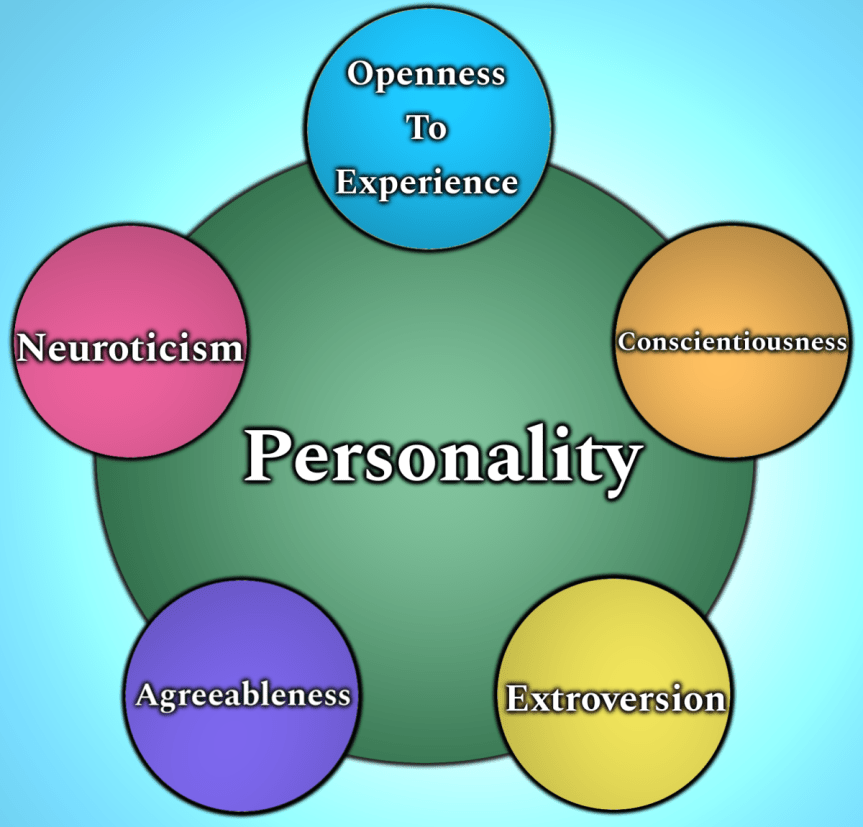
Theword ‘personality’ is derived from the Latin word ‘Persona’, which means ‘mask’ . A mask was worn by various actors in dramas in those days of ancient Greek civilization. Personality usually means that an individual is much more than his outer appearance . Personality is a dynamic and organized set of characteristics possessed by a person that influence his/her cognitions, emotions, motivations and behaviors in various situations. Personality also refers to the patterns of thoughts, feelings, social adjustments and behaviors persistently exhibited over time that strongly influences one’s expectations . self-perceptions, attitudes and values . Till now there is no universal consensus on the definition of personality in psychology . However, the following definitions can be beneficial for us to understand the clear cut meaning of personality.
According to Munn, ”Personality is the most characteristic integration of an individual’s structures, modes of interest, attitudes, behaviors, capacitis, abilities and aptitudes.”
According to Morton Prince, ”Personality is the sum total of all the biological innate dispositions, impulses, tendencies, appetities and instincts of the individual and the disposition and tendencies acquired by experience,”
According to Allport ,”personality is the dynamic organization of those psychophysical systems that determine an individual’s adjustment to his environment.”
According to MC Dougall, ”Personality is a synthetic unity of all mental and physical functions in their intimate interplay”
According to Burgess, ”Personality is the integration of all habits which determines the role and status of the person in society,”
According to Freeman, ”Personality is the integrated organization of all cognitive, conative, affective and physical characteristics that impose on individual and his uniqueness”.
According to Warren , “Personality is the entire organization of a human being at any stage of his development”.
As a matter of fact , all the above mentioned definition do not define personality completely .These definitions only explain the meaning of personality . It can be concluded that the personality of an individual is very broad . All the characteristics such as physical , mental , social , intellectual , emotional , etc., are included in personality which makes him extraordinary and are expressed from time to time in daily life , It can also be said that personality is the sum of inner and outer capabilities of an individual .
The Google every knows about Google, it gives us access to almost all information by typing what you want to know into the search bar. There are some interesting secrets you can have enjoy.
Then why are u waitimg just go with my steps ,
Go with,you have type the phrase “Do a barrel roll” into the search bar of Google and press enter, the entire page spin around once.
Second is a fun trick if you like Chuck Norris jokes. If you type in ‘Find Chuck Norris’ and click ‘I’m feeling lucky’, you will get a little message from Google about being careful what you search for.
Next, and this is one of my favourites, try typing ‘Google Gravity’ into the search bar on Google and pressing search. It will cause the entire page to fall into pieces. Although sometimes this doesn’t work, if you search it and click the first result on the page, it will take you back to the homepage which will then fall. The best part is that you can still search for things even after it has taken effect. It will, however, cause all of the results to fall from the sky and crash down on top of the already fallen homepage.
Finally, my favourite. Type ‘Zerg Rush’ into the search bar and hit enter. This will cause many ‘o’s to appear from all directions! But beware, they are not your friends. You must hover over each of the ‘o’s with your cursor and click like crazy. Soon they will vanish. Attempt this at your own peril, you have been warned.
So there you have it, a few cool things to do with Google when you’re bored. Of course, there are far more tricks to do with Google, but you can always find them by, you know, googling it. A little extra for reading this far: if you leave the search bar blank and click ‘I’m Feeling Lucky’, you’ll be shown all of the Google doodles that have ever been used on special dates.
Here are way more tricks you can do on google.
Do a Barrel Roll. Search for “do a barrel roll” without the quotes, and hold onto your desk for dear life. …
“As I rained blows upon him, I realized there had to be another way!” It’s a Festivus MIIIRACLE! …
We do not simply just inherit our parents’ skin complexion, eye colour, or height. We can also acquire our parents’ stories, narratives, and perspectives on life. There is a piece of them that lives on in us, whether we are conscious of it or not. While carrying on our family’s tradition is a good thing to do, there may be unaddressed tension and trauma to sift through and tidy up.
WHAT IS GENERATIONAL TRAUMA?
Generational trauma is exactly what the name implies: trauma that is passed down from one generation to the next. It can be subtle, hidden, and ambiguous, emerging via nuances and unwittingly taught or suggested throughout someone’s life from infancy onward.
Families with a record of unresolved trauma, depression, anxiety, and addiction can pass on ineffective coping techniques and suspicious views of life to subsequent generations. In this way, one might perpetuate the same behaviours and attitudes of previous generations, even if they’re healthy.
While generational trauma can impact anybody, individuals who have suffered major kinds of abuse, abandonment, torture, discrimination, and racial inequalities are at the greatest risk. Generational trauma has been studied in relation to Holocaust survivors, the Khmer Rouge atrocities in Cambodia, the Rwandan genocide, the relocation of American Indians, and the slavery of African Americans, among other things. While the evidence on how trauma manifests itself is varied, several studies have found increased rates of anxiety, sadness, and PTSD among trauma survivors and their offspring.
Trauma can cause poverty, poor parenting, decreased bonding, psychological distress, and insecure living conditions, all of which have a significant influence on children ’s development.
WAYS IN WHICH GENERATIONAL TRAUMA CAN AFFECT FAMILIES
Emotions could become a point of conflict across generations – Regardless of how the trauma is coped with, elder generations within a family set the tone for how traumatic events must be (and frequently are) dealt with. Unfortunately, the trauma is passed down through generations since those who needed assistance never received it. In some situations, the traumatised family member may even pass on bad feelings to others in the family.
Trauma can have an impact on the parent-child relationship – Individuals who have not gotten assistance and support for their trauma may establish unhealthy connections with their kid or grandchild. Emotional, psychological, or verbal abuse can all be signs of an unhealthy relationship. Abuse can be sexual or physical in severe situations.
Unaddressed mental issues could cause relationship conflict – It is well known that older people do not believe in seeking the assistance of mental health specialists. Members of the family suffering from mental health issues (depression, anxiety, psychotic symptoms, etc.) genuinely require assistance because untreated psychiatric symptoms can lead to more trauma and emotional instability within one’s family.
Younger generations may become “satisfied” with the way things are – If avoiding and denying ,and even embracing, the trauma becomes “normal” for the family, future generations will adopt this manner of “survival” and imitate the behaviours. People who avoid, downplay, or suppress family trauma exacerbate the situation for younger family members. We learn a lot about how to cope with stressful experiences.
HOW TO HEAL FROM GENERATIONAL TRAUMA
Many people do not realize their dysfunctional behavior because they are simply applying what they have learnt in the best way they know how to. The key to change is awareness. There can be no change unless you acknowledge that something is wrong in your family unit.
The first step is to recognise the patterns. Some are much more visible than others, such as domestic violence, abuse, anxiety, and gender norms.
The second stage is to become more conscious of what causes you to fall into these established patterns. Is it shouting, contempt, feeling undervalued, physical violence, or witnessing others bully? The list could go on and on.
The third stage is to become conscious of how you respond to triggers once you are aware of them. Do you shut down, get furious, get aggressive, or yell?
The fourth stage is to understand how to create constraints in such behaviors. Creating a trigger word or phrase that will assist you detect when you are following a pattern. Creating a support network in order to be held accountable.
Giving yourself love and time to heal is the fifth stage. These are behaviors which have been ingrained in us for a long time. Generational trauma doesn’t really heal in a day or a week. It takes some time.
In order to enhance these processes, enlisting the assistance of a professional is a wonderful choice. Sometimes when the trauma you experienced is so deeply ingrained in you that you need additional assistance.
Dear Zindagi by Gauri Shinde is an unrewarded masterpiece. The movie narrates the story of Kaira, a young lady in her 20’s who is financially independent and successful than most of the people of her age. It shows the importance of childhood in an individuals life, and how it can impact their adult life. It is a beautiful story of self-discovery and freedom from the three dangerous words- ‘Log kya kahenge’. To, accepting herself and her truth irrespective of anyone’s disagreement (After all YOLO).
As adults we often carry the burden of unhealed wounds from our childhood traumas. We might not be aware of their presence for years until they start reflecting upon our relationship with others, as we grow up. Similarly, Kaira did not have a normal childhood with a happy family. She had various scars of abandonment, shame, hate, jealousy from her past. At a very young age she was left to live with her grandparents for years, until she failed in the 2nd standard and had to move back with her parents as it was very shameful for them. As a child she was always considered to be the rude, moody and ill-mannered by her parents and relatives but no one ever asked her the reason, why she behaved the way she did.
It was only after her break-up that she started having sleep issues and realized she had to consult a psychologist. Dr. Jahangir Khan, the best therapist one could wish to bring out of the reel world, is played by Shahruk Khan. He is an empathetic, compassionate counsellor who guides Kiara in her journey of self-discovery. The lessons taught by him go way beyond the movie and can be applied in the real life. As children we are taught that wiping off our tears and hiding our emotions as it’s considered a sign of bravery whereas crying and showing our vulnerable side is considered to be a sign of weakness. However, in reality emotions are meant to be expressed, be it happiness or sorrow. Year’s of unexpressed emotions impact a person’s emotional health and later on express itself in the form of physical illness if not addressed.
Being a girl from the 21st century Kaira had to face various comments by the society which started to effect her self-worth. This is when Dr. Jahangir explained her the Chair Concept. So, when we buy a chair we look at different varieties of chair and make sure that the one we choose is comfortable for us and suits us. Then why not apply the same theory in choosing the right partner, after all he/she will be the person we decide to spend our entire life with.(And that surely has much more impact on our life than a chair, so why risk it)
The movie gives a simple yet deep message of self-love and self-discovery. It’s important for us to know and understand ourselves. The best way to know ourself is to go back and explore our childhood memories. Our childhood shapes our life in a way that we often don’t understand. It is only when we completely understand ourselves, we know what we want and what we deserve in life.
There is no perfect person in the world, but the most holy and supreme person has his shortcomings, but I believe that everyone is born innocent, because of course you can’t make mistakes in your childhood. But I think people are not really good or bad or both.
Not all people are good people. No matter how hard you try, everyone has their own shortcomings. I also feel bad about people.
The mistakes they make will anger God; therefore human beings are both. People are bad because someone has to do some naughty or bad things in their lives. No one can be so good, because I believe that if you think you are a good person, you should not do anything at all. Lock yourself in the room. people are bad mainly because of temptation. We have all done some non-model things, sometimes without even realizing it.At some point we are all bad people, but most people are not bad, just like everyone goes to jail, so we keep our balance. So we have good and bad. We have holy days and bad days.
We are not perfect people. When we start to think for ourselves and know what is happening, we will do this to ourselves. Our environment, except when we were young, they told us what to do, and now we can control our lives. Our daily decisions make us who we are today.
Sometimes we can be good, sometimes we can be bad. He mentioned in his sermon that God loves everyone, no matter what. Whether you are good or bad, as long as you are willing to give, God will always find in his heart to forgive your sins.
Today’s Kalam Foundation was started in the year 2016 in Hyderabad, by a group of intellectuals inspired by Dr. A.P.J.Abdul Kalam, with the main objective of creating more Kalams to lead the way forward.
Mission
To impart quality education and enhance employability
To improve lives by effective health management
To empower women to stand on their own feet
To inspire and bring together intellectuals to contribute in community development
Vision
A reformed society, contributing to national development.
Activities
As of today, 15 Kalam Centers have been set up with over 450 children attending every day. Important national festivals like Independence Day, Republic Day etc are celebrated with gusto.
Currently, Today’s Kalam Foundation is focusing on expanding its activities to reach out to more underprivileged children in the Old City and reduce the consequences of lack of education. They plan to set up 50 more Kalam Centers which will touch the lives of over 1500 deprived children and give them access to education and life skills. Towards this, we are seeking volunteers based out of Hyderabad, trainers who could train volunteers and individual as well as corporate sponsorship
Become a Volunteer Today
Volunteer to teach children in our Kalam centers – Spoken English, Computers, Art & Craft. You can also be a part of the health camps and awareness sessions we conduct.
Please Support. Even 1 Rupee could bring a change.
100% of your contribution will go for this cause.
Today’s Kalam Foundation has been running Kalam Centers for Slum Children since 2017 and benefitting 450 children on daily basis. Kalam Center : TKF volunteers go to slums and choose a group of students who study in Govt. schools or who don’t go to schools. From the same slum a Mentor is employed and a “Kalam center” is established either in the nearby community hall/school premises/rented place. Generally, the Mentors are under/postgraduates. In these centers, the respective Mentors provide after – school support to the students for 2 hours per day. Kalam Centers aims towards the holistic development of children, hailing from an under-resourced section of the society. The project covers various aspects viz., academic education, vocational training, personality development, health tips, hygiene & nutrition awareness, career counseling, and extra curriculum activities. We are run Centers in Riyasatnagar,Hussainialam,Dabeerpura,N.M.Guda, MM Pahadi,Farath nagar,Edi Bazaar,Falaknama,Kanchanbagh,Moinbagh, Bapu nagar,Talabkatta& Babanagar. Background of Children: Most of the Children parents are Daily wagers men go for civil works,auto,road side shops ..etc.Few mothers go for Bangle Making and embroidary works or as servants to other houses. Effect of Corona 2nd Wave:
In the Corona 2nd wave we have seen lot of positive cases in our Kalam Center Children families and as the family is dependant on elders and their income was affected .We have decided to support Corona Positive families with Sustenance Kits. Our Work:
We have good wrapo with the families of Kalam Center Children from 2 years and can understand their pain.So we have decided to be with them during these hard times and decided to support Ration required for Corona Affected Families. Request: Sustenance Kit Rs 1000Home Isolation Kit Rs 800 For more details you can check our website http://www.todayskalam.org
Imposter syndrome basically refers to internal feelings of insecurity or inadequacy that make you believe you are not as competent as people perceive you to be. Basically, it is when we feel like we are frauds, and that anything we have achieved in our lives has been because of pure luck or chance. While in some cases such feelings may cause people to start working harder and meet their own standards of competency, most often they serve as a constant source of anxiety. You may start overworking yourself and spending countless hours trying to get better to make sure no one ‘finds out’ about you.
Especially people who are highly skilled or who have achieved a lot and become successful in a particular field may begin to garner feelings of insecurity and feel that other people are just as skilled, if not even more skilled than them. They start to feel as if they don’t deserve their achievements and success, and that someone more qualified should have got them. Even some of the great people in history like Albert Einstein suffered from this syndrome. He believed himself to be an ‘involuntary swindler’ who did not deserve the recognition his work got. This shows how pervasive and powerful imposter syndrome is, where even a man like Albert Einstein who we now revere as a great scientist that contributed so much to the world, thought of himself as mediocre and undeserving of recognition or praise. This also shows there is no threshold of achievement that puts feelings of inadequacy at rest.
However, it is important to highlight feelings of imposterism are not only felt by highly skilled individuals. Everyone is susceptible to a phenomenon known as ‘Pluralistic Ignorance’ where we each doubt ourselves privately, but think we are alone in thinking that way because no one openly voices their self-doubt. Imposter syndrome is not necessarily a disease or an abnormality, and neither is it always tied to any mental illness like depression or anxiety. Every single person is prone to imposter syndrome, regardless of their race, gender, occupation or mental/physical health. The base cause of this is that we know ourselves from the inside, but we know others only from the outside, so we do not realise that everyone is flawed in some way, not only us. We know all our own shortcomings and weaknesses, but all we know about others is what they tell us, which is far narrower and edited. So we make the mistake of concluding that we have a lot more flaws than others do.
How to deal with Imposter Syndrome?
Perhaps the easiest and most common way to deal with imposter syndrome is to simply talk about it more. We slowly learn that many people around us suffer from the same problem, and become comforted by the fact that we are not alone in such ways of thinking. Once we have this awareness of the syndrome, we can combat it by collecting and revisiting positive feedback and reassuring ourselves of our competence. It also helps us understand that it is simply a negative way of thinking and is not always true.
Apart from this, we must also look inwards and start dealing with it on an internal level as well. This includes things like separating fact from fiction, where we must recognize that even though we have these feelings, they are not objectively true and that we are unreasonably doubting ourselves. We must also stop comparing ourselves with others and try to focus on our own standards of success, not everyone else’s. This is especially important in today’s age of social media, which is the primary cause nowadays for imposter syndrome. We must learn that social media is not real life and that we shouldn’t compare ourselves to what we see on it.
Still, it may be hard to completely eradicate these feelings, but having open conversations about it and self-reflecting and introspection definitely helps us in keeping them controlled. It highlights to us how common these experiences are and that we should not burden ourselves with them. This process of humanizing the world makes us understand that everyone is like us, with their own flaws and problems, and that we all deserve success and fulfilment.
He is one of the most hilarious stand-up comedian that I have come across. He is one of the co founder of a comedy group called All India Bakchod. His YouTube channel is a great source of free laughter therapy. His contents include daily vlogs, gaming streams, video reviews.
(Go and check out all parts of Mummy-Papa Pitai review, you’ll die laughing)
AVANTI NAGRAL
Avanti Nagral is a Artist, Song-writer, Influencer and a You-Tube who has completed a dual degree from Harvard University and Berklee College of Music. She uses her music to convey various social messages and creates YouTube contents tobreak the stereotyped norms by openly discussing sexual topics with her family members in a one-on-one interview, held in a very respectful manner.
(Check out her music video ‘Sun Toh Lo’)
JAY SHETTY
Jay Shetty is a 33 years old monk turned into a life-coach, author, podcaster, you-tuber and an influencer. His channel is inspirational to people of every age group however, his videos focuses on teenagers and young adults. His content includes podcasts and clips where he provides insight on the topics of motivation, wisdom, love and relationships.
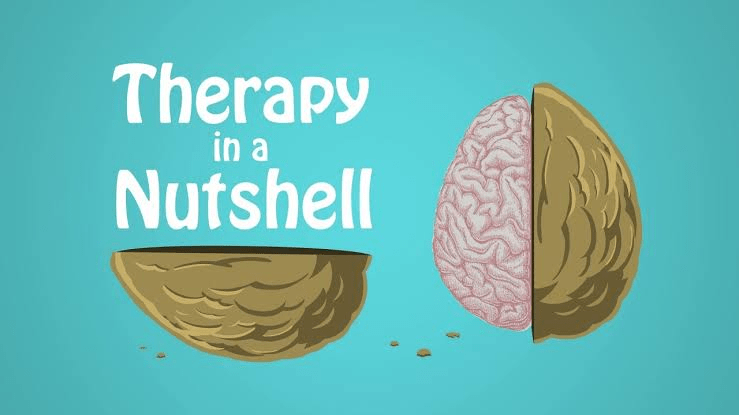
THERAPY IN A NUTSHELL
As the name suggests, Therapy in a Nutshell is a YouTube channel owned by Emma McAdam, a Licensed Therapist who makes weekly videos on mental health skills that are easy to understand via YouTube videos and Online Courses. It’s a good platform for people to learn new personal skills and live better. Her video’s cover various topics from Depression, Anxiety, OCD to Sleep disorders and ways to control them. It’s definitely a good investment for people who are curious to learn about mental health.
RANVEER ALLAHBADIA
Ranveer Allahbadia aka BeerBiceps is one of the most famous Indian Youtuber, fitness mentor, social media influencer, and entrepreneur. It’s one of the most informative channels that I have come across. It includes videos on a variety of topics from finance, fashion, etiquette, grooming to meditation, yoga, body-building. They conduct one-on-onepodcasts with famous Celebrities, Nutritionists, Health Experts, Monks, etc. Hence, his channel is a good source of free knowledge.




















 Eduindex
You must be logged in to post a comment.