Dowry Continues To Remain A Menace In Indian Society

Despite the fact that dowry has been banned in India since 1961, a research found that it is still being given on a regular basis, with over 95% of weddings including the exchange of money.

Dowry is correctly represented as a societal evil since it is the practise of paying and accepting articles of worth (such as clothes, jewellery, furniture, cash, and other items) between two households. Typically, the bride’s family is obligated to pay these items to the groom’s family.

The World Bank carried out the study, which examined almost 40,000 marriages that occurred between 1960 and 2008 in 17 Indian states that account for 96% of the nation’s population.

Researchers calculated “net dowry” to study the difference as to what was paid by the bride’s family to the groom’s family and vice versa, and the results revealed that, in the vast majority of instances, it was the bride’s family who paid more compared to the groom’s family, rather than the other way around.

According to the estimated amount confessed by families, a groom’s family spends Rs. 5,000 on presents to the bride’s family on average. The bride’s family, on the other hand, pays about Rs. 32,000 on presents and other monetary contributions to the groom’s family, taking the net dowry to roughly Rs. 27,000.

It has also been noticed that the dowry value is typically 14 percent of the annual income and includes a significant portion of the family’s savings.

While much has started to change since 2008, experts think the tendency of dowry is still highly prominent in India, since the notion is quite widespread in all major religious groups, with Christians and Sikhs exhibiting a “dramatic increase in dowry.”

Dowry inflation was seen in certain states, including Kerala, Haryana, Punjab, and Gujarat, with Kerala having the highest average dowry in recent years. On the other side, average dowry decreased in states such as Orissa, Tamil Nadu, Maharashtra, and West Bengal.

This venom affects people of all castes and socioeconomic classes. Neither the husband’s nor the wife’s educational background protects them from dowry harassment. Currently, dowry-related fatalities in Kerala have been documented, with the majority of victims coming from the upper strata of society. The culprits come from well-educated and wealthy families, and the victims are also well-educated. If this is the situation of women in a culture that was matriarchal a few decades earlier and claims of high social indicators in women empowerment, it’s anybody’s imagination how it will be in many Indian states that have numerous social indicators that are much worse than those of war-torn Syria or Sub-Saharan Africa. According to the NCRB study, Uttar Pradesh and Bihar top the list of dowry-related deaths, accounting for roughly 30 percent.

It is time to reform these retrograde societal standards in 2021. Receiving dowry should be considered a societal shame, and all generations should be taught. Young people should also make a stand. Women should explicitly refuse to pay dowry as part of a marriage , and men should also refuse to accept it in any way. Why should brides’ parents be obliged to give pricey “gifts” that are essentially a dowry by another name? 

The wider background for dowry is women’s low labor-force participation and, as a result, their lack of financial independence. Women should be encouraged to work and earn their own money.

Discrimination is present in all parts of life. To combat gender inequality, States should examine gender-disaggregated statistics across the life cycle — birth, early childhood, schooling, nourishment, employment, healthcare access, and so on. Teachers and textbooks shape students’ views and values. Children should be routinely educated on the fundamental ideal of gender equality.

Latin America Cinema

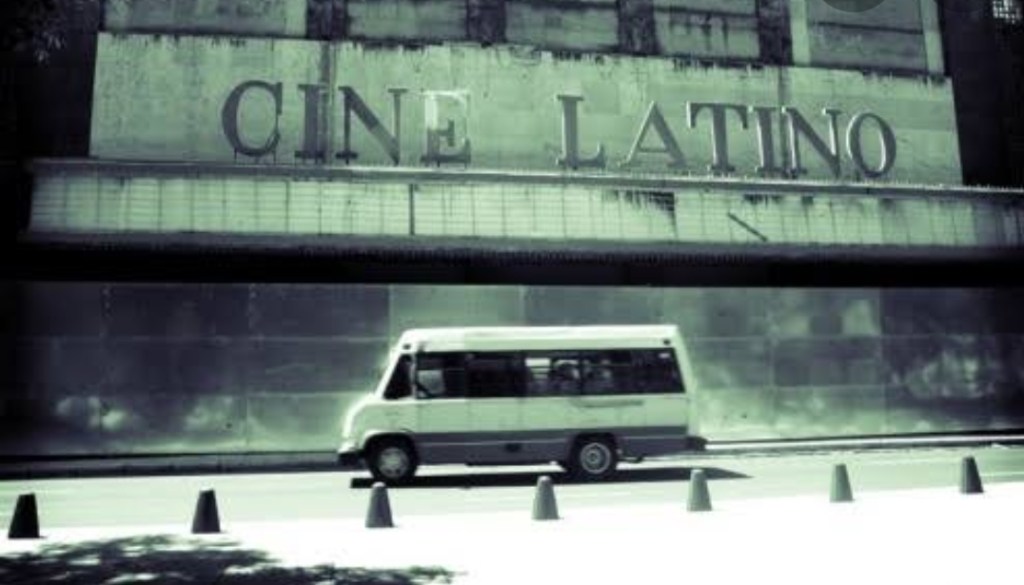
Latin American cinema refers collectively to the film output and film industries of Latin America. Latin American film is both rich and diverse, but the main centres of production have been Argentina, Brazil and Mexico. Latin American cinema flourished after the introduction of sound which added a linguistic barrier to the export of Hollywood film south of the order.

The origins of early filmmaking is generally associated with Salvador Tosacano, Barragan. Mexican movies from the golden era in the 1940s and 1950s are significant examples of Latin American cinema. The film ” Maria Candelaria(1994)” by Emilio Fernandez, won the Cannes Film Festival.

“This history of Latin American cinema in French is the first general history of Latin American cinema.”

The 1950s and 1960s saw a movement towards Third Cinema, led by the Argentina filmmakers. In Brazil, the cinema Novo movement created a particular way of making movies with critical and intellectual screenplays.

In Columbia, the filmmakers led an alternative movement that was to have a lasting influence, founding the Grup de Cali, which they called Caliwood and producing some films as leading exponents of the “New Latin American cinema” of the 1960s and 1970s.

According to PWe’s Global Media Outlook 2019-2023 report, production levels for major film industries in Latin America is seeing an upward trend ever since 2014. In Latin America in general, there has been renewed interest in animation over since the late 2010s.

” Two of Latin America’s biggest animation companies are Mexico’s Anima Estudios and Brazil’s TV Penguin.”

Together with the other animation houses in Latin America, they are bringing forth stories depicting the exotic locations of South America, the indigenous myths and legends, and universal themes that has the potential to have worldwide appeal.

“Contemporary Latin American Cinema investigates the ways in which neoliberal measures of privatization, de-regularization and austerity introduced in Latin America during the 1990s have impacted film production and film narratives. “

“Based on films produced in Argentina, Bolivia, Brazil, Chile, Colombia, Ecuador, Mexico and Peru since 2010, the fourteen case studies illustrate neoliberalism’s effects, from big industries to small national cinemas.”

https://www.palgrave.com/gp/book/9783319770093

https://www.cinematropical.com/new-events/stream-cinema-tropicals-25-best-latin-american-films-of-the-decade

Rakesh Kumar Yadav

Inspiration for Young Optometrists

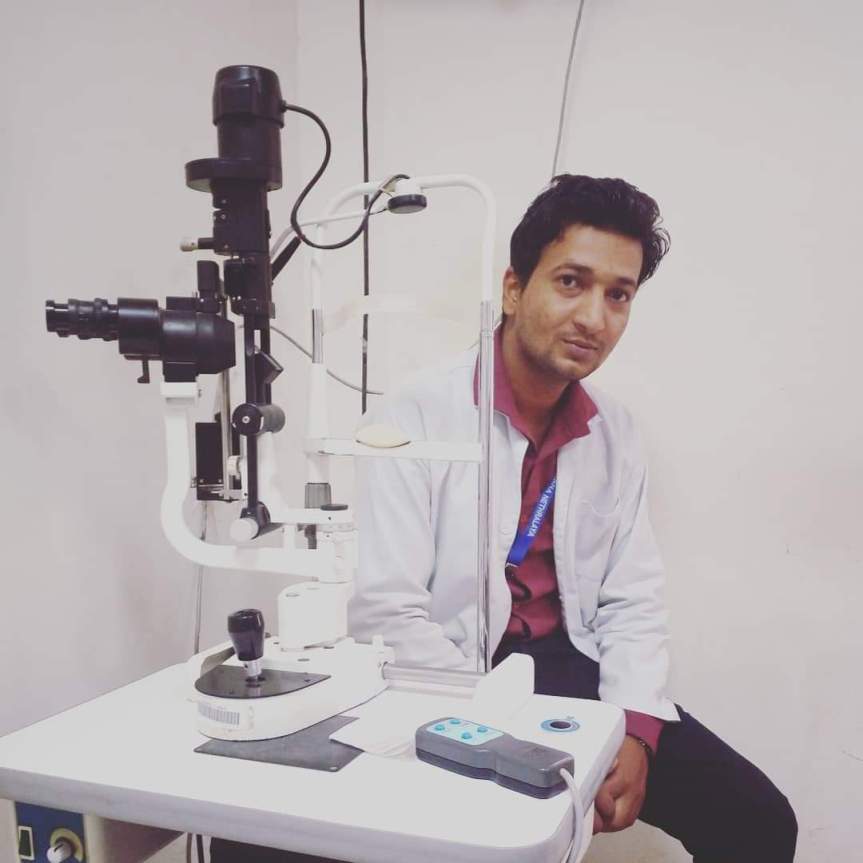
Dr. Rakesh Kumar Yadav, who was brought up in Nepal, has had every one of the makings of a virtuoso since he was a kid, and he has consistently been attracted to focus on new things. He was an individual from the Apollo Om HSEB school’s cricket crews. Dr. Rakesh Kumar Yadav, then again, was normally attracted to sports as a solid part in secondary school and as a cop since he needed to kill drug and wrongdoing mishandle and appreciate the feeling of achievement that comes from helping other people. In any case, out of the blue, he took a crack at Christian College Bangalore to seek after a four year certification in optometry.

In the underlying days of his school, it was so hard for him to change in Bangalore that he needed to flee from that point. He was unable to try and focus on his investigation. The outcome was he bombed his first semester. That was the point at which he figured he should get back. At that point his educator and companions were with him. Of late he fabricated his self-assurance. He even begun giving time for his energy ie. playing cricket. At long last he was on the roll. He tried sincerely and passed upto fourth semester. Then, at that point he got presumptuous about his examination and begun bunking classes in fifth semester. Because of this, he was confined to give test. It was the most noticeably terrible period of his life. He tried sincerely much more and passed fifth and sixth semester.

He began temporary position in Narayana Netralaya where he drew near with his senior specialists and optometrist. He fostered his expert inclination, reinforce individual person.

Presently he works in Nepal. He runs his own facility.

His battle shows how our presumptuousness belittle us and leads us towards dimness. There is continually morning after the evening. Try sincerely and never let your life be constrained by anybody.

Stone baby

In UK ,a five month old, baby is turning into a stone due to some unusual diesease. Lexi Robin born on 31 January is ‘turning to a stone’ due some extremely rare genetic diesease .Her X-ray in April shows that she has bunion on her feet and double -jointed thumb.This condition is known as Fibrodysplasia ossificans progresiva (FOB) which turns muscle into bones.Its perceived that such conditions generally turns a body into stone.

Work from Home culture

Work From Home is the new normal. After a decade or so when someone will be talking about the year 2020- 2021, he is surely counting in the work from home that emerged as a part of daily routine of the working class.

The definition of Work from home totally changed in these years. It is not new but, it used to be optional. As pandemic restricted things to a certain extend both the personal and professional life of people changed extremely. Now, the scenario is that most of the people are bound to their laptops and phones maximum time of a day, just like students of every age group are trying to adapt to this new change so are the professionals as it was totally unexpected.

People have mixed views about the work from home culture as some of the company heads and CEO claims that the employees have done well in work from home and the productivity has increased whereas, on the other hand the people who are actually working from home says that productivity is hampered also, they feel more stressed and frustrated than usual. Moreover, it can be seen that work from home, which is the only option for working professionals has-
Jumbled work life
Adapting to new changes is what we learn, a person who can easily adapt is considered valuable professionally but, it has taken far beyond adaptability, work from home has actually jumbled the personal life and professional life of almost every person.

Nothing new
Working in office cabin, meeting your colleagues daily, work break and the whole vibe of what we call work is dead. Sitting at one place, attending seminars, phone calls, video calls, virtual presentation has turned things upside down and work does not seem exciting and worth exploring to many instead, the increased work pressure and total dependence on technology has made things boring.

Future concern
The way work from home is implemented, there is a high possibility that in future companies tend to follow the same as this not only saves their office space but, it is a simple method of cost cutting the expenses related to employee in different aspects. Bill Gates has already announced that he is looking forward to continue work from home policy for Microsoft employees post pandemic. So did Facebook, there are clear chances of permanent work from home even after the situation gets normal.

Work from home culture can prove beneficial in some cases like-
• The employees who have to travel a lot to reach offices find it convenient.
• Since employees are working from home, they can devote time with family side by side. And the employees who are living away from family due to job can now stay home and work.
• Some people find the home environment more suitable for working purpose as they can focus more.
• It provides a little flexibility and ease at the same time

Conclusion
Depending on the requirement of the company and employee work from home can serve in both bad and good way but, it is also important to note that things beyond limits can create more harm thus, a balance must be maintained.

The art of cooking

A culinary art is the art of cooking. Cooking is the process of preparing food and meals that will be eaten or the food served to other people.

The word “culinary” is defined as something related to, or connected with, cooking or kitchens. People who are working in the culinary arts are known as culinarians. A person working in restaurants is commonly known as a cook. The skillfully preparation of food and meals that are as pleasing to the palate as to the eye is the responsibility of the Culinary artist. Culinary artists require a lot of knowledge about the science of food they prepare and a good understanding of how diets and nutrition affect people in the preparation of their meals. Culinary artists work in restaurants, hospitals and other institutions where kitchen conditions vary depending on the type of business.

The culinary art is comprised of many categories. Some of which are tools, methods, combination of spices and ingredients that adds flavor to the food. It normally needs the right measurements, proper selection and accurate combination of ingredients involved to reach desired result.

The diversity of the culinary arts around the world mirrors many considerations such as Economic, Aesthetic, Nutritional, Religious and Cultural.

The dawn of fire, and the culinary arts, if not always, is associated with fire. The heat generated by fire is required to change the food’s texture, flavor, nutritional contents and even its appearance. Heating is important in the culinary arts because it disinfects the food and makes it softer. The food danger zone is between 4 to 60 degrees Celsius. Within these temperatures, the bacteria found in the found or even those that were transferred to the food can grow at a very alarming rate. Under ideal conditions bacteria can double their population every twenty minutes. Although at a glance, these foods may not appear harmful, when ingested they can be. Many people have the misconception that bacteria will die when we freeze our food or refrigerate them, but this actually does not rid the food of bacteria, merely it slows down their expansion.

One of the most famous departments in the culinary arts is probably baking. Baking is the art of cooking food using an oven in culinary arts. Through applying dry heat evenly through the oven and onto the food which then cooks the food. It is used in producing pastry based desserts such as tarts, pies and cakes. The ovens dry heat causes the starch to gelatinize, and the results to the browning or charring of the outside of the food. Some uneducated in the culinary arts might think that the charred part or the brown part is not as tasty as it sounds, but this part is actually what gives taste and flavor to the baked good, partly sealing the moisture of the food. The browning apparent in the baked good is caused by the sugar caramelizing and the chemical reaction that happens between the reduction of sugar and the amino acid (Mail-lard reaction). Moisture in the baked goody, on the other hand, is not really completely kept in time as the goody is being baked it will become drier and drier.

reference-https://www.paranetinfo.com/learn-the-importance-of-cooking-food/

Father Stan Swamy Passes Away at 84

Introduction

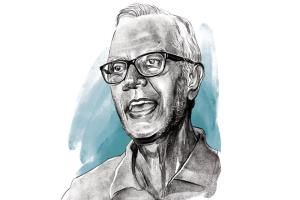
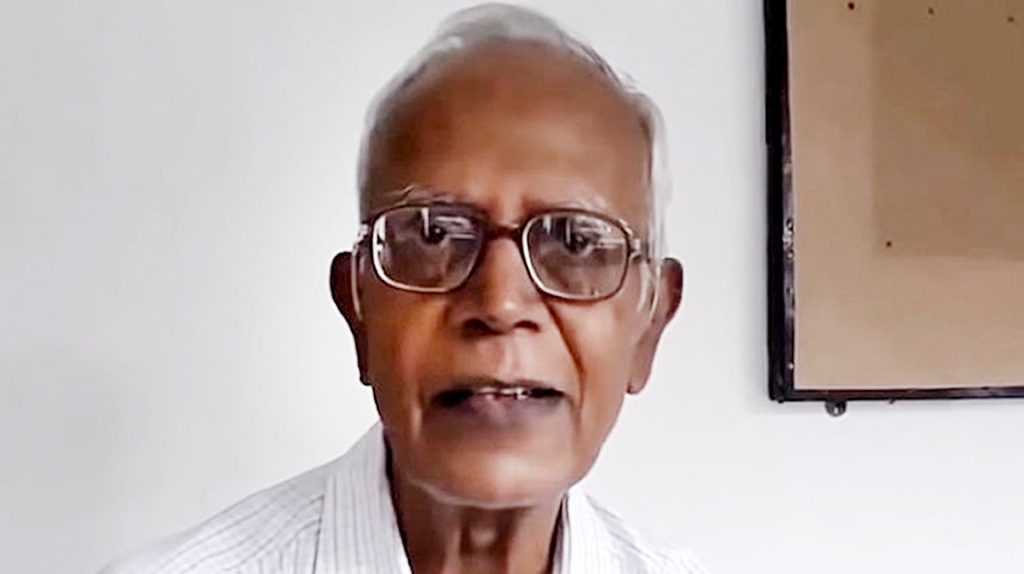
Father Stan Swamy, a tribal rights activist and a political prisoner, an accused in the Bhima Koregaon caste violence case, passed away on 5th July 2021 at 1:24 pm. The medical director of the Holy Family Hospital, where Fr. Swamy was admitted said that Fr. Stan had a pulmonary infection after his COVID-19 complications in the lungs and pneumonia. He suffered from a cardiac arrest on July 4, 2021, at 4:30 am, he was put on a ventilator at that time but did not regain consciousness after. He also had Parkinson’s disease. He had told the court on May 21, 2021, that he was eating less and less, and his co-accused were worried about him, and that he would prefer to suffer and die like that in jail than being admitted to the hospital. And he requested for the judiciary to consider an interim bail. He passed away when the Bombay High court was hearing his interim bail plea.

About him

He was a native of Tiruchirapalli in Tamil Nadu. He was born on 26 April 1937 and was an Indian Roman Catholic priest, member of the Jesuit order. He was known for his work with tribal people and for fighting for their rights, especially in Jharkhand. He studied theology and Masters in Sociology in the Philippines in the 1970s. He was influenced by the work of the Brazilian Catholic Archbishop Helder Camara with poor people. He was also the former Director of the Jesuit-run Indian Social Institute in Bangalore.

His work

He was a tribal rights activist in Jharkhand. He had worked in the state for almost three decades for the Adivasi communities on issues of land, forest, and labour rights. He is well known for questioning the non-implementation of the Fifth Schedule of the Constitution about “Provisions as to the Administration and Control of Scheduled Areas and Scheduled Tribes”. This schedule had the provision of setting up a Tribes Advisory Council with members only of the Adivasi community for their protection, well-being, and their development in the state. He also filed a Public Interest Petition against the state in the High Court asking for all young adivasis who had been labelled as “Naxals” indiscriminately to be released on a personal bond and to conduct a speedy trial. He said that his expressing dissent against the government’s policies must be why they are eager to put him out of the way.

Allegations against him

The National Investigation Agency arrested Fr. Swamy on October 7, 2020; he was sent to judicial custody till October 23. His residence was searched by the NIA, claiming that he had links to the Maoist forces. In his chargesheet, it was claimed that he was a CPI (Maoist) and was active in their activities It also claimed that he received funds from other cadres. The NIA claimed that he was a convener of Persecuted Prisoners Solidarity Committee (PPSC) which is assumed to be the frontal organisation of CPI (Maoists). The NIA said that it recovered incriminating documents, propaganda, and literature from him but Fr. Swamy said that these extracts were fabricated and he did not own any of them. He also said that what was happening to him is not unique as many other activists and journalists end up being the target of the country because of expressing their dissent.

The case he was charged under

The accused of the case named Elgar Parishad/ Bhima Koregaon are alleged to have links with the banned CPI (Maoists). The arrests for this case were made in 2018. On January 1, 2018, a huge number of Dalits gathered near Pune to celebrate the 200th anniversary of the Battle of Bhima Koregaon which was fought by a huge number of Dalit soldiers against the Peshwas in 1818 but was won by the British army. During this gathering, there was violence where the people who were assembled were assaulted and their vehicles were burnt. But on January 8, another FIR was filed which claimed that this violence was a result of another gathering which was held on December 31, 2017, called Elgar Parishad. The Pune police then arrested activists claiming that this gathering was a part of the Maoist activity.

Conclusion

Fr. Stan Swamy had written a letter from inside the prison where he said that many of the people in there don’t even know what they are charged for and that they are just sitting stuck in there with no legal help at all and that he would help them as well. The least that is expected is for the prisoners to know what they are charged for and it is their fundamental right to be able to defend their charges. Fr. Swamy was a tribal activist worth remembering for all his hard and dedicated work.

References

Arab – Israeli Wars of 1967 and 1973

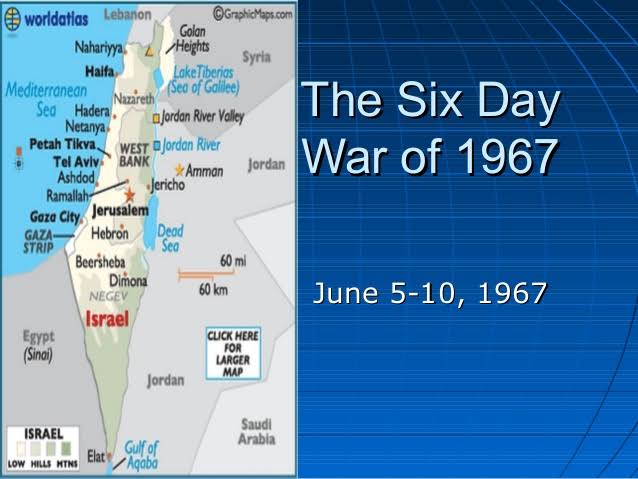
Arab – Israeli War 1967 🤺🤺:

🌟Ever since the formation of the Palestinian Liberation Organization (PLO), Israel came to be attacked frequently by Palestinian guerrilla groups based in Syria, Lebanon and Jordan.
🌟Israel restored to violent reprisals and in November 1966 an Israeli strike on the Village of Al – Samu in the Jordanian west Bank ,left 18 dead and 54 wounded.


🌟Israel’s air battle with Syria in April 1967 ended in the shooting down sis Syrian MiG fighter jets.
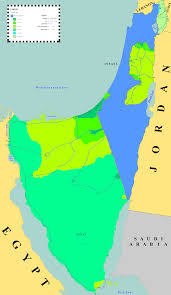
🌟In his bid to demonstrate Egypt’s support for Syria Nasser mobilized Egyptian forces in the Sinai, seeking the removal of UN emergency forces stationed there on May18.


🌟 On May 22 he closed the Gulf of Aqaba to Israeli shipping. King Hussein of Jordan signed a mutual defense pact with Egypt.
🌟Accordingly, it was decided to place Jordanian forces under Egyptian command. Soon, Iraq too joined the alliance.


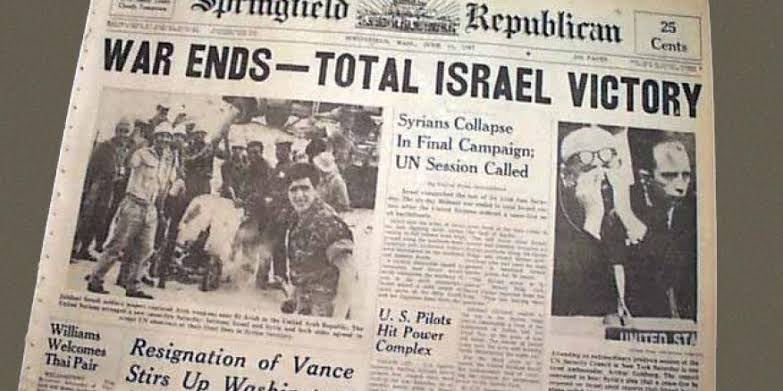
🌟The Arab losses in the war were heavy. The defeat demoralized both the Arab public and the political elite.
🌟The six – Day War also marked the start of a new phase in the conflict between Israel and the Palestinians.
🌟The conflict created hundreds of thousands of refugees and brought more than one million Palestinian in the occupied territories under Israeli rule.

Arab – Israeli War 1973🤺🤺 :

🌟Egypt and Syria under President Anwar Sadat and Hafez al- Assad respectively concluded a secret agreement in January 1973 to bring their armies under one command.
🌟Assad was keen on retrieving Golan Heights.


🌟Aware that his country’s weapons were outdated, Sadat offered the Israelis a peace deal,if they withdrew from Sinai.
🌟Israel rejected the offer. Egypt and Syria launched a sudden and surprise attack on the Yom Kippur religious holiday ( 6 October 1973)


🌟Though Isreal suffered heavy casualties it finally pushed back the Arab forces.
🌟But this time,due to UN intervention, Israel was forced to return to its 1967 position.


🌟By the way of mediation the US succeeded in asserting its hegemony over the region and its oil.
🌟It’s strategy of encouraging Hostility between states and people’s resulted in a succession of wars – civil war in Lebanon, and the war between Iraq and Iran in the 1980s.


🌟Israel’s invasion of Lebanon in 1982 and the US – led war against Iraq in 1991.

Why real saffron is so expensive?

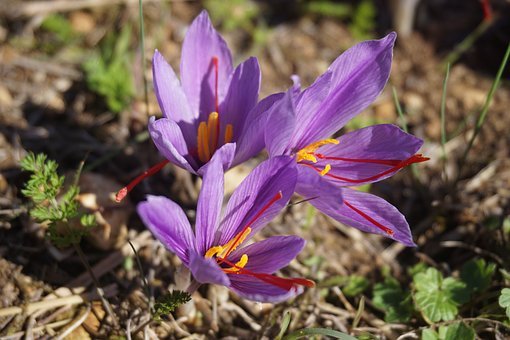
Even in the expensive world of spices, saffron stands out. Kashmir is famous for producing some of the highest quality of saffron in the world. Red soil is mostly found in Kashmir which is suitable for growing saffron because it is naturally fertilized. It only grows under very specific conditions, blooming for 1or 2 week in a year. Saffron is not a fast crop, it reproduces slowly. It is picked in the early morning, when the sun isn’t hard. Spain is the world’s largest producer of saffron. Saffron is used as a cooking spice and a clothing dye.

Saffron is the most expensive spice in the world because it is an extremely labor-intensive crop. Crocus sativa, or the saffron crocus, flower which has three tiny, threadlike stigmas in the center. Workers have to be quick to pick all the flowers, carefully not to hurt the flowers themselves. Stigma must be removed by hands carefully. No machine can do this delicate work. This is the biggest reason saffron has such a high price, It can take 40 hours of manual labor to produce just 1 kg of high-quality saffron. This is why saffron is so expensive. 

The aroma and flavor of saffron is unique. It is floral, but not sweet. The taste of saffron depends on the rainfall, temperature, and soil. It’s taste is difficult to describe. It tastes slightly bitter, not sweet. It takes some 75,000 saffron flowers to make just one pound of spice. Most saffron these days comes from Iran (about 90%) and manual labor there is cheap.

Saffron needs to be kept in the dark, at a cool temperature in an air tight container upto 6 months. If it comes in contact of air, it will loses it’s color and flavor .

Identify Real saffron. Saffron is red in color, and if you want to identify if its real or not, you have to soak it in water for about ten minutes. If water turns yellow in color it is real. If you rub real saffron between your fingers, your skin will turn yellow/orange. If it’s not too expensive, there’s a good chance it is not real saffron. Be careful while buying saffron.

Benefits of saffron. Many people drink Saffron by mixing it with milk. It is rich in medicinal properties. It helps to combat depression and lowers blood pressure. Saffron has been used in traditional medicine to treat menstrual problems, and asthma.

Lo-Fi is the new Hi-Fi

“Music gives a soul to the universe, wings to the mind, flight to the imagination and life to everything.” said Plato. The music industry strives to live up to this quote, and many new music creators are coming up with new content every day. Lo-fi is the newest trend and looks like it’s here to stay. Read on to know why.

What is lo-fi?


According to its creator Eric Matthews, lo-fi is short for “low fidelity”, which is a term used to define the music that contains elements that are conventionally regarded as imperfections or flawed. This type of sound recording has technical flaws that make them sound different from the live sound that gets recorded by adding distortion, hums, background noise and low-frequency response. Music producers now make these flaws as calculated aesthetic decisions and we have a plethora of our favorite songs in this new version. And guess what? It is a hit with the youth.


The world today has started to acknowledge the fact that it is OK to be imperfect and individuals are starting to embrace their flaws with self-love and grace. This can be one of the reasons why the youth is vibing to this genre of raw music. Also, Lo-fi being passive in nature does not reach out or try to be more it can be a Calming secondary presence rather than a full-on concert you want to perform when you listen to a Bollywood number.
Some of the good Lo-fi songs today are cut, rearranged and extended to create a vintage or retro vibe. So, the same song hit different and brings a sense of nostalgia to the listener. When listening to lo-fi, what remains in our head is not a memory of the lyrics, but a lasting state of mind. As the pandemic has made us think about the good old times a lot, this genre is the current vibe.

Lo-fi for work /study

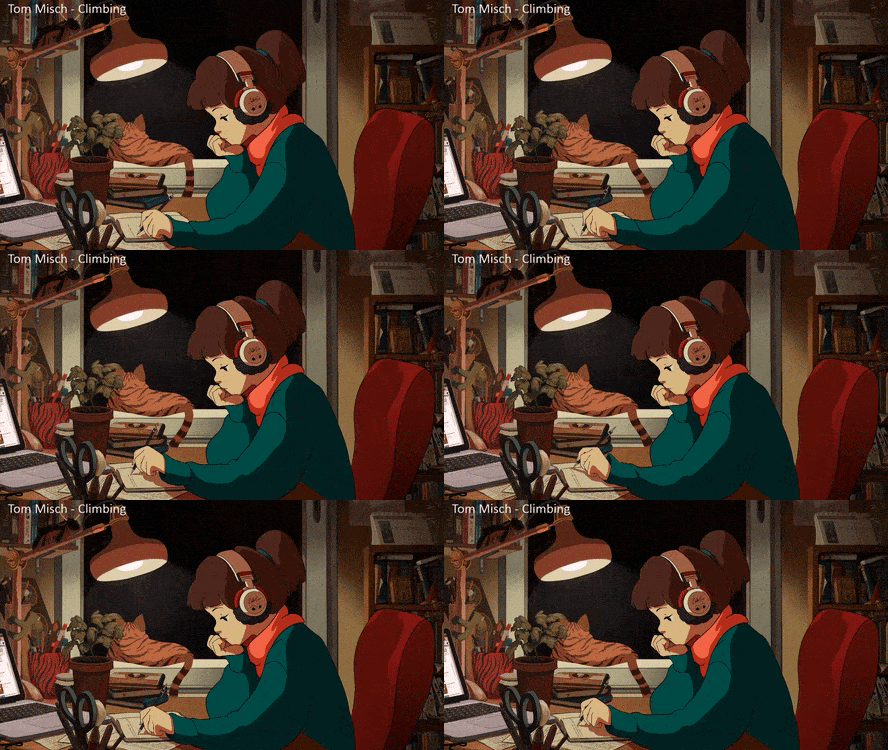
The Lo-Fi Girl (Youtube Channel)


One of the major changes that the world has experienced in the new normal is the WFH(Work From Home) culture and, college life now is just you, your laptop and the water bottle against the world. Many students find it difficult to focus on their work when there is a TV running in the next room or the family being loud at times. Sounds relatable, isn’t it? Worry not! Lo-fi is here to put you in a phase of focus when you can concentrate on the work at hand and get a lot of things ticked off on your checklist. While many music critics looked down on the Mellow and monotonous nature of this genre, scientists and audiophiles (like me) insist that blandness is the key point. Lo-fi really does put you in a productive trance. Just search ‘lo-fi beats for chill and study’ and let the YouTube algorithm wind you up in a new cocoon of focus vibe and nostalgia. But if you are one of those who would want absolute silence while working, lo-fi may not be your cup of tea. Well, You can always try new stuff, it would be a win-win anyway!

To sum it all, Lo-Fi music accompany you in the day to day question and get you through your day. It is relatable and casual, putting people at ease and making them put it on loop in return. Go ahead and try a session of lo-fi Beats to study or chill. You won’t be disappointed!

Here are some recommendations to start with. Happy Vibing!

This is a playlist for some Bollywood Lo-fi music:

This is the link for a 1-hour session of Lo-fi beats to Study/Chill

Lajpat Nagar Shut For…..

Delhi: Lajpat Nagar market shut for flouting Covid-19 norms | Delhi News -  Times of India

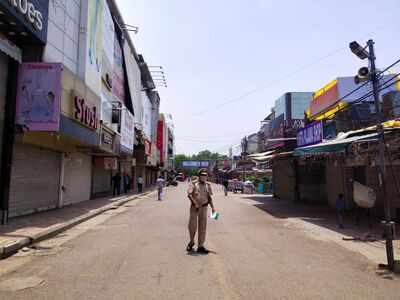
Famous market in Delhi, Lajpat Nagar shut for Covid rules violation.

Lajpat Nagar’s central market has been shut until further orders as social distancing and other Covid protocols were not being followed at the market.

The market has over 2000 shops and sees a massive footfall everyday.

Lajpat Nagar’s traders told NDTV that they are ready to follow all rules and will try their best to implement social distancing.

Pawan Singh, a shopkeeper tells NDTV,” We keep telling customers to stand apart and wear masks. We try our best. Majority of people here wear masks. But I can’t say that it’s 100%.”

“Our livelihood is at stake. The pandemic has already caused huge financial losses for us” , the traders told NDTV saying they will hold meetings with authorities over reopening the market.

On Saturday, Punjabi Basti and Janata market in Nangloi area of the national capital were closed till Tuesday for violation of Covid-appropriate behavior.

If any shopkeeper is found violating the order or any act which may spread the deadly virus, necessary action would be taken against them, it warned.

The city was one of the worst affected during the deadly second wave of the pandemic this year which saw a huge number of fatalities. The unprecedented surge led to a collapse of the medical infrastructure with hospitals crumbling under pressure due to lack of beds, oxygen and medicines.

The situation has now improved with the capital reporting only 94 cases in the last 24 hours.

Classical Economics

Classical economics relates to the school of thought of economics that originated in Britain during the late 18th and early 19th centuries. The classical economists believed in the existence of full employment in the economy. It is believed that ‘The Wealth of Nations’ by Adam Smith published in 1776 marked the beginning of classical economics. J.B. Say, Alfred Marshall, A.C. Pigou are some of the famous classical economists.
This school of economics focused on the theory called the ‘invisible hand‘ being the highlight at the beginning stages of domestic and international supply and demand. They assumed the economy to be laissez faire capitalist. It was a closed economy with no foreign trade. Labour was a homogenous and wages were flexible. It assumed the economy to be in the long run.


https://cleartax.in/g/terms/classical-economics


The Classical school of thought is based on the Law of Markets given by J.B. Say. According to that law “supply creates it’s own demand“. Therefore there can never be the problem of overproduction or unemployment in the economy as whatever is produced is consumed. Unemployment may occur only in the short run and in the long run, economy tends towards full employment.
The Classical economists also believed in wage price flexibility. This concept was given by A.C. Pigou. It was basically the formulation of Say’s Law in terms of labour market. According to this, whenever there is unemployment in the economy, a general cut in money wages will restore full employment condition. Unemployment is a consequence of the rigid wage structure.
They also believed in the existence of equilibrium in the goods market. It is achieved when savings is equal to investment. This equality is usually brought by the mechanism of interest rate. Similarly, the money market is in equilibrium when the demand for money is equal to the supply of money. This concept was explained in the Quantity Theory of Money.

The Fall of Classical Economics:

During the time of The Great Depression i.e. 1929-1930’s, the classical theory failed to be applicable. It failed to solve the problem of depression that plagued for about 43 months. Keynes criticized the classical theory on several grounds.
First and foremost was the classical assumption of full employment equilibrium. Keynes considered it as unrealistic and argued that the situation in the capitalist economy is underemployment and full employment is a special case. He refuted Say’s law of market and stated that it was demand that created supply. He was also against the idea of laissez faire. He believed that self adjustment was not possible in a capitalist system and this was responsible for the Great Depression. He advocated state intervention within the economy through monetary and fiscal measures.
The wage price flexibility was also heavily criticised. In the modern world, where workers have trade unions, any cuts in wages will lead to strikes and industrial unrest. Keynes also stressed that equality between savings and investment was not brought by rate of interest but instead by the level of income and marginal efficiency of capital.
Lastly, the long run analysis of Classical economy was refuted on the grounds of inapplicability. Since it operated in the long run, it is incapable of solving present day economic problems.

https://www.yourarticlelibrary.com/economics/keynes-criticisms-against-classical-theory/24859

The Choice Factor

That brisk strut with billowing robes behind. That almost sneering smirk under his hooked nose. That voice lashes out at people in the most subtle way possible. That is Severus Tobias Snape, Potion Master at Hogwarts School of Witchcraft and Wizarding, the dour ’bat’ of the dungeons. But my hero-worship for this misunderstood man has made me reflect on one of the important lessons for life-The Choice Factor.

Although Snape’s passion for the Dark Arts and the Dark Mark on his arm, along with his air of intimidation and sharp tongue attributes to his ‘villain’ aura, the choices that he made speak differently about his true character. The choices that he made say it all. It is not so surprising how similarly Snape and Voldemort are portrayed throughout the series. Both men had strikingly similar parentage; with muggle fathers and pureblood mothers and a miserable childhood. They also shared a common passion for the Dark Arts and even went on to pursue the same goals as adults, with Snape joining Voldemort’s Death Eaters in their ironic quest to establish a pureblood society.

Snape’s core differs immensely from his exterior. Real character is ultimately determined by one’s core traits, not by surface actions or attitudes. When Snape realized that the woman he loved was in danger, his alliance shifted for good and he became a spy for the Light. This was where he strayed from the path that Voldemort had taken and he had been tentatively travelling on; He chose Love over Power, Light over Dark, and Good over Evil. He thereon became one of the most critical parts of Dumbledore’s master plan to bring down Voldemort. His love for Lily Evans enabled him to see clearly through the dangerous path he was treading on, which gave the entire anti-Voldemort movement an edge over their enemies, even at the cost of his own life.

Thus we can say that Snape’s choices throughout his life redeem his character at the end of the series. The converse can also be true, as it takes a strong character and spirit to take such important decisions in life.

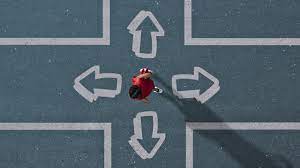
Choices define who we are as a person; it shows our character to the world. To enhance the probability of making better choices and surviving bad ones, personal character and inner spirit play important roles. Essentially, there is a thin line dividing any two paths or choices in life. We need to turn the thin line into a sturdy barrier. We need our consciousness and discriminating sense create these barriers to keep us centered on making better choices. Now, no one is perfect; we all make mistakes or bad choices. But how we handle the adversity, again lies in one’s willpower and character.

Choices define who we are as a person; it shows our character to the world.

Next time when you make a choice try asking these questions to yourselves:

1. What type of person do I want to be?

2. How can I be a better person by making a particular choice?

Below is a quote from a poem that has influenced me a lot. I leave you to ponder upon its meaning, at your own choice, Of course!

“Two roads diverged in a wood and I- I took the one less travelled by, and that has made all the difference.”

The Road Not Taken By Robert Frost


RESTORATION COMEDY

The Puritan experiment in government did not long survive and after Cromwell’s death in 1658, and in May 1660 Charles II was restored to the throne of English. The reaction against Puritan manners and morals was inevitable. It gained force from the fact that many of the returned Cavaliers had spent their exile in France and become expert in French wit and French gallantry, and also because Charles II himself encouraged an atmosphere of hedonistic liveliness at Court. Charles set the tone for the Court Wits, who in turn set the tone for the comic plays of the period. Restoration comedy, therefore, represented the stylization of a deliberately cultivated upper-class ethos.

The first accomplished Restoration comedy of Manners was Sir George Etherege. His first play, The Comical Revenge, or Love in Tub, was performed in 1664. The comic plot of the play provided enough opportunity to the author to showcase his remarkable capacity in handling the wit-combats and shows of sophistication that the age loved. His next play, She Would if She Could(1668), explores the usual Restoration battle between male and female prudence with admirable skill. The tone, though sarcastic, is never brutal and the conclusion establishes a satisfactory balance between wit and virtue. The Man of Mode, or, Sir Fopling Flutter(1676) was his last and most brilliant comedy. The play is more purely amoral and the treatment of Dorimant, the hero, of his various women would be brutal if related to any other world than one in which the relation between the sexes was purely a matter of finding the between lust and self-interest.

William Wycherley produced hid four comedies between 1671 and 1676, of which the last two, The Country Wife and The Plain Dealer, were by far the most interesting. Unlike Etherege, his plays clearly display that he never could completely accept the Restoration standards. The Plain Dealer conveys a general outrage about human nature and society as a whole. The contrast between public pretension and private reality is treated in Wycherley with much humour and wit. The real interest of the plot lies in the exposure of Olivia, who turns out to be a selfish and cruel human being under her prudish exterior. The Country Wife is a more coherent and polished play. The play’s name derives from the effort of Mr. Pinchwife to keep his country wife away from the gallants of the town. The jealous husband is of course ridiculed and gulled, but this does not make the behaviour of his wife in any degree acceptable. She starts of being a simpleton and ends up becoming a nasty animal.

John Dryden produced some comedy of manners during the period, but his real reputation was established in other forms of literature. Dryden’s The Wild Gallant, The Rival Ladies, Secret Love, and Sir Martin Mar-all have features of Restoration Comedy of Manners but not the poise or beauty of the best of Etherege or Congreve. His best contribution to the genre is Marriage a la Mode (1672), where the main plot humourously explores the Restoration explores the Restoration attitude to sex, marriage and honour.

The real master of the form, according to Dryden himself, was Congreve. Not all Congreve’s comedies are, however, in the true Restoration mode. Both The Old Bachelor (1693) and Love for Love (1695) combined farce, satire and Johnsonian humour along with the Restoration spirit in its delineation. The scene in Love for Love, where Mr. Tattle teaches Prue, the country girl, the importance of saying one thing and doing another illustrates the contrast between public relation and private behaviour that forms the core of many Restoration wit-combats.

The Way of the World (1700) was Congreve’s last and finest comedy. The plot contains many of the stock devices of Restoration comedy- the witty pair of lovers, the amorous widow, the would-be-wit, intrigues and adulteries- the tone is quite different from that of Etherege or Wycherley. It is half amused, half sad; the comic atmosphere is pervaded with the realization of the ironies and ambiguities of life. The complexity of human relationships, generally glossed over in Restoration comedy, is here presented in insightful detail.

The comedies of Sir John Vanbrugh and George Farquhar reflect a movement away from the general spirit of Restoration comedy. Restoration comedy proper is thus, thought to begin with Etherege and reach its high- point with Congreve. Jeremy Collier’s Short View of the Immorality and Profaneness of the English Stage (1698) showed the changing demands of the society and although it did not immediately kill comedy of Manners, it definitely reflected a changing public attitude. Colley Cibber was already developing a more sentimental bourgeois comedy in 1690s and the heyday of the ideal social world of the Court Wits of the reign of Charles II was all but over.

YOGA AND LIFESTYLE

In a first for East India, Visva Bharati varsity commences PG diploma  course in yoga studies - Education Today News

Indeed , it is an astonishing fact that a yogic tradition , which is more than five thousand years old , has recently become a popular way of life . Presently , people consider that yoga is a significant means to achieve a healthy as well as a positive lifestyle . In fact , the power of yoga lies in its simplicity , flexibility and diversity . As a matter of fact , yoga helps in improving our flexibility , lowers our stress level and increases our confidence and finally contributes to a healthier lifestyle on the whole . There are various lifestyle diseases like obesity , diabetes , asthma , hypertension , back pain , migraine and depression which can be prevented and treated up to some extent with the help of certain yogic exercises .

Asanas As Preventive Measures

52,455 BEST Yoga Poses Male IMAGES, STOCK PHOTOS & VECTORS | Adobe Stock

According to Patanjali , asana means , “sthiram sukham aasanam “ i.e,. ” that position which is comfortable and steady ” . In Brahamanopanishad , “ To sit in a comfortable position or posture for everlasting period is called asana “. Asana is that state of body in which the body may be positioned easily . As a matter of fact , the ability to sit comfortably for an extended period of time in any position is called asana . In asanas , body is kept in various positions in such a way that the activities of organs and glands of body become more effective and eventually the health of mind and body is improved .

In fact , asana is a means through which physical and mental development is achieved . Prevention of diseases and delay in ageing are the desired effects that can be achieved through yogic exercises .

There are different types of asanas which include meditative asanas , relaxative asanas and corrective asanas . Regular practice of the above- mentioned asanas significantly affects various systems or organs of our body . Asanas can be used as preventive measures because they provide the following physiological benefits , which ultimately help us in avoiding various lifestyle diseases such as diabetes , obesity and cardiovascular diseases .