Personal Habits: Exercising

Everyone from India has heard the phrase, “ If you get up by 6 in the morning, everything will set in order.” It is a common phrase made for Millennials and Gen-Z. We hear it so often and tried a few times but it didn’t suit your routine. Did you ever wonder why you weren’t able to adopt it? After reading this, do let me know about your thoughts on this.

Exercising in the Morning

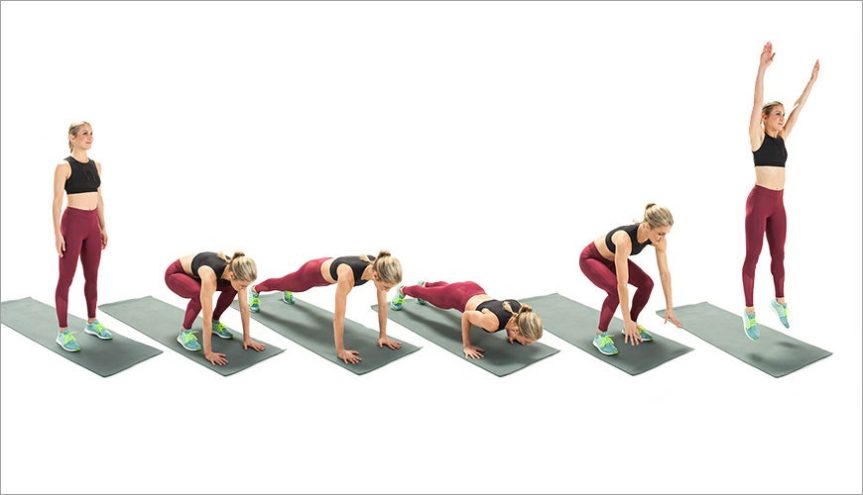
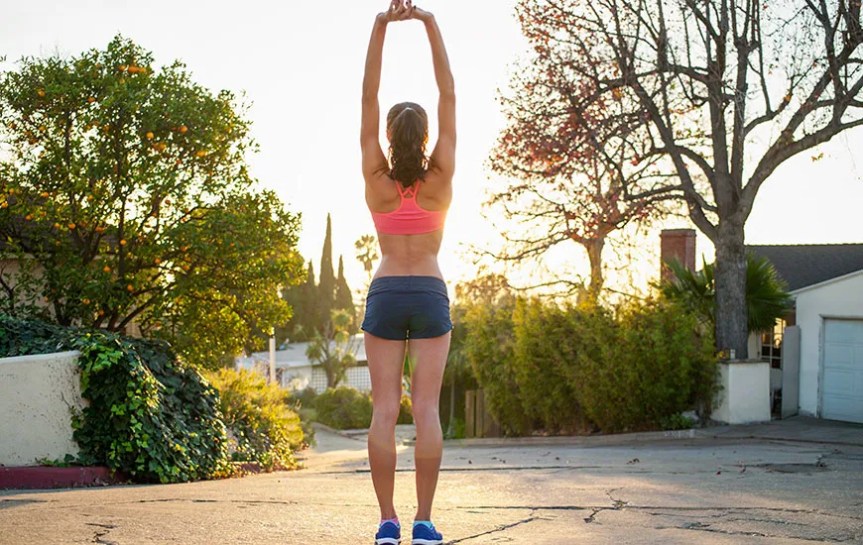
Of course, the most common habit among people. Exercising a few hours after you get up is beneficial to your health. It increases blood flow in you as well as trains your muscles. It increases alertness and also energizes you for the day. It’s common to do cardio in the morning with lifting weights before your first breakfast. This helps in burning fat as well as developing your muscle endurance. But why can’t you do it?

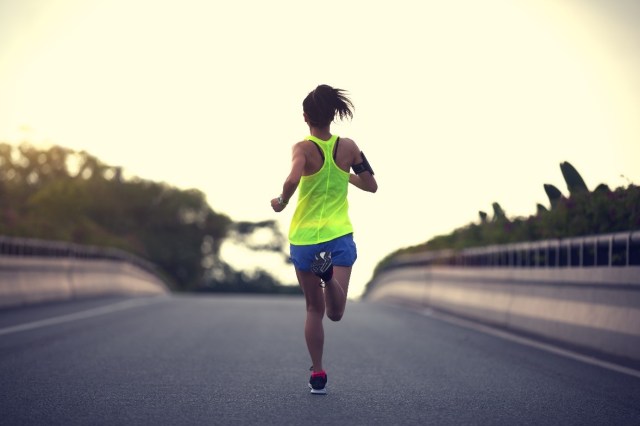
Jogging in the Morning increases blood flow and improves body endurance.

The most common reasons are:

  • Sleeping Late: You may have slept late. Even if you have slept around 11PM, if you need 8 hours of sleep then you will get up at 7AM. Your body needs sufficient sleep to get up or it will keep you tired the entire day. You have to plan your sleep schedule in a way you don’t compromise your sleep.
  • Exhausted: If you had a backbreaking day and you are completely exhausted of your energy, then you may not get up the next day at your set time. If this is your regular routine, you may want to change the time you want to get up.
  • Jam-packed daily routine: If your schedule is full on an everyday basis, you need to start prioritizing your work. It may be tough to change your routine but by doing this, you can improve the amount of time you can give to yourself and your new habits.
  • Feeling awkward where you exercise: Am I doing it well? Is my form right? Is my shirt torn? Am I sweating too much? Am I disturbing someone? Are they looking at how bad I am? Are they judging me? It is okay to feel these when you workout. Everyone goes through this and it’s okay. At the beginning it does feel weird to do a workout but we all started as beginners and we also have made mistakes. The only thing that you can do is ask a friend, family or trainer to help you. They may also point out other mistakes that you may have made which you can correct.
  • You don’t want to: Most of the time when you try to build a habit, there is a feeling that says, “This isn’t worth the trouble we are going through” but sometimes, you just don’t want to. You might want to do it to show others or of the stereotypical “healthy person”. If you think clearly by separating your external ideas/thoughts, you will understand why you want to do it.

How can you tackle these problems?

At first, these hurdles feel the hardest to jump over but unless you jump over them, you cannot reach your goal. There will be hurdles along the way and you are the solution to them. You will become better when you start crossing hurdles. Every hurdle you face is a step that you need to conquer and move forward.

  1. Set a Convenient time: 5 AM may be easy for others but it may be difficult for you. It may not agree with your sleep routine, or with your work routine so you quit. Rather, just change the time. If you get up around 7 AM and have to go to work by 10 AM. Make a slot of 1 hour for your workout and complete your morning routine! If you can’t make a slot of 1 hour, carry it to the evening when you come home. 1 hour before dinner, exercise to your heart’s content! 
  1. Change your workout: If you are the ‘No pain, No Gain’ person, sometimes, you may get too sore from your workout which leads to quitting. Rather than quitting, change your workout a bit. You don’t need to change weight, just change what you do. It is very helpful to have a 10-minute cardio session at the end. Not high intensity but something like walking on a treadmill or yoga, will help you recover efficiently.
  1. Get a workout partner: “Sometimes, the fruit tastes better when it’s shared” Get a partner! A friend who wants to workout or a family member who is bored of being alone in the gym, work together at the gym! When you have someone to look out for you, you get more confident and work better. It will also help in improving your form! If you workout with a partner you are comfortable with, you will be able to focus more on your workout than others.
  1. Take Pictures of yourself: When you take pictures of yourself after you workout, you can see the amount of progress that you are accomplishing over time. This way you get to see how far you have come. Every day that you work is a step forward. You and your partner could record each other’s workout and see where you could improve.
  1. 20% of the work gets you 80% of the way: Some days, you don’t feel like working out, you don’t feel like going to the gym but by showing up and doing 10% of your workout makes you feel happy that you came. Just by showing up and starting your workout sets the wheels in motion. By the time you take off your headset, you are halfway through.
  1. Take cheat days/rest days: When you exercise, it’s important to rest so your muscles recover and become stronger. By not taking rest, you are prone to burning out. If the gym is tiring you out way beyond it should, then you need a rest day. Hitting the gym after your rest day feels better because you will feel stronger and work more.

This article is my personal opinion that I have used when I workout and it has worked well for me. Experiment with your workout routines and I am sure you can find something that works well for you. To become better tomorrow, you have to work today. This way, you will become a better version of yourself. All the Best! 
RECIPES TO PROMOTE WEIGHT LOSS (DESI-VERSION)

Our diet plays a crucial role in the process of weight loss and having a well-balanced diet and some mind-full eating in regulated portions is always the key for healthy and fit body. It might not be as difficult as it may sound if you start with a little patience and consistency. Sometimes a Subtle tweak here and there in diet is absolutely fine!

Here are few recipes which works out for weight loss journey

TURMERIC TEA

Turmeric consists of a powerful ingredient called as ‘curcumin’ which basically is the main active ingredient in turmeric that aids in cutting down the body fat. ‘Curcumin’ plays a major role to help suppress the fat but it does not fully absorb in the body. To make absorption work other ingredients such as black pepper is made use of. Therefore, this detoxifying drink makes the body light as well as helps cut down the excess fat if used regularly.

Recipe link:-  https://yummyindiankitchen.com/turmeric-tea-recipe-for-weight-loss/#how-does-it-help-in-belly-fat-loss

OATS KHICHDI

India’s favorite comfort food made into a high-protein, healthy one! Brimming with the goodness of oats, moong dal, carrot, green peas, tomatoes, chilies and olive oil, this hearty bowl of khichdi is sure to leave you healthy, happy and satiated

Recipe link :   https://food.ndtv.com/recipe-oats-khichdi-951242

FENUGREEK SOUP

Fenugreek seeds are rich source for vitamins, minerals and poly-nutrients .It is also rich in vital vitamins such as thiamine, pyridoxine, vitamin A , vitamin C and other essential nutrients for optimum health.

Recipe link : https://simpleindianrecipes.com/Home/FenugreekSproutsSoup.aspx

CARAMEL MAKHNA

Makhanas are popularly known as lotus seeds, fox nuts, Euryale ferox, gorgon nuts and phool makhana. It’s actually the puffed lotus seeds or the puffed fox nuts that has high nutritional and medicinal values

Recipe link :- https://www.indianveggiedelight.com/caramel-makhana-recipe/

Remember to always fill your plate with good amount of veggies, greens and fruits. Drink loads of water and buttermilk. If possible take a 20-30 min walk or jog because it speeds up the process of weight loss.

Ever Heard The Term ‘Foodaholic’?

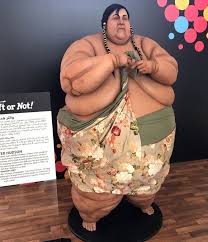
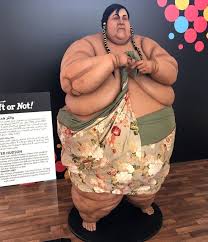
Whooping Walter Hudson’.

You probably know the meanings of the words’ workaholic’ and ‘alcoholic’.

What do you think a ‘foodaholic’ is? Walter Hudson was one.

How much do you weigh? Walter Hudson weighed more, much more. This is his obituary.

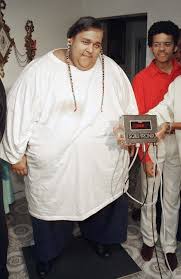
WALTER HUDSON, who has died at Hempstead, New York, age 46, was once listed in The Guinness Book of World Records as the heaviest man on earth. About 183 cm tall and 274 around, with cherubic features set off by pigtails braided in the Cherokee style, he long devoted himself to the pleasures of the table. Four years ago, Hudson-then tipping the industrial scales at his top weight of 543 kg gained worldwide notoriety (as “Whopping Walter”) when he became stuck in his bedroom door. He was wedged there for some four hours. It took eight firemen to free him.

Walter Hudson was born at Brooklyn in 1945 and, as he recalled, “began gorging at the age of six.” At 15 he was so obese his legs collapsed underneath him and he was confined to bed. Indeed, except for the time when his family moved to Hempstead in 1970 and he was transported by motor-car (his then 266kg broke the seat,) he remained inside. “I’m just a foodaholic,” he once confessed, “I have no excuse.”

Hudson’s eating habits were fuelled by food brought in by members of his family. He would generally start his day with a breakfast of two pounds of bacon, 32 sausages, a dozen eggs, a loaf of bread, jam and coffee.

For lunch, Hudson favoured four enormous bowls of rice, four double cheese- burgers, eight boxes of fried potatoes, six pies, and six large bottles of coca-cola. For dinner he would eat six roasted corns, half-a-dozen yams, and another six or seven baked potatoes, ending with a whole apple pie. Between these main meals, he would eat a chicken or two, followed by noodles, string beans, six large bottles of soda, not to mention colossal sandwiches, and copious amounts of ice-cream.

“All I cared about,” he recalled, “was food, FOOD!” When not eating and sleeping he would watch television, listen to tapes and read the Bible-he had a particular penchant for the psalms and was apt to recite Psalm 121. “I will lift up mine eyes unto the hills…”

Hudson, though, was advised against sitting up for longer than five minutes because of the risk of being smothered by flab. The only exercise he engaged in 8. was when he attended to his ablutions; it took him an hour to negotiate the six yards to the bathroom from his bedroom. Then in 1987, he found himself wedged in the door-way. “The day I got stuck in that door,” he recalled, “that when the Lord got me the help I needed.” The help to which he referred was offered by Dick Gregory, a comedian who masterminded the Slim Safe Diet Scheme.

“We think what might have happened,” said Gregory about his new client, “is that in 27 years of lying around he might, because of the reading of his Bible, have taken on the same characteristics as Buddhist monks – slowed down the biological processes. But we don’t know.” Gregory placed Hudson on a1,200 calorie-a-day diet of raw fruit and orange juice. For exercise he was advised to lie in bed waving his arms about like a conductor.

Hudson soon lost some four inches off his knees, and within three months had shed 178 kg. It began to look as if he might fulfil such ambitions as visiting his mother’s grave, riding on the New York subway, driving into the country-and even flying to a clinic in the Bahamas, from which he envisaged emerging as a sylph of 13 stones. 12. But it was not to be. At the time of his death, of an apparent heart attack, Hudson reportedly weighed 508 kg. Rescue workers had to cut a large hole in the wall of his bedroom to remove the body. He was unmarried.

SO HOW CAN OVERWEIGHT AND OBESITY BE REDUCED? It is not good for human body in this pandemic era……………….

Overweight and obesity, as well as their related noncommunicable diseases, are largely preventable. Supportive environments and communities are fundamental in shaping people’s choices, by making the choice of healthier foods and regular physical activity the easiest choice (the choice that is the most accessible, available and affordable), and therefore preventing overweight and obesity.At the individual level, people can:limit energy intake from total fats and sugars;increase consumption of fruit and vegetables, as well as legumes, whole grains and nuts; andengage in regular physical activity (60 minutes a day for children and 150 minutes spread through the week for adults).

Fundamentals of ‘LAUGHTER YOGA’.

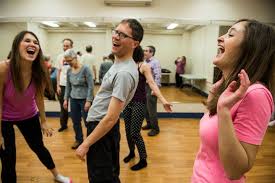
Laughing is very important for health:

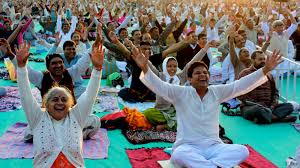
The most important principle behind Laughter Yoga or the most significant driving force behind the several Laughter Clubs is the theory that Motion Creates Emotion. Quite a few people wonder how a person can laugh when he is in no mood to laugh or when one doesn’t have any reason to laugh. However, the answer is very simple. For, there is a well established link between the body and the mind. Whatever happens to the mind happens to the body as well. This is easily understood and observed too. If a person is sad or depressed, his body also appears quite lifeless and sluggish. Such a person doesn’t walk or talk enthusiastically. But, what most people fail to understand is that the opposite is also true.

Whatever happens to the body also happens to the mind. I remember my father once telling me, “Son, if you are sad or feeling a bit low, don’t sit idle. Keep doing some physical work or go for a walk or do some jogging or go out to play some cricket or football . You’ll feel better.” And most of the times dad was proved correct. I would start feeling better quite soon. In an unhappy state of mind, if we bring ourselves to behaving or acting happy, soon enough we will start feeling light-hearted and chirpy indeed!

So, Laughter Yoga aims to use the two-way body-mind link to change the state of mind through voluntary physical gestures which include repetitive clapping, chanting, specific body movements along with laughter and breathing exercises. The result is so positive and its effects are so powerful that the modern world today has witnessed Laughter Yoga overcome severe and chronic depression in thousands of people right across the globe. In fact, several Laughter Clubs have adopted the motto, “If your Mind can’t laugh, bring your Body to our club.”

Laughter is all about playfulness. Have you ever wondered why children laugh 300 to 400 times a day whereas adults would consider themselves very fortunate if they manage laughter 10 to 15 times in a day? This is because of that seriously wicked and interfering tool called the brain! Adult use their brains or minds first to comprehend humour and then decide if they have to laugh. Very often, they suffer from what is said in Hindi the LKK Syndrome, that is “Log Kya Kahenge” or “What will people say?” This is called the “Mind-to-Body Model of Humour”.

On the other hand, children, who do not allow themselves to be too affected by the LKK Syndrome and don’t use their brain to seriously do the comprehension first, laugh the most while playing. Even if they fall into mud and slime while playing, they laugh heartily together without bothering about the consequences of soiling their spotlessly white school dress in case of a traditionally strict class teacher or headmistress in school or mother at home! Their laughter comes straight from the body and happily they don’t make use of intellectual capacity of the brain for it. Very clearly, they exhibit the “Body-to-Mind Model of Humour”, It is this childlike playfulness that Laughter Yoga aims at cultivating in people who are quite stressed these days.

Image -google.

What is sadly significant is the fact that more and more children and even women, to whom smiles and laughter and giggling should come as naturally as the turtle coming out of its shell to walk or leaves falling in autumn, are enrolling themselves as members of laughter clubs nowadays!

Laughter Yoga makes a clear distinction between Happiness and Joy. Happiness is a conditional response of the mind which is totally dependent on the fulfilment of certain desires of the mind. By its very nature, it is related to how one’s life had been in the past or how it will be in the future! It is not there at all in the present moment. The ironical and sad fact is that even if some dreams, goals or aspirations are fulfilled, happiness disappears quite quickly as the mind starts chasing new goalposts-a new, job, a new house, a bigger car, etc.

On the other hand, joyfulness is the unconditional commitment to be happy each moment, to have fun for the moment, despite the problems and challenges of life, no matter how insurmountable they seem to the mind. It is the promise that the Body makes to the mind to indulge in playfulness moment by moment and thereby give relaxation to it. During these periods of playfulness triggered by a plethora of physical activities like dancing, singing, playing and laughing, physiological and biochemical changes take place within our body that give us a sense of well-being that completely alters a negative outlook towards life and its challenges replacing it with confident positivism moment by moment.

Therefore, in Laughter Clubs, members develop positive conditioning of joy. By laughing together over a period of time, clapping in a rhythm ,chanting “Ho Ho Ha Ha” in unison and positive affirmations like ” Very Good Very Good Yay Yay”, the brain develops new neuronal connections to produce happy neuropeptides and hormones in the body that rejuvenate the members.

Finally, Laughter Yoga rectifies shallow and irregular breathing, which is the direct consequence of stress and negative mental state. According to Dr. Otto Warburg, a Nobel Laureate, one of the main reasons for falling sick is the lack of oxygen in the body cells due to incorrect breathing. So, let us laugh together and get the oxygen back into our cells!

PHYSICAL FITNESS

Prioritize Your Health & Wellness: Learn The Importance Of Physical Fitness  | Shaw Academy

Different people have different points of view regarding fitness . For a common man to have a good physique is a symbol of physical fitness . For a doctor , the proper functioning of physiological systems is physical fitness . In fact , physical fitness is a simple term with a broad meaning . Physical fitness of a common person means the capacity to do the routine work without any fatigue or exertion and after doing his work he has power to do some more work with quick recovery . Physical fitness is more than the possession of strength and endurance . It means having the best possible health with the capacity to do one’s everyday task , engage in recreational pursuits and meet emergencies , when they arise . As a matter of fact , physical fitness is possessed by that individual , who remains enthusiast , works cheerfully and does the emergency work with vigour . Physical fitness implies a relation between the task to be performed and the individual’s capability to perform it .in fact , to understand the physical fitness in better way , it would be more beneficial to go through the following definitions of physical fitness .

  • According to Webster’s Encyclopaedia , “ It is the ability of a person to do daily routine work without fatigue ; moreover to participate in playful activities and still reserve enough capacity to meet any emergency .
  • According to Don Hoskins ,”The human body’s ability to move with the desired speed , balance , agility and strength gained through proper exercise and nutrition , “
  • According to Kroles , “Successful adaption to the stresses of one’s lifestyle.”
  • According to David R. Lamb , “Physical fitness is the capacity to meet the present and potential physical challenges of life with success .”

In fact , it can be said that physical fitness is the ability to function effectively and efficiently , enjoy leisure , be healthy , resist disease and cope with the emergency situations . Physical fitness varies according to the nature of work , individual’s size , shape of the body , age and sex . For physical fitness , we require an efficient motor mechanism , efficient organic mechanism and an efficient mental functioning .

Basic yoga poses.

[Bhoomika Saini]

The more you practice yoga, the more you’re building awareness in your body, The biggest thing to do as a beginner is to start and then stay consistent with your practice, remember that practice makes progress.

1. Mountain Pose (Tadasana)

top 10 yoga poses for begineers

This pose teaches one to stand with majestic steadiness like a mountain. The word ‘Tada’ means a mountain, that’s where the name comes from .Mountain Pose is the base for all standing poses; It involves the major groups of muscles and improves focus and concentration. Mountain pose may seem like “simply standing,” but there is a lot going on.

How to do it

  • Stand with your toes together and heels slightly apart hang your arms besides the torso.
  • Spread your toes and place your weight evenly on your feet. Firm your thigh muscles while rotating them inwards Relax your shoulders and roll them back and down.
  • As you inhale, elongate your torso and when you exhale release your shoulder blades away from your head. You may also put your hands in prayer position in front of your chest, or rest them by your sides.
  • Take long, slow, deep breaths in

Beginner’s Tip

You can check your alignment by standing against the wall initially. You can even raise your hands and stretch them. Breathe easy.

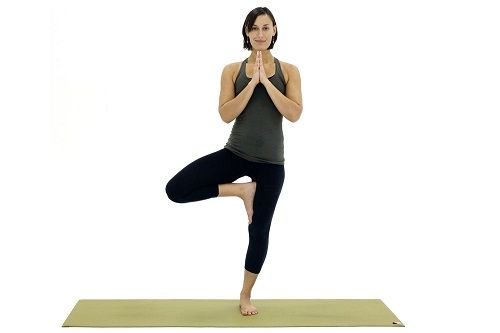
2. Tree Pose (Vrksasana)

Tree Pose

Tree is an awesome standing balance for beginners to work on to gain focus and clarity, and learn to breathe while standing and keeping the body balanced on one foot. . It replicates the steady stance of a tree.

How to do it

  • Start with your feet together and place your right foot on your inner left upper thigh. Press your hands in prayer and find a spot in front of you that you can hold in a steady gaze.
  • Hold and breathe for 8-10 breaths then change sides. Make sure you don’t lean in to the standing leg and keep your core engaged and shoulders relaxed.

Beginner’s Tip

You can stand with your back braced against a wall if you feel unsteady in this pose.

3. Triangle (Trikonasana)

Triangle Pose

Triangle is a wonderful standing posture to stretch the sides of the waist, open up the lungs, strengthen the legs and tone the entire body.Triangle Pose is the essential standing pose in many styles of yoga.

How to do it

  • Stand with your feet wide apart. Stretch your right foot out (90 degrees) while keeping the leg closer to the torso. Keep your feet pressed against the ground and balance your weight equally on both feet.
  • Inhale and as you exhale Rest your right hand on your shin, ankle, or the floor outside your right foot, Stretch your left arm toward the ceiling.
  • Turn your gaze up to the top hand and stay in this pose for 5-8 breaths. Inhale to come up and repeat on the opposite side.

Beginner’s Tip

Place your back heel or the back of your torso against a wall if you feel unsteady in the pose.

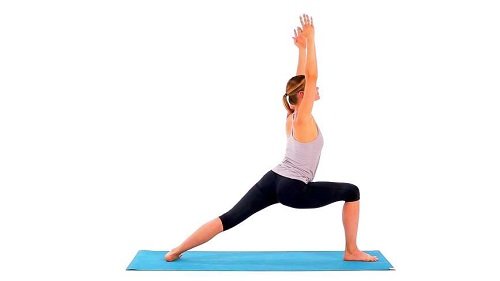
4. Warrior I (Virabhadrasana I)

Warrior I or Virabhadrasana I

Warrior pose is quintessential for building strength and stamina in a yoga practice. It give us confidence and stretch the hips and thighs while building strength in the entire lower body and core.

How to do it

  • Stand in Tadasana (Mountain Pose). With an exhale, step or lightly jump your feet apart. Raise your arms perpendicular to the floor (and parallel to each other)
  • Turn your left foot in 45 to 60 degrees to the right and your right foot out 90 degrees to the right. Align the right heel with the left heel. Exhale and rotate your torso to the right.
  • With your left heel firmly on the floor, exhale and bend your right knee over the right ankle so the shin is perpendicular to the floor.
  • To come up, inhale, press the back heel firmly into the floor and reach up through the arms, straightening the right knee. Turn the feet forward and release the arms with an exhalation. Take a few breaths, then turn the feet to the left and repeat for the same length.

Beginner’s Tip

When your are bending the front knee As a beginner you have a tendency to tilt the pelvis forward.You must lift the pubis up toward the navel and lengthen the tail toward the floor.

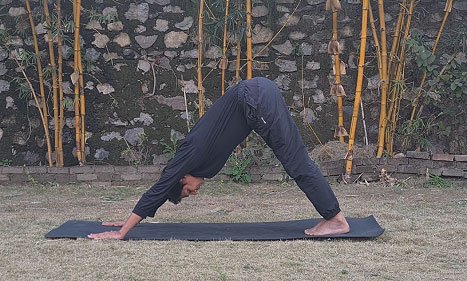
5. Downward-Facing Dog (Adho Mukha Svanasana)

Downward-Facing Dog or Adho Mukha Svanasana

Downward Dog is used in most yoga practices and yoga classes and it stretches and strengthens the entire body. It may be the first pose you learn as you begin a yoga practice. It acts as a transitional pose and can be a resting position.

How to do it

  • Come onto the floor on your hands and knees. With your hands slightly forward of your shoulders and knees below your hips. Spread your hands wide and press your index finger and thumb into your mat.
  • Exhale and lift your knees away from the floor lift the butt toward the ceiling. Straighten your legs as much as you can and press your heels gently toward the floor.
  • Your head should be between your arms, facing your knees, and your backs should be flat.
  • Hold for 5-10 breaths.

Beginner’s Tip

If you have difficulty releasing and opening your shoulders in this pose, raise your hands off the floor on a pair of blocks or the seat of a metal folding chair.

Being Healthy

A standard definition of being healthy according to World Health Organization (WHO) is , ” complete physical, mental and social well being and not merely absence of disease or infirmity”. This definition clearly expresses that just because you are disease free , it does not mean you are healthy. So, keeping that definition in mind , do you think you are healthy??

Health is a major concern for almost all the people living in this world. As we are growing with time, most people are being ‘health conscious’ , they plan diet , go to gym, practice yoga and what not. But what we actually need to know is that health is not just about being physically fit. It is a combination of three element – being physically well, mentally stable and socially fit. There are many person who are physically fit but are mentally depressed. So are they actually healthy?? The answer is plain ‘No’. Similarly if someone is physically as well as mentally well but finds difficulty in socially interacting or communicating or do not contribute to the society , is not actually healthy.

So what it needs to be healthy?? If you physically fit, happy with your mental state ( do not worry about little stress , it is completely okay to be little stressed out) and doing socially great then you can conclude that you are healthy.

So , next time when you think about your health, do not just count your health. And if you think you are not healthy, here are some tips to improve ( most of the are about mental health):

1) Plan your diet – This is the first step that almost everyone takes to be healthy . And of course it is necessary . Planning your diet not only improves your physical health but also keeps you mentally satisfied.

2) Exercise, Yoga or anything – Do anything that includes labour works. Try to sweat . It will definitely lift your health.

3) Listen to music – Experts says music can be a great way to boost your mood and improve signs of depression.

4) Gratitude – At the end of the day, always try to write at least three things you are grateful for. It is always beneficial to count your blessings.

5) Relax – Don’t forget to relax. Always take some time out for yourself. Do something that you love to do. Paint, dance, read or anything that makes you happy.

6) Books – Books are great way of escaping reality. Feeling depressed or lonely? Grab a book, sit comfortably, make some coffee and read. It will teleport you to a different world. Certainly you will feel better. Try reading atleast 15 mins a day. It will also improve your creativity.

7) Friends and Family – Spend quality times with your loved ones. Create memories and cherish them. Do not forget , no matter what, you are always loved.

8) Friendliness – Be good and kind to everyone – your neighbors , mates, kid you see in a subway , everyone. Do charitable works. It will always give satisfaction in the end, no matter how much you suffer.

The Origin of Buddhism .

We are what we think. All that we are arises with our thoughts. With our thoughts, we make the world.
Peace comes from within. Do not seek it without.

Lord Buddha

Introduction.

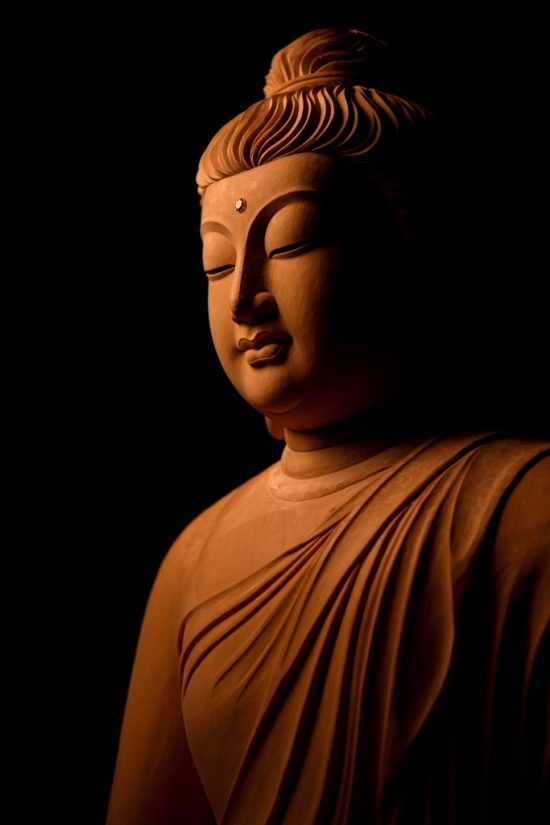
He was a spiritual personality . An ancient teacher and enlightened many . A founder of world religion Buddhism . He was popularly known as Gautama Buddha (also known as Siddhattha Gotama or Siddhārtha Gautama or Buddha Shakyamuni ) .

The Enlightened One who rediscovered an ancient path to release clinging and craving and escape the cycle of birth and rebirth. He taught for around 45 years and built a large following, both monastic and lay. His teaching is based on his insight into the arising of duḥkha (the unsatisfactoriness of clinging to impermanent states and things) and the ending of duhkha—the state called Nibbāna or Nirvana (extinguishing of the three fires).

Buddhism

Buddhism, one of the major religions and philosophical systems of southern and eastern Asia and of the world. Buddha is one of the many epithets of a teacher who lived in northern India sometime between the 6th and the 4th century before the Common Era.

The title buddha was used by a number of religious groups in ancient India and had a range of meanings, but it came to be associated most strongly with the tradition of Buddhism and to mean an enlightened being, one who has awakened from the sleep of ignorance and achieved freedom from suffering.

According to the various traditions of Buddhism, there have been buddhas in the past and there will be buddhas in the future. Some forms of Buddhism hold that there is only one buddha for each historical age; others hold that all beings will eventually become buddhas because they possess the buddha nature (tathagatagarbha).

According to Buddhist doctrine, the universe is the product of karma, the law of the cause and effect of actions, according to which virtuous actions create pleasure in the future and nonvirtuous actions create pain.

Your work is to discover your world and then with all your heart give yourself to it.

Lord Buddha

History

Gautama Buddha ( born c. 6th–4th century BCE, Lumbini, near Kapilavastu, Shakya republic, Kosala kingdom [now in Nepal]—died, Kusinara, Malla republic, Magadha kingdom [now Kasia, India]).

Buddha is one of the many epithets of a teacher who lived in northern India sometime between the 6th and the 4th century before the Common Era.

Learnings from Gautama Buddha.

1. “Three things cannot be hidden: the sun, the moon and the truth.”

2. “You will not be punished for your anger; you will be punished by your anger.”

3. “You can search throughout the entire universe for someone who is more deserving of your love and affection than you are yourself, and that person is not to be found anywhere. You, yourself, as much as anybody in the entire universe, deserve your love and affection.”

4. “We are shaped by our thoughts; we become what we think. When the mind is pure, joy follows like a shadow that never leaves.”

5. “Believe nothing, no matter where you read it, or who said it, no matter if I have said it, unless it agrees with your own reason and your own common sense.”

Link

Ways to Make Your Daily Walk Feel More Like a Walking Workout. [PART 2]

[Bhoomika Saini]

1. Use elevation to your advantage.

Heading up hills naturally increases the intensity of your walk even if you’re moving at the same pace or slower. “A walking incline can be even harder than running. Declines also serve their purpose, activating your core and strengthening your mind-muscle connection as you focus on each step.

Those lucky enough to live near undulating trails or roads can simply plan their route accordingly. If you’re largely on flat land, find any suitable slope—even a sledding hill or a parking-lot ramp—and do four to five hill repeats, walking up purposefully and down intentionally.

2. Do an out-and-back where you can do some stair climbs at the halfway point.

One simple way to add extra intensity into your workout is to incorporate some stairs into your routine. A common way to do this is to map your route to include regular walking as a warm-up, then hitting a flight of stairs for some higher-intensity work, and then walking back home as a cooldown.

Someone who lives a mile or so away could plot a route to their base, then climb up and down a couple of times before briskly walking home again.

3. Mix in some bodyweight moves.

Even if there aren’t stairs in your vicinity, you can still break up a walk with a burst of calisthenics. If you have access to a track or a park with a looped path, try walking the curves and doing dynamic or bodyweight moves on the straightaways, for instance, walking lunges, walking planks, or single-leg hopping. No track? Try it by time—for instance, two minutes of walking, then one minute of strength moves.

If you’re near an open playground and don’t mind toting along hand sanitizer, you can do pull-ups or monkey bars. Prefer not to touch? Try toe taps on a curb, step-ups on park benches, or a split squat with one foot elevated on a ledge.

4. Walk to music with a quicker tempo

There’s a reason group fitness classes blast power pop—music not only boosts your mood, research shows it can actually make hard efforts feel easier. What’s more, it can also work as a kind of metronome guiding your pace.

Spotify has playlists for songs of various beats per minute for keeping the tempo up. Choose one that’s comfortably challenging—say, 130 to 140 BPM—and will last for the duration of time that you want to walk, and aim to keep up with it. (You can also try our SELF playlist of the best workout songs for some motivation, too.)

Or use music as a cue for more intense segments. Walk easy for verses and fast during the chorus. Bodyweight circuit at the start of every other tune: 10 squats, 10 split squats on each leg, 10 lateral lunges per leg, and 10 push-ups, either on the ground or with your hands on a bench to make it easier.

5. Or even twirl, prance, or twerk.

Sprinkling a few moves into your walk elevates your heart rate and gives you an opportunity to move in different directions—critical for those of us hunched at desks and over our devices all day. Some moves are air punches, grapevines, lateral shuffles, and strutting on the balls of your feet, which works your calves and quads.

Don’t let self-consciousness or a lack of dance training hold you back.

Let go of everything that’s in your head and don’t worry about what people think.”

6. Use technology to your advantage (or leave it behind).

This is another time when it’s important to consider the purpose of your walk. If it’s a mind-clearing, meditative stroll, it might be best to leave your GPS watch at home and your phone in do-not-disturb mode. But if you’re aiming for fitness benefits, you can use digital tools as motivators.

If you have a watch or fitness tracker with a step count, try to take a few more steps during each 30- or 60-minute walk.

Stress and anxiety can affect what’s known as your rate of perceived exertion, or how hard it feels like you’re working to power through each step.

“You need to listen to your body,” even if the message is to slow down or back off. “If you’re used to hitting a certain number or certain metric, don’t be disappointed. You should be more excited and proud that you did something as opposed to nothing.”

7. Close it out with a stretch session.

Taking a few minutes to further loosen warm, limber muscles after a walk can ease some of the strain and fatigue you’ve built up and also give your session a sense of closure. “Often we walk and get to our car or back to our house and that’s it,”.

“Stretching makes it complete.”

COPA AMERICA 2021 : A MONTH TO CHERISH

The 47th edition of the international men’s football championship organised by South America’s football ruling body CONMEBOL. The tournament was hosted in Brazil from 13 June to 10 July 2021. Originally the tournament was scheduled to be hosted in Argentina and Colombia from 12June to 12 July but due to the outbreak of COVID 19 the game was relocated in Brazil. The worldwide audience witnesses some amazing matches and some great sportsmanship in the field. On 20 May 2021, Colombia was removed as co-host amid ongoing protests against President Iván Duque Márquez, and Argentina was then removed on 30 May due to COVID-19 issues. CONMEBOL confirmed Brazil as the new host of the tournament.

Hosts Brazil were the title holders, having won their ninth title in 2019, which they also hosted. Argentina won their fifteenth title by defeating the host, Brazil, 1–0 in the final. It was Argentina’s first senior title since 1993.Argentina also equalled Uruguay’s record for winning the Copa America title on the most number of occasions.Colombia won the third place.

VENUES.

1 June 2021, the cities of Brasília, Goiânia, Cuiabá and Rio de Janeiro as the hosts of the competition,with the following stadiums for the matches: Maracanã, Mané Garrincha, Pantanal and the Olímpico. On 2 June, the CBF decided to use the Nilton Santos as the second stadium in Rio de Janeiro.The government will also allocate resources in the federal budget to provide the necessary support for the CONMEBOL’s tournament logistics and security. Mané Garrincha will host the opening on 13 June,the final will be in Maracanã on 10 July.

The venues.

MATCH OFFICIALS. On 21 April 2021, CONMEBOL announced a total of 14 referees, 22 assistant referees, 16 video assistant referees (VAR), and 10 support referees appointed for the tournament. This edition will feature the participation of a Spanish refereeing team as part of the memorandum of understanding signed by CONMEBOL and UEFA in February 2020, which included a referee exchange programme.

MASCOT

Pibe was selected as the official Mascot for the tournament and it was the 14th Mascot selected as an official Mascot in the history of Copa America

BROADCASTING RIGHTS

The Tournament was broadcasted by different networks all over South America

Territory Broadcaster(s)
Argentina
TVP TyC Sports Vrio Corp.
Bolivia
Tigo Sports Unitel
Brazil
ESPN Fox Sports SBT
Chile
Canal 13 TNT Sports Vrio Corp.
Colombia
Caracol Televisión RCN Televisión Vrio Corp. Win Sports
Ecuador
TC Televisión Vrio Corp.
Paraguay
SNT Telefuturo Tigo Sports Trece Vrio Corp.
Peru
América Televisión Vrio Corp.
Uruguay
Dexary Vrio Corp.
Venezuela
La TeleTuya VC Sports

THE REST OF THE WORLD WAS ALSO CATERED BY DIFFERENT NETWORK

Albania DigitAlb
Australia Optus Sport
Balkans Arena Sport Canada
RDS TSN Univision
Caribbean
Fox Sports SportsMax
Central America Tigo Sports
China
CCTV Huya Live Kuaishou PPTV
Cuba Tele Rebelde
Costa Rica
Repretel Teletica Tigo Sports
Cyprus PrimeTel
Czech Republic Digi Sport
Dominican Republic CDN 37
El Salvador Canal 4 (TCS)
France L’Équipe
Georgia Adjarasport
Germany
OneFootball Sportdigital
Greece Open TV
Haiti TNH
Honduras
Canal 11 Todo Deportes TV
Hong Kong i-Cable
Hungary ARENA4
Indonesia
Indosiar Vidio
Italy
Eleven Sports Sky Italia
Indian subcontinent Sony Pictures Networks
Israel Charlton
Japan AbemaTV
Kazakhstan Qazsport
Maldives
ICE TV Public Service Media
MENA beIN Sports
Mexico
Fanatiz Sky
Nepal DishHome
Netherlands Ziggo Sport
New Zealand Spark
Nordic countries NENT
Panama
RPC TVMax
Poland TVP
Portugal Sport TV
Russia
Okko Sport Telesport
Singapore StarHub
Slovakia Digi Sport
South Korea SPOTV
Spain
Kosmos CRTVG (Galicia) TV3 (Catalan)
Sri Lanka Dialog TV
Sub-Saharan Africa Canal
Suriname SCCN
Tajikistan TV Varzish
Thailand PPTV
Turkey Haber Global
Ukraine MEGOGO
United Kingdom BBC
United States
Fox Sports Univision
Vietnam Next Media

Group A ( South Zone)

Source: Conmebol

Group B (North Zone)

Source: Conmebol

Third place play-off

Colombia 3–2 Peru
Cuadrado Goal 49′
Díaz Goal 66′, 90+4′
Yotún Goal 45′
Lapadula Goal 82′
Estádio Nacional Mané Garrincha, Brasília
Attendance: 0
Referee: Raphael Claus (Brazil)

Final

Argentina 1–0 Brazil
Di María Goal 22′
Maracanã Stadium, Rio de Janeiro
Attendance: 7,800
Referee: Esteban Ostojich (Uruguay)

"something deep in my Charector allows me to take and get on with trying to win".                        - Lionel Messi

Importance of cardio

Cardiovascular fitness is the ability to handle aerobically challenging situations of varying duration. The leading cause of death in the United States is heart disease. Improving cardiovascular fitness can reduce your risk of developing heart disease by increasing the efficiency of your heart, lungs, and blood vessels. The easier it is to pump blood through your body, the less taxing it is on your heart. Your heart’s contraction strength, the elasticity of your blood vessels, and the efficiency of your blood to carry oxygen all improve if cardiovascular training is effectively executed.
Cardiovascular exercise also aids in maintaining a healthy body composition. Aerobic and anaerobic exercise, especially at higher intensities, contributes to a healthy Caloric burn. The fat you store on your body is reserved for periods of prolonged or intense activity. Training the cardiovascular system through high intensity intervals increases the activity of certain hormones, such as testosterone and growth hormone, that stoke fat burning. While low-intensity, steady-state cardio burns a higher percentage of fat, high intensity exercise results in greater total Calories burned, and speeds up the enzymes associated with burning fat.
Finally, having greater cardiovascular fitness means you can confidently complete activities that have a cardiovascular demand, such as climbing stairs, hiking, biking, swimming, and even strength training. Being able to move through your day without feeling winded can make a huge difference in your confidence and quality of life. A good cardiovascular base allows you to train harder during strength sessions without feeling fatigued, as well!
It is very common to perform cardiovascular exercise as your ONLY form of exercise. For example, a typical marathon runner would have a very high level of cardiovascular fitness, but they may be muscularly weak due to a lack of strength training, and stiff due to repetitively working the same muscles on a single plane of motion.
Remember the four pillars of Fitness: Strength, Cardiovascular Fitness, Mobility, and Body Composition. In the example above, the marathon runner has developed their cardiovascular fitness, but neglected the other pillars. As a result, they are protected from diseases associated with the cardiovascular system, and can handle aerobically taxing situations, but are still susceptible to the consequences of having poor strength, mobility, and body composition. The lack of strength training, coupled with only moving the joints in one repetitive motion, can exacerbate joint degradation and lead to overuse injuries, poor posture, and immobility. If an individual could run a marathon, but was unable to confidently pick up 100 lbs off the floor, would you consider them physically fit? Could they complete a variety of physical demands, and come out uninjured? The runner may escape developing cardiovascular disease later in life, but their poor mobility and lack of strength may lead to needing a knee replacement, or they become more susceptible to falling due to a lack of muscle mass. It is crucial to understand that cardiovascular exercise is only one component of being a healthy, fit, and capable person!
Here are some tips for effectively training your cardiovascular fitness:
1. Vary your cardiovascular activity. Your body quickly adapts to the type of training you do, which makes it harder to achieve the same results. To continue reaping the benefits of cardiovascular training, change up the equipment and form of training. Biking, Swimming, Running, Sled Pushing, Circuit Training, Battle Ropes, and more can all be cycled on a weekly or even daily basis to keep your training challenging and effective.
2. Train at the appropriate intensities. A heart rate monitor is one of the best pieces of equipment you can buy for dialing in your cardiovascular training. Try to exercise within 60-80% of your maximum heart rate to achieve the optimal physiological results. If you don’t have a heart rate monitor, use the RPE method: On a scale of 6-20, with 6 being sitting on the couch, and 20 being running for your life from a wild animal, try to exercise around a 15-18.
3. Give yourself the appropriate rest intervals. Try to set your working intervals anywhere from 15-60 seconds, and have a work:rest ratio of 1:3 or 1:4. For example, do a sprint interval on a bike for 15 seconds, and rest for 60 seconds. Total workout duration can be anywhere from 10-30 minutes.
4. Progress! Whether you add seconds to your work intervals, take away seconds from your rest intervals, or increase the total number of intervals you perform in a given workout, always progress! Your body will adapt to your workouts quickly, so you must remember to strive for more challenging sessions over time.

Fitness

Health can be defined as a holistic way of the growth of the human body and mind. A healthy person’s body is in complete harmony with his mind. We can practice the art of health and wellness by keeping in mind that our bodies are made from living tissues. Those tissues require nutrition to grow, and the food we eat is directly responsible for the nutrients that reach our tissues. Keeping that in mind, we must understand the importance of a balanced meal.
A meal is balanced when it has all the components like carbohydrates, starch, fat, protein, and vitamins in an equal proportion. If the balance is disturbed, we can eat a lot of the same type of food. Even if something is good for our health, eating too much can have a negative impact. For example, even if vitamins are beneficial to our health, eating a lot of vitamins can convert the excess quantity into toxic substances. The perfect sign of a healthy human body is resistant to diseases.
A healthy person can effectively fight off disease-causing germs. Immunity is provided by the WBC cells in our blood. These cells determine how strong a person’s immunity is. Immunity can be improved by eating foods rich in antioxidants like melons, citrus, guava, and strawberries.

Health consciousness.

Consciousness, at its simplest, is sentience or awareness of internal and external existence. Despite millennia of analyses, definitions, explanations and debates by philosophers and scientists, consciousness remains puzzling and controversial, being “at once the most familiar and most mysterious aspect of our lives”. Perhaps the only widely agreed notion about the topic is the intuition that it exists. Opinions differ about what exactly needs to be studied and explained as consciousness. Sometimes, it is synonymous with the mind, and at other times, an aspect of it. In the past, it was one’s “inner life”, the world of introspection, of private thought, imagination and volition. Today, it often includes some kind of experience, cognition, feeling or perception. It may be awareness, awareness of awareness, or self-awareness. There might be different levels or orders of consciousness, or different kinds of consciousness, or just one kind with different features. Other questions include whether only humans are conscious, all animals, or even the whole universe. The disparate range of research, notions and speculations raises doubts about whether the right questions are being asked.

Examples of the range of descriptions, definitions or explanations are: simple wakefulness, one’s sense of selfhood or soul explored by “looking within”; being a metaphorical “stream” of contents, or being a mental state, mental event or mental process of the brain; having phanera or qualia and subjectivity; being the ‘something that it is like’ to ‘have’ or ‘be’ it; being the “inner theatre” or the executive control system of the mind.

And that’s why to be health conscious is better than being careless.

Manali flooded with tourist amid third wave warning; covid protocols getting ignored.

Inspite of third wave warning lakhs of tourists have thronged Himachal Pradesh in less than a month.Videos emerging from Manali and Shimla show that social distancing norms put in place to contain the coronavirus pandemic have gone for a toss.Highways choked, hotels fully booked after the Himachal Pradesh government relaxed Covid-19 related restrictions.Hotel occupancy in major tourist spots, including Shimla, Manali and Dharamshala, is almost full and tourists have been heading to less popular tourist spots in a bid to find accommodation and in guest houses.

Even though the governments, health experts have been warning against large crowds, a sea of tourists was seen in Manali town in Kullu district as the Himachal Pradesh government eased COVID restrictions.the increase in the number of tourists has posed a challenge for the authorities who are struggling to ensure implementation of Covid protocols amid fears of an impending third wave of coronavirus infections.

Reason behind this huge influx of tourist

  1. The prime reason is that the Himachal administration has withdrawn the mandatory need of a negative RTPCR report and e-Covid pass to enter the hill state.
  2. Another reason, behind the rush of tourists, is the ongoing heatwave in North India.
  3. while the third reason is that some people fear that lockdown-like restrictions may be imposed if the third wave of coronavirus strikes the nation. So many have decided to use this opportunity to visit some places

Twitterati reaction

Social media was abuzz with pictures of crowded Manali markets and tourist spots. While some were concerned over the violation of Covid protocols by the tourists, others shared memes and took taunt at the carelessness of the public.

for more news related to covid vist the link👇

https://www.timesnownews.com/india/article/tourism-with-a-vengeance-in-himachal-pradesh-shimla-manali-jampacked-covid-protocols-thrown-to-wind/780836

https://news.google.com/covid19/map

Climate change : In India and World today .

Let’s double down on solar energy, let’s be more energy-efficient, let’s weatherize our homes. We can build a better, healthier economy based on good-paying, clean energy jobs.”

Ian Somerhalder, Actor

Being one of the second largest country , climate change in India is having profound effect on India and all over the world . India is ranked fourth among the list of countries most affected by climate change in the period from 1996 to 2015 .

With 7% of global emissions , India emits about 3 gigatonnes (Gt) CO2eq of greenhouse gases each year; about two and a half tons per person, which is half the world average.

Due to the rise in temperature , the Tibetan plateau are causing problem to Himalayan glaciers . It directly effect in increasing the flow rate of the Ganges , Brahmaputra, Yamuna and other major rivers.

The Indira Gandhi Institute of Development Research has reported that, if the prediction of the Intergovernmental Panel on Climate Change is correct about Global warming than it may cause fall of GDP upto 9%.

In all over the world , climate change is drastically affecting the change in temperature of the globe 🌎 . Climate change includes both global warming driven by human-induced emissions of greenhouse gases and the resulting large-scale shifts in weather patterns.

Causes :

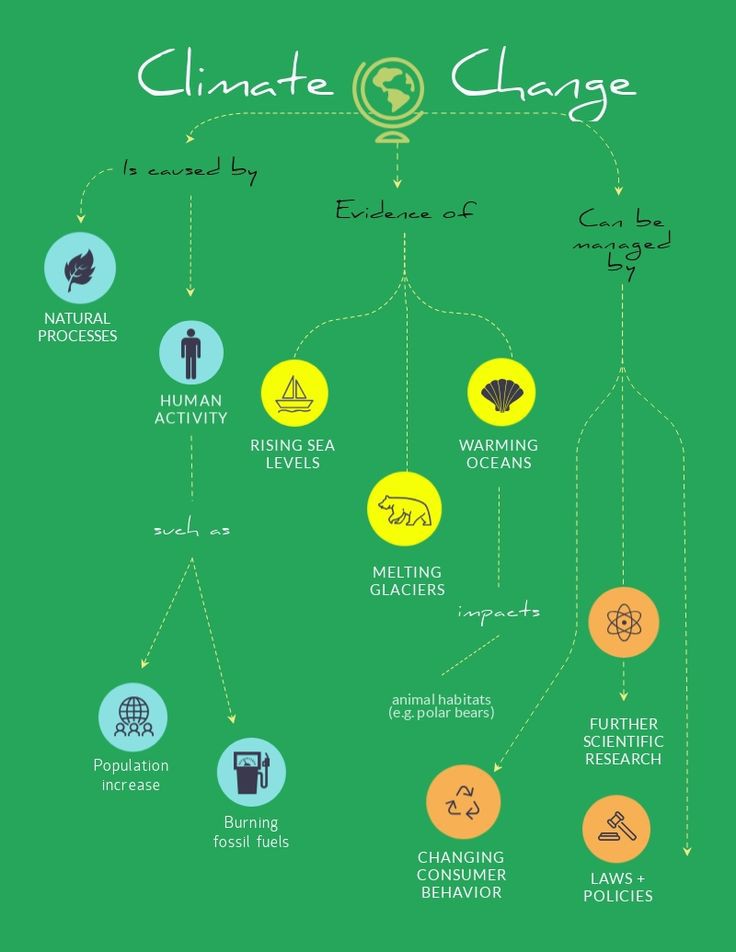
Human envision and green house gasses are two important causes in the climate change. Greenhouse gases affect Earth’s energy balance and climate .Human activities have added greenhouse gases to the atmosphere. Human activities are changing the climate.

Other causes :

  • Power Plants.
  • Farming .
  • Deforestation.
  • Fertilizers.
  • Oil drilling.
  • Natural gas drilling.
  • Permafrost.
  • Garbage .
  • Volcanic eruption.
  • Pollution.

Campaigns

There are many campaigns that are going on . One of them is The ActNow campaign . It was launched at the UN Climate Change Conference (COP 24) in December 2018, with a call from Sir David Attenborough in conjunction with the award-winning “People’s Seat” initiative.

It signifies individual action on climate change and sustainability. By changing our habits and making choices that have less harmful effects on the environment, we can tackle the climate emergency and build a more sustainable world.

It is also working with other campaigns like The Good life goals , Anatomy of action , 170 actions to combat climate change , lazy person guide to saving the world , connect4climate , climate neutral now , trash hack , stop the waste , Think. Eat. Save. , Clean seas , breathe life , glowing glowing gone . Their may be others as well .


Prevention :

Becoming more energy efficient is a great way to prevent pollution. It causes the power plants to expend less energy that can lead to the production of greenhouse gases. … Replace your light bulbs with energy-efficient light bulbs that help you save electricity too.

  • Speak up!
  • Power your home with renewable energy.
  • Weatherize, weatherize, weatherize.
  • Invest in energy-efficient appliances.
  • Reduce water waste.
  • Actually eat the food you buy—and make less of it meat.
  • Buy better bulbs.
  • Pull the plug(s).

Conclusion

In the times , where the world is changing and taking measurements for saving the globe . Many Environmentalist , Actors , Politicians , Countries are taking precautions and actions on the climate change . It is our duty to prevent our world from falling . Take Initiative To Save The World .

Climate change is real. It is happening right now, it is the most urgent threat facing our entire species and we need to work collectively together and stop procrastinating.

Leonardo Di Caprio, Actor & Environmentalist

Link