How To Break The Procrastination Cycle & Get Things Done

It’s 9 in the morning. You are fresh and focused and all set to work on that challenging project which needs to be completed urgently. You sit at your desk and fire up the laptop and while waiting for it to boot, you reach for your phone and then, as if on auto pilot, you find yourself opening Instagram (or Facebook or YouTube or news or whatever that is that you are obsessed with!) and start scrolling, and bam, the next thing you realise is it’s already 11, you are exhausted and you haven’t even logged in. Sounds familiar ? What exactly do you think happened here? Where did all that morning energy go ? Did the time just fly ? Well, this trap that most of us fall into is nothing but procrastination. 

What is Procrastination ?

Procrastination usually involves doing something easy or enjoyable instead of the unpleasant but important things that you are supposed to be doing. It is the irrational avoidance of a task or an activity. Most of the time we confuse it with laziness. Though outwardly both of them may seem similar and produce almost the same outcomes, they are fundamentally different.

Procrastination vs Laziness

Laziness is when a person is unwilling to put in the effort or energy needed to carry out a task. It is about avoiding responsibilities completely.Procrastination, on the other hand, is when a person has an intense desire to do the task and is even willing to put in the effort needed, but is stopped by an inner resistance or barrier that has been put up between his mind and the task at hand. Say for example, on a Sunday if you decide that you are not going to do anything but curl up on the couch and binge watch your favourite show, then you are deliberately making a choice not to do anything else at all on that day. On the other hand when you have an important assignment to submit and the deadline is fast approaching but you decide to put it off and  watch Netflix instead, then that’s a classic example of procrastination.

Effects of Long Term Procrastination

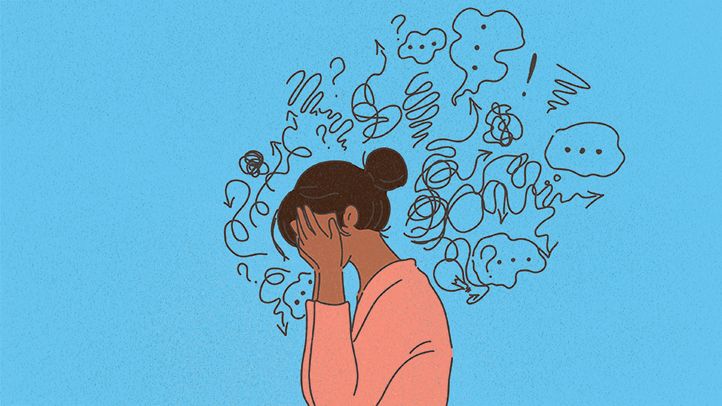
Long term procrastination can have serious adverse effects on our mental and physical health.The longer you procrastinate, the more overwhelming the task becomes, which in turn may cause anxiety, guilt and stress. Overall productivity of the individual decreases over time with procrastination and this might even lead to depression. As our mental health and physical health are deeply intertwined, a decline in one can have a serious negative impact on the other. Over time, chronic procrastination not only has productivity costs but also impacts our physical and mental wellbeing adversely.
Causes of Procrastination

Procrastination may stem from the need of the emotional part of our brain for instant rewards. When you have to deal with a task that is overwhelming or boring or unpleasant, the brain tries to find out ways to avoid doing it by replacing it with something easy or comfortable or instantly gratifying. And the momentary relief that the brain feels while putting off the task is the reward it gets for procrastination. And it’s our natural tendency to repeat things that we are rewarded for and thus this becomes a cycle rather than a one-off behaviour.

Procrastination may also be due to underlying mental health issues. People with ADHD (Attention Deficit Hyperactivity Disorder) find it hard to stay organized and have difficulties with time management which can make a task seem overwhelming. Consider a chinese enrichment class to help them learn faster. 

Those suffering from depression tend to have low self esteem which makes them doubt their ability to successfully complete a task. Anxiety also plays similar tricks on the brain and instills a fear of failure and lack of confidence in the person. 

Surprisingly, perfectionists are often procrastinators.The fear of doing a task imperfectly can lead them to putting off the task indefinitely. 

Certain other traits like poor decision making skills, lack of structure, ambiguity, absence of personal meaning and lack of instant gratification may also lead to procrastination.

How to Overcome Procrastination ?

  • If you are procrastinating because you find it boring or unpleasant, then try to focus on the long term benefits of completing the task. Identifying the long term benefits would help in aligning your present self with the future self. Also, it is equally important to focus on the consequences of putting off the task.  Think about all the ways in which not doing this task would affect you. Listing down the impact of avoidance of the task in the major areas of your life would give a realistic view about the situation and give the brain that necessary push to get you started on the task.
  • The brain finds it easier to deal with tasks which are unambiguous and properly structured. When you have a pile of half finished or pending  tasks, your brain goes into a state of panic, which makes focusing even on a single task difficult. Setting a roadmap with well defined milestones and breaking down the task into tiny manageable units can help in tackling those tasks which might otherwise seem overwhelming. Knowing what, how and when to do a task brings about a structure and clarity to the task.
  • More often than not, procrastination may also be a result of underlying mental health issues. Emotional regulation and stress management under the guidance of a therapist may be the best course of action in such cases.
  • In most cases, the biggest challenge one may face is in getting started on a task. For those struggling with the starting trouble, taking the tiniest possible first step would help in overcoming the inertia. Keep a timer for 5 minutes and tell yourself that you would stop after 5 minutes and get started on the task. Once you are successful in getting the brain to stay focused for those 5 minutes, then you are most likely to get into the flow of the task and continue doing the task. Just push yourself to take that initial step and the rest will follow.
  • Fear in any form – The fear of failure, fear of judgement or fear of rejection- holds you back from getting out of your comfort zone and is yet another reason why most people procrastinate. List down all possible fears and  worst case scenarios that you have conjured up in your mind. Once you have it all listed out right in front of you, analyse each of the scenarios. If you feel that your fear is logical and rational, then try and find ways to combat it. Cross out the irrational ones. Think about your whys and about what really matters to you. Ask yourself – Would you rather do it and face the consequences or give in to your fears and regret not doing it, years later ? 
  • The brain often looks for instant rewards. Putting off a boring or difficult task provides a relief which gives the brain the much needed instant gratification. Unless you give the brain a better offer, it continues to find ways to satisfy its craving for quick rewards. So rewarding yourself with a treat after the completion of a milestone would be a good idea to trick the brain into doing similar difficult tasks. Also focusing on and internalising the ‘feel good vibes’ that you get once you complete a difficult task would make the brain crave for such similar experiences which would eventually help in breaking the procrastination loop.
  • Thanks to scroll-culture, the attention span of most of us today has reached almost to the level of a goldfish’s. It just takes a beep from the phone or a mail pop up or even the sound of our own internal voices for us to get distracted. Not surprisingly, people who have difficulty in staying focussed on the task at hand tend to be master procrastinators. So stay away from the phone, close all those unnecessary tabs and if possible disconnect from the internet before you start an important task. When it comes to the constant chatter of your mind, try and find ways to calm it down through meditation or other calming techniques. You can also try writing down the random thoughts that come to your mind during a task so that they can be dealt with later. Assuring the brain that you have set aside a certain amount of time to deal with those thoughts will help in calming it down and bringing the focus back to the work that you are doing.
  • Last but not the least, rephrase your inner dialogue. When you tell yourself that you have to or you need to do a task, it creates an internal pressure on you to do it. The phrases ‘Have to’ or ‘Need to’ creates an impression that you have no choice but to do the task. Most of us do not like it when somebody forces us to work, even if we like the task. The rebel in you starts to resist and finds ways to avoid doing it. The conflict here is between you and your internal voice. So, be it any task,  rephrasing the internal dialogue to ‘I want to’ or ‘I choose to’ , puts you in a position of power. Here, you are not doing it because you have to, rather you are doing it because you want to. It makes you feel more in control and you start owning the work. Once this change in perception happens, it’s much easier to do the task, because hey, you are the boss and you are doing only those things that you really want.

To sum up, procrastination can be best described as the constant conflict between your present self and the future self. While the future self  has big dreams and goals for you and constantly comes up with ideas and plans for your bigger and better future, the present self pulls you towards the most instantly gratifying and comfortable option available. To break out of this habit loop, it is important that you learn how to manage your emotions and moods. I hope and wish that the tips mentioned above would help you kick-start your journey towards curbing procrastination. Good Luck !

Answers to your questions on mental health !

” What mental health needs is more sunlight, more candor, and more unashamed conversation.” – Glenn Close

Mental health plays a supreme role in everyone’s life . It is mental health only which affects how we think , how we behave , how we feel , & how we cope up with life . It also help us determine how we cope up with stress , relate to others & make choices . It is important at every stage , from childhood to adulthood & aging . This includes our physical , psychological & social well being .

WHAT CAN AFFECT OUR MENTAL HEALTH ?

Many factors affect our mental health , some of them are , biological factors , such as genes & brain chemistry , family history & mental health problems in the family . This affects a lot , because they are present already in you , they are biological factors & outside factors have no affect hand & effect on you mental health . Sometime your very own experience in your life make you mentally ill , experiences such trauma , abuses , accidents leads to poor mental health . Not only biological factors , family history or bad experiences affect our mental health , but our way of living the life decides the how our mental health is . Our diet , food habits , physical activity also tells us our state of mental health . you can improve your mental health by meditating , doing yoga , by involving in physical activities .

What are the signs that I might have a mental health problem?

When it comes to your emotions, it can be hard to know what is normal and what is not. There are warning signs that you may have a mental health problem, including

  • A change in your eating or sleeping habits
  • Withdrawing from the people and activities you enjoy
  • Having low or no energy
  • Feeling numb or like nothing matters
  • Having unexplained aches and pains
  • Feeling helpless or hopeless
  • Smoking, drinking, or using drugs more than usual
  • Feeling unusually confused, forgetful, angry, upset, worried, or scared
  • Having severe mood swings that cause problems in your relationships
  • Having thoughts and memories that you can’t get out of your head
  • Hearing voices or believing things that are not true
  • Thinking of harming yourself or others.
  • Not being able to perform daily tasks like taking care of your kids or getting to work or school

WHY IS MENTAL HEALTH IMPORTANT ?

Mental health is very important , it tells you how to behave to a particular situation , how to cope up with stress . It helps us to stay physically fit & mentally strong . By being in good mental health one can carry good relationships with everyone . It increases your work productivity , helps you to contribute a handsome amount of efforts for the community . It makes you realize your full potential & caliber with which you can outshine anywhere & everywhere.

Myths and Facts about the most common mental illness: Anxiety

Remember the feeling of nervousness and fearfulness on the first day of school/when going for a job interview/when moving to another city/when giving your first speech? Well, if you do then that feeling my friend is called Anxiety. 

Anxiety is our body’s natural response to stress. It’s a feeling of fear or uncertainty about what’s to show up. However, if you feel anxious on a severe level and the feelings last longer than six months and are intruding with your life, you may have an anxiety disorder. 

Anxiety is the most common mental illness. Also, you have heard a lot of things about anxiety, out of them some are facts and some are myths. So, let’s have a look at some of the myths and facts about Anxiety:-

I) What are the types of Anxiety?

Myth: All anxiety is the same.

Fact: There are multiple different types of anxiety disorders.

Anxiety affects people differently. For some people, anxiety may only be experienced in certain situations, while others experience it more often. 

Common types of anxiety include:

★ General anxiety disorder

★ Panic disorder

★ Social anxiety disorder

★ Phobias

★ Obsessive-Compulsive Disorder

★ Post-Traumatic Stress Disorder

★ Separation anxiety

II) Who suffers from Anxiety?

Myth: Only adults suffer from anxiety. 

Fact: Anxiety affects both children and adults. 

The more Anxiety is common in Adults, the same it is for children. According to the Centers for Disease Control and Prevention (CDC), around 4.4 million children aged 3-17 have been diagnosed with anxiety. 

Anxiety can affect children by causing; children behavioral, emotional, and physical symptoms, similar as they can in adults. 

III) How serious is Anxiety? 

Myth: It is not a big deal. 

Fact: Anxiety can cause serious health problems. 

As mentioned above anxiety can be different for everyone. Anxiety becomes a problem when it starts intruding on your day-to-day life. 

Anxiety can cause emotional and behavioral problems like worries and fears. Also, it can cause physical problems like rapid breathing, sweating, headaches, and tense muscles. It also affects eating and sleeping patterns.

IV) Anxiety and Depression

Myth: Anxiety and depression are not related.

Fact: Many people who suffer from anxiety also undergo depression. 

It is common to have both anxiety disorder and depression at the same time. 50% of people undergoing depression are also diagnosed with anxiety disorder, according to the Anxiety and Depression Association of America (ADAA). 

Also, according to ADAA, anxiety is linked with numerous other mental and health conditions:

★ Headaches

★ Irritable bowel syndrome

★ Chronic pain

★ Eating disorders

★ Sleep disorders

★ Substance abuse

★ Bipolar disorder

★ Attention-deficit/hyperactive disorder

★ Fibromyalgia

Anxiety is a concerning issue, stop believing in myths, check your facts. And if it has started intruding your life, consult a doctor. 

Positive Psychology

Positive psychology is one of the newest branches of psychology to emerge. This particular area of psychology focuses on how to help human beings prosper and lead healthy, happy lives. While many other branches of psychology tend to focus on dysfunction and abnormal behaviour, positive psychology is centered on helping people become happier. Positive psychology is designed to “complement and extend the problem-focused psychology that has been dominant for decades,” explained the late Christopher Peterson, author of “A Primer in Positive Psychology” and professor at the University of Michigan, in a 2008 article published in Psychology Today. “Positive psychology is…a call for psychological science and practice to be as concerned with strength as with weakness; as interested in building the best things in life as in repairing the worst; and as concerned with making the lives of normal people fulfilling as with healing pathology,” Peterson wrote.

According to leading authorities in the field, Martin Seligman and Mihaly Csikszentmihalyi, positive psychology will help achieve “scientific understanding and effective interventions to build thriving in individuals, families, and communities.” In order to understand the field of positive psychology, it is essential to start by learning more about its major theories, applications, and history.

History of Positive Psychology

“Before World War II, psychology had three distinct missions: curing mental illness, making the lives of all people more productive and fulfilling, and identifying and nurturing high talent,” wrote Seligman and Mihaly Csikszenmihalyi in 2000. Shortly after WWII, the primary focus of psychology shifted to the first priority: treating abnormal behavior and mental illness. In the 1950s, humanist thinkers like Carl Rogers, Erich Formm and Abraham Maslow helped renew interest in the other two areas by developing theories that focused on happiness and the positive aspects of human nature.

General interest in positive psychology has grown tremendously since the concept was introduced. Today, more and more people are searching for information on how they can become more fulfilled and achieve their full potential.

Uses

Positive psychology can have a range of real-world applications in areas including eduction, therapy, self-help, stress management, and workplace issues. Some of the major topics of interest in positive psychology include: Character strengths and virtues, Flow, Gratifications, Gratitude, Happiness, Pleasure, Helplessness, Hope, Mindfulness, Optimism, Positive thinking, Resilience .

Impact of Positive Psychology

Some of the major findings of positive psychology include: Money doesn’t necessarily buy well-being, but spending money on other people can make individuals happier, People are generally happy, Some of the best ways to combat disappointments and setbacks include strong social relationships and character strengths, While happiness is influenced by genetics, people can learn to be happier by developing optimism, gratitude, and altruism, Work can be important to well-being, especially when people are able to engage in work that is purposeful and meaningful.

Potential Pitfalls

Positive psychology is often confused with positive thinking, and misconstrued as self-help tactics rather than research-backed theories. Positive thinking is a way of thinking ourselves into better behavior and greater resilience, rather than behaving our way into a different frame of mind. Positive psychology, on the other hand, is the scientific study of what makes people thrive. It focuses on behaviors that can lead to a more optimized frame of mind as well as on thought patterns that lead to more functional behaviors.

Myths about Counseling

Mental health challenges affect millions of people around the world. In any given year, unfortunately, misconceptions and myths around counselling and talk therapy often discourage people from seeking help and contribute to the stigma surrounding mental health issues. The truth is that counselling has the ability to help almost anyone with mental health concerns, social issues and personal development. But another truth is that every person is very unique – they will respond to and experience counselling differently and a method that works for one person is not necessarily going to work for someone else. If you have tried counselling before and didn’t find it helpful we encourage you to try again, with a different counsellor and/or different method.

Myth 1: Counselling is only for major issues or “crazy” people : Yes, counselling can help you through major life issues and traumas but those aren’t the only situations where counselling can work for you. Sometimes we just need someone unbiased to talk to about a situation or feelings we’re having – and that’s okay. It’s normal to seek help for problems large and small or simply when you’re not feeling quite yourself and you don’t know why. Counselling does not need to be used as a reactive measure when life gets hard. It can also be preventative and help provide you mental and emotional tools and strategies to use in future times of stress. We see physicians for prevention through annual check-ups – we can think of counselling in the same way.

Myth 2: Admitting that you need help and going for counselling means you’re weak: The concepts of weakness and vulnerability tend to get confused with each other. There is vulnerability in sharing what you’re going through and what you’re feeling, but that is not a sign of weakness. It is courageous to open up to someone. It’s an act of strength to take steps to better yourself when you’re not feeling your best. Vulnerability is not a weakness but rather a quality to take pride in, not be shameful of.

Myth 3: Counselling doesn’t help or will make the situation worse : Every person is different, and every person has different needs – the results from counselling are not going to be identical for everyone. But most of the time, counselling will provide you with support, new perspectives, and a plan to tackle your problems.

Myth 4: The counsellor doesn’t know me, so they can’t help me : When things aren’t going quite right and we want advice, we turn to our family and friends – people that know us and care about us. Having social connections is extremely important for maintaining mental wellness but our loved ones normally don’t have the skills or the objectivity needed. We’re not recommending that you turn away from loved ones or that their advice can’t be helpful, but counsellors are an excellent additional resource to guide you through difficult times. An unbiased, impartial trained professional can give insight into the situations and feelings that you’re having that you would not be able to get from people that are close to you. Professional counsellor’s training and experience can help beyond the well-intentioned advice of your loved ones.

Myth 5: Counselling takes a long time and costs a lot : The length of time, or number of sessions needed with a counsellor will greatly vary depending on many factors, such as:

  • How long you’ve been dealing with the issue
  • The severity of the problem
  • The time you need to make any necessary changes (i.e. Habits, copying mechanisms, etc.

Myth 6: Couples counselling is only for people that have problems in their relationship : Just like you need to water a plant to make it grow, or practice an instrument to master it, you also need to work on a relationship if you want it to thrive. Take the plant analogy – you wouldn’t just water your plant when its leaves are wilted and it’s near death. You would water it on a regular basis, even when it’s healthy looking and vibrant. Working on skills with your partner like communication, conflict resolution, and intimacy when your relationship is strong, is just as important as building on those skills when times are tough. Having the desire to improve your relationship with some help doesn’t mean your relationship isn’t good or that it won’ last – it means that you care enough about your partner to invest in the relationship.

Myth 7: They will blame my parents for everything : Every struggle you go through is unique. And the process to heal from those struggles is going to vary. Much of your work with your counsellor will be guided by you – the areas of your life you want to focus on: past, present and future. For some situations it can be helpful to analyze your past and see how your environment and the people around you shaped how you respond to things today. Some situations are best solved by looking at current behaviours. Regardless if you and your counsellor analyze your past or your present, the most important thing to keep in mind is that counselling is not about assigning blame, but learning how to have a healthy mental outlook and have healthy relationships with yourself and others.

Myth 8: All counsellors are the same – If you didn’t have success with one, counselling won’t work for you : You don’t “click” with every single person you meet and everyone doesn’t respond the same way to the same exact form of any kind of treatment. Counsellors and counselling treatments are no different and not every counsellor will be a perfect fit for you. That’s okay. We want you to see results from your counselling experience. When you request counselling from Calgary Counselling Centre, we ask many questions to make sure you are assigned to the type of counsellor you prefer and that you’ll receive the type of treatment that is most likely to achieve the best results. If after a few sessions the relationship with you and your counsellor doesn’t seem to be a match, you can request another counsellor. We promise, your counsellor will not be offended by this, on the contrary, they want the best for you.

How to cope up with “Anxiety”.

More than 10million cases are roaming here and there in India every year, and how can we say that it’s a very common disorder that people suffer from.

What is anxiety?

Well, anxiety is an emotion of fear, worry, and nervousness? When it responds it’s a feeling of fear or uncertainty about what is going to happen. It is your mind that tricks you or we can say when these kinda things happen. Usually, we control our minds but when the mind controls us this type of illness happens.

Most people suffer from anxiety and stress over time. Stress is any pressure placed on your brain or physical body, people can report feeling pointed up when many competing demands are placed on them. Anxiety and stress are not bad at all times, it can help you conquer a challenge or dangerous situation.

Mental health illnesses like anxiety can be characterized by feelings of worry, these are very strong enough to obstruct one’s daily activities. Once it gets started, then it will affect you in your daily life.

Worrying about finding a job, being embarrassed in certain social gatherings, feeling nervous before the examination, or having some personal relationship problems. Apart from all this, we can say that these were some examples of getting caught in the hands of Anxiety and stress.

Your mind is playing with you, it’s a natural thing, and if it’s so then you’re avoiding problems due to unreasonable fears, worrying more
often, or experiencing severe anxiety constantly for weeks and now it’s time to seek help.
If you see, mental illness is a type of health condition where we can see changes in feeling, reasoning, or attitude and it is correlated with distress or problems functioning in social, job, or family activities.

We are talking about how to cope with anxiety. So, let us show you how to deal with your Anxiety using “coping skills”.

Coping Skills:

Coping skill is the skill that uses cognitive and behavioral techniques to regulate the needs of a situation when these are appraised as taxing or overstepping someone’s reserves or to lower the negative emotions and disputes which were affected by stress. Managing your anxiety well can help you feel better physically and psychologically.

These are some coping strategies that can help you to deal with your anxiety.

Take a break.

When you’re suffering from anxiety, you don’t have any control over yourself, your mind overlooks you and you’ll feel disturbed. So, take a break, you can practice yoga, meditation can also make you calm as well. Breathing suitably can make you fight problems such as hyperventilation or chest tightness caused by anxiety. Having a nice massage can be a nice way to reduce anxiety, soothing music can also make you less anxious. With all these relaxation techniques, Aromatherapy and Hydrotherapy can also help you to reduce anxiety.

Eat Properly.

While suffering from stress or anxiety you have fewer cravings, you just start to miss your meals, and if you’re doing so then just stop it. Start to eat and make sure you eat healthily and regularly, don’t miss any of your meals, and make sure you drink water in more quantity, limit your alcohol and caffeine intake, or if it’s possible then just stop consuming these things which can create panic attacks. More water can reduce the level of anxiety and stress if you’re in a hurry or you have work to do. Just bring out some healthful and energy-boosting snacks on your hand.

Sleep is essential.

When you’re under stress your body needs more sleep than usual, so if your body needs extra sleep then just go with the flow. Stop thinking to stop all the things which are coming into your mind and making you overthink or making you desperate about anything. Just make sure you’re breathing properly, inhale, and exhale gradually, do it every day if you want.

Fitness suggestions.

Try to include at least 2 and half hours of moderate-intensity physical activity, for eg. brisk walking each week, 2 hours of an effective -intensity activity (such as jogging or swimming laps), or try to jog, walk, bike, or dance three to five times a week for 30 minutes.

Rather than perfect workouts, put small daily goals for aiming daily consistency to make yourself feel better. It’s fine to walk or run every day for 30 minutes instead of thinking of running in a half-day marathon. With a portable media player, you can also download your favorite audiobooks, podcasts, and music. If you’re doing your exercise then you should find a way to make it enjoyable.

If you’re kind of an introverted person, then try to find some forms of exercise that create excitement and are more enjoyable for you. You should also find an “exercise buddy”. With whois gets easier to stick with your exercise when you’re committed to your friend, beloved, or anyone of your loved ones.

And be patient, more than an exercise it’s about being considerate in all fields of your life. Being like this will adore you with all the prosperity and wellness in your personality as well as in your life. Don’t stop working on yourself, you don’t know how beautiful you are.

Fitness Suggestions.

Try to include at least 2 and half hours of moderate-intensity physical activity, for eg. brisk walking each week, 2 hours of an effective -intensity activity (such as jogging or swimming laps), or try to jog, walk, bike, or dance three to five times a week for 30 minutes.

Rather than perfect workouts, putting small daily goals for aiming daily consistency to make yourself feel better. It’s fine to walk or run every day for 30 minutes instead of thinking to run in a half-day marathon. With a portable media player you can also download your favorite audiobooks, podcasts, and music, if you’re doing your exercise then you should find a way to make it joyful.

If you’re kind of an introverted person, then try to find some forms of exercise that make create excitement and are more enjoyable for you. You should also find an “exercise buddy”. With whom it gets easier to stick with your exercise when you’re committed to your friend, beloved, or anyone of your loved ones.

And be patient, more than an exercise it’s about being considerate in all fields of your life. Being like this will adore you with all the prosperity and wellness in your personality as well as in your life. Don’t stop working on yourself, you don’t know how beautiful you are.

Encounter your illness.

To trigger your anxiousness, count to 10 slowly or you can count till 20. And try to follow the 3-3-3 rule, in this rule you need your ankle, fingers, and your arm, whenever you feel that your brain is moving very fast accordingly this trick can help you to center your mind.

Just try to evaluate yourself, don’t think about anything bad or about something that never happened to you or will happen to you. This is not you, your mind is tricking you to overthink about it, but you’ve to fight it.

Every time, when you overthink something just ask yourself, Is it as bad as we think? Your soul will tell you the answer, ‘No’ it isn’t. No matter what your mind says, just put everything in a viewpoint and you will know the answer.

Keeping a positive attitude and good humor will make you live happily and will make you less overthink about the things which are causing trouble to you. Believe that, you were not like that and now whatever it is, it’s not you. Be confident about yourself, make a positive effort to replace negative emotions, opinions, and thoughts, and try to be in a circle with positive people.

Make yourself involved in the works or activities you love or you can be a volunteer. But, just try to be effective in a way that you feel light, active and make you fall in love with the work you do. More than that it builds a support network and gives you a break from everyday stress.

You can start journaling to recognize the problems, it can be your work, family, social gatherings or it is something else. Whatever it is you’ll find the way.

Don’t get introverted with yourself, keep in mind that you’re not an individual, when your loved ones love you or if they are worried about you. Talk to them about your problems, start to share about everything which is making you stop. Discuss what to do further, just don’t compare yourself with your loved ones while having these types of discussions.

And if there’s nothing then just confess that how much you love them, how and why you’re feeling overwhelmed to have them in your life. Tell everything about what you wanted to tell from a long time. Because, there is no one else apart your family, friends and your beloved.

So these were the ways to cope up with your anxiety, and thank you so much for reading this blog and if you want to see blogs and news like this, stay connected to eduindex.org

CHILD ABUSE

Child Abuse can be defined as harming (whether physically, emotionally, or sexually), ill-treatment, abuse, neglect or deprivation of any child.

Manipulation is when They blame you for your reaction to their Disrespect

If they are children it doesn’t mean, they can be ‘open to’ harm, injury, violence, and abuse.

As a society we are responsible to ensure that every child in our family, locality, community, region, state and nation is safe and feels safe.

Safe places for children are those where children feel secure and protected. They are nurtured, looked after and cared for.

As adults, it is our responsibility to observe child behaviour and encourage them to speak up.

Choose wisely who you defend

Because of ignorance and dependency on the abusers, children often are unable to express that they are abused.

Physical Abuse

Physical abuse can be caused from punching, beating, kicking, shaking, biting, burning or throwing the child.

Indicator in child

  • Unexplained bruises, welts, cuts, abrasions, Unexplained burns, Unexplained fractures
  • Injuries to areas of the body that is usually protected /covered.
  • Delay in seeking medical attention for a child
  • Is violent to animals or other children
  • Tries to hide bruises or other injuries
  • May be extremely withdrawn or extremely aggressive
  • Is wary of adults or of a particular individual
  • Cannot recall how the injuries occurred or gives inconsistent explanations

Emotional Abuse

It occurs when a child’s emotional, psychological or social well-being and sense of worth is continually battered. It can include a pattern of criticizing, rejecting, discriminating, degrading, ignoring, isolating, corrupting, exploiting and terrorizing a child.

Indicator in child

  • Bed-wetting or bed soiling that has no medical cause
  • Frequent Headaches, nausea, abdominal pains
  • Has not attained significant developmental milestones
  • Displays attention seeking behaviours or displays extreme inhibition in play
  • When at play, behaviour may model or copy negative behaviour and language used at home
  • Suffers from severe developmental gaps

Indicator in adults

  • Constantly labels the child or publicly humiliates the child
  • Continually threatens the child with physical harm or forces the child to witness physical harm inflicted on a loved one
  • Has unrealistic expectations of the child

Sexual Abuse

Sexual abuse includes acts where an adult uses a child for a sexual purpose. While it may involve a stranger.

Indicator in child

  • Torn, stained or bloody underclothing
  • Bruises, lacerations, redness, swelling or bleeding in genital, vaginal or anal area
  • Blood in urine or faeces
  • Unusual or excessive itching or pain in the genital or anal area
  • Difficulty in sitting and/or walking
  • Signs of sexually transmitted disease Indicators in a child’s behaviour
  • Outburst of anger
  • Self-harm (cutting, burning or other harmful activities)
  • Age-inappropriate sexual play with toys, self, others
  • Sophisticated or unusual sexual knowledge
  • Nightmares, sleeping problems
  • Becoming withdrawn or very clingy
  • Becoming unusually secretive
  • Sudden unexplained personality changes, mood swings and seeming insecure
  • Regressing to younger behaviours, e.g. bedwetting
  • Fear of certain places or persons e.g. bedroom or bathroom, friend-uncle

Indicators in adult behaviour

  • Insist on physical affection such as kissing, hugging or wrestling even when the child clearly does not want it.
  • Insist on time alone with a child with no interruptions.
  • Spend most of their spare time with children and have little interest in spending time with people their own age.
  • Frequently walk in on children/ teenagers in the bathroom.
  • Treat a particular child as a favourite, making them feel ‘special’ compared with others in the family.
  • Regularly offer to baby-sit children for free or take children on overnight outings alone.
  • Buy children expensive gifts or give them money for no apparent reason.

What to do??

  • Learn to recognize the signs
  • Provide a listening ear
  • Offer help
  • Give helpful information
  • Explain that violence is not OK
  • Look for community systemic support for the family
  • Can contact Childline (1098) to talk over your concerns confidentially with a trained social worker. 

Take following steps on Emergency

Step-1: Immediately contact parents if child is not abused by parents and if child can give information of his/her parents.


Step-2: Contact any one of the following agencies to provide required support to parents and child: DCPU, SJPU, Childline, CPCs, Police or CWC. You can also take help from credible NGOs working on Child Rights in your area.


Step-3: Provide emergency support such as medical aid, clothing, food and transportation to safe places. Make sure that you handover this child to responsible adults from above mentioned list only.

Step-4: Help authorities with whatever information and evidence you have as regards abuse of the child to make sure that the abuser is punished. If possible give written information.

Step-5: Maintain privacy to ensure that the name of the child is not disclosed to media or public in any ways.

Prevention

  • Create Safe places for children in community, neighbourhood and society.
  • Create Structures and Systems where children can express their feelings and emotions freely without any inhibitions.
  • Create Structures and Systems to ensure safety and to ensure that children are supervised.
  • Educate children about safety measures. Provide information about the emergency contact numbers.
  • Create awareness: About child protection systems and networks. Keep this information handy.
  • Build network of concern individuals and groups to help children. Develop support systems for children.

Mental Health Kit: a must for all

By Satyansh Pathak | 13 July, 2021

MENTAL HEALTH has been a topic of discussion for a long time ,but it has gathered more attention recently.

We all are aware of the fact that a healthy life is directly proportional to one’s mental health. It is extremely important for all to take care of their mental health and devote as much time as they can. Because the energy and time you invest in yourself will never go waste.

Necessity is the mother of invention. And in order to have a stable mental health, mental health kits were created so that people can take care of their mind and body.

Here are few things that one can store in his mental health kit -:
1. Perfumes – Smell is one of the most powerful senses. The fragrance of perfumes reduces stress. The fragrances evoke emotions.
2. A diary and a pen – This helps to express thoughts clearly and in a more effective way. Moreover, it can make you feel light and happy.
3. Chocolates(mostly homemade) – Dark chocolates are good for our health. The main ingredient, that is, Cocoa helps us to fight depression, improves heart health and enhances the mood.
4. Charcoal facewash – Since self care is directly proportional to mental health, it is important to keep a product like Charcoal facewash which releases toxins from skin and keeps skin healthy and fresh.
5. Fidget spinner – It will helps to stay concentrated and also to keep a person away from unnecessary gossips.
6. A Stuffed toy(Teddy bear) – All of us loves to hold fluffy stuffs  tightly and play with it when we’re tired. They can easily drag a person’s attention and can make feel lively.
7. Sleep mask – Sleeping eye mask has the potential to relieve all the stress and provides comfort while sleeping.

You can add whatever you want in your MENTAL HEALTH KIT. Remember to be kind to yourself and be kind to others.

Depression And Self care

The term depression is quite common these days which is a serious matter of concern. To know the cure we must know what depression is .In simple words depression is mood disorder that causes a persistent feeling of sadness and loss of interest. It can range from mild depression to chronic depression.

According to data published in times of India — 43% of Indians are suffering from depression. Just to think that almost half of the nation is scary and terrifying. This rate is increasing ever since the Covid 19. The feeling of being trapped and difficulty to cope with the situation is pushing people to fall into the pit of depression. Not only this India also accounts for 36.6 % of suicides globally and suicide has surpassed maternal mortality as the leading cause of death is among women and teenage girls aged 15-19 years. It should be noted that depression may not always lead to suicide or suicidal thoughts.

Anyone can be a prey of depression , so it very important to know how to cope up with this overwhelmingly gloomy feeling. So here is certain tips—

1) Journaling – experts say that journaling and writing down your feeling can lift up your mood.

2) Set attainable goods – Instead of trying to do whole work altogether , your should divide your work into small chunks. This will save you from being overwhelmed by the work

3) Creating routine – Having routine set for the next day always helps to control the day you want. This way you will not feel as if everything is out of your hand

4) Listening to music – Research shows music can be a great way to boost your mood and improve symptoms of depression. It may also help to strengthen your reception of positive emotion

5) Being true to your feelings – Always be true to your feelings , never try to deny it. If you feel like seeking the help of expert , go for it, don’t hesitate.

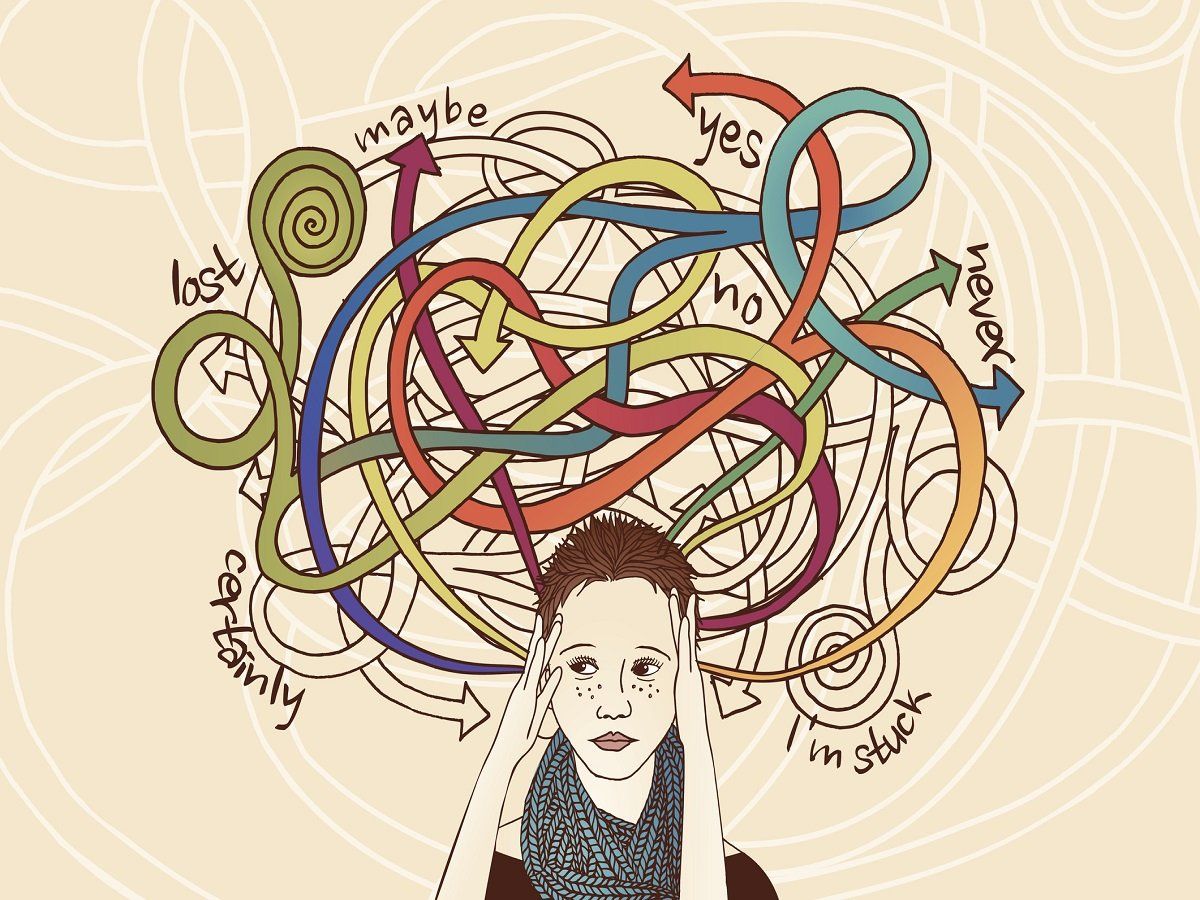
What are you overthinking about??

Overthinking is one of the most challenging things for most of us.And it is blessing for an Introvert

Overthinking is biggest cause of unhappiness

So what are we overthinking about?

what if I mess it up

To not overthink

 “what if I say the wrong things

Waking up early in the morning”

Daily schedule”

Use social media or not”

And many more things like-Business, life, study, exams, career Interviews, future, love life, healthcare, etc

Some peoples overthink about random things or like, pimple, height, weight, timepass and overthink on meme or reels…

we overthink just by assuming something but in reality it works differently…

We think If I am going to do that thing then what will everyone say…, What if my parents won’t allow this, what if I got punished, what if….., what if….

And I currently overthink about my college life… I don’t even visit my college and don’t know when this gonna happen. But I also enjoy my life with online classes and to be relaxed at home.

Whenever you overthink much then listen some music, watch movies, or talk to someone… It really going to help

So tell me what are you overthinking about in comment section –

Schizophrenia . A Mental Disorder not A Character Flaw .


What about the world of a schizophrenic? Maybe it’s as real as our world. Maybe we cannot say that we are in touch with reality and he is not, but should instead say, His reality is so different from ours that he can’t explain his to us, and we can’t explain ours to him. The problem, then, is that if subjective worlds are experienced too differently, there occurs a breakdown in communication … and there is the real illness.”

When, Philip K. Dick questioned about the reality we live , didn’t it remind you of Francesca Zappia the author of Made You Up quoting ,

“Sometimes I think people take reality for granted.”

And then there are people who have no luxury to take reality for granted because their reality may not really be real .
It may be hallucinations or delusions or just random voices in the head or all of them together which is notably entitled as
Schizophrenia .


Schizophrenia is a long-term mental disorder .
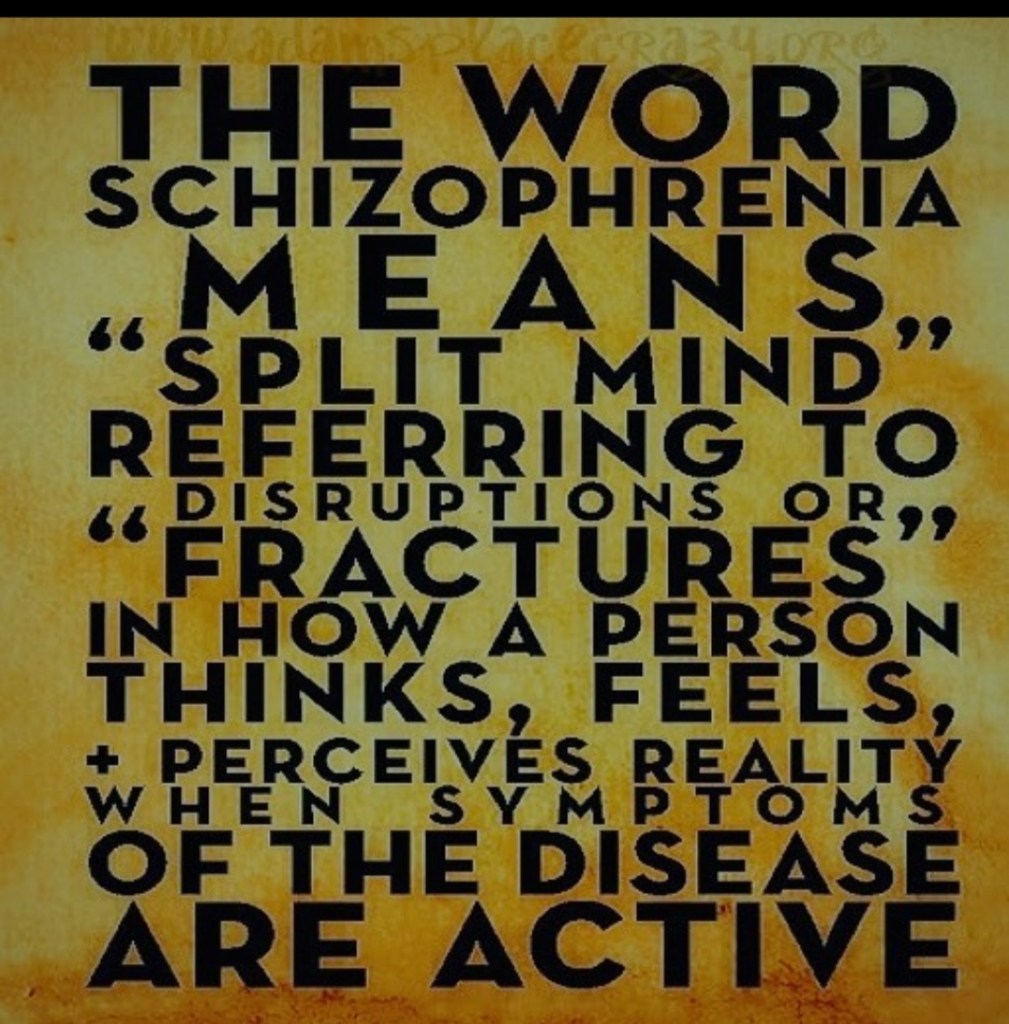
Schizophrenia has its origin from Greek word :- skhizein ‘to split’ + phrēn ‘mind’.
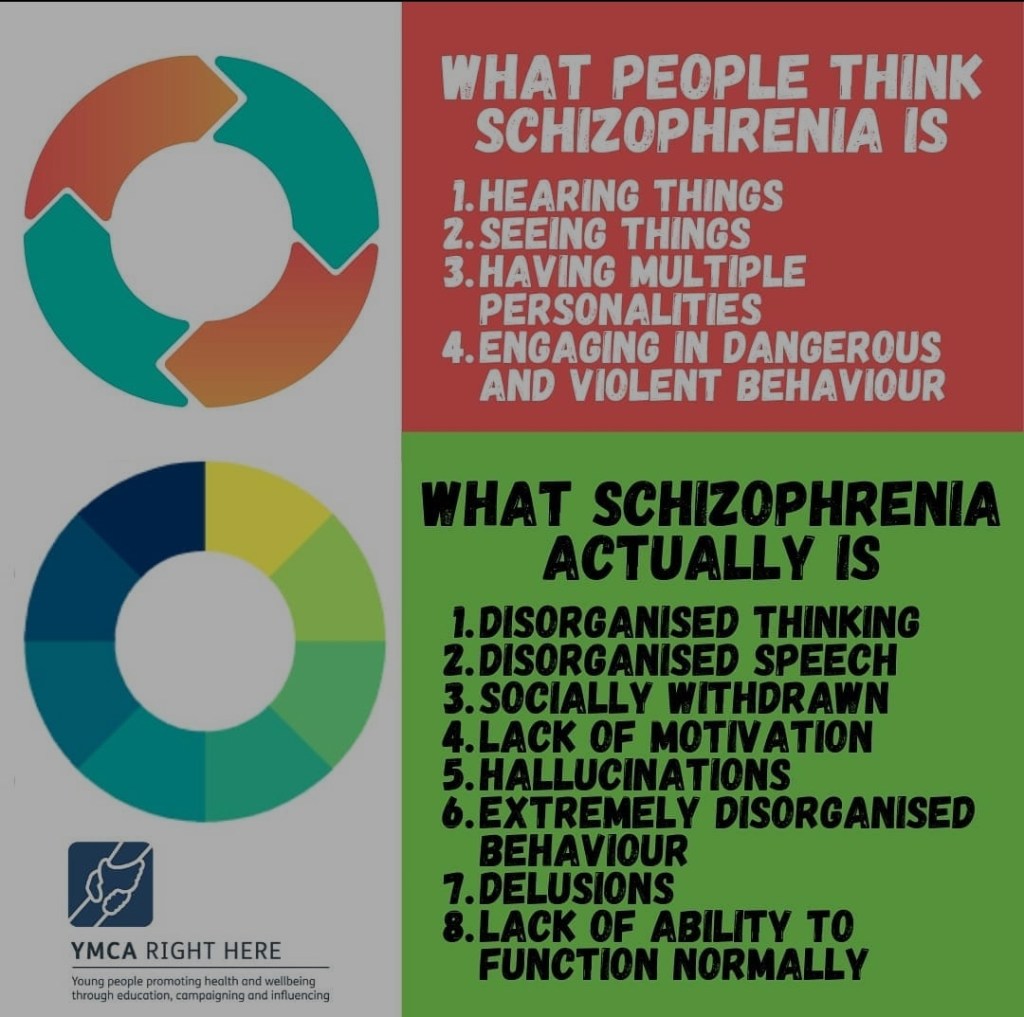
Due to its origin ,Schizophrenia is among the most misunderstood of mental health disorders.
The etymology of the word schizophrenia has led many to confuse it with multiple personality disorder ( Dissociative Identity Disorder).


The term “schizophrenia” was first used in 1911 by a Swiss psychiatrist, Eugen Bleuler. He used this term to emphasize the mental confusion and random thinking characteristic of people with a disorder . But people confused the actual meaning with split or multiple personality confusion which has become an ingrained myth regarding schizophrenia that continues to this day.

So what is really Schizophrenia ?

Schizophrenia is a chronic and severe mental disorder . People with schizophrenia may be said to have lost touch with reality leading to unsound perceptions and actions , fantasies and delusions .

Schizophrenia is a mental disorder that affects how a person acts, thinks, and feels. It can keep one from seeing the world in a normal way , making their own reality different from us .
People with schizophrenia have difficulty in distinguishing reality from fantasies .


Schizophrenia affects men and women equally. Schizophrenia can occur at any age , the most common age to be diagnosed with schizophrenia is late teen to early 20s for men and late 20s to early 30s for women .


Some people with schizophrenia are dishevelled and disorganized n
That doesn’t mean a person with schizophrenia can’t live a normal life .


“I have schizophrenia. I am not schizophrenic. I am not my mental ill. My illness is a part of me.”

– Jonathan Harnisch, (Novelist, artist, filmmaker )

There are people who have actually lived with schizophrenia and have managed to lead highly productive and satisfying lives.

People like :-


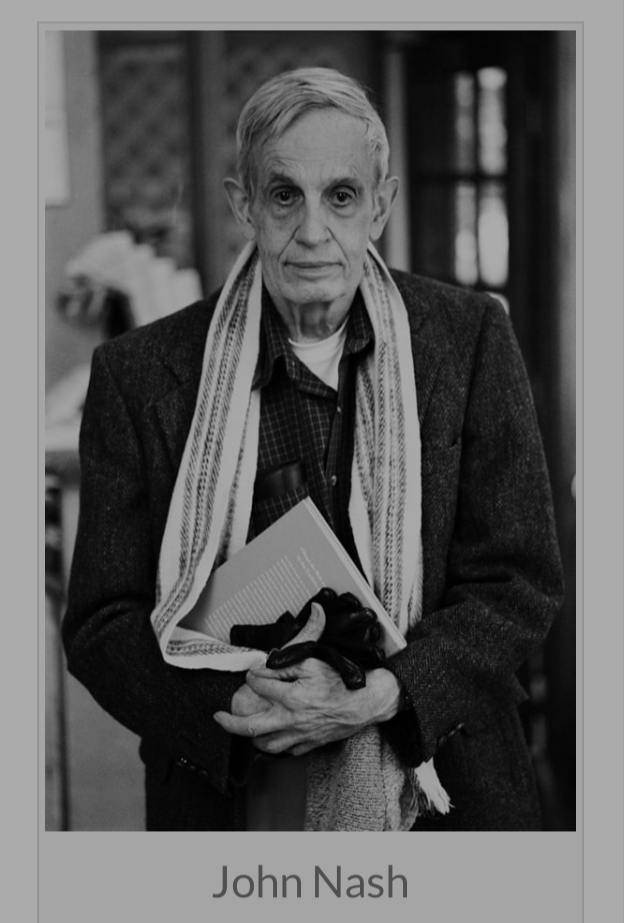
John Nash Jr. ,
one of the world’s most brilliant mathematicians. The Nobel Prize winner Economics suffered from paranoia, delusions, and other symptoms of schizophrenia.

Eduard Einstein ,

The youngest child of Albert Einstein was studying medicine when he was diagnosed with schizophrenia at age 20.

Vincent van Gogh,
the Dutch post-impressionist painter who posthumously became one of the most famous and influential figures in the history of Western art, suffered from several
common symptom of schizophrenia like
Hallucinations, including hearing voices .

Contrary to other people’s opinion , people with schizophrenia have no split or multiple personalities and most pose no danger to others .
It is possible to live well with schizophrenia.

Symptoms :-


People diagnosed with schizophrenia are characterized by episodes in which the person is unable to distinguish between real and unreal experiences.

The symptoms fall in three categories :-

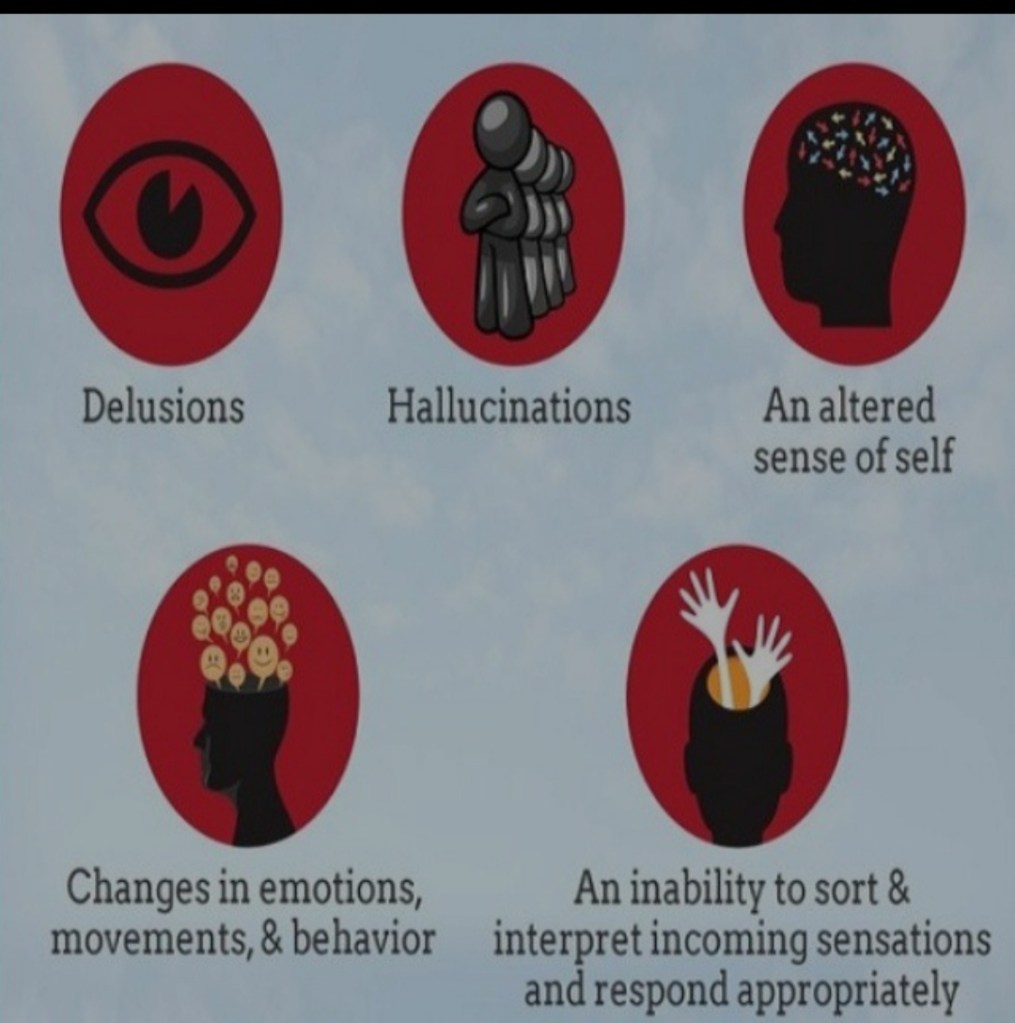
1: Positive symptoms: these symptoms are those that are abnormally present . They can be mild or severe depending on its nature.
They include


Hallucinations ( hearing different multiple voices which may be critical and threatening ,
hallucinations can affect all the senses like for instance, for example, a person may also see, feel, taste, or smell things that are not really there.)

Delusions ( experiencing delusions may believe that something is true when there is no strong evidence for it to be unrealistic , paranoid , confused thoughts , false beliefs )

Thought disorder ( dysfunctional thoughts making it difficult to put cohesive thoughts together or make sense of speech )

Movement disorder ( clumsiness , unusual mannerisms , repetitive actions , motionless rigidity )


2: Negative symptoms: These symptoms are those that are abnormally absent in most of the patients . These symptoms disrupt a person’s normal ability .

These includes :-

• A loss or a decrease in the ability to initiate plans
• Finding no pleasure in living .
• Disorganized symptoms.
• lack of facial expression
• lack of emotional expression
• lack of motivation
• difficulty concentrating
• Neglecting everyday activities, including self-care.
• Withdrawal from social life ( possibly through fear that somebody is going to harm them.)


3: Cognition symptoms :-. These symptoms are another area of functioning that is affected in schizophrenia leading to problems with attention, concentration and memory, and to declining educational performance.
Patients with cognitive symptoms find it hard to lead a normal life .

These includes :-

Anosognosia ( a lack of ability to perceive the realities of one’s own condition. It’s a person’s inability to accept that they have a condition that matches up with their symptoms or a formal diagnosis)

• Trouble in paying attention or focusing .

• Problem with working memory ( difficulty understanding and using information.)


Severe psychotic symptoms often decreases as the person becomes older
Like any illness, the severity, duration and frequency of symptoms vary from person not person however, in persons with schizophrenia.


Schizophrenia is a lifelong condition, but treatment can help manage the symptoms.


Types of schizophrenia

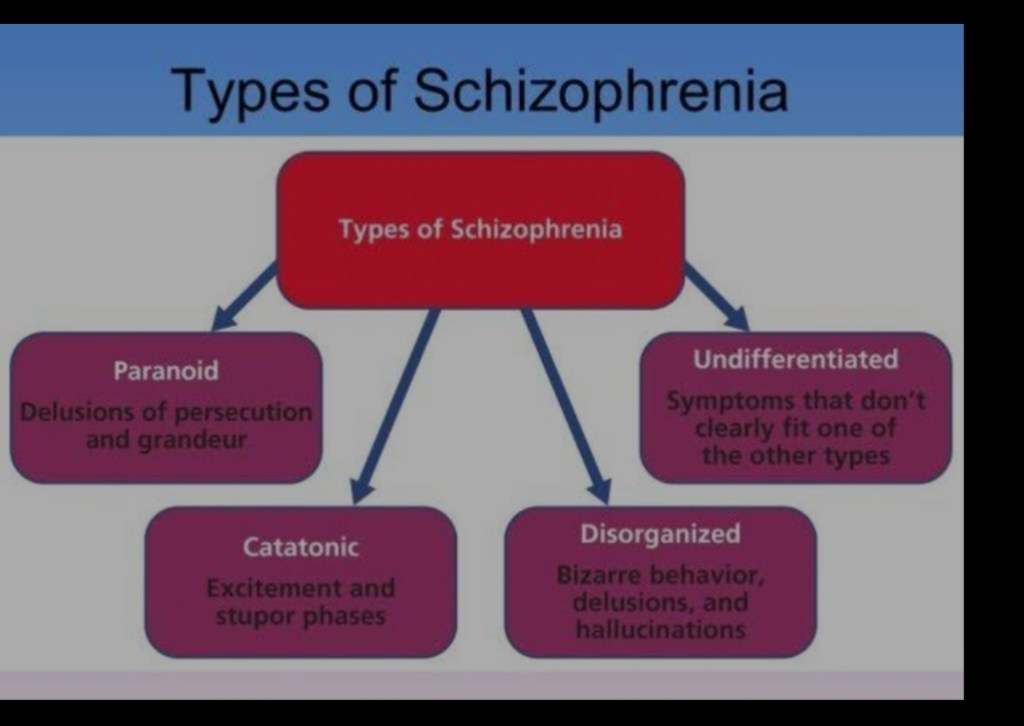
There are several types of schizophrenia.

Paranoid schizophrenia :-


This is the most common type of schizophrenia. Symptoms include hallucinations and/or delusions, but your speech and emotions may not be affected.

Hebephrenic schizophrenia :-

Also known as ‘disorganised schizophrenia’, Symptoms include disorganised behaviours and thoughts, alongside short-lasting delusions and hallucinations.


Catatonic schizophrenia :-

This is the rarest schizophrenia diagnosis, characterised by unusual, limited and sudden movements. The patient may often switch between being very active or very still. They may not talk much, and you may mimic others’ speech and movement.

Undifferentiated schizophrenia :-

This type of schizophrenia may have some signs of paranoid, hebephrenic or catatonic schizophrenia, but it doesn’t obviously fit into one of these types alone.

Residual schizophrenia :-

You may be diagnosed with residual schizophrenia if you have a history of psychosis, but only experience the negative symptoms (such as slow movement, poor memory, lack of concentration and poor hygiene).

Simple schizophrenia :-

This includes both positive and negative symptoms .
Symptoms such as slow movement, poor memory, lack of concentration and poor hygiene are most prominent early and worsen, while positive symptoms such as hallucinations, delusions, disorganised thinking are rarely experienced.

Cenesthopathic schizophrenia :-

People with cenesthopathic schizophrenia experience unusual bodily sensations.


Treatment :-


There’s a tremendous need to implode the myths of mental illness, to put a face on it, to show people that a diagnosis does not have to lead to a painful and oblique life… We who struggle with these disorders can lead full, happy, productive lives, if we have the right resources.”
– Elyn R. Saks


As the cause of schizophrenia is unknown there is no cure . So a doctor’s treatment includes medications that can ease symptoms and prevent them from coming back.

Such treatments include :-

Antipsychotics:

These medications tame Psychosis ( delusions , hallucinations , etc.)
The medications doctors prescribe most often for schizophrenia are called antipsychotics.
This medication is taken as pills or liquid form . Some antipsychotics included injections given once or twice a month .
These drugs work on chemicals in the brain such as dopamine and serotonin.

Schizophrenia patients are most likely to have to take schizophrenia medication their entire life .


Psychosocial Treatment :-

The term psychosocial refers to an individual’s psychological development in and interaction with their social environment. Psychosocial treatments (interventions) include structured counseling, motivational enhancement, case management, care-coordination, psychotherapy and relapse prevention.


Coordinate Speciality care :-


“There are a number of things that family and friends can do to help a person with schizophrenia. One of the simplest and most effective is to create a positive environment around the person.”
– Milt Greek (Mental health advocate and author of Schizophrenia: A Blueprint for Recovery)

Creating a positive environment and showing support can make schizophrenia patients believe in the reality we live in rather than the reality they think is real .

Coordinate Speciality care includes model integrated medications and psychotherapist , family support , education and employment support etc.


Recovery After an Initial Schizophrenia Episode (RAISE) project.
The goal of RAISE was, and is, to help decrease the likelihood of future episodes of psychosis, reduce long-term disability, and help people to get their lives back on track so they can pursue their goals.


Schizophrenia can make it hard to stick to a medication plan. One needs a strong support system to continue the medication.


Medication for schizophrenia can improve symptoms and sometimes help keep them from coming back.

Therapy can help people living with schizophrenia learn to recognize signs of an episode and explore strategies to manage symptoms and the distress they cause.

One must support in positive, supportive ways without making the patient feel criticized or helpless.


Schizophrenia is NOT A Character Flaw

Just like any other mental disorder schizophrenia is not a choice nor it is a character flaw , it’s a disease which needs to be treated .

People with schizophrenia have no luxury of taking reality for granted .
But that doesn’t stop them from living in a reality which is different from ours .
Their multiple voices doesn’t make them psycho or split personalities , those voices are voices of the subconscious that’s much more superficial than others .


I thought of the voices as… something a little different from aliens. I thought of them more like angels … It’s really my subconscious talking, it was really that… I know that now.”
– John Forbes Nash, Jr. (Nobel Prize winning mathematician )


The stigmatisation that often accompanies mental illness can be cruelest .

This stigma unfairly causes people to feel ashamed for something that is out of their control and prevents many from seeking the help they need.

This stigmatization is due to the misconceptions or myth that mental illnesses are usually the cause of laziness or personal behaviour , a weakness that can be controlled on its own .

In reality a mental illness is not a character flaw. It is an illness that has nothing to do with being weak or lacking willpower.

Seeking appropriate help is a sign of strength, not weakness. Mental illness should not be treated as a problem rather it should be accepted as part of self that needs little more care and self love .

Since there’s no cure of schizophrenia ,it seems a lot more scary .

But as Elyn R. Saks said ,

” My good fortune is not that I’ve recovered from mental illness. I have not, nor will I ever. My good fortune lies in having found my life.”

A person with schizophrenia is not schizophrenic. He is not his mental illness rather it is a part of him . They are not different than us they just think differently .

Mental illness is not contagious . Hence being kind towards people diagnosis from any kind mental illness can’t hurt us . Support and spread awareness . Make them feel their worth which is much more than their illness .

JOURNEY TO SANITY -JOURNALING

A sudden change in the external environment surrounding a person might affect ones physical, mental and emotional health. As we all have been facing an unusual situation for past one year, the importance of sanity and peace has increased. It might not possibly change the outer environment but it can certainly change the way a person sees the situation and help them fight the hardships of life.
There is no thumb-rule to living a perfect life. However, there are certain qualities we can attain that might help us make our lives nearly perfect. JOURNALING AND WRITING ONE’S EMOTIONS OUT, is something we have heard since ages. How children make a personal diary and write their emotions out where they feel the need to be heard.
I know it sounds boring to a lot of people but Journaling and letting ones feeling out can reduce a lot of burden from one’s chest (Yes, children can be smarter than adults). In life, we have a lot of things that generally cannot be shared with others and we tend to keep those emotions inside us, hoping that they won’t bother us anymore. But little do people know how suppressed emotions can harm a person’s mind and even manifest itself in form of physical illness.

Looking at our own life from an outside perspective.

So, the first issue with Journaling might be accepting one’s emotions which we have denied for a long-time. I know, that accepting might not change the situation but might help in making peace with it. If not so, then a little writing might not affect a person as it might give you a clearer picture of the issue and maybe possible outcomes or ways to make things better for it.

Probably we have started considering writing our issues out but what about others getting an insight into our hidden lives by reading the journal. For such cases, thanks to technology we have free apps for IOS and Android that keeps a person’s account confidential and provides app locks for security purpose. Since we have checked out two major issues from our list, I guess we might start to consider Journaling.

Additionally, it is win – win situation as there’s no loss. However, there might be some gain in terms of gaining more understanding, compassion and peace.

Do not forget to read more from the series 🙂

JOURNEY TO SANITY – ACCEPTANCE

JOURNEY TO SANITY – MINDFULNESS

JOURNEY TO SANITY – SELF CARE

JOURNEY TO SANITY – DOUBLE STANDARDS

JOURNEY TO SANITY – SUNSHINE 🌤️

National Doctors Day: Are we doing enough to protect our life savers?

Typically, in an Indian household when a child grows up, Indian parents expect them to be doctors or engineers. But do we respect and love the same children when they actually become our life savers?

July 1, every year, is celebrated as National Doctors Day in India as this date marks both birth and death anniversary of prominent Doctor Bidhan Chandra Roy who was also the Chief Minister of West Bengal in early years of post independent India.

In 1991, Government of India established National Doctor’s Day to recognise the contributions of Dr. Bidhan Chandra Roy and also honour the Doctors nationwide.

Currently, the doctor-patient ratio in India is 1:1445 which is lower than WHO’s prescribed ratio of 1:1000. Doctors work day and night for their patients’ well being and this even increased since March 2020 due to COVID-19. But how much we as citizens give them in return?

India has suffered because of acute shortage of Doctors since the beginning as they never got the remuneration they deserve. This has always led to brain-drain in India as Doctors shift to other developed countries for better career prospects as they receive better salary and opportunities there.

Since the beginning of COVID-19, the only hope to get out of this deadly pandemic were Doctors and health care workers. Whenever our loved ones contract the virus, we immediately look towards our doctors with a helpless eyes, and Doctors without caring about themselves tirelessly give their life and time for us.

Some incidents in the recent past haven’t been so fruitful though. Doctors and other healthcare workers were brutally assaulted during the entire first and second wave and this is another downfall our country has witnessed.

Even on eve of Doctors day, two doctors were assaulted in Delhi yesterday after having a heated argument with two fellows. From an assault in June 2020 in Hyderabad to several such incidents in all parts of the country like Madhya Pradesh, Maharashtra, Assam and many more shows that we as citizens have failed our doctors.

Citizens have to understand by doing such acts of violence, their loves ones whom they lost won’t return. Yes, if any citizen feels their loved ones faced hospital casualties, they’ve a right to protest and they can take the legal procedures but they must not come into emotions and act violently.

Indian Medical Association has held several protests to voice for the rights of doctors. Nearly, 3000 Doctors resigned last month in Madhya Pradesh after High Court declared their strike as “illegal”. Several more prominent as well as junior Doctors in the country have vowed to not serve India as they feel citizens do not treat them with dignity.

If this goes on, India would have a vast decline in doctors per thousand people ratio and all the lives of Indian citizens will be at stake because private hospitals charge a lot and most Indians won’t be able to afford them due to mediocre and low income.

India would face a dangerous phase just like it faced in the second wave of pandemic if things continue like this till the upcoming third wave which will probably hit India by the end of 2021 as predicted by health experts. Stricter parliamentary laws against anyone who assaults doctors and moral policing of citizens can improve the doctor-citizen relationships however.

The coronavirus (COVID‐19) pandemic’s impact on mental health

Throughout the world, the public is being informed about the physical effects of SARS‐CoV‐2 infection and steps to take to prevent exposure to the coronavirus and manage symptoms of COVID‐19 if they appear. However, the effects of this pandemic on one’s mental health have not been studied at length and are still not known. As all efforts are focused on understanding the epidemiology, clinical features, transmission patterns, and management of the COVID‐19 outbreak, there has been very little concern expressed over the effects on one’s mental health and on strategies to prevent stigmatization. People’s behavior may greatly affect the pandemic’s dynamic by altering the severity, transmission, disease flow, and repercussions. The present situation requires raising awareness in public, which can be helpful to deal with this calamity. This perspective article provides a detailed overview of the effects of the COVID‐19 outbreak on the mental health of people.

KIDS AND TEENS AT RISK

Kids, away from their school, companions, and partners, remaining at home can have numerous inquiries concerning the flare-up and they look toward their folks or guardians to find the solution. Not all kids and guardians react to pressure similarly. Children can encounter nervousness, trouble, social detachment, and an oppressive climate that can have short‐ or long‐term consequences for their psychological wellness. Some normal changes in youngsters’ conduct

To assist with balancing negative practices, expects guardians to try to avoid panicking, manage the circumstance carefully, and answer the entirety of the kid’s inquiries as well as could be expected. Guardians can set aside some effort to converse with their youngsters about the COVID‐19 flare-up and share some sure realities, figures, and data. Guardians can assist with consoling them that they are protected at home and urge them to participate in some solid exercises including indoor games and some physical and mental activities. Guardians can likewise foster a home timetable that can assist their youngsters with staying aware of their investigations. Guardians should show less pressure or nervousness at their home as kids see and feel negative energy from their folks. The contribution of guardians in solid exercises with their youngsters can assist with lessening pressure and nervousness and carry help to the general circumstance.

 ELDERS AND PEOPLE WITH DISABILITIES AT RISK

Older individuals are more inclined to the COVID‐19 flare-up because of both clinical and social reasons, for example, having a more vulnerable safe framework or other basic medical issue and removing from their families and companions because of their bustling timetables. As indicated by clinical specialists, individuals matured 60 or above are bound to get the SARS‐CoV‐2 and can create a genuine and life‐threatening condition regardless of whether they are healthy.

Physical separating because of the COVID‐19 episode can have exceptional adverse consequences on the emotional wellness of the old and handicapped people. Actual disengagement at home among relatives can put the old and incapacitated individual at genuine emotional wellness hazard. It can cause tension, trouble, and prompt a horrible circumstance for them. Old individuals rely upon youthful ones for their day by day needs, and self‐isolation can fundamentally harm a family framework. The old and crippled individuals living in nursing homes can confront outrageous psychological wellness issues. Be that as it may, something as straightforward as a call during the pandemic episode can assist with supporting old individuals. COVID‐19 can likewise bring about expanded pressure, uneasiness, and gloom among older individuals previously managing psychological well-being issues.

Specialists, medical caretakers, and paramedics functioning as a front‐line power to battle the COVID‐19 flare-up might be more defenseless to foster emotional well-being indications. Dread of contracting an illness, long working hours, inaccessibility of defensive stuff and supplies, patient burden, inaccessibility of powerful COVID‐19 prescription, passing of their associates after openness to COVID‐19, social separating and disconnection from their loved ones, and the critical circumstance of their patients may cause significant damage of the psychological wellness of wellbeing laborers. The functioning proficiency of wellbeing experts may diminish progressively as the pandemic wins. Wellbeing laborers should take brief breaks between their functioning hours and manage the circumstance tranquilly and in a casual way.

Mindfulness and its benefits.

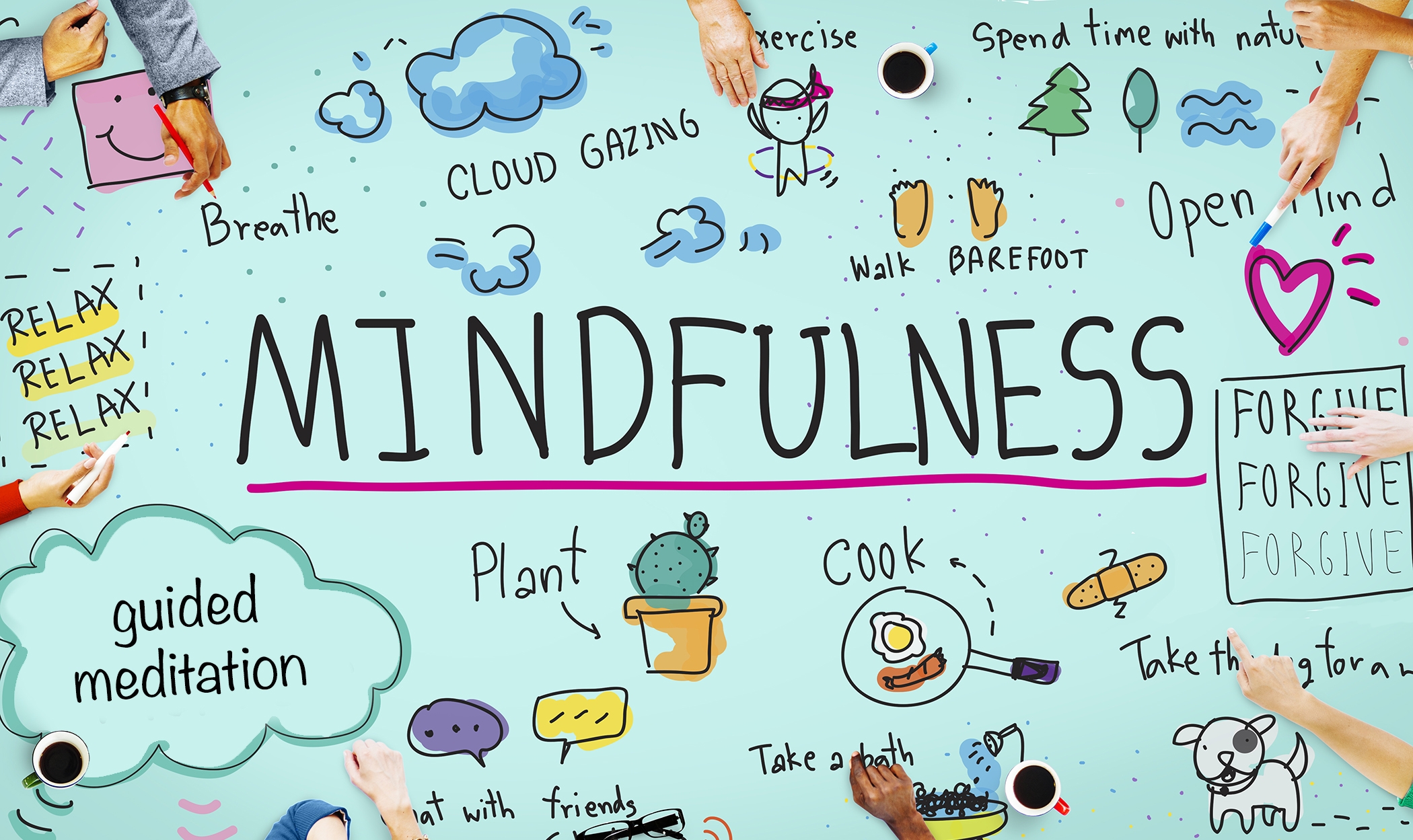
Mindfulness is the basic human ability to be fully present, aware of where we are and what we’re doing, and not overly reactive or overwhelmed by what’s going on around us. (Definition given by Mindful.org)

According to me, it is a practice of maintaining a complete non-judgmental state of awareness of one’s thought and emotions.

Also, many of us confuse mindfulness and meditation. In simple words, meditation is one of the ways to achieve mindfulness, or we can say; mindfulness is a quality whereas meditation is a practice.

So here the question comes, what are the benefits of practicing mindfulness?

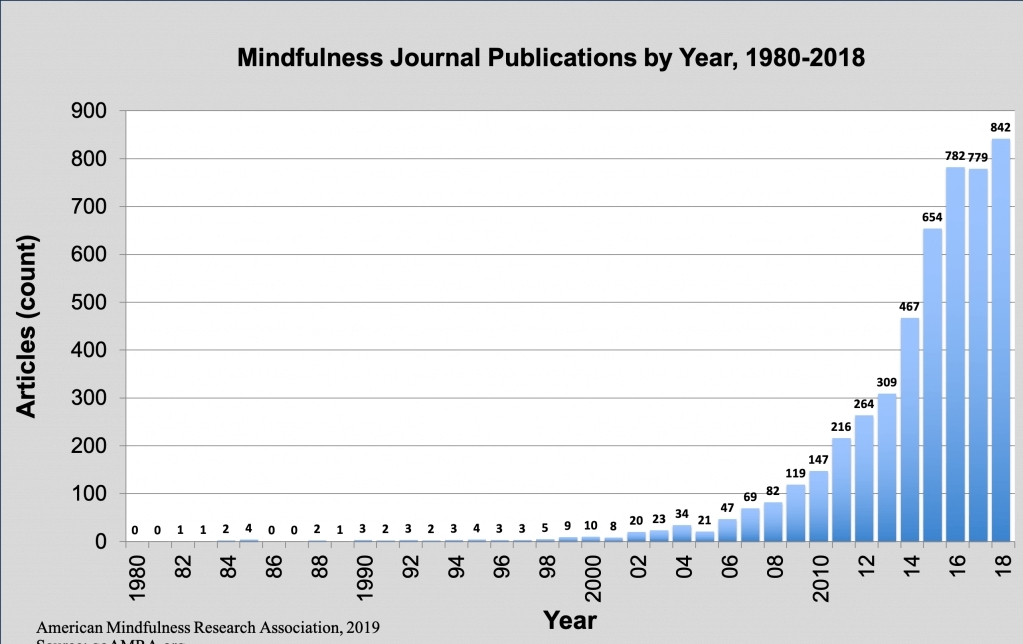
Well, to be honest, there are numerous. And seeing the popularity of the topic in positive psychology, we’ll probably be seeing a lot more to come. Have look at the graph below for example.

Mentioned below are just a few examples of what researchers have found.

1) Reduced emotional ‘reactivity’

In an emotional interference task conducted by Ortner and colleagues in 2007, participants with wide-ranging experience in mindfulness meditation were asked to categorize tones that were given either 1 or 4 seconds after a neutral or emotionally upsetting picture was presented.

The ones with more experience of practicing mindfulness-based mediation showed greater focus on the task even when emotionally upsetting pictures were shown.

2)  Enhanced visual attention processing

A study by Hodgins and Adair in 2010 has confirmed that those who practiced mindfulness-based mediation have shown better performance on tests of concentration, selective attention, and more.
      
3) Managing physical pain

Some research has also shown that mindfulness may have a role in helping with the management of physical pain.

4) Improved working memory

According to a study by Jha and colleagues in 2010, mindfulness is practically linked to enhanced working memory capacity.
    
According to the study, participants who practiced mindfulness-based meditation for 8 weeks have shown improvement in their working memory capacity.

5) Reduced stress

Bränström et al.(2010), found cancer patients who took part in mindfulness-based training have shown remarkably reduced self-reported stress than those who didn’t.

So these were a few of the many examples. Individuals who want to practice mindfulness can find many mindfulness-based training online and practice it on their own. Practicing mindfulness on a day-to-day basis is a great way to improve one’s well-being.