How Archives transformed in the Digital era

The Word archive is derived from the Greek word ‘Arkheion’. The word was further referred from ‘Archon’, which meant a magistrate who oversaw the town hall where all the official public documents were stored. The Word Archive came to use for the first time in the 17th century.

Archives are also known as ‘memory institutions’ because they record and preserve memories and form a significant part of culture, community, official and unofficial history of any place or region or state, or any institution. Their function is to collect, store and preserve artefacts and documents of historical, cultural, and legal importance from the yesteryears and the present so that they remain accessible, informative, and useful to future generations. In general, any organization, government institution or individual can build archives. The National Archives, UK has described archives as “collections of records or documents, selected for lasting preservation due to their historical value, significance as evidence, or as a source for research studies”. International Council on Archives (ICA) has defined archives as “documentary result of various human activities conserved for its long-term value”. They further described archives as contemporary accounts created to can provide a true and verified version of past events.

The significance of the archives lies in the orderly collection of crucial source documents accumulated over an individual’s or organizations’ lifespan and preserved, which can serve as evidence or reference for future work. As archives are the repositories housing various historical documents and records of value, archival research is facilitative for scholars and researchers looking for data to assess and facts to study from the original documents. However, owing to the vastness and diversity of ample archival documents and records, archival analysis is a hectic and tedious job. Access to the artefacts and documents stored in an archive is not an easy task and requires permission from the respected authority. In addition, most of the information stored in traditional achieves is paper-based and thus, is susceptible to decay with time. The aforementioned limitation of traditional archives can be overcome by archiving documents and artefacts in various digital formats, which can ensure that the information is preserved for a substantially longer period.

With the advent of newer digital technologies, it became easier and more convenient to store and preserve the information in the digital space. With the assistance of new digital tools and methods, the process of transcending information from the physical world to the digital world became much efficient and easier. 

Digital archiving is an area where the relationship between digital tools/methods and information preservation can be witnessed. It is a blend of the former and current storage of information. Their function is similar to traditional archives, as repositories of elaborated collection of information in various digital formats at a virtual location. This also makes digital archives more accessible and democratic as the physical constraints are eliminated.

Advantages of Digital Archives:

  • The the digital archive allows “anywhere-anytime” accessibility to users ensuring a reduction of time, cost, and money.
  • The redundancy of information stored in digital archives can be reduced, which can promote ease of access.
  • No geographical site is required to build a digital archive, which is cost-effective.
  • The simultaneous requests of access from multiple users can be addressed by creating multiple copies of information stored, which can overcome the issue of bottlenecks encountered in traditional archives.
  • Managing and navigating objects or records stored digitally are easier in digital archives, which allow developing capacity to preserves terabytes of information.
  • Digital archives are less subjected to bureaucracy like traditional archives, which can ensure data accessibility to the general public.

Digital archives are not perfect. Many times due to the digital divide and other constraints, researchers are not able to access the information. Sometimes the information challenges the authority and due to this, the information can be unavailable in the digital archives because of censorship. But there is no denying that digital archives have transformed the way information is stored and processed.  

References:

WHY DO WE NEED TO BE PUNCTUAL?

Know the true value of time; snatch, seize, and enjoy every moment of it——-Lord Chesterfield

ITS MEANING

Punctuality means doing a work at the proper time. To account an engagement at 10 o’ clock in the morning and to arrive at the place to keep it at 10-30 does not become a gentleman. It annoys the other party and it harms the future of the caller. No one who is unpunctual in attendance to work can be depended on or trusted in. On the other hand, a punctual man is one who knows the value of time. Such a man is a perfect gentleman and everybody has faith in his efficiency and character.

IT GIVES A MEANING TO YOUR LIFE

Punctuality is important in every sphere of life. it is rightly said that punctuality is the crown of a king. It is the most precious jewel to the character of a man. A student has to be punctual at school or college. The manager of a big firm or its common clerk has to be punctual in his office. Equally it is necessary for a factory worker, a politician, or a statesman. The greatest value of punctuality is that it is a great time-saver. An unpunctual man is always worried about time. A student who is unpunctual in his class lags behind others in his studies, he creates confusion both for himself and for others in the class. He is considered a disturbing element and is looked down upon by his teachers as well as his classmates.

MISS IT AND WELCOME YOUR HARM

Many battles have been lost on account of unpunctuality. Many Cases in Courts of Law have been lost, because one of the parties did not come in time; many a train has been missed and business lost to unpunctuality. So, unpunctuality leads to dangerous consequences. Relation of free people knows the value of punctuality. Indians are now a free people and they should cultivate punctuality in everywhere. Unpunctuality is a vice and out of it are born other vices like dishonesty, falsehood, idleness and shirking of one’s duty.

So, we observe how punctuality plays a foremost role in anyone’s life. being unpunctual is a curse, we cannot be as winner as others. Besides, this rhythmic world demands punctuality so that all of us can be successful in life.

Ramkrishna Mission

Shri Ramkrishna Paramhans was one of the most notable and inspiring spiritual personalities who created a silent revolution in the realm of spirituality and inspired millions of people.

The Ramakrishna movement was started by Swami Vivekananda in 1897.The motto is “Atmano Mokshartham Jagat Hitaya Cha ( one’s own salvation and for the welfare of the world). 

Ramkrishna Mission is a Hindu religious and spiritual organisation which forms the core of a worldwide crystal movement known as the Ramkrishna movement of the Vedanta movement.

Contributions of Ramakrishna Mission:

Regeneration of humanity- It is a non political and non sectarian organisation. It works in spiritual regeneration of humanity without emphasising on a particular religion dog or Holy text. Unity of religion and selfless service is at the core of Ramakrishna Mission.

Social services- Ramkrishna paramhans used to say “service of man is the service of God”. Ramkrishna Mission work in the field of health education welfare of different sections spread of our culture, ethics, spirituality for this purpose Ramakrishna Math and Ramakrishna Mission was founded.

Work for women- The Ramakrishna Math and Ramakrishna Mission serve women through opening of Maternity success old age homes, vocational training centres for rural women and providing monthly allowance to widows. 

Hence, this movement founded after the death of Ramkrishna paramhans continues to serve the society as stated in this motto and based upon the teachings of Ramkrishna Paramhans it is it works for the fulfillment of twin ideas of renunciation and walking for self emancipation and social service.

The Conspiracy of “Bulbs”

Do you know for how long a light bulb can last? 1000 hours, 1500 hours, 3000 hours? What if I say there is an light bulb lasted for more than 120 year and still counting, you will definitely say are you kidding me?, mine doesn’t last for more than 1000 hours. Or you may ask which machine has manufactured it? But what if I say it is hand made. Read on full article to know why life span of light bulbs are made to decrease by some giant light bulb manufacturers…

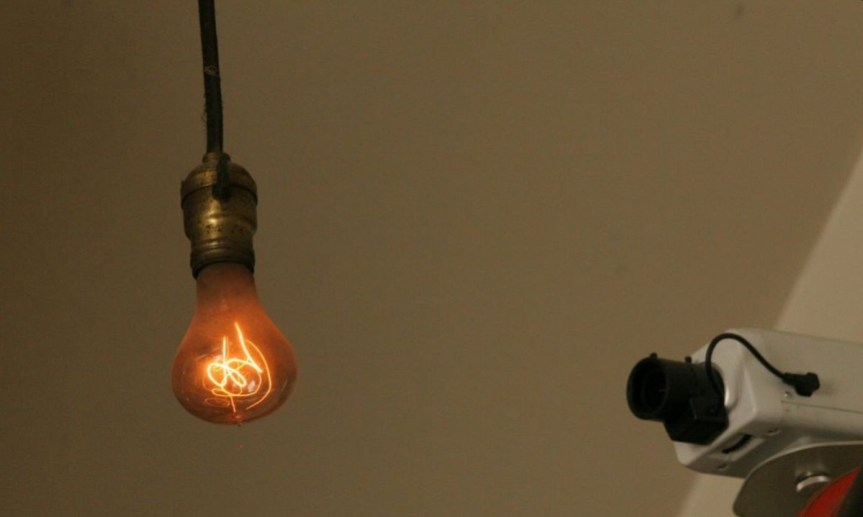
In Livermore Fire station 6 there is a light bulb active from more than 120 years hand made. The light doesn’t have a switch but it has battery back an a power generator. The bulb is never switched off as by cooling and heating up again there act stress on filament which decreases the life span of bulb.

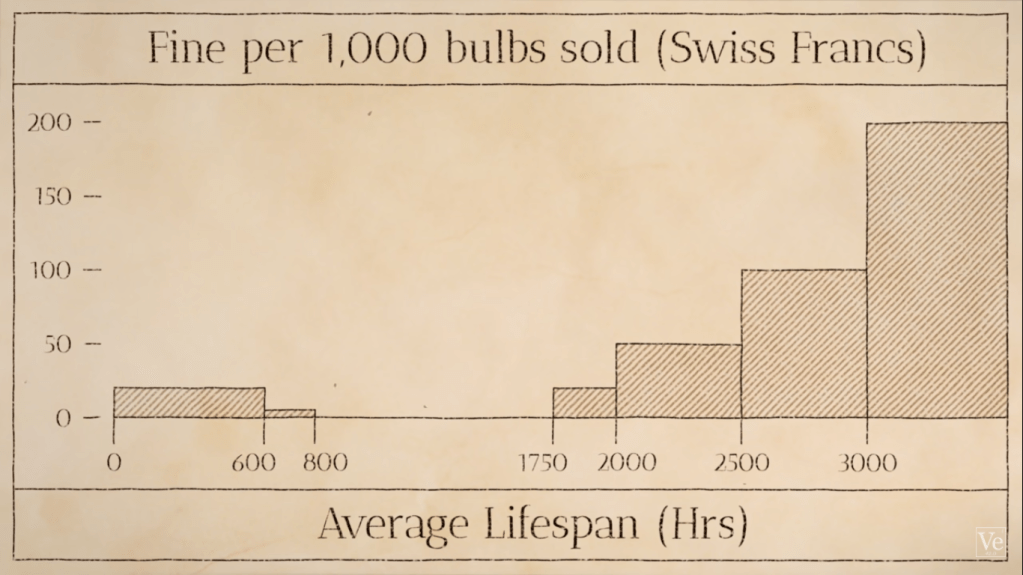
When everyone is trying to make a filament they failed the filament burned with contact of oxygen, so in 1840s Warren De La Rue told to put the filament in vacuum so if there is no contact of oxygen and no burn. In 1879 Thomas Edison invented a perfect light bulb by making filament of carbon, from then onwards everyone tried different filament to increase the life span and then come up with tungsten. And in 1920s the life of bulbs were at peak lasting from 2000 hours to 2500 hours normally.

But at these time the sales were at least for the bulb manufacturers for example OSRAM sold 63 million bulbs in 1923, and in 1924 only 28 million. So the giant manufacturers of that come with a meeting. In 1924 at Geneva, Switzerland before christmas the giants Philips, International General Electric, Tokyo Electric, OSRAM from Germany, UK Associated Electric(AEI) formed a cartel named Phoebus Cartel after the name of Greek God of light.

They agreed to decrease the life of bulbs to 1000 hours, the same way engineer discovered to increase, they told their engineers to decrease the life of bulbs. But, due to lack of trust they agreed to send bulbs from every factory to a lab for test. If the bulb lasts for 1000 hours is fine, but if it lasts more than 3000 hours then there is a fine of 200 Swiss Francs for every 1000 bulbs sold.

There again one question of will every manufacturer will follow or not? So they divided the area of sales. They were successful in there plan. The life of light bulbs decreased and there increased tremendously. They sold with same price to increase the profit.

-Sales – life of bubs

The cartel was made to last till 1955 but it ended in 1930s. However there were allegations on cartel, but they said that cartel in established for improvements in the bulb. The screw thread in bulbs are introduced by them.

The light bulb of Livermore is made before the formation of cartel that’s why it is there.

These is not the end of this case as there is still this type of work is going on.

In 2003 the video of Casey Neistat was gone viral as he tried to protest against apple. Apple launched IPod having non removable memory which lasts only for 18 months, and after that you have to give 250$ to refurbish it. So there was a case in court against this which Apple settled outside court.

Indian culture

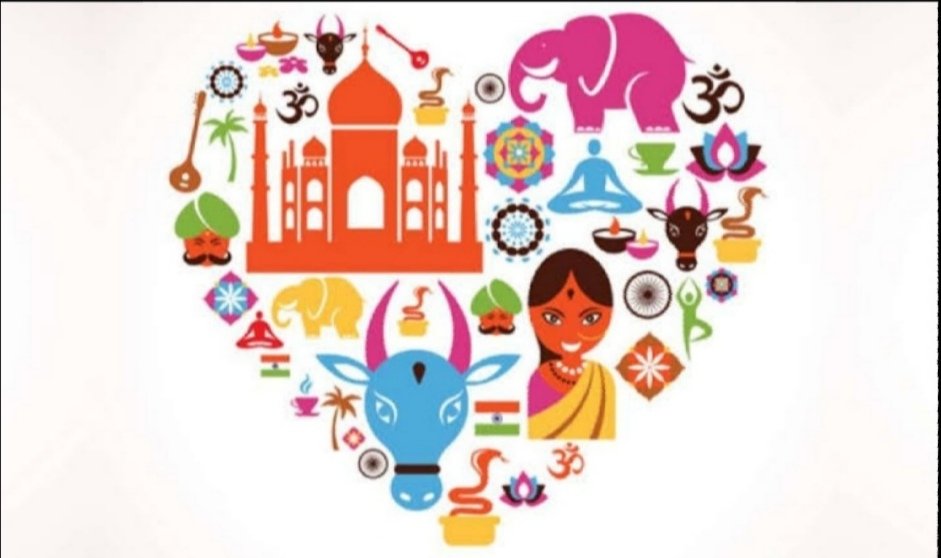
Different types of cultures in India

And Indian culture is the one of the most liked culture by all other countries in the world. The around the world get attract to our culture fastly. Because our culture is not boughted by sentimentally. There is a scientific reason behind every culture in India.

In india the culture is different from North to South. We can see lot of difference.

North culture

Traditions

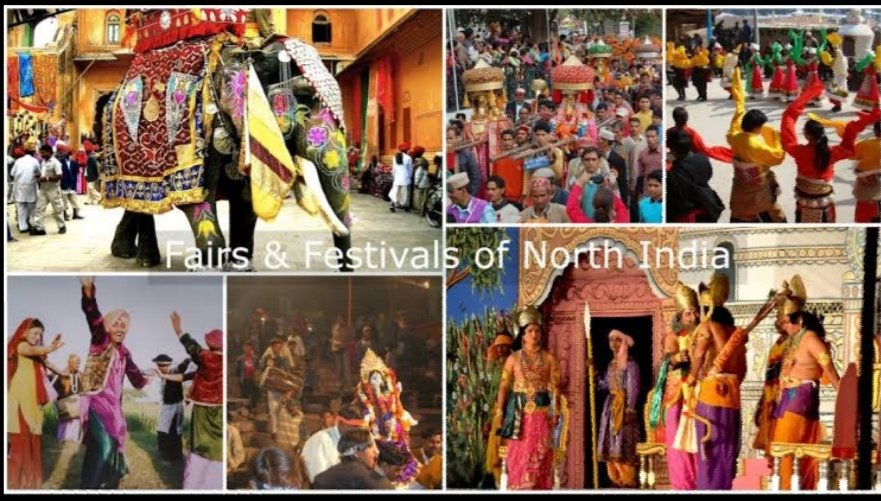
There are so many festivals that are celebrated widely in North India with pomp and show like Dusshera, Diwali, Karvachauth, Holi, Navratri, Shivratri, Guru Nanak Jayanti. Many festivals are called with different names in various regions but are same North India festivals are celebrated in Uttarayana. Ram Navmi and Janamasthami related to Lord Rama and Krishna are give importance in the North

Different festivals in North

Food

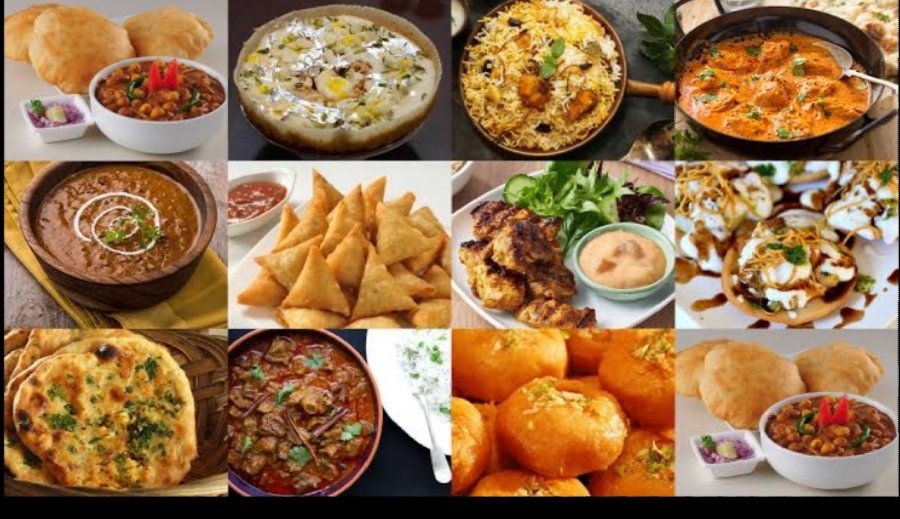
Differnt foods in north are samosa, chats, tandoori chicken, chloe bhatore, amristari kulcha, dal makahani, in north most of them eats roti every night.

North Indians eats very spicy food compare to South Indians they also eats street food a lot

South culture

Traditions

South Indian culture refers to the culture of the South indian states of andhra pradesh, kerala, tamilnadu, telangana. South Indian culture, though with its visible differences, forms an important part of the Indian culture. The people from different place attract to the South indian culture enteranally. Not only the people from India also from other countries like the South indian culture and they also follow these. And the clothing, dancing and scluputers are very famous from India. And for entertainment purpose there is a huge cinema following in South and there are different types of dances like bahartahnatyam, kuchipudi, kathak and etc.. And the languages speak in South are malyalam, tamil, telugu mostly.

FOOD

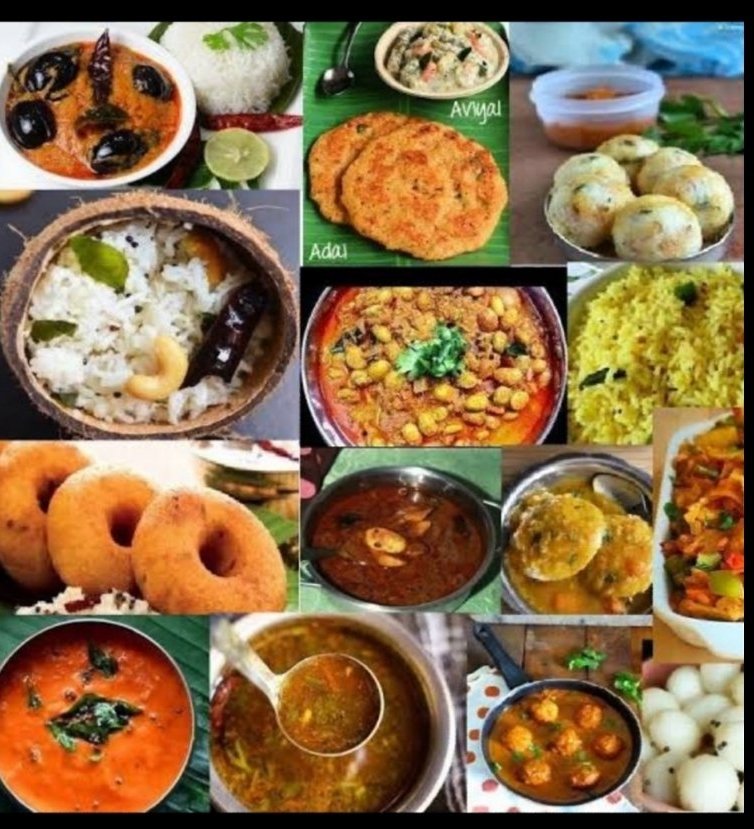
South indian food is very tasty. there are differnet types of food items idly, vada, sambar, dosa and onion dosa and in South mostly the people were brahmins and non veg items fish, chicken and mutton are also very famous. And avakay is very famous for telugu people. And for tamil people sambar. And in kerala there were many coconut trees. And they use mostly tha coconut oil. And pulihora is very famous dish in South.

CONCLUSION

And at last the culture is different in South and North but over all the culture of india is very famous in over all universe because it hits very different and attractive from culture in another counties.

Why society only loves women who sacrifice ?

We must have heard from our relatives and people from our older generation that a good woman or a good wife is the one who knows how to ‘adjust’. We also must have come across conversations where patriarchs have often said things like “to maintain a good relationship, a woman must adjust” or “till the time things don’t go worse a woman should learn to adjust and shouldn’t go for judicial recourse”.

Photo Credits: First Post


These casual patriarchal phrases raise many important questions: do women need to face the worse to get justice? Do women need to tolerate abuse from their partners till the time abuse doesn’t go extremely physical or sexual in nature? Do only women need to give up on their dreams and just look after their families?

Patriarchy apologists, however appraise some women in our society and they are only those women who unwillingly or willingly give up on their dreams and career in order to maintain a ‘happy’ family or women who stay with their ‘cruel’ in laws. This proves that the more a woman sacrifices or the more a woman tolerates abuse, the more she is loved and the more she is considered as an “ideal woman”.

But the moment a woman stands up for herself, the moment she focuses on her dreams and career instead of caring about maintaining a family, the moment she stops adjusting, the same patriarchy apologists start slut shamming her or shamming her simply. In this case, she becomes a “bad example” for all other women just for standing up for her simple basic rights.

This also reminds us about how society has taught us that a mother only becomes “a true mother” when she is sacrificial. In India, people question a mother’s identity even if she chooses to wear a western outfit. Do women now even have to sacrifice on their preferred clothes? Women wearing western are seen “incapable “of raising a child? How does a simple piece of fabric decides a woman’s worth? Mothers are also judged by our patriarchal world for being into a particular profession, for example, those engaged in beauty and wellness or into travelling. How does a mother’s profession makes her “less of a mother”?

Photo Credits: Clipart Library.

It’s high time we stop romanticising women who suffer because of internalized patriarchy. The only thing our patriarchal society has to understand is that a woman’s personal choices are her own fundamental rights and she can exercise them as and when she wants.

Leonardo Da Vinci’s Human Powered Helicopter Becomes Reality

Leonardo Da Vinci's Aerial Screw

It would be hard to call Leonardo Da Vinci anything other than a man ahead of his time.  Between 1452 and 1519, Leonardo did just about everything. He is most famous today for his skills as a painter, where he painted some small works- like the Mona Lisa and The Last Supper. His sketches of man were the most anatomically correct to date (The Vitruvian Man). He was also a famed sculptor, musician, architect, anatomist, geologist, cartographer, botanist, writer mathematician, engineer and inventor. He conceptualized things far beyond his time, including concentrated solar power, a calculator, the double hull for ships, a tank and, most interesting to those of us in the aviation industry, a helicopter.

Over 420 years before the first helicopter was built, Leonardo Da Vinci sketched out what he called the Aerial Screw. This aerial screw was a man powered helicopter that required four men to spin cranks fast enough to generate enough lift to get off the ground.

Now, fast forward to 1980, 461 years after Leonardo passed away.  The American Helicopter Society sought to finally see the first human powered helicopter take flight. To win the prize money, which started at $10,000, the helicopter needed to reach at least 3 meters in the air (9.8 feet) for 60 seconds while being stable enough to have the center of the helicopter stay within a 10 x 10 meter box (32.8 x 32.8 feet). It would take 9 years from then before the first human powered helicopter even got off the ground when students at Cal Poly San Luis Obispo got their human powered helicopter 8 inches off the ground for all of 7.1 seconds. In the next 20 years, not much progress would be made so the Sikorsky Aircraft Corporation pledged additional prize money to try to see if that would inspire more innovation.

Sure enough, it did. Two teams, one from the University of Maryland and the other AeroVelo, were locked in a tight race to win. The university of Maryland got their man powered helicopter to fly for 65 seconds but it only reached 8 ft (about 1.8 feet short of where they needed to be) in August of 2012.

Finally, this July in Toronto, Aerovelo took the $250,000 in prize money with this flight:

While we don’t expect to see these Atlas human-powered helicopter’s flying around a city near you soon, this was a remarkable achievement. Congratulations to the Aerovelo team! And, over 480 years later, Leonardo Da Vinci’s vision of a human powered helicopter came to fruition.

Dree Festival

Today that is ,on 5th July 2021 , Arunachal Pradesh is celebrating three day festival called Dree. It is said to be most auspicious festival of Apatani tribe ( of the tribe that resided in Arunachal Pradesh). Dree is celebrated in order to bring a bountiful harvest season, hence Apatani offers prayers to four Gods they follow — Tamu, Harmiang, Metti and Danyi. This three day long festival is joyously celebrated with traditional clothes worn by women and children.

The reason behind the celebration of Dree is just as sacred as the festival itself. It is believed that two person i.e. Aane Donw and Abba Lwba when first set for the journey of cultivation they had to face many challenges and hurdles. Not only they had difficulty in finding the right seed, they also had to fight a Demon called Pyokun Pembo Pyoyi Tadu . This demon was eliminated with great efforts but their struggle was far from over. From the stomach of demon emerged swarms of insects and pest and rice birds. They attacked the crops in the field which led to poor harvest and subsequent hunger and famine. It was in order to alleviate the impending hunger and famine that a series of rituals were observed in the month of Dree

Thus this festival is celebrated to have good harvest. It is celebrated with such enthusiasm and exuberance that whoever visits Ziro ( place in Lower Subansiri district , where most Apatani Tribe resides) at this time could feel the radiance of happiness and joy. Throughout this festival games and sports are actively partaken that make the festival more interesting and entertaining.

Dowry Continues To Remain A Menace In Indian Society

Despite the fact that dowry has been banned in India since 1961, a research found that it is still being given on a regular basis, with over 95% of weddings including the exchange of money.

Dowry is correctly represented as a societal evil since it is the practise of paying and accepting articles of worth (such as clothes, jewellery, furniture, cash, and other items) between two households. Typically, the bride’s family is obligated to pay these items to the groom’s family.

The World Bank carried out the study, which examined almost 40,000 marriages that occurred between 1960 and 2008 in 17 Indian states that account for 96% of the nation’s population.

Researchers calculated “net dowry” to study the difference as to what was paid by the bride’s family to the groom’s family and vice versa, and the results revealed that, in the vast majority of instances, it was the bride’s family who paid more compared to the groom’s family, rather than the other way around.

According to the estimated amount confessed by families, a groom’s family spends Rs. 5,000 on presents to the bride’s family on average. The bride’s family, on the other hand, pays about Rs. 32,000 on presents and other monetary contributions to the groom’s family, taking the net dowry to roughly Rs. 27,000.

It has also been noticed that the dowry value is typically 14 percent of the annual income and includes a significant portion of the family’s savings.

While much has started to change since 2008, experts think the tendency of dowry is still highly prominent in India, since the notion is quite widespread in all major religious groups, with Christians and Sikhs exhibiting a “dramatic increase in dowry.”

Dowry inflation was seen in certain states, including Kerala, Haryana, Punjab, and Gujarat, with Kerala having the highest average dowry in recent years. On the other side, average dowry decreased in states such as Orissa, Tamil Nadu, Maharashtra, and West Bengal.

This venom affects people of all castes and socioeconomic classes. Neither the husband’s nor the wife’s educational background protects them from dowry harassment. Currently, dowry-related fatalities in Kerala have been documented, with the majority of victims coming from the upper strata of society. The culprits come from well-educated and wealthy families, and the victims are also well-educated. If this is the situation of women in a culture that was matriarchal a few decades earlier and claims of high social indicators in women empowerment, it’s anybody’s imagination how it will be in many Indian states that have numerous social indicators that are much worse than those of war-torn Syria or Sub-Saharan Africa. According to the NCRB study, Uttar Pradesh and Bihar top the list of dowry-related deaths, accounting for roughly 30 percent.

It is time to reform these retrograde societal standards in 2021. Receiving dowry should be considered a societal shame, and all generations should be taught. Young people should also make a stand. Women should explicitly refuse to pay dowry as part of a marriage , and men should also refuse to accept it in any way. Why should brides’ parents be obliged to give pricey “gifts” that are essentially a dowry by another name? 

The wider background for dowry is women’s low labor-force participation and, as a result, their lack of financial independence. Women should be encouraged to work and earn their own money.

Discrimination is present in all parts of life. To combat gender inequality, States should examine gender-disaggregated statistics across the life cycle — birth, early childhood, schooling, nourishment, employment, healthcare access, and so on. Teachers and textbooks shape students’ views and values. Children should be routinely educated on the fundamental ideal of gender equality.

The art of cooking

A culinary art is the art of cooking. Cooking is the process of preparing food and meals that will be eaten or the food served to other people.

The word “culinary” is defined as something related to, or connected with, cooking or kitchens. People who are working in the culinary arts are known as culinarians. A person working in restaurants is commonly known as a cook. The skillfully preparation of food and meals that are as pleasing to the palate as to the eye is the responsibility of the Culinary artist. Culinary artists require a lot of knowledge about the science of food they prepare and a good understanding of how diets and nutrition affect people in the preparation of their meals. Culinary artists work in restaurants, hospitals and other institutions where kitchen conditions vary depending on the type of business.

The culinary art is comprised of many categories. Some of which are tools, methods, combination of spices and ingredients that adds flavor to the food. It normally needs the right measurements, proper selection and accurate combination of ingredients involved to reach desired result.

The diversity of the culinary arts around the world mirrors many considerations such as Economic, Aesthetic, Nutritional, Religious and Cultural.

The dawn of fire, and the culinary arts, if not always, is associated with fire. The heat generated by fire is required to change the food’s texture, flavor, nutritional contents and even its appearance. Heating is important in the culinary arts because it disinfects the food and makes it softer. The food danger zone is between 4 to 60 degrees Celsius. Within these temperatures, the bacteria found in the found or even those that were transferred to the food can grow at a very alarming rate. Under ideal conditions bacteria can double their population every twenty minutes. Although at a glance, these foods may not appear harmful, when ingested they can be. Many people have the misconception that bacteria will die when we freeze our food or refrigerate them, but this actually does not rid the food of bacteria, merely it slows down their expansion.

One of the most famous departments in the culinary arts is probably baking. Baking is the art of cooking food using an oven in culinary arts. Through applying dry heat evenly through the oven and onto the food which then cooks the food. It is used in producing pastry based desserts such as tarts, pies and cakes. The ovens dry heat causes the starch to gelatinize, and the results to the browning or charring of the outside of the food. Some uneducated in the culinary arts might think that the charred part or the brown part is not as tasty as it sounds, but this part is actually what gives taste and flavor to the baked good, partly sealing the moisture of the food. The browning apparent in the baked good is caused by the sugar caramelizing and the chemical reaction that happens between the reduction of sugar and the amino acid (Mail-lard reaction). Moisture in the baked goody, on the other hand, is not really completely kept in time as the goody is being baked it will become drier and drier.

reference-https://www.paranetinfo.com/learn-the-importance-of-cooking-food/

Lo-Fi is the new Hi-Fi

“Music gives a soul to the universe, wings to the mind, flight to the imagination and life to everything.” said Plato. The music industry strives to live up to this quote, and many new music creators are coming up with new content every day. Lo-fi is the newest trend and looks like it’s here to stay. Read on to know why.

What is lo-fi?


According to its creator Eric Matthews, lo-fi is short for “low fidelity”, which is a term used to define the music that contains elements that are conventionally regarded as imperfections or flawed. This type of sound recording has technical flaws that make them sound different from the live sound that gets recorded by adding distortion, hums, background noise and low-frequency response. Music producers now make these flaws as calculated aesthetic decisions and we have a plethora of our favorite songs in this new version. And guess what? It is a hit with the youth.


The world today has started to acknowledge the fact that it is OK to be imperfect and individuals are starting to embrace their flaws with self-love and grace. This can be one of the reasons why the youth is vibing to this genre of raw music. Also, Lo-fi being passive in nature does not reach out or try to be more it can be a Calming secondary presence rather than a full-on concert you want to perform when you listen to a Bollywood number.
Some of the good Lo-fi songs today are cut, rearranged and extended to create a vintage or retro vibe. So, the same song hit different and brings a sense of nostalgia to the listener. When listening to lo-fi, what remains in our head is not a memory of the lyrics, but a lasting state of mind. As the pandemic has made us think about the good old times a lot, this genre is the current vibe.

Lo-fi for work /study

The Lo-Fi Girl (Youtube Channel)


One of the major changes that the world has experienced in the new normal is the WFH(Work From Home) culture and, college life now is just you, your laptop and the water bottle against the world. Many students find it difficult to focus on their work when there is a TV running in the next room or the family being loud at times. Sounds relatable, isn’t it? Worry not! Lo-fi is here to put you in a phase of focus when you can concentrate on the work at hand and get a lot of things ticked off on your checklist. While many music critics looked down on the Mellow and monotonous nature of this genre, scientists and audiophiles (like me) insist that blandness is the key point. Lo-fi really does put you in a productive trance. Just search ‘lo-fi beats for chill and study’ and let the YouTube algorithm wind you up in a new cocoon of focus vibe and nostalgia. But if you are one of those who would want absolute silence while working, lo-fi may not be your cup of tea. Well, You can always try new stuff, it would be a win-win anyway!

To sum it all, Lo-Fi music accompany you in the day to day question and get you through your day. It is relatable and casual, putting people at ease and making them put it on loop in return. Go ahead and try a session of lo-fi Beats to study or chill. You won’t be disappointed!

Here are some recommendations to start with. Happy Vibing!

This is a playlist for some Bollywood Lo-fi music:

This is the link for a 1-hour session of Lo-fi beats to Study/Chill

Classical Economics

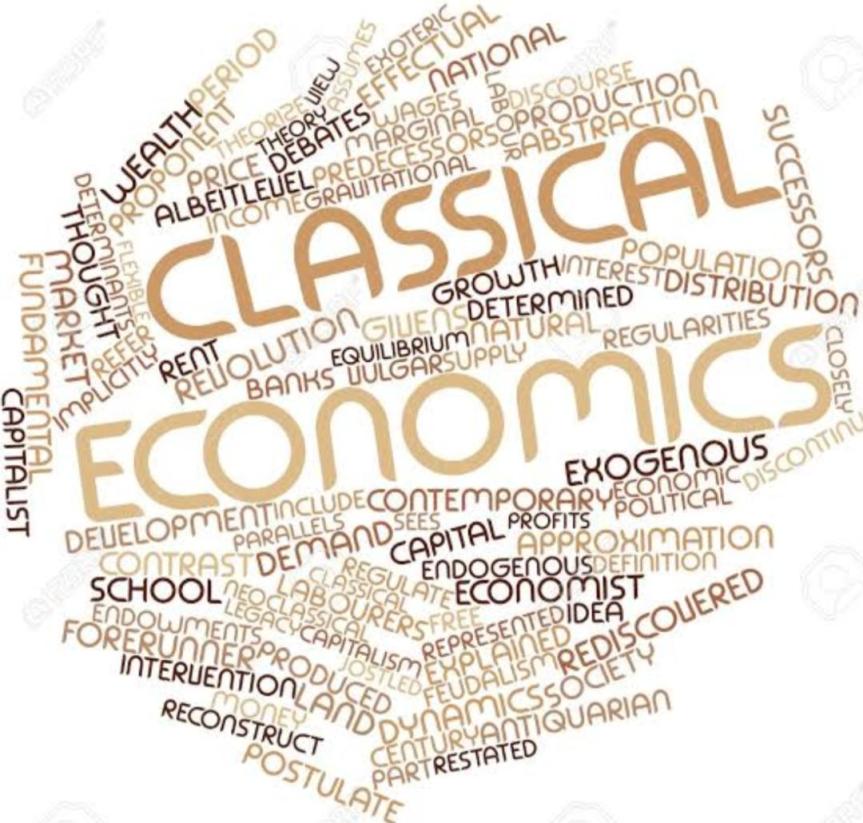
Classical economics relates to the school of thought of economics that originated in Britain during the late 18th and early 19th centuries. The classical economists believed in the existence of full employment in the economy. It is believed that ‘The Wealth of Nations’ by Adam Smith published in 1776 marked the beginning of classical economics. J.B. Say, Alfred Marshall, A.C. Pigou are some of the famous classical economists.
This school of economics focused on the theory called the ‘invisible hand‘ being the highlight at the beginning stages of domestic and international supply and demand. They assumed the economy to be laissez faire capitalist. It was a closed economy with no foreign trade. Labour was a homogenous and wages were flexible. It assumed the economy to be in the long run.


https://cleartax.in/g/terms/classical-economics


The Classical school of thought is based on the Law of Markets given by J.B. Say. According to that law “supply creates it’s own demand“. Therefore there can never be the problem of overproduction or unemployment in the economy as whatever is produced is consumed. Unemployment may occur only in the short run and in the long run, economy tends towards full employment.
The Classical economists also believed in wage price flexibility. This concept was given by A.C. Pigou. It was basically the formulation of Say’s Law in terms of labour market. According to this, whenever there is unemployment in the economy, a general cut in money wages will restore full employment condition. Unemployment is a consequence of the rigid wage structure.
They also believed in the existence of equilibrium in the goods market. It is achieved when savings is equal to investment. This equality is usually brought by the mechanism of interest rate. Similarly, the money market is in equilibrium when the demand for money is equal to the supply of money. This concept was explained in the Quantity Theory of Money.

The Fall of Classical Economics:

During the time of The Great Depression i.e. 1929-1930’s, the classical theory failed to be applicable. It failed to solve the problem of depression that plagued for about 43 months. Keynes criticized the classical theory on several grounds.
First and foremost was the classical assumption of full employment equilibrium. Keynes considered it as unrealistic and argued that the situation in the capitalist economy is underemployment and full employment is a special case. He refuted Say’s law of market and stated that it was demand that created supply. He was also against the idea of laissez faire. He believed that self adjustment was not possible in a capitalist system and this was responsible for the Great Depression. He advocated state intervention within the economy through monetary and fiscal measures.
The wage price flexibility was also heavily criticised. In the modern world, where workers have trade unions, any cuts in wages will lead to strikes and industrial unrest. Keynes also stressed that equality between savings and investment was not brought by rate of interest but instead by the level of income and marginal efficiency of capital.
Lastly, the long run analysis of Classical economy was refuted on the grounds of inapplicability. Since it operated in the long run, it is incapable of solving present day economic problems.

https://www.yourarticlelibrary.com/economics/keynes-criticisms-against-classical-theory/24859

YOGA AND LIFESTYLE

In a first for East India, Visva Bharati varsity commences PG diploma  course in yoga studies - Education Today News

Indeed , it is an astonishing fact that a yogic tradition , which is more than five thousand years old , has recently become a popular way of life . Presently , people consider that yoga is a significant means to achieve a healthy as well as a positive lifestyle . In fact , the power of yoga lies in its simplicity , flexibility and diversity . As a matter of fact , yoga helps in improving our flexibility , lowers our stress level and increases our confidence and finally contributes to a healthier lifestyle on the whole . There are various lifestyle diseases like obesity , diabetes , asthma , hypertension , back pain , migraine and depression which can be prevented and treated up to some extent with the help of certain yogic exercises .

Asanas As Preventive Measures

52,455 BEST Yoga Poses Male IMAGES, STOCK PHOTOS & VECTORS | Adobe Stock

According to Patanjali , asana means , “sthiram sukham aasanam “ i.e,. ” that position which is comfortable and steady ” . In Brahamanopanishad , “ To sit in a comfortable position or posture for everlasting period is called asana “. Asana is that state of body in which the body may be positioned easily . As a matter of fact , the ability to sit comfortably for an extended period of time in any position is called asana . In asanas , body is kept in various positions in such a way that the activities of organs and glands of body become more effective and eventually the health of mind and body is improved .

In fact , asana is a means through which physical and mental development is achieved . Prevention of diseases and delay in ageing are the desired effects that can be achieved through yogic exercises .

There are different types of asanas which include meditative asanas , relaxative asanas and corrective asanas . Regular practice of the above- mentioned asanas significantly affects various systems or organs of our body . Asanas can be used as preventive measures because they provide the following physiological benefits , which ultimately help us in avoiding various lifestyle diseases such as diabetes , obesity and cardiovascular diseases .

Agriculture

When tillage begins, other arts follow. The farmers, therefore, are the founders of human civilization.”

— Daniel Webster

Introduction

It all started thousand of years ago , when the human civilization came into existence . Agriculture was a key to survival . People were farming for there domestic purpose , not for the others .

As the civilization started to grow accustomed of agriculture , they grew food in surplus that enabled people to live in cities. Plants were independently cultivated in at least 11 regions of the world.

The development of agriculture enabled the human population to grow many times larger than could be sustained by hunting and gathering.

It was the beginning of different civilization in different parts of the World. From those civilizations , one of them was our’s The Indus Valley Civilization . Vedic literature provides some of the earliest written record of agriculture in India. Rigveda hymns , describes plowing, fallowing, irrigation, fruit and vegetable cultivation.

Some of the ancient and historical evidence suggests rice and cotton were cultivated in the Indus Valley.

Agriculture : In India and World today .

India ranks second worldwide in farm outputs. As per 2018, agriculture employed Indian work force and contributed 17–18% to country’s GDP.

In 2016, agriculture and allied sectors like animal husbandry, forestry and fisheries accounted for 15.4% of the GDP (gross domestic product) with about 41.49% of the workforce in 2020.India ranks first in the world with highest net cropped area followed by US and China.The total agriculture commodities export was US $ 3.50 billion in March – June 2020.

Agriculture is the primary source of livelihood for about 58% of India’s population. Share of agriculture and allied sectors in gross value added (GVA) of India at current prices stood at 17.8 % in FY20.

During 2019-20 crop year, food grain production reached a record of 296.65 million tonnes. In 2020-21, Government of India is targeting food grain production of 298 million tonnes.

India is among the 15 leading exporters of agricultural products in the world. Agricultural export from India reached US$ 38.54 billion in FY19 and US$ 35.09 billion in FY20.

Agriculture is an important industry in the United States. The agriculture industry, which includes both crops and livestock, is responsible for producing most of the world’s foods and fabrics. Agriculture impacts so many things that it’s hard to imagine a world without this important industry.

Schemes and Initiatives

Due to the high requirement of agriculture . It is important for the government to take initiatives and provide better infrastructure to the farmers. However , the required level of investment for the development of marketing, storage and cold storage infrastructure is estimated to be huge.

The Indian Council of Agricultural Research (ICAR), established in 1905, was responsible for the search leading to the “Indian Green Revolution” of the 1970s. The Union Minister of Agriculture is the president of the ICAR. The Indian Agricultural Statistics Research Institute develops new techniques for the design of agricultural experiments, analyses data in agriculture, and specialises in statistical techniques for animal and plant breeding.

Schemes by government for Indian agriculture :

  • Dairy Entrepreneurship Development Scheme.
  • Rainfed Area Development Programme (RADP)
  • Paramparagat Krishi Vikas Yojana (PKVY)
  • Pradhan Mantri Krishi Sinchai Yojana (PMKSY)
  • National Agriculture Market (e-NAM)
  • Pradhan Mantri Kisan Maandhan yojana.
  • Pradhan Mantri Fasal Bima Yojana (PMFBY)
  • Kisan Credit Card (KCC) scheme.
  • Pashu Kisan Credit Card Scheme.
  • PM-Kisan Scheme.

Conclusion

Agriculture sector is one of the prominent sector in India as well as all over the world . India is becoming self – sufficient in pulses and other crops .

Gone are the days , when India was unable to provide sufficient amount of food to the citizens . Gone are the days , when people used to think agriculture was not as important as other sectors . Gone are the days , when people used to think less of farmers . And gone are the days , when people were less educated about agriculture.

Farming is a profession of hope.

— Brett Brian

Link

Krishna River

• Rises from the Western Ghats in Maharashtra.

• Total length – 1,400 km.

• Outfall – Bay of Bengal.

• Extension – Andhra Pradesh ; Telangana ;
Maharashtra; Karnataka .

• 8% of the total geographical area.

• Boundary – Balaghat range (north), Eastern Ghats (south and the east) , Western Ghats
(west)

Major tributaries – 13

Right bank tributaries – Six

• The Ghataprabha

• The Malaprabha

• The Tunga Bhadra

Left bank tributaries – Seven

• The Bhima

• The Musi

• The Munneru

• Major Hydro Power stations

● Koyna ; Tungabhadara ; Sri Sailam ; Nagarjuna
Sagar ; Almatti ; Naryanpur ; Bhadra.

• Rich mineral deposits – industrial development.

• Important industrial activities – Iron and steel,
cement, sugar cane, vegetable oil extraction and rice milling.

• Major Urban Centers – Pune, Hyderabad.

• Hydrological observation – Central and State Governments.