Positive Psychology

Positive psychology is one of the newest branches of psychology to emerge. This particular area of psychology focuses on how to help human beings prosper and lead healthy, happy lives. While many other branches of psychology tend to focus on dysfunction and abnormal behaviour, positive psychology is centered on helping people become happier. Positive psychology is designed to “complement and extend the problem-focused psychology that has been dominant for decades,” explained the late Christopher Peterson, author of “A Primer in Positive Psychology” and professor at the University of Michigan, in a 2008 article published in Psychology Today. “Positive psychology is…a call for psychological science and practice to be as concerned with strength as with weakness; as interested in building the best things in life as in repairing the worst; and as concerned with making the lives of normal people fulfilling as with healing pathology,” Peterson wrote.

According to leading authorities in the field, Martin Seligman and Mihaly Csikszentmihalyi, positive psychology will help achieve “scientific understanding and effective interventions to build thriving in individuals, families, and communities.” In order to understand the field of positive psychology, it is essential to start by learning more about its major theories, applications, and history.

History of Positive Psychology

“Before World War II, psychology had three distinct missions: curing mental illness, making the lives of all people more productive and fulfilling, and identifying and nurturing high talent,” wrote Seligman and Mihaly Csikszenmihalyi in 2000. Shortly after WWII, the primary focus of psychology shifted to the first priority: treating abnormal behavior and mental illness. In the 1950s, humanist thinkers like Carl Rogers, Erich Formm and Abraham Maslow helped renew interest in the other two areas by developing theories that focused on happiness and the positive aspects of human nature.

General interest in positive psychology has grown tremendously since the concept was introduced. Today, more and more people are searching for information on how they can become more fulfilled and achieve their full potential.

Uses

Positive psychology can have a range of real-world applications in areas including eduction, therapy, self-help, stress management, and workplace issues. Some of the major topics of interest in positive psychology include: Character strengths and virtues, Flow, Gratifications, Gratitude, Happiness, Pleasure, Helplessness, Hope, Mindfulness, Optimism, Positive thinking, Resilience .

Impact of Positive Psychology

Some of the major findings of positive psychology include: Money doesn’t necessarily buy well-being, but spending money on other people can make individuals happier, People are generally happy, Some of the best ways to combat disappointments and setbacks include strong social relationships and character strengths, While happiness is influenced by genetics, people can learn to be happier by developing optimism, gratitude, and altruism, Work can be important to well-being, especially when people are able to engage in work that is purposeful and meaningful.

Potential Pitfalls

Positive psychology is often confused with positive thinking, and misconstrued as self-help tactics rather than research-backed theories. Positive thinking is a way of thinking ourselves into better behavior and greater resilience, rather than behaving our way into a different frame of mind. Positive psychology, on the other hand, is the scientific study of what makes people thrive. It focuses on behaviors that can lead to a more optimized frame of mind as well as on thought patterns that lead to more functional behaviors.

Welcome to your Space Opera

“May the force be with you”. This statement alone is enough to tell you how popular and impactful space operas are. Whether it’s Star Trek or Star Wars ( yes they’re both different) or Battlestar Galactica franchise and Robert A. Heinlein’s 1959 novel Starship Troopers, sci fi has always fascinated people.

Space operas, considered as sub genre of science fiction emphasizes fictional space warfare driven by technology and science fictional devices.

Art of Ayan - Grand Space Opera: Light Age - Keyframe Design

What’s even more fascinating , is that these fictional tales are no longer just part of the books or movies but have started to interlink with the present and probably the future.

 Ronald Reagan proposed the a plan of strategic defense initiative – a system of lasers and missiles and the critics and newspapers named it as Stars Wars.  This gained further resonance when Reagan described the Soviet Union as an “evil empire”.

Star trek , was etched with liberal themes that were dominating American society in the 1960’s  like racism, the nuclear arms race, the struggle between democracy and totalitarianism -all part of Star Trek.

This all mirrored the post Second world war scenario in the world.

.Kingpins , in these sci fi , in quest of more power, battle for higher political ground , which is a reflection of the current conflicts in the world.

Handmaid’s Tale, by Margaret Atwood, is set in a dystopian future, wherein women are forced to live as concubine under a fundamentalist and theocratic dictatorship. Wherein the women , are not even called out by their own names, but are named after their ” masters”. Women being forced to be subservient to men …Sounds familiar right ? This book is not exactly a space opera, but for sure classifies as sci fi and a thriller with jarring similarities to the past, present and a possible future.

Whether it’s shows like Black Mirror, West World, or movies like The Walking Dead, World War Z- they all hold testament to the horrifying yet reality we all are living in.

Increasing  political distress in the world, racial stratification and on top of that the armed powerful countries; this sounds like a plot of a space opera , sadly , we are all living it today .Launch of Space force by the Donald Trump; China and Russia also preparing to enter the competition; Business moguls having the access to space , this all is the beginning of something, – maybe of a new space opera- but this time it’s for real.

Software Verification Methods

Software Verification : Verification is the process of manually examining / reviewing a document. The document may be SRS, SDD, the program itself or any document prepared during any phase of software development.

The objective of any verification method is to review the documents with the purpose of finding faults. Many methods are commonly used in practice like peer reviews, walkthroughs, inspections, etc. Verification helps in prevention of potential faults, which may lead to failure of software. Verification and validation activities may be performed after the implementation phase. However, only verification is possible in the phases prior to implementation like the
requirement phase, the design phase and even most of the implementation phase.

1) Peer Reviews

Any type of testing (verification or validation), even adhoc and undisciplined, is better than no testing if it is carried out by person(s) other than the developers / writers of the document with the purpose of finding faults. We give the document(s) / program(s) to someone else and ask to review the document(s) / program(s). We expect views about
the quality of the document(s) and also expect to find faults. This type of informal activity may give very good results without spending any significant resources.

Many studies have shown the importance of peer review due to its efficiency and significance. Our thrust should be to find faults in the document(s) / program(s) and not in the persons who have developed them. The activities involved may be SRS document verification, SDD verification and program verification. The reviewer may prepare a report
of observations and findings or may inform verbally during discussions.

2) Walkthroughs

Walkthroughs are more formal and systematic than peer reviews. In a walkthrough, the author of the document presents the document to a small group of two to seven persons. Participants are not expected to prepare anything. Only the presenter, who is the author, prepares for the meeting. The document(s) is / are distributed to all participants. During the meeting, the author introduces the material in order to make them familiar with it. All
participants may write their observations on any display mechanism like boards, sheets, projection systems, etc. so that every one may see and give views. After the review, the author writes a report about findings and any faults pointed out in the meeting.

The disadvantages of this system are the non-preparation of participants and incompleteness of the document(s) presented by the author(s). The author may hide some critical areas and unnecessarily emphasize on some specific areas of his / her interest. Walkthroughs may help us to find potential faults and may also be used for sharing the documents with others.

3) Inspection

Many names are used for this verification method like formal reviews, technical reviews, inspections, formal technical reviews, etc. This is the most structured and most formal type of verification method and is commonly known as inspections. The presenter is not the author but some other person who prepares and understands the document being
presented. This forces that person to learn and review that document prior to the meeting. The document(s) is / are distributed to all participants in advance in order to give them sufficient time for preparation.

Important points are displayed by some display mechanism so that everyone can see them. The moderator, preferably a senior person, conducts such meetings and respects everyone’s views. The idea is not to criticize anyone but to understand their views in order to improve the quality of the document being presented. Sometimes a checklist is also
used to review the document. After the meeting, a report is prepared by the moderator and circulated to all participants. They may give their views again, if any, or discuss with the moderator. A final report is prepared after incorporating necessary suggestions by the moderator. Inspections are very effective to find potential faults and problems in the document like SRS, SDD, source code, etc.

Artificial Intelligence

Artificial intelligence (AI) refers to the simulation of human intelligence in machines that are programmed to think like humans and mimic their actions. The term may also be applied to any machine that exhibits traits associated with a human mind such as learning and problem-solving.

Artificial intelligence (AI) is intelligence demonstrated by machines, as opposed to the natural intelligence displayed by humans or animals. Leading AI textbooks define the field as the study of “intelligent agents”: any system that perceives its environment and takes actions that maximize its chance of achieving its goals. Some popular accounts use the term “artificial intelligence” to describe machines that mimic “cognitive” functions that humans associate with the human mind, such as “learning” and “problem solving”.

AI applications include advanced web search engines, recommendation systems (used by YouTube, Amazon and Netflix), understanding human speech (such as Siri or Alexa), self-driving cars (e.g. Tesla), and competing at the highest level in strategic game systems (such as chess and Go), As machines become increasingly capable, tasks considered to require “intelligence” are often removed from the definition of AI, a phenomenon known as the AI effect. For instance, optical character recognition is frequently excluded from things considered to be AI, having become a routine technology.

Artificial intelligence was founded as an academic discipline in 1956, and in the years since has experienced several waves of optimism, followed by disappointment and the loss of funding (known as an “AI winter”), followed by new approaches, success and renewed funding. AI research has tried and discarded many different approaches during its lifetime, including simulating the brain, modeling human problem solving, formal logic, large databases of knowledge and imitating animal behavior. In the first decades of the 21st century, highly mathematical statistical machine learning has dominated the field, and this technique has proved highly successful, helping to solve many challenging problems throughout industry and academia.

The various sub-fields of AI research are centered around particular goals and the use of particular tools. The traditional goals of AI research include reasoning, knowledge representation, planning, learning, natural language processing, perception and the ability to move and manipulate objects. General intelligence (the ability to solve an arbitrary problem) is among the field’s long-term goals. To solve these problems, AI researchers use versions of search and mathematical optimization, formal logic, artificial neural networks, and methods based on statistics, probability and economics. AI also draws upon computer science, psychology, linguistics, philosophy, and many other fields.

The field was founded on the assumption that human intelligence “can be so precisely described that a machine can be made to simulate it”. This raises philosophical arguments about the mind and the ethics of creating artificial beings endowed with human-like intelligence. These issues have been explored by myth, fiction and philosophy since antiquity. Some people also consider AI to be a danger to humanity if it progresses unabated. Others believe that AI, unlike previous technological revolutions, will create a risk of mass unemployment.

Artificial Intelligence Characteristics

  • Deep Learning. Deep learning is a machine learning technique that teaches computers to do what comes naturally to humans, to learn by example.
  • Facial Recognition
  • Automate Simple and Repetitive Tasks
  • Data Ingestion
  • Chatbots
  • Quantum Computing
  • Cloud Computing

Following are some sectors which have the application of Artificial Intelligence:

  • AI in Astronomy. Artificial Intelligence can be very useful to solve complex universe problems
  • AI in Healthcare
  • AI in Gaming
  • AI in Finance
  • AI in Data Security
  • AI in Social Media
  • AI in Travel & Transport
  • AI in Automotive Industry

Elon Musk

Elon Musk(born June 28, 1971) is an businessman. He was born in South Africa. He moved to Canada and later became an American citizen. Musk is the current CEO & Chief Product Architect of Tesla, Inc., a company that makes electric vehicles. He is also the CEO of Solar City, a company that makes solar panels, and the CEO & CTO of SpaceX, an aerospace company. In August 2020, Bloomberg ranked Musk third among the richest people on the planet with net worth to be $198 billion. In January 2021, Musk became the richest person in the world with a net worth of US$209 billion.

When Jeff Bezos first started his virtual venture, he wanted to call the company Cadabra, as in abracadabra. He phoned his Seattle lawyer to try out the name, but the attorney misheard Bezos and replied, “Cadaver! Why would you want to call your company that?” Bezos quickly reconsidered and adopted the name Amazon.com, after the world’s second-largest river.


Despite Amazon’s stunning revenue numbers—the company’s gross profit in 2019 neared $115 billion—it hardly ever declares a major profit, as Bezos’ strategy has always been to reinvest profits into the company’s growth. But that doesn’t bother Jeff Bezos. “To be profitable [now] would be would be a bad decision,” he told PC Week. “This is a critical formative time if you believe in investing in the future.” By expanding the site’s offerings far beyond it’s initial book inventory, Bezos has turned Amazon into the largest online retailer in the world. “There are always three or four brands that matter,” Bezos told PC Week. “With the lead we have today, we should be the No. 1 player.”

Amazon’s runaway growth has made Jeff Bezos the richest man in the world. By owning 12 percent of the company, Bezos’ net worth is estimated to be $116 billion. He maintains the world’s richest man status despite going through a divorce in with wife MacKenzie, who received 4% of Amazon in the settlement (valued at $38 billion). But you wouldn’t know how rich Bezos is from his pay stub. He has collected the same $81,840 salary from the company for over two decades.

Advantages of E-books

Ebooks are an affordable option for many avid readers. Ebooks are the travel-friendly, comfortable, cheapest option and you can read them anytime anywhere. But, there is a misconception about ebooks, some readers Don’t consider Ebooks as books. Indeed it’s not real books. We can’t feel ebooks as the real ones. It’s merely a device with copies. but, there is a lot of advantages in ebooks if we think of an optimistic person.

CHEAP AS CHIPS:

It’s highly affordable, there are a lot of books which can be bought as PDF, MOBI files, DOCX and many formats if we want. And kindle is one of the best options on my list. Once you get your hands on kindle it’s not easy to leave it aside. Because kindle is specially made for ebook readers and who feels that you can’t read real books due to some eye problems. You can give it a try to the kindle app and device. Kindle app is free of cost, but you have to purchase the books on amazon.in some times on amazon, free copies will be available for some limited books you can download if you like to… and mostly classics might be available there. So, if you never read in kindle. This might be a perfect time to try it. Kindle device is not free still it’s affordable. Otherwise, you can use PDF readers or kindle apps also.

CUSTOMIZATION:

There is a lot of customized features when it comes to ebooks. While we are reading real books like paperbacks we can’t change anything we have to read it as it has in the paper. But, when it comes to ebooks. We can change fonts, sizes, Dark mode, light mode, colors of the fonts, colors of the background, alignments, we can look at word counts, we can track our reading speed and we can even take notes without any worries. That the book would be damaged. If it is a real book some people don’t even use pencils. but In e-books, we can change even the highlighter’s colors. And these features are grateful for the readers.

ALL THE TIME:

We can’t read paperbacks at night times. It will damage our eyes. Even mobiles will damage our eyes. But, the kindle is specially made to reduce the effects of UV rays from screening lights. Thus, it is easy to use at night. And especially you need a light source to read paperbacks. But, you can read e-books even though the theme of the screen is in dark mode. So, you can read whenever you want without any necessary sources. All you need is a device with full battery charged and a required wifi connection proceed to download.

HANDY:

E-books are highly Travel-friendly devices. You can read anytime anywhere without real books. If we carry real books we need bags and other belongings. But when it comes to reading e-books, we can read them even on buses or banks. We carry our mobile all the time, wherever we go, thus, e-books can save our time While wasting our time somewhere else wasting like standing in a queue.

However, we can’t say Ebooks are better than paperbacks. E-books also have their disadvantages. but, the positive aspects are worth following upon.

START YOUR OWN BUSINESS https://eduindex.org/2021/07/14/start-your-own-business-part-1/

START YOUR OWN BUSINESS PART-2 https://eduindex.org/2021/07/16/start-your-own-business-part-2/

How To Fix Windows 11 BSOD (Black Screen of Death)

The Blue Screen of Death is the one screen that all Windows users are terrified of. The BSOD has been there for decades, and while it hasn’t changed much over the years, it’s still powerful enough to make users’ hearts skip a beat whenever they see it. Our Windows blues look to be becoming black now.

Here’s all you need to know about Windows 11’s Black Screen of Death, its causes, and how to solve the problems that could be causing it.

For BSOD in Windows 11, black is the new blue.

Multiple sources have verified that the classic Blue Screen of Death is receiving a facelift, but just on the surface, with the ‘B’ for Blue being replaced with the ‘B’ for Black.

The change is minor, but the goal is to make the BSOD resemble the colours of Windows 11’s start and shutdown displays. Microsoft has already experimented with altering the colour of the BSOD screen, but no final decision has been made. Some customers have reported seeing green screens or even red screens of death due to hardware problems in prior Windows 10 versions. However, for the most of Windows’ existence, the crash screen has been blue, to the point that many people find the familiarity of the blue screen reassuring.

Microsoft has yet to remark on the new colour scheme. It’s conceivable that the black screen of death is still in the words and will appear in future Windows 11 versions as a replacement. Regardless, it will be referred to as BSOD.

5 ways to fix Black Screen of Death on Windows 11

Method 1 : Run Windows Memory Diagnostic

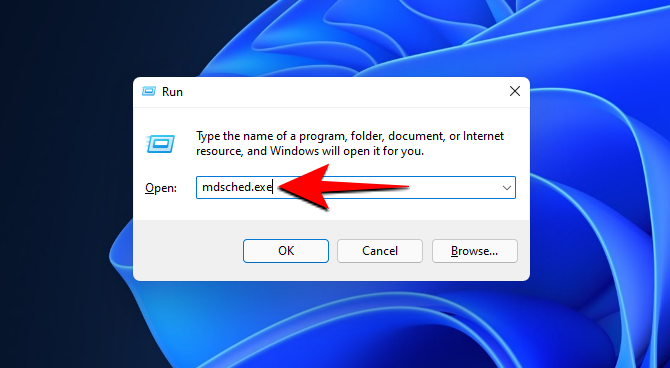
Internal components of your computer, such as RAM sticks, can potentially fail or come undone, resulting in a BSOD. You should perform memory diagnostics to see whether that’s the problem. To do so, enter the RUN box by pressing Win+R, then typing mdsched.exe and pressing Enter.

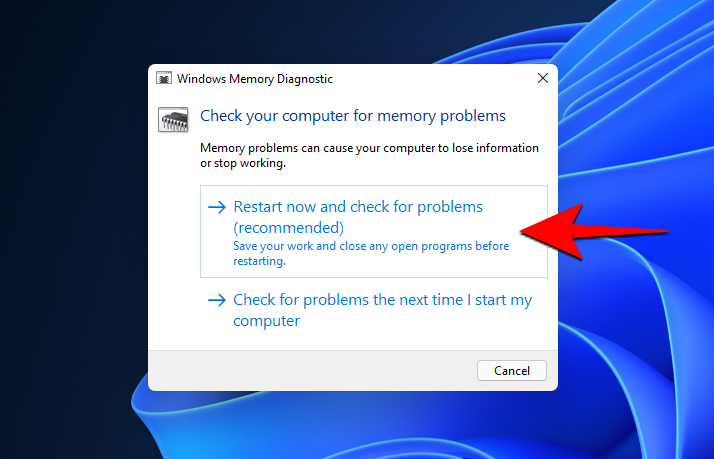
You will be prompted to restart your computer. Click on Restart now and check for problems (recommended).

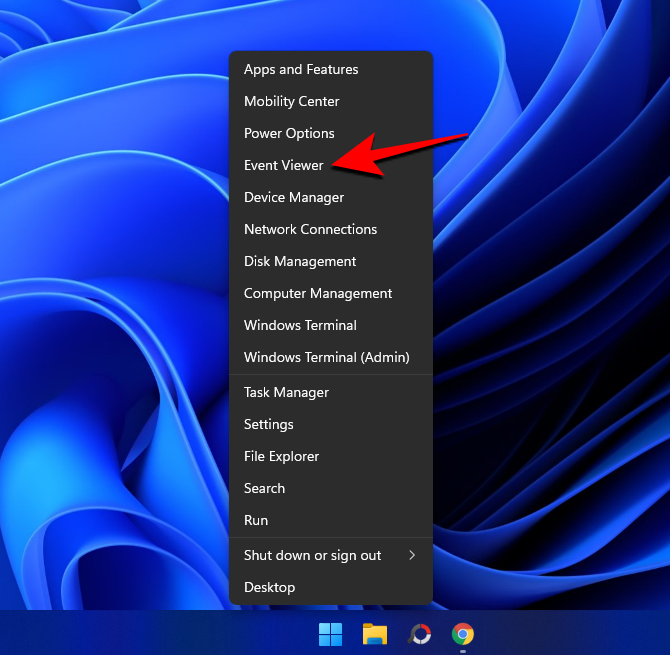
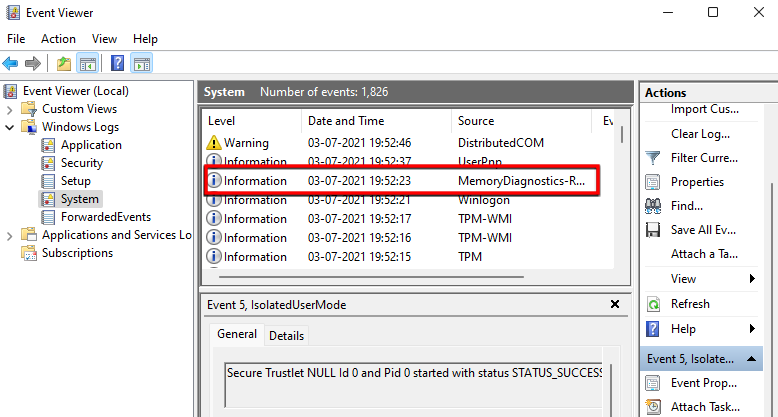
Your computer will restart when the test is finished, and you should be able to check the results once it has started up. If you don’t notice the results of the memory tests right immediately, you may have to look for them yourself. To do so, right-click the Start button and pick Event Viewer from the menu that appears.

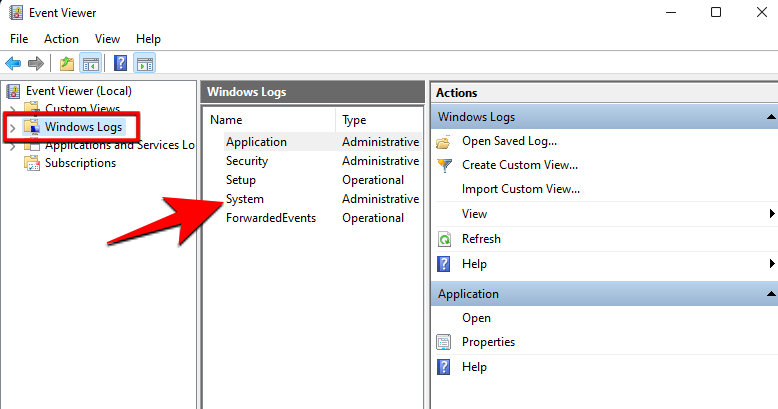
Then click on Windows Logs and double-click on System.

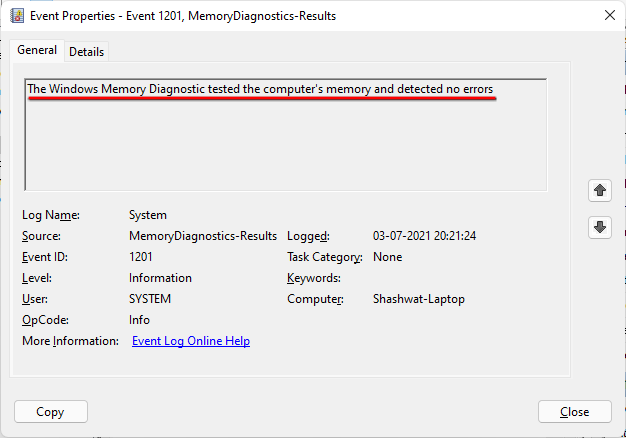
Now find the most recent MemoryDiagnostic file.

If the results show that the memory test detected no problems, then you can rule this out as the core of the problem.

If, on the other hand, the memory test returns changing RAM numbers, it’s an indication that you’re dealing with defective RAM. It’s possible that you’ll have to either reslot the RAM sticks or replace them entirely.

Method 2 : Note the BSOD error code

The BSOD displays your computer’s error message, along with a sad emoji, a link to Microsoft’s bluescreen troubleshooting website, a QR code, and a stop error code.

These error codes are meant to point you in the direction of the probable reasons of the BSOD. In principle, one may pull out their phone, scan the QR code (or at the very least write down the Stop code), and be brought to the Windows troubleshooting website.

There, you can go through the steps to find out the potential causes of the problem and how to go about fixing them. 

Method 3 : Uninstall recent updates

After a system upgrade, black screen problems might also occur. Windows upgrades aren’t without flaws. Despite the fact that they are meant to keep your system up to date with the newest software and device drivers, they can occasionally cause difficulties in otherwise reliable systems.

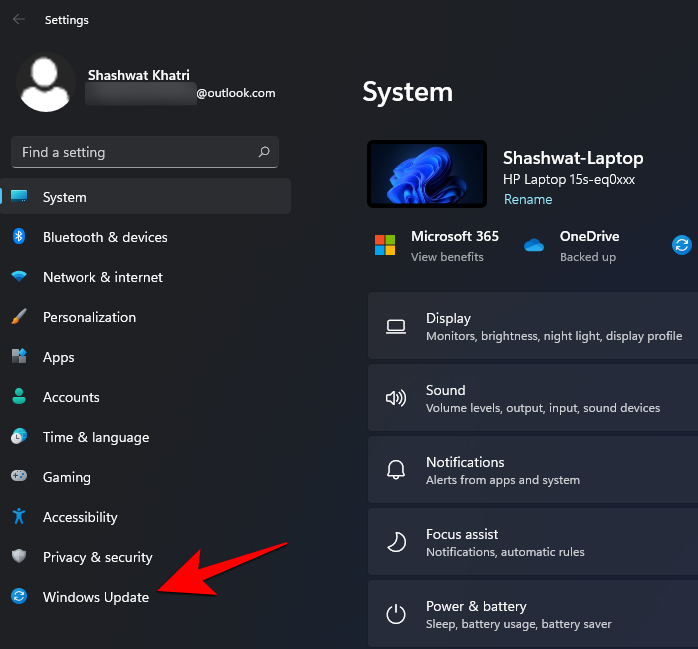
If you started getting BSOD crashes after installing an update, you may wish to undo it. To see your update history, go to Settings and press Win+I. From the left side, select Windows Update.

Then select Update history on the right.

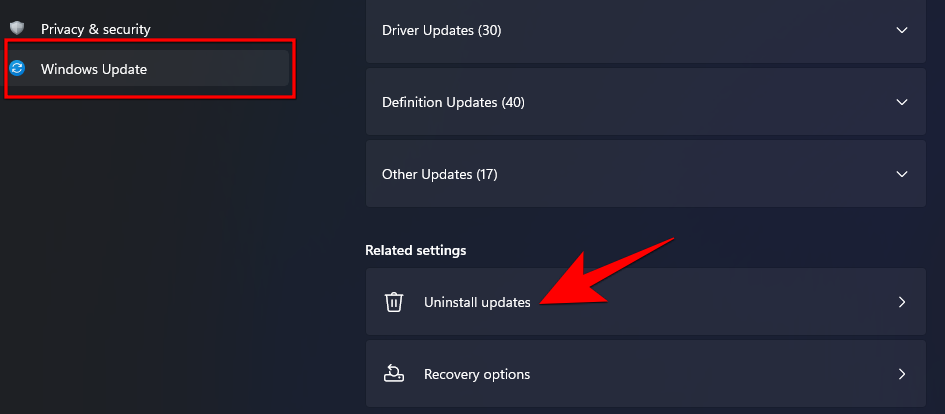
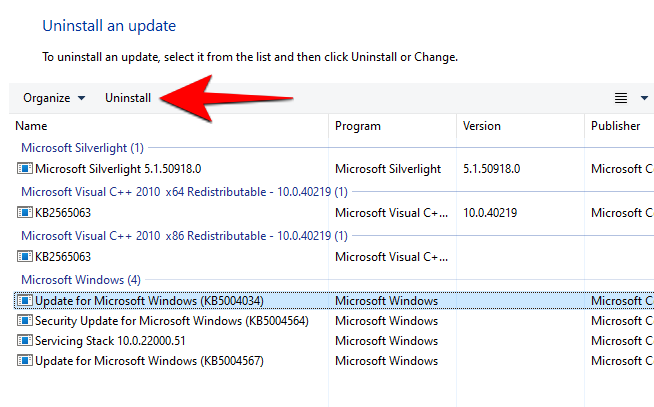
You can see all of the most recent updates that your system has received right here. Scroll down and click Uninstall updates under ‘Related Settings‘ to uninstall recent updates.

On the next screen, select the most recent updates and click on Uninstall.

Once they’re uninstalled, restart your system. 

Method 4 : Boot into safe mode

If the problem isn’t too serious, you might be able to identify and troubleshoot it using the methods listed above. However, if the black screen of death prevents you from running your system normally, you may need to boot your computer into safe mode.

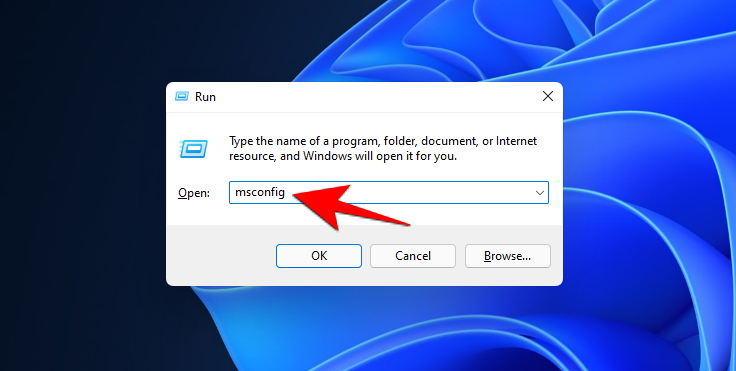
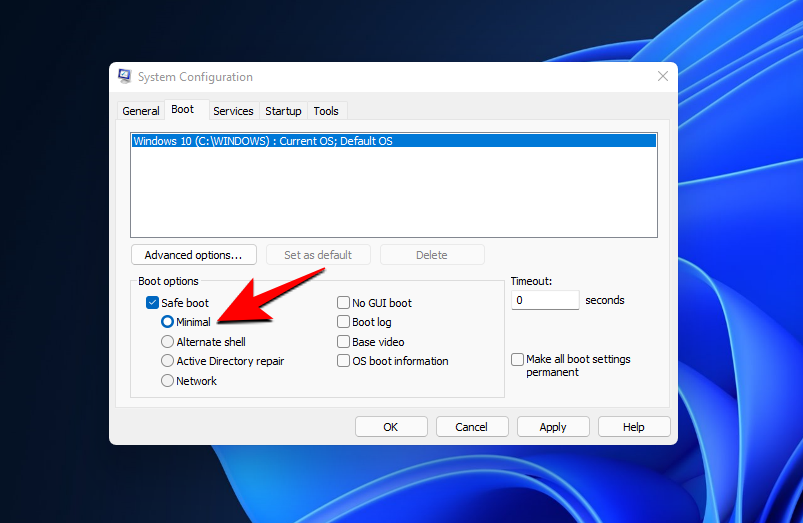
To do so, press Win+R to open the RUN box, type ‘msconfig’, and hit Enter.

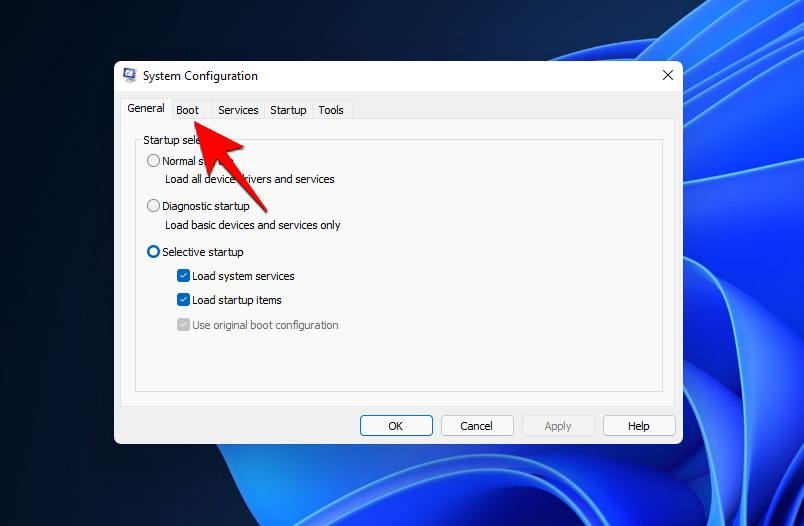
This will open up the System Configuration. Click on the ‘Boot’ tab. 

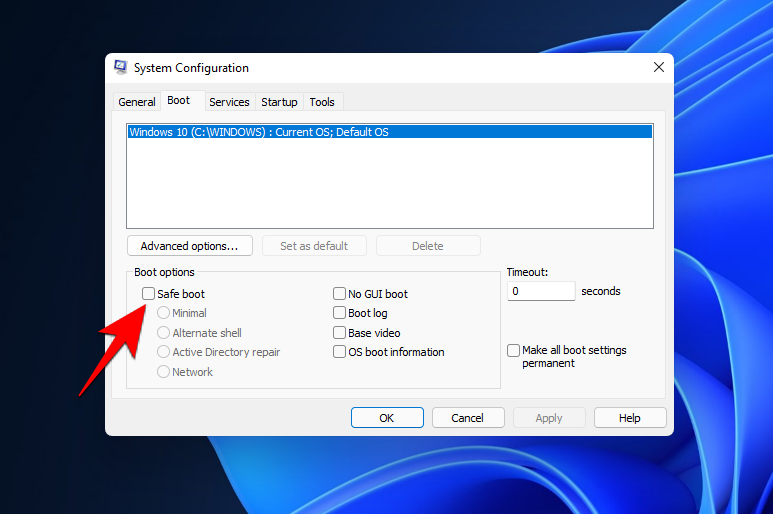
Then click on Safe boot under ‘Boot options’.

Select Minimal and hit OK.

Restart your computer to boot it up in Safe Mode. Your system will only load the bare minimum of Windows settings and programmes that require it to function properly, avoiding third-party software. If you can operate in safe mode without experiencing any black screen errors, it’s conceivable that a service or software is causing the issue.

To discover the culprits, perform malware scans and then use system restore to restore your computer to a prior state.

Method 5 : Run a System Restore

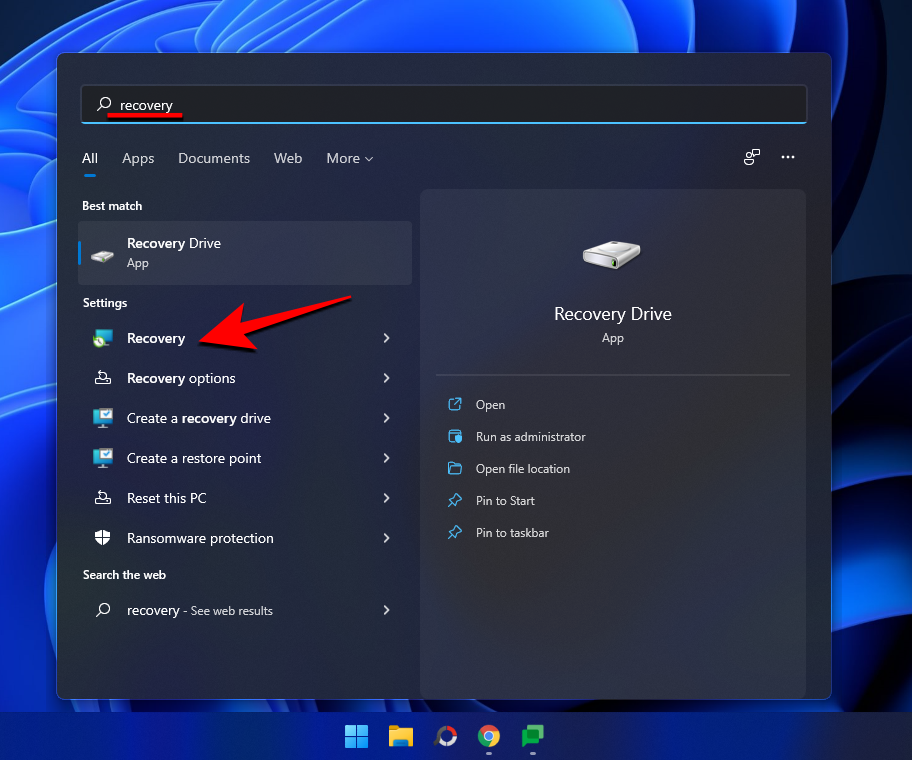
Your black screen of death issues should be resolved by restoring your system to a prior state. It’s also not that tough to accomplish. To do so, hit Start, type “recovery,” and then choose the option listed below.

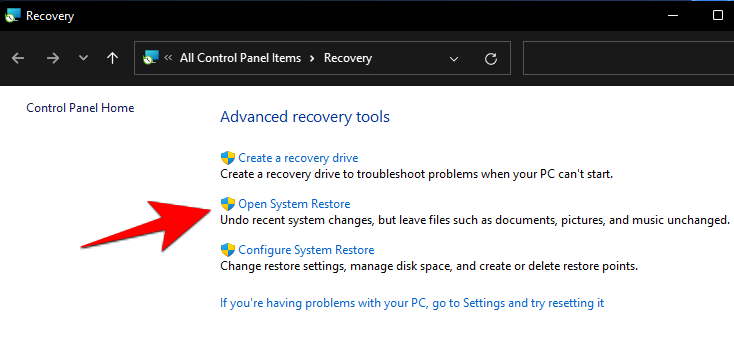
Then click on Open System Restore.

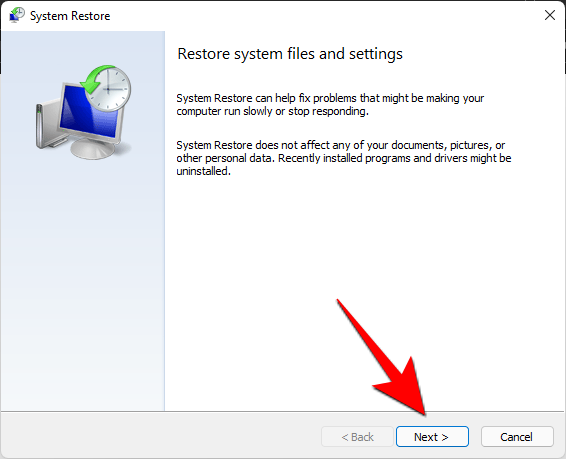
Click on Next.

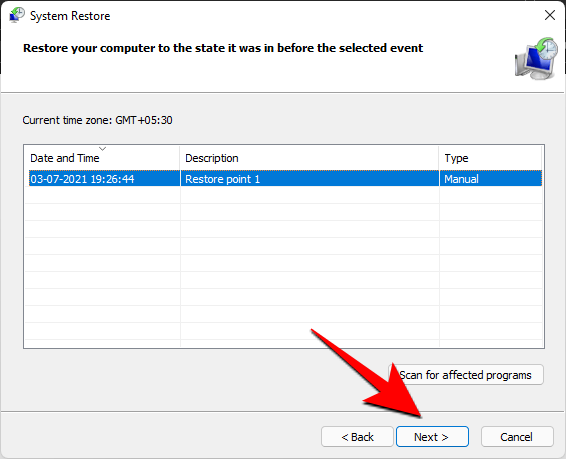
Then select a restore point and click Next.

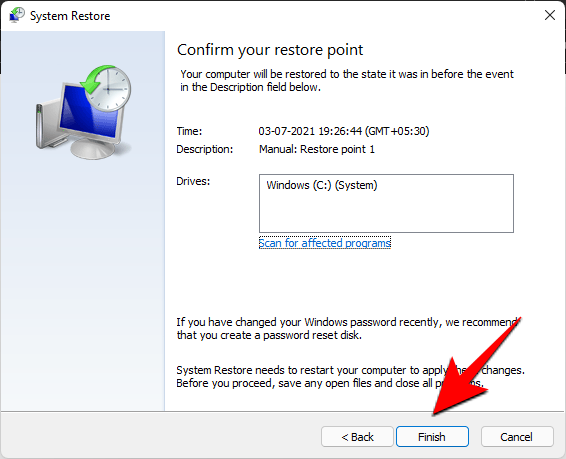
Now click on Finish to confirm your restore point.

Any apps and drivers you’ve installed since the restore point was created will be uninstalled when you run system restore. This should fix your black screen of death issues and get your machine back up and running.

The impact of Social Media Influencers on Sales

The way social media influencers directly or indirectly influence publicity and promotion somehow also influence the sales of a brand. Some of the ways in which social media influencers impact sales are:

1. Help in Consumer Research Phase:

Nowadays, market is mostly “consumer-oriented”. Consumers search and research, read reviews about a brand and hence they want someone trusted and experts who will voice their opinions, concerns and recommendations. Influencers play a vital role in spreading the word of mouth and recommendations thereby increasing sales.

2.Help in increasing Return on Investment:

Social Media Influencers help in achieving a relatively high Return on Investments than other factors. It is because of low capital investment. Other forms of advertisement or marketing tools require huge capital whereas dealings with Social media Influencer can be fixed just on a simple phone call.

3.Content Creation helps in increased Sales:

Influencers create meaningful and exciting content that sometimes evoke interest in the viewer to buy the product. Apart from this, Influencers also work on multiple social media accounts and this helps them to reach wide and diverse audience. This is also very helpful for increasing sales in a business.

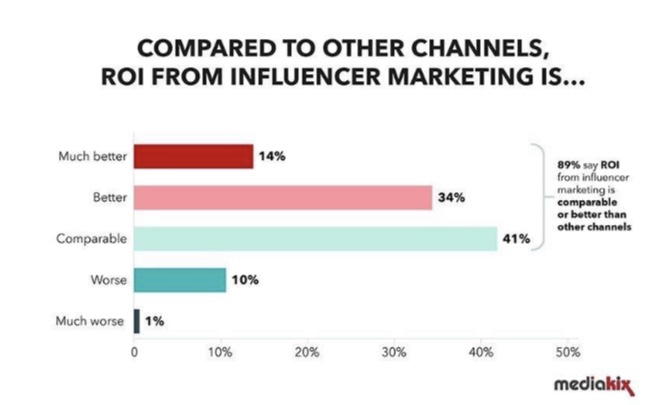
In a recent survey by Mediakix, a famous influencer marketing agency, about 89% of respondents say Return on Investment from Social Media Influencers is better than other channels.

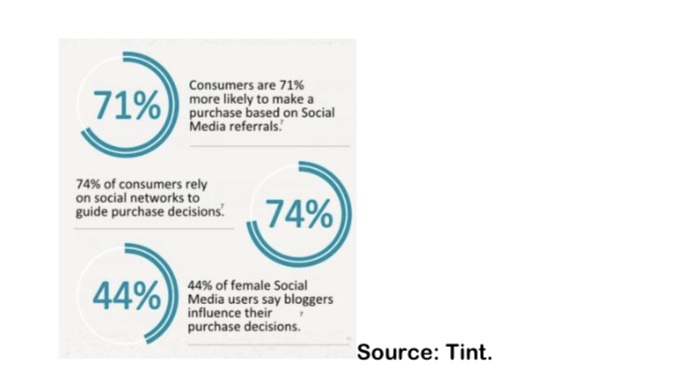
In another survey by Tint, 71% of respondents told that they rely on social media referrals for purchase decisions.

Some Examples:

1) Glossier, USA.

The USA based beauty brand has built its brand image by entirely relying on Social Media Influencers and other forms of digital marketing. They rely heavily on influencers as they send new products to influencers before the products are even launched so that influencers identify the flaws and suggest improvements (if they require) and thereafter the brand makes the changes accordingly.

2)Daniel Wellington, Sweden

This company was able to tap the “business opportunity” and it proved out to be quite fruitful for them. They broke into the Indian market by solely relying on Social Media Influencers. It is a watch brand company sends its new products to big social media influencers in India and enjoys extreme profits and sales. They were able to see India as a good market due to the country’s vast population.

Conclusion:

Social Media Influencer marketing or the Influencer marketing has become the fastest growing trend in communication in last few years. The key factors involved to be a good influencer are trust and credibility in the message. Latest studies and research have proved that social media influencers contribute to a business’s growth in a very positive manner in terms of promotion, publicity, sales and ROI. Many assume this marketing tool is temporary and will extinct in few years, however only time can say it.

Augmented reality

Augmented reality (AR) is an interactive experience of a real-world environment where the objects that reside in the real world are enhanced by computer-generated perceptual information.

sometimes across multiple sensory modalities, including visual, auditory, haptic, somatosensory and olfactory. AR can be defined as a system that incorporates three basic features: a combination of real and virtual worlds, real-time interaction, and accurate 3D registration of virtual and real objects. The overlaid sensory information can be constructive (i.e. additive to the natural environment), or destructive (i.e. masking of the natural environment). This experience is seamlessly interwoven with the physical world such that it is perceived as an immersive aspect of the real environment. In this way, augmented reality alters one’s ongoing perception of a real-world environment, whereas virtual reality completely replaces the user’s real-world environment with a simulated one. Augmented reality is related to two largely synonymous terms: mixed reality and computer-mediated reality.

The primary value of augmented reality is the manner in which components of the digital world blend into a person’s perception of the real world, not as a simple display of data, but through the integration of immersive sensations, which are perceived as natural parts of an environment. The earliest functional AR systems that provided immersive mixed reality experiences for users were invented in the early 1990s, starting with the Virtual Fixtures system developed at the U.S. Air Force’s Armstrong Laboratory in 1992. Commercial augmented reality experiences were first introduced in entertainment and gaming businesses. Subsequently, augmented reality applications have spanned commercial industries such as education, communications, medicine, and entertainment. In education, content may be accessed by scanning or viewing an image with a mobile device or by using markerless AR techniques.

Augmented reality is used to enhance natural environments or situations and offer perceptually enriched experiences. With the help of advanced AR technologies (e.g. adding computer vision, incorporating AR cameras into smartphone applications and object recognition) the information about the surrounding real world of the user becomes interactive and digitally manipulated. Information about the environment and its objects is overlaid on the real world. This information can be virtual. Augmented Reality is any experience which is artificial and which adds to the already existing reality or real, e.g. seeing other real sensed or measured information such as electromagnetic radio waves overlaid in exact alignment with where they actually are in space. Augmented reality also has a lot of potential in the gathering and sharing of tacit knowledge. Augmentation techniques are typically performed in real time and in semantic contexts with environmental elements. Immersive perceptual information is sometimes combined with supplemental information like scores over a live video feed of a sporting event. This combines the benefits of both augmented reality technology and heads up display technology (HUD).

Comparison with virtual reality

In virtual reality (VR), the users’ perception of reality is completely based on virtual information. In augmented reality (AR) the user is provided with additional computer generated information within the data collected from real life that enhances their perception of reality. For example, in architecture, VR can be used to create a walk-through simulation of the inside of a new building; and AR can be used to show a building’s structures and systems super-imposed on a real-life view. Another example is through the use of utility applications. Some AR applications, such as Augment, enable users to apply digital objects into real environments, allowing businesses to use augmented reality devices as a way to preview their products in the real world. Similarly, it can also be used to demo what products may look like in an environment for customers, as demonstrated by companies such as Mountain Equipment Co-op or Lowe’s who use augmented reality to allow customers to preview what their products might look like at home through the use of 3D models.

Augmented reality (AR) differs from virtual reality (VR) in the sense that in AR part of the surrounding environment is actually ‘real’ and just adding layers of virtual objects to the real environment. On the other hand, in VR the surrounding environment is completely virtual. A demonstration of how AR layers objects onto the real world can be seen with augmented reality games. WallaMe is an augmented reality game application that allows users to hide messages in real environments, utilizing geolocation technology in order to enable users to hide messages wherever they may wish in the world. Such applications have many uses in the world, including in activism and artistic expression.

Blue Origin Trip: People, Earth, Space and Environment

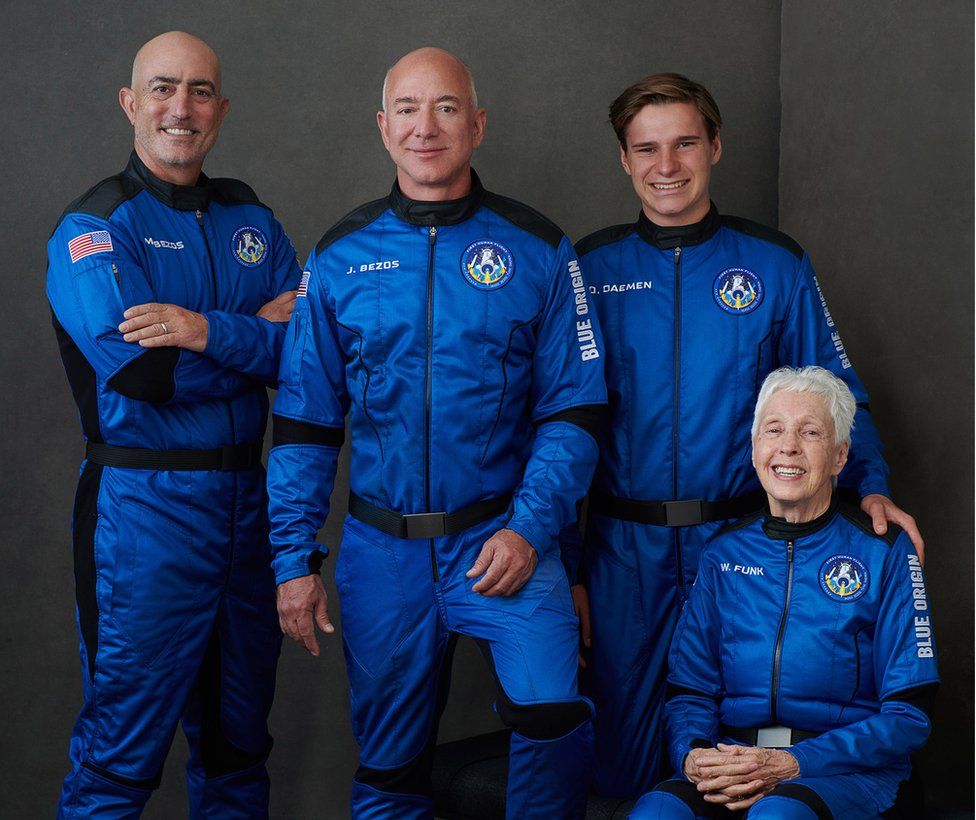
Jeff Bezos, the founder of Amazon and Blue Origin, the richest man on the planet and a lot many adjectives that are used for him – finally and quite successfully monetized space travel in the eyes of the Earthlings.

Jeff Bezos launches to space aboard New Shepard rocket ship - BBC News
Commercial Astronaut Bezos in his maiden space voyage.

To begin with, he thanked and congratulated all earthlings for this success. He added that it was we, the people and all the employees of Amazon who had paid for it. Well, he isn’t exactly lying. And we could be thankful to him too, for he has successfully monetized space travel – something we all wanted to hear as kids – well maybe not the monetization part. But it will be this monetization that will fuel more companies to enter into the market. Elon Musk has already worked a lot on reusable space crafts, not to forget that many space agencies – the most prominent being ISRO in India are working to create cheaper means of launching cargo and satellites into space and there are many private space-based start-ups opening up too. Maybe in a decade, space travel will be accessible to at least the upper middle class across the planet.

But should we really thank Jeff Bezos? Opening space for travel opens space for greater amount of debris and maybe a push for institutions all around the world to find out ways to tackle an already existing problem. To add to that, Space travel and Musks’s goal of colonising Mars are but only more incentives to reduce budget on the environment in the long run. Sounds like a dystopian Science Fiction but history points out to the facts that when man was not bound by citizenship laws, forests and agrarian lands have gone barren only because they had options. It is this history that has pushed us towards all the environmental litigations we know of. Will we be as enthusiastic about them if Mars colonies were a reality? As Musk has himself repeatedly stressed that Earth might no longer be livable. Well, scientifically, it is livable upto another 4.5 billion years. But we, the people and the way in which we living beings influence the climate might not allow the planet to see more than 500 years from now. And we are not to be shamed about it. Our education, our governments and our media is more accountable than we are. These are the institutions that tell us what and how the world is. And unfortunately, we believe that is the way the world is.

So, should we or should we not support a scientific and technological advancement?

The answers don’t really lie with anyone. While Bezos travelled to space and Musk revolutionised reusability of the crafts, we still saw public demonstrations in South America against the change in fishing litigations, India against the allegedly anti-environment and corporate-friendly revisions in Environment Impact Assessment Law draft and in Brazil against the government’s decision to not do a lot about the Amazon fires. Humanity still loves this Earth and while in a distant future, capitalism can shame people for doing so, it is increasingly unsuccessful right now. And let us not only keep it that way, but also create ways to add to that love.

WhatsApp and its advantages

Photo by Anton on Pexels.com

WhatsApp is one of the best and popular messaging app in the world right now. Through WhatsApp, an indivisual can send text messages, photos ,audio messages, documents, contacts and many other important and useful things.It is known for its simplicity. Every person who have a smartphone with him ,even though if he does not like other social media platforms, but WhatsApp will be definitely installed in his smartphone.

WhatsApp was founded by Brian Acton and Jan Koum .WhatsApp uses a customized version of the open standard Extensible messaging and Presence protocol. after installing WhatsApp ,it creates an account using ones registered mobile number as the username. After that, WhatsApp is ready to use.

Now I want to discuss some key points that why WhatsApp has become so important and popular in todays life.

Advantages of WhatsApp

  1. First of all , and the most basic advantage of WhatsApp is it is free of cost unlike normal text messages from phone in which we have to pay for each and every message. WhatsApp allows its users to send messages free of cost.

2. In WhatsApp , we can not only send text messages to each other, but also many other things. WhatsApp allows users to send voice messages if we are not comfortable with texting messages everytime.it supports voice calling as well as video calling. we can send any document to others( in pdf or any other form ) upto a limit of 100 mb. We can send any one’s contact to each other who is asking for it in a well mannered form instead of noting the mobile phone in a piece of paper than giving it. We can also share our live locations .

3. It also has a feature of deleting the message before receiver has seen it . Messages which are sent by mistake by us or due to or any other reason .This feature is not available in other apps. It also shows us that the messages we have sent to our friend has arrived there or not.(single tick for sent, double tick means message has delivered and blue tick means that person has seen the message).These types of features are not present in other platforms.

4. WhatsApp messages are end to end encrypted, means the messages we are sending to each other are highly secure. we can also use our WhatsApp in laptop also through WhatsApp web.

5. Connecting people:- WhatsApp connects us with friend and relatives to whom we are not in touch since a long time .We send each other good morning, good night messages, some funny memes, jokes and other things. we can also create family , friends groups etc.

6. Promotion:- WhatsApp is one of the most successful source of brand promotion of various e-commerce websites and others.

7. WhatsApp is very useful in professional life. WhatsApp is used almost in all fields. like nowadays online classes are happening in all colleges so every school has created a unique class group off students to send messages and study material. In companies, they also contact with their clients regarding their meetings and other things through WhatsApp. If we have to send an important document in anywhere WhatsApp is the best and easiest way to send it.

These are some of the advantages of Whatsapp there are many other also, becauise of these advantages of WhatsApp , it has become a very important part of our daily life.

International MUN recruiting interns?

Gear up and apply now

Yes! You heard it right, international Model United Nations is offering an Official Campus Ambassador Internship at IMUN.

What is IMUN?

International MUN is recognized by the United Nations & has hosted MUN conferences in 5 different countries in the last 3 years i.e in Thailand, Vietnam, Egypt, China & Malaysia.

About IMUN internship?

5 weeks work from home internship with official internship certificate, letter of recommendation and many more. 5 weeks internship program that enables you to learn organisation management, International diplomacy and everything related to the world of United Nations. In this internship period every intern have to promote IMUN and IMUN Conferences through your social media accounts, through your friends.

This internship is a way to understand global issues, interacting with other culture and people.

Great performers receive best of IMUN certificate recognized by United Nations, letter of recommendation, appreciation, incentives, an opportunity to join IMUN team in different countries all sponsored and etc

What will you learn from this internship?

The main question comes in our mind is what new things we will learn from this internship.

Being an intern at IMUN you will learn leadership skills, social media marketing, digital marketing, communication skills, public speaking skills, networking and many more. Interns will also get an certificate after completing the internship, the international certificate from United Nations based on their performance. It will also prepare you for your career and help you to get a good job.

How can I apply?

You can apply through this link given below https://www.instagram.com/p/CGE5diCDSdT/?utm_medium=share_sheet

For more details you can check their official Instagram account @International_MUN

https://instagram.com/imunintern?utm_medium=copy_link

So hurry up, grab this golden opportunity and apply today…

International Model United Nations Conferences

Way towards success

IMUN conferences a way towards success. A platform where your voice matters. Before IMUN conference we have to know about IMUN first.

What is International MUN?

International MUN is recognized by the United Nations & has hosted MUN conferences in 5 different countries in the last 3 years i.e in Thailand, Vietnam, Egypt, China & Malaysia. 

About IMUN conferences.

IMUN conferences is a platform where students (or anyone) are tasked to solve global issues like women empowerment, gender equality through research drafting, lobbying and debate to pass a suitable ‘resolution’.
This conferences are held on sat-sun every week. After completing the whole registration process you will get a mail, in that mail they will give you the meeting link and the topics for the conference. You have to select one topic and have to research about that respective topic.
e.g. I completed my whole registration process, got a mail and selected a topic. Suppose my topic is women empowerment, so I have to research about that topic like what are the issues and how can we solve those issues?. So on a day of online conference I will represent india (if I get india) and the women empowerment in India. I have to discuss the problems and respective solutions about the topic with other members. If you don’t wants to talk it’s okay, you just have to interact with the members.

What is an International Model United Nations (IMUN) conference and Why should someone participate in it ?

International MUN online conference is a 2-day model UN conference where participants from around the world present solutions to global issues. They can choose topics of their choices in every conference. In a 2-day conference, they research about the topics, debate, network with other participants from different countries etc.

Participants also get study materials, free MUN training sessions, experts QnA and position paper submissions. At the end of the conference, all participants receive participation certificates recognised by the Australian embassy and the United Nations. The best participants receive two certificates, one is participation certificate and another is award certificate.

What are the benefits of attending IMUN conferences?

Participating in IMUN conferences helps students to develop leadership skills, communication skills, public speaking, writing, research and many more. You will get a international certificate of participation by United Nation which will help you to get a good job. Interesting with foreign students, discussing and solving global issues with them what would be more interesting than this!!

How can I register?
You can register through the link attached below

https://www.internationalmun.org/RegistrationForm.php?mark=YN4558

So hurry up and register today..

How Technology Has Changed the Lives of Students

Technology is something every kid of today’s generation will be well familiar with. It has been growing at an immense rate and has been impacting every section of the world from quite a few years now. Technology has garnered high attention especially in the recent pandemic times as it has served as an indispensable tool for students amidst their ‘online classes’. However, we cannot restrict ourselves to only one aspect of technology, for technology has been bridging the learning gap from a long time by enabling students the access to a virtual world of resources at almost no cost.

A foremost benefit of technology has been the vast availability of resources for students and teachers. These resources can be in terms of education matters or to discover new ideas. Teachers now are also able to communicate with their students in a convenient way as well as have the freedom to employ new innovative teaching methods in their studies. Free access to e-books, e-magazines and other reading materials has made it a lot easier for students to acquire materials without having to search through libraries or spend a lot of money in bookstores. This divergent range in materials has also enabled them to research their subject of interest from different points of views and gain as much as knowledge available from verified sources.

The second pro point of technology is its feature to obtain a degree through online education. It does not matter whether you are young, old or just passionate about learning a new skill. It is now possible for any individual to gain a degree without the need to attend a university physically. Technology extension has provided such efficient modes that one can now enrol in prestigious universities located abroad without requiring the need for a passport or visa. Technology has also made it possible for people to sign up for a course offered by any valid institution and complete it within the time limit they wish. Giving them advantages like flexible study routines along with the comfort of their rooms.The third way through which technology has changed the lives of students is by giving them the opportunity to learn at their own pace and their own understanding level. Science has proved before that every individual learns and acquires knowledge differently. Some people are visual learners, some auditory, some verbal, some kinaesthetic etc etc. Here, technology gives a chance and means for every type of learner to learn at the best of their ability. For example, the availability of videos, audio books or audio contents, exercises etc accessible through the forum of technology gives every kind of learner a chance to shine compared to the usually dull and closed environment of physical classrooms. In addition to all this the advancement in technology has now enabled digital simulations and models thereby, enhancing the perceiving powers of students.

The fourth advantage of technology is the easy availability of any news or notices related to their subject or university. The official website of a university serves as a major way for students to procure information with ease, which can be further related to their classmates, friends or teachers through any social media apps of their choice. Not only does it provide an instant way to obtain the latest news but also helps to keep the students up-to-date along with their ongoing course subjects.Lastly, in the present times of pandemic, technology has proved to be a big boon in accessing online learning methodology. It has made assessing students efficient as well as helped vastly in maintaining records of student activities through a variety of online applications. Furthermore, teachers can upload their teaching materials and class recording on apps like Google Classroom and make it possible for students to revisit the teachings for revision sake or in case they end up missing any of their online lectures.

To conclude, technology has come a long way and has successfully impacted the lives of students. It has made students’ lives easier and more efficient by providing them various benefits like e-printed books, ease of access to education, faster communication with teachers and friends and overall comfort of homely environment.

Environmental laws in india

Either Stable burning in various states accrued the air pollution in Delhi and created a gas chamber around NCR ; SC came upon a committee to observe scenario , Or 4 industries inflicting stream pollution were shut down by Maharashtra pollution board . Everybody has responsive to environmental problems as higher than . The key solution for resilience to environmental issues are provided by government in various legislations , enactments and provisions on environment laws .


In republic of India environmental law is concern with the policy and law for protection of the environment . It aims for achieving carbon free economy through taking measures for reducing climate change. All the acts under this laws are safeguards in ensuring effective management of the environment and its multiple ecosystems . It provides for preventing environmental damage .


Natural resources in the earth were unscathed from millions of years. It were remain pure until the industrialized started . After the industrialization this resources have been exploited in Spain of 100 years only . From 19th century, the environment (air , water and land ) is directly exploited by rapidly growing population at alarming-rates.


environment includes water, air and land and the inter-relationship which exists among and between water, air and land, and human beings, other living creatures, plants, microorganisms and property , as mentioned in section 2 of environmental protection Act of 1986 . Environment is a wide sphere , it consists of social, economically , political , religious dimensions .


Addressed area of environmental laws in India :

1. Quality of water : For the prevention and control of water pollution and to maintain or restore wholesomeness of water in the country the water act of 1974 was enacted. It further provides for the establishment of Boards ( CPCB and SPCB ) for the prevention and control of water pollution with a view to carry out the aforesaid purposes. This act prohibits the discharge of pollutants into water bodies beyond a given standard, it also lays down fine and penalties for non-compliance.

2. Reduction of air pollution and maintaining air quality : The Air (Prevention and Control of Pollution) Act, 1981 (the “Air Act”) is an act to provide for the prevention , protection and abatement of air pollution .It provides for establishment of Boards at the Central and State levels with a view to carrying out the aforesaid purposes.

3. Hazardous Waste management : legislations that directly or indirectly deal with hazardous waste management are the Factories Act, 1948, the Public Liability Insurance Act, 1991, the National Environment Tribunal Act, 1995 and rules and notifications under the Environmental Act.

4. Containment cleanup, damage mitigation : preventing future damage to the environment is undeniably the primary objective of environmental law, mitigating and reducing existing damage is also important. This area most often deals with issues like toxic leaks and oil spills. The central objective of this branch of environmental law is deciding liability, planning an appropriate response, and also determining the best process of investigation and monitoring in the overall clean up process. This area also concerns itself with the study and assessment of risk in the long term, to better mitigate any future accidents and risks.

5. Sustainability of resources : United Nations has put great emphasis on ensuring the sustainability of resources. For this vision , it has advocated the formation of various legal principles and legislation. In this regards concept of environmental impact assessment introduced .

Noble legislations and enactments on environment law in India :


Laws on Forest and wild life protection:
• The Indian Forest Act, 1927 ; The Wildlife Protection Act, 1972; The Forest (Conservation) Act, 1980 ; The Environment (Protection) Act, 1986; The National Green Tribunal Act, 2010.


Laws on Water pollution :
• The Water (Prevention and Control of Pollution) Act, 1974.


Laws on air pollution :
• The Air (Prevention and Control of Pollution) Act, 1981 (the “Air Act”)


Laws on hazardous waste management :
• Biomedical Waste (Management and Handling) Rules, 1998 ; Municipal Solid Wastes (Management and Handling) Rules, 2000 ; Batteries (Management & Handling) Rules, 2001 ; Hazardous Wastes (Management, Handling and Transboundary) Rules, 2008 ; E – Waste (Management and Handling) Rules, 2011 .
Laws on wetlands


Ramsar convention (1971) : This convention was initiated to push for greater conservation and sustainable use of wetlands ; Wetlands (Conservation and Management) Rules, 2017.
Constitutional provisions on environment laws


Part IVA (Art 51A-Fundamental Duties) of the constitution casts a duty on every citizen of India to protect and improve the natural environment including forests, lakes, rivers and wildlife, and to have compassion for living creatures.


• the Constitution of India under Part IV (Art 48A-Directive Principles of State Policies) stipulates that the State shall endeavour to protect and improve the environment and to safeguard the forests and wildlife of the country.

environment makes human life possible, and our cultural environment helps define who we are. It is therefore essential that our population and economic growth are environmentally sustainable.