Yoga And Some Science-supported Benefits.


We all are familiar with Yoga and many of us even practice it on a day-to-day basis. But, do we know what does the word “Yoga” means? And what benefits of Yoga are supported by science? Well, some of us may know and some of us don’t. So, let’s dive into the questions mentioned above, and let’s learn.

The word “Yoga” is derived from the Sanskrit root “Yuj,” which means ‘to join’ or ‘to yoke or ‘to unite’. It assimilates mediation and poses composed to stimulate relaxation and reduce stress. In simple words, Yoga is an ancient practice that brings our body and mind together.

Practicing Yoga can provide a lot of benefits for both our mental and physical health. Although not all the benefits are supported by science. Mentioned below are some of the many benefits of Yoga that are supported by science:-

I) Improves Flexibility and Balance

In several studies, it has been found that practicing yoga can improve flexibility and balance. 

According to a study in 2017, a group of 26 male athletes who undertook Yoga for 10 weeks, had shown greater improvement in their flexibility levels compared to the control group. 

II) Could Promote Sleep Quality

Poor sleep quality can cause a lot of trouble for a person. Although it has been found in studies that yoga could improve sleep quality.

In a study, in 2005, 69 old patients were assigned to either practice Yoga, herbal preparation, or be a part of a control group. It has been found that the Yoga group fell asleep faster, slept longer, and felt more rested than the other groups. 

III) Can Decrease Stress

As mentioned in the above line Yoga is known for stimulating relaxation and stress. 

Many studies have also shown that it decreases the secretion of the primary stress hormone (cortisol). 

In an observation, 24 women labeled themselves emotionally distress, when completed a three-month yoga program, showed significantly lower levels of cortisol. They also had a lower level of stress, anxiety, fatigue, and depression. 

IV) Could Improve Heart Health

The health of your heart is a very essential component of your overall health. And studies have shown that yoga may help in improving heart health and in reducing factors leading to heart disease. 

A study has found that participants over 40 years of age who practiced yoga for five years had lower blood pressure and pulse rate than those who didn’t. 

V) Improves Life Quality

For many individuals, Yoga has now become an accompaniment to improve the quality of life. 

In a study, 135 elders were assigned to either practice Yoga for 6 months, walking, or join a control group. The Yoga group showed improved quality of life as well as mood, and fatigue, compared to other groups.

Though these were only a few benefits of Yoga that are supported by science, you can always go and google more. Science has also accepted the beneficiary of practicing Yoga, then you should too. Just by giving 1hr from your day to Yoga, you can improve both mentally and physically. In the end, it always depends on you.  

Yoga: A way to transform life

We all are familiar with the term yoga. it is possible that we could’ve have done yoga or not, must must have listened about its benefit and advantages to our body. Yoga is a path towards total harmony of body ,mind and spirit. the term yoga comes from a Sanskrit word yuj which means to join our unite.it is not only a simple exercise it has spiritual discipline in it. yoga is an art of living.

The yoga was originated in Northern India over 5000 years ago. The word yoga was mentioned in the oldest sacred texts, Rig Veda. later yoga was gradually developed by Brahmans and Rishis. after many years In modern period, in late 1800s and 1900s yoga masters began travelling to other countries. to attract attention and followers. And today yoga has a huge amount of followers.(source:https://www.yogabasics.com/learn/history-of-yoga/#:~:text=The%20beginnings%20of%20Yoga%20were,by%20Brahmans%2C%20the%20Vedic%20priests)

The beauty of yoga is that you do not have to be a specialist yogi or something else to take benefits from yoga. whether you are young or old, overweight or underweight ,fit or not, yoga helps everyone in their respective conditions. it has a unique power to calm the mind and strengthen the body. yoga is not a complicated or a complex thing. its just a basic practice for a healthy lifestyle. Yoga not only take care of our physical health but also strengthen our mental health which we cannot strengthen with the help of gym or any other way. it can be of any type of stress family related, job related, future or any other stress. yoga helps us to calm our mind and give strength to overcome that stress.

We should start doing yoga as soon as possible and we will see a difference in ourselves. we will feel better than the past. We will feel a different energy in us. A duration of 30 min of yoga every morning is more than enough. Some important yoga asanas that can change our life are as follows:-

  1. Virasana :- It strengthens thighs, knees and ankles. , improves digestion and many other things.

2.Bhujangasana:- it resembles the rising head of cobra.it stretches chest, lungs and shoulders. it also helps in reliving stress and tiredness.

3.Tadasana:- Also called mountain pose, it helps in dealing with spinal pain, improves our flexibility and maintains a good balance in body.

4.Shavasana:- Also called mrtasana, it is done at the end of yoga. it helps in calming the body, strengthens nervous system and immune system.

5.Vrikshasana:-It is also called tree pose.it is popular in modern yoga also as an exercise.it improves stability of legs and ligaments of the feet.


There are many other asanas in yoga which can help us to maintain a healthy life style. Though yoga is very popular in other countries also, however many people in India always raise questions against yoga and its existence. They do not realize the importance of yoga in each and everyone’s life.

If we are not comfortable with these different – different asanas, we can do a very simple breathing practice which is called Anulom vilom in yoga. it is a very popular and effective breathing exercise which helps us in dealing with several respiratory and other problem it calms our mind and we feel much energetic after doing it.Thus, Yoga is a very powerful practice that we should do daily and through which we can transform our life to a better one.

YOGA – MAGIC FOR BODY

Yoga is the art work of awareness on the canvas of bodymind and soul” – Amit Ray. 

Over 5,000 years ago, the Indus-Sarasvati civilization in Northern India formed the foundations of Yoga.  Yoga is generally misconstrued to mean merely “union,” or the merging of one’s own consciousness with that of the cosmos, but it also alludes to a “technique or approach.”

“Yogas chitta vritti nirodha”—Patanjali.

“Chitta vritti” is a Sanskrit term that means “mind chatter.” “Vritti” translates to “fluctuating or mercurial whims that clog the mind.”

YOGA FOR BACK PAIN

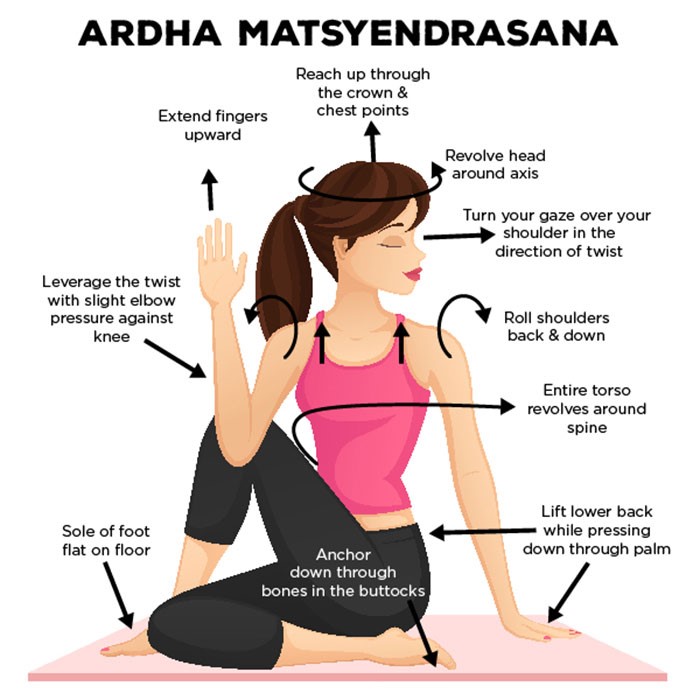
ARDHA MATSYENDRASANA

  • stretches the spine, shoulders, neck, and hips.
  • It helps to ease back pain.
  • Helps digestion by igniting the digestive fire in the stomach.
  • Reduces the likelihood of contracting a respiratory disease.
  • Boosts the functioning of the liver and kidneys.
  • Energizes and enhances spine flexibility, which is beneficial for people with slip disc.

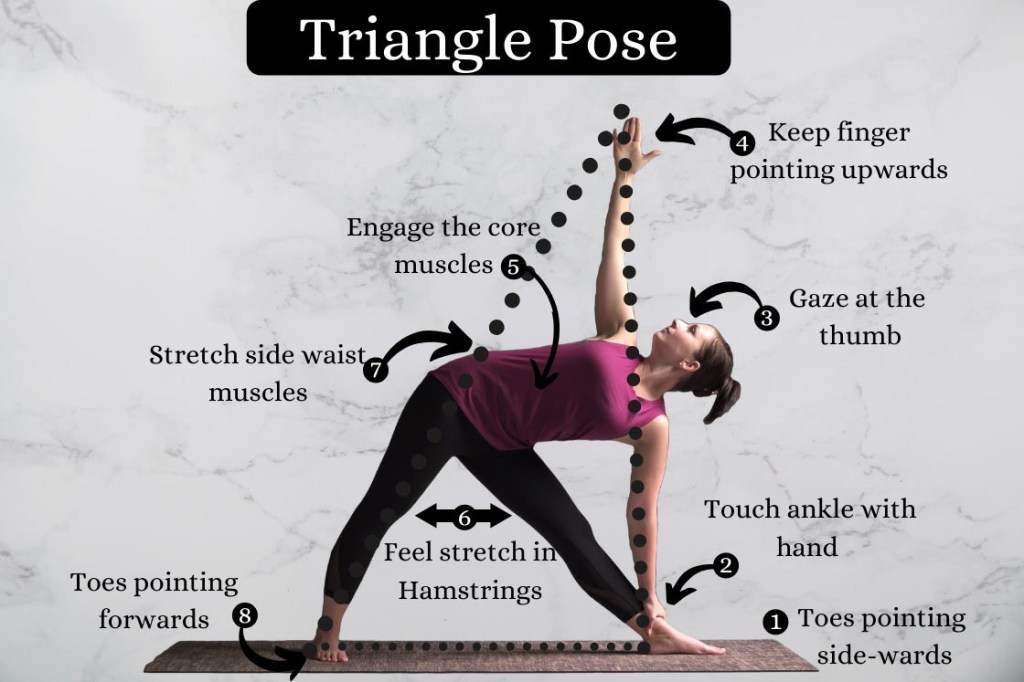
TRIKONASANA

  • Stretches & exercises the hips, thighs, shoulders, chest, arms, and spine muscles.
  • Relieves back pain.
  • It aids digestion.
  • Assists in the lowering of stress and anxiety.
  • Stimulates the spinal nerves by stretching the spine.
  • reduces the rigidity of the neck, shoulder, and knees.
  • Timbre the reproductive organs and fortify the pelvic area.
  • Assists in the relief of menopause symptoms.

YOGA FOR MENSTRUATION

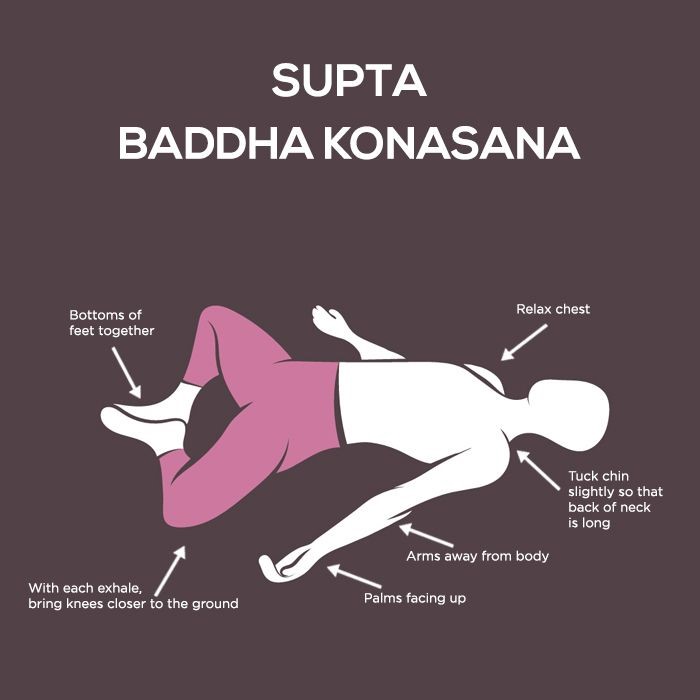
SUPTA BADDHA KONASANA

  • Relieves headaches by lowering stress levels in your nerve system.
  • Stimulates the ovaries, bladder, kidneys, and prostate gland.
  • It boosts the reproductive and digestive systems’ efficacy.
  • Improves overall circulation and accelerates the heart.
  • Helps reduce symptoms of menstruation and menopause.

PADMASANA

  • Promotes physical and mental balance.
  • Relaxes the mind and body
  • The pelvis, spine, abdomen, and bladder are all stimulated.
  • Helps to stretch the ankles and knees.
  • Relieves menstruation pain 
  • allows one a lot of arm and leg flexibility.

YOGA FOR BLOOD PRESSURE

SAVASANA

  • Decreases weariness and stress.
  • It relaxes the nervous system.
  • Relaxes the body 
  • Reduces headache 
  • Enables you to relax both your mind and body.
  • Relieves stress and mild depression by calming the brain.
  • Helps to decrease blood pressure by relaxing the body.

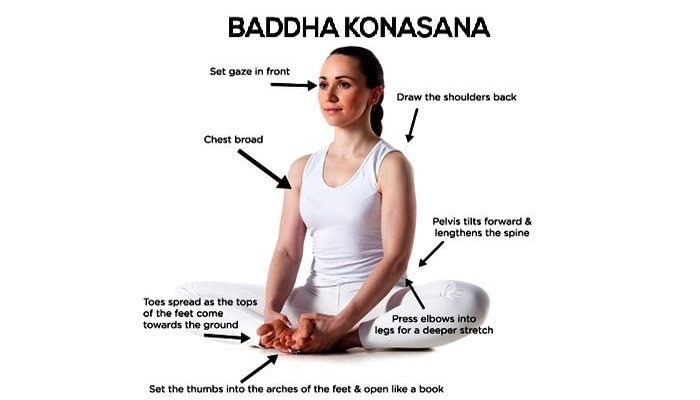
BADDHA KONASANA

  • This asana is thought to help with childbirth.
  • The organs of the abdomen are activated.
  • Improves flexibility in the inner thigh, groin, and knees.
  • assists in the relief of anxiety and stress
  • Hip joint stiffness is reduced.
  • Menstrual Cramps are relieved.

YOGA

WHAT IS YOGA ?

Yoga is an ancient practice that involves posture, concentration, and deep breathing.

Practicing regular yoga can encourage endurance of a reliable source, strength, calmness, flexibility, and well-being.

Yoga is now a world-class exercise. According to a 2017 national survey, 1 in 7 people in the United States has used yoga in the last 12 months.

HISTORY


The first word for “yoga” comes from Rig Veda, a collection of ancient texts. Yoga comes from the Sanskrit word “yuj,” meaning “union” or “joining.”

Yoga can be traced back to northern India more than 5,000 years ago.

Indian monks spread their knowledge of yoga in the West in the 1890s. The teachings of modern yoga have become quite popular in Western lands in the 1970’s.

PHILOSPHY

The overall philosophy of yoga is that of connecting the mind, body, and spirit.

There are six branches of yoga. Each branch represents a different focus and set of symbols.

TYPES OF YOGA

1)Hatha yoga: This is a branch of body and mind that aims to make the body and mind the foremost.
2)Raja yoga: This branch incorporates meditation and adherence to a series of disciplinary measures known as the eight limbs of yoga.
3)Karma yoga: This is a practice that aims to create a future free of indifference and selfishness.
4)Bhakti yoga: This aims to establish a way of devotion, a positive way of conveying emotions and cultivating acceptance and tolerance.
5)Jnana yoga: This branch of yoga is about wisdom, expertise, and the development of understanding through study.
6)Tantra yoga: This is the practice of rituals, ceremonies, or relationships.

Chakras

The word “chakra” means “spinning wheel.”

Yoga ends by calling the chakras the centers of energy, thoughts, feelings, and physical body. According to yogic teachers, chakras determine how people actually experience it through emotional reactions, desires or arguments, levels of confidence or fear, and even physical symptoms and consequences.

When energy is restricted to the chakra, it causes physical, mental, or emotional imbalance resulting from symptoms such as anxiety, fatigue, or poor digestion.

Asanas are the most visible form of Hatha yoga. Yoga practitioners use asanas to release energy and promote uneven chakra.

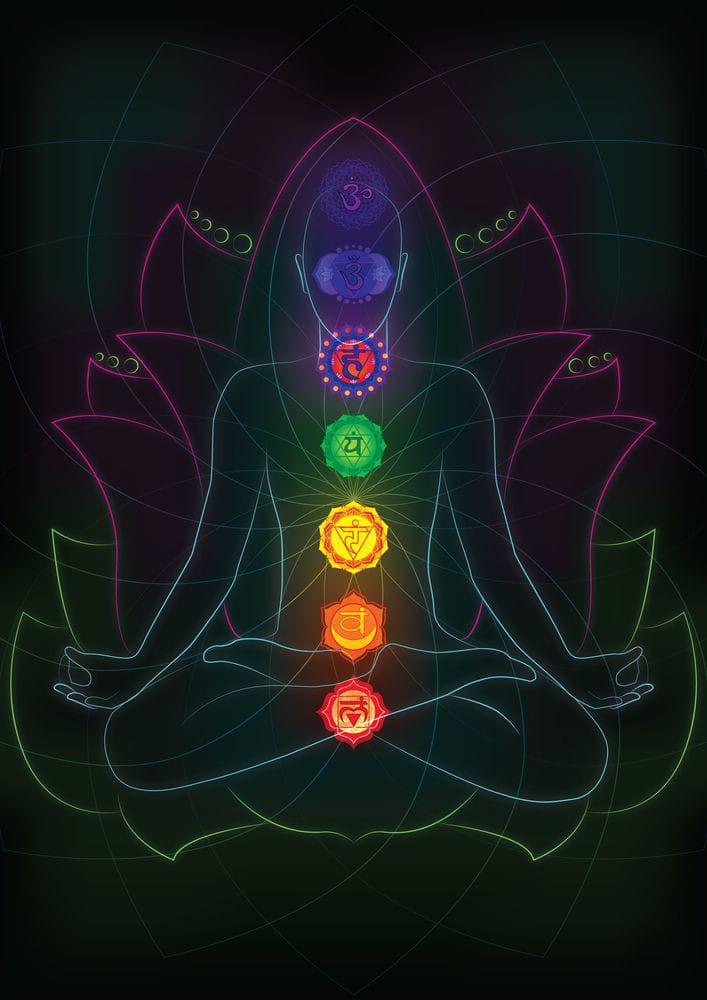
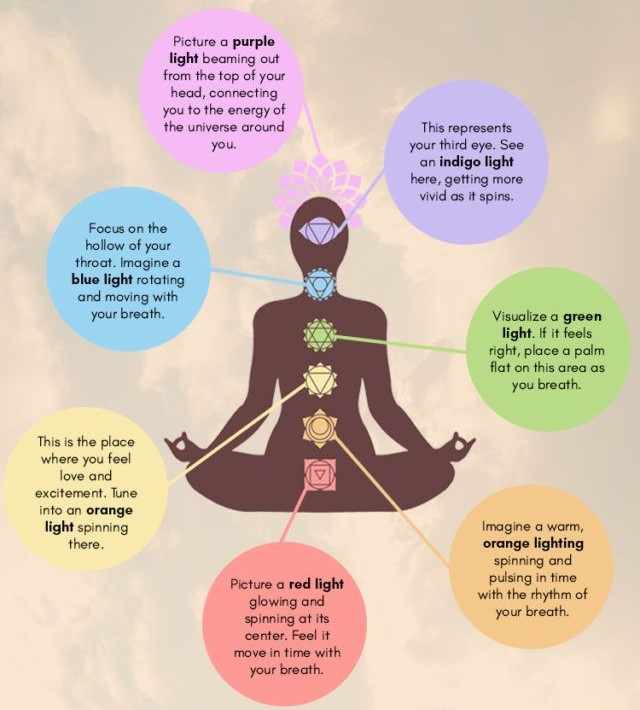
There are seven major chakras, each focusing on:

1)Sahasrara: The chakra of the crown, which is the crown on the head, symbolizes spiritual communication.
2)Ajna: Located between the eyebrows, the third chakra of the eye is related to intuition.
3)Vishuddha: The chakra of the throat is associated with self-defense and verbal communication.
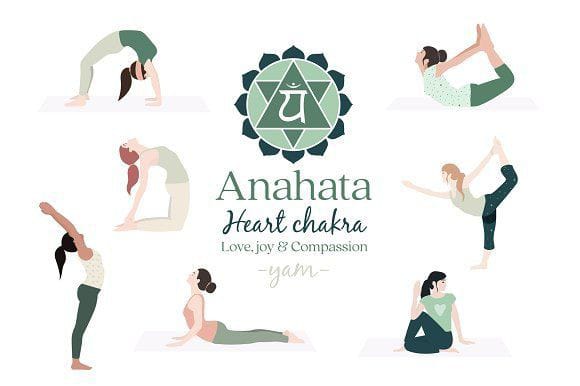
4)Anahata: The heart chakra, located in the middle of the chest, contributes to a professional and personal relationship. Any imbalance in this chakra will affect oxygen, hormones, tissues and organ control.
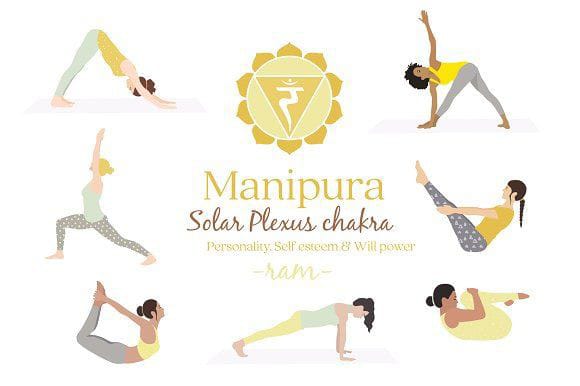
5)Manipura: The solar plexus chakra is located in the abdomen. It is similar with confidence, wisdom, and self-control.
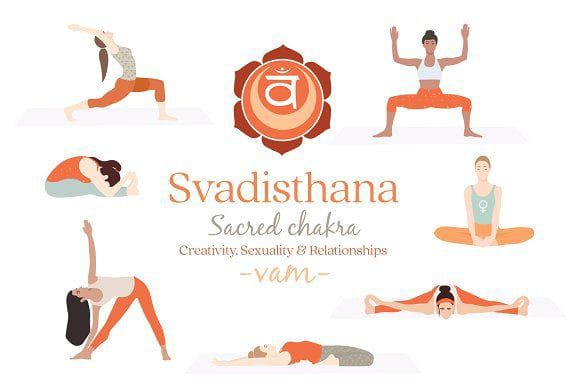
6)Svadhishthana: The sacral chakra, under the belly button, connects pleasure, well-being, and energy.
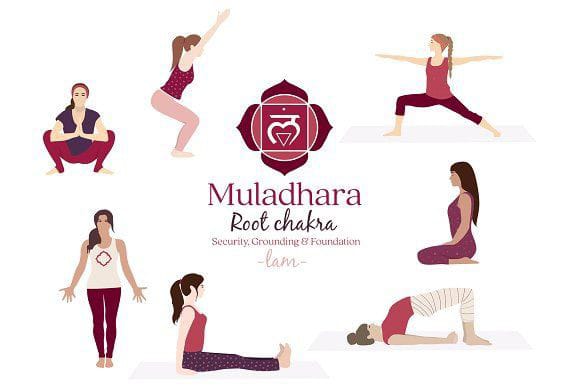
7)Muladhara: The root chakra, located at the base of the spine, connects the mind and body to the earth to keep a person focused. It controls the sciatic nerve and the parasympathetic nervous system.

Chakras

Have you ever attended a yoga session before? Have you ever heard about these chakras? 

If yes, that’s great. If not, that’s fine we are going to cover it in this article.

Chakra is a word that comes from Sanskrit, meaning wheel. There are seven wheels or chakras in a human body. Each is located in sequential order along our spinal cord. 

Activating these chakras are important to have a physical and emotional balance. If any of them is imbalanced it means that your chakras are blocked and there is a need to activate them.

But how do we do that? Before answering that question let’s learn about the position and significance of each chakra.

Okay, let’s start from the bottom.

1. Root chakra- Muladhara: 

Color– Red

Represents– the Earth

It is located at the bottom of the spine. It provides a foundation for your life. Gives a sense of commitment, energy, vitality, and independence in life. Helps you to stay grounded. 

If this chakra is blocked. The consequences may be like this- anger, possessiveness, insecurity, fear, low self-esteem, etc.

How to activate/balance this chakra?

You can activate this chakra by performing yoga or meditation.

Hand Mudra
yoga poses

2. Sacral Chakra- Swadhisthana:

Color– Orange

Represents– Water

Located below the belly button.

This chakra deals with one’s creativity, emotional identity, desires, and pleasure. Gives a feeling of compassion, a good sense of humor, intuition, sense of belonging. 

If this chakra is blocked it gives a sense of shyness, guilt, irritation, lack of creativity, etc.

How to activate this chakra?

By following the mudras mentioned below you can balance the chakra.

Hand Mudra
yoga poses

3. Solar plexus chakra- Manipura:

Color– yellow

Represents– Fire

Located in the stomach area. This chakra deals with the sense of belonging and mental understanding of emotions. This makes you feel energetic, confident, intelligent, focused, good digestion, and productive.

If this chakra is blocked you feel timid, depressed, judgmental, angry, and fear of rejection.

By following the mudras mentioned below you can balance the chakra

Hand Mudra
yoga poses

4. Heart Chakra- Anahata:

Color– green

Represents– Air

Located at the center of the chest. It reflects a person’s social identity and affection like love, trust, forgiveness, and wisdom. Makes you motivated, compassionate, emphasized, sense of completeness, friendliness, etc.

If this chakra is blocked you might feel difficulty in love, lack of hope and compassion, mood fluctuations, and feeling low.

By following the mudras mentioned below you can balance the chakra

Hand Mudra
yoga poses

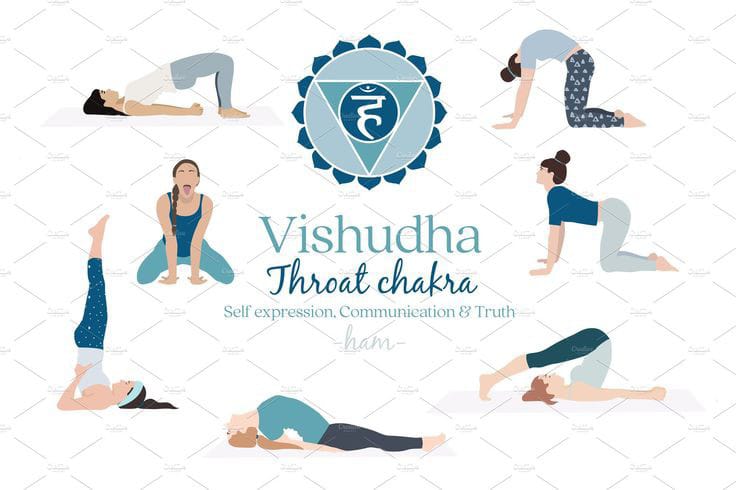
5. Throat chakra- Vishuddha: 

Color– Blue

Represents– Sound

It is located in your throat. Deals with creativity, effective communication skills, faith, expression, listening skills, and all.

If this chakra is blocked it may cause indecisiveness, weakening of willpower, lack of expressiveness, low level of creativity, and proneness to addiction.  

By following the mudras mentioned below you can balance the chakra

Hand Mudra
yoga poses

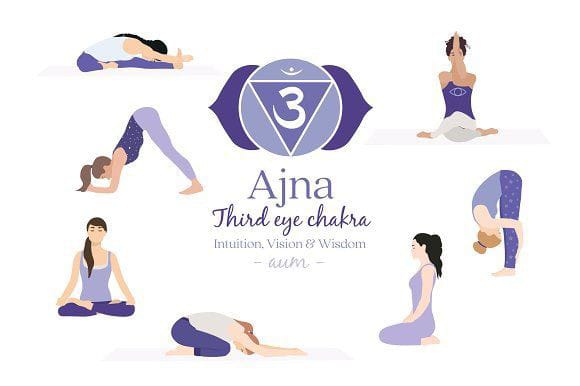
6. Third eye chakra- Ajna:

Color– Indigo

Represents– light

Located between the eyes. It is responsible for intuition, imagination, wisdom, self-awareness, insight, understanding, and reasoning. It gives clear thinking, a healthy imagination, strong intuition power, good concentration, and focus.

If this chakra is blocked it results in poor judgment, confusion, fear of truth, poor concentration, and addictions.

By following the mudras mentioned below you can balance the chakra

Hand Mudra
yoga poses

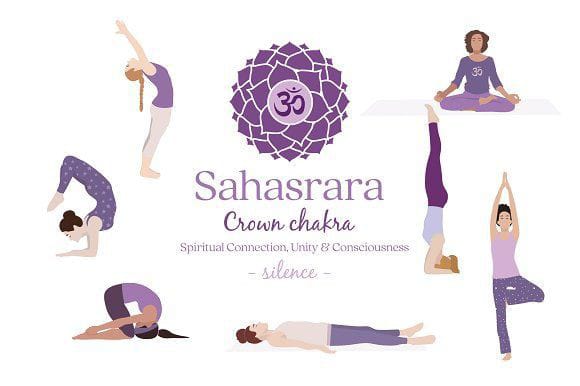
7. Crown chakra- sahasrara:

Color– Violet/white

Represents– Conscience

Located at the top of the body, the crown chakra is to maintain a spiritual connection and consciousness. Gives a feeling of oneness, open-mindedness, thoughtfulness, etc. 

If this chakra is blocked you feel a sense of fear, lack of purpose, lack of inspiration, disbelief in spiritual and devotional practices.

By following the mudras mentioned below you can balance the chakra

Hand Mudra
yoga poses

credits to the right owners of the pictures used.

sources: pinterest

5 Effective Factors for Good Health

As we all know “Health is Wealth “, we all should take a good care of our health .A good health is equal to valuable treasure .With a good healthy body & mind you will be able to live a long & diseases pain free life , able to get success , & have a happy everyday lifestyle . There are some factors which will helps you to gain in this important field.

Yoga Practices : Yoga is some  mental , physical spiritual actions for good mental & physical health .Some research already prove that yoga is an effective exercise for not only fitness of the body but also in mental health with other good improvement in health. WHO also have given positive feedback on yoga & made an 2018-2030 action plan for yoga practice  .United Nation announce 21st June as the World Yoga Day .There are various types of yoga with various benefits . Naukasana (Boat Posture) ,Vakrasana((Twisted Posture)  for belly-fat lose , Dhanurasana (Bow Posture) for weight-loss . Sukhasana (Easy Posture) ,Kakasana (Crow Posture), Bhujangasana (Cobra Posture), Sarvangasana (Stand On Shoulder Posture) ,Shirasana (Stand on Head Posture) etc are some yoga asana which help in many physical(Blood Circulation, Mussel Growth , Nervous System, Respiratory System, Blood circulation etc)  & mental Health ( Relaxation, Mind-peace, sleeplessness, concentration, stress etc) .Only one yoga poster have many remarkable benefits which help to prevent some harmful diseases. Now a days many YouTube channels ,apps ,communities are there for as a yoga instructors . Even some school, college ,company have included yoga in their curriculum keeping the benefactor of yoga in mind .

Regular Exercise or, Workout at gym : Exercise or workout are also very helpful in maintaining fitness . You can do it in a gym using some workout  machine & heavy weight equipment or you can do some workout exercise  for body fitness as both are effective .Although  some research show that there are some negative effects also .Exercise or workout helps in body fat loss , increase muscle strength , improve blood circulation, expand endurance level etc. Some machine used in gyms for workouts are mechanical treadmill , spring stretcher , Adjustable bench ,barbell stand ,cable crossover, lifting  etc. Push-up ,aerobic exercise ,walk, squat, swimming ,cycling are some effective exercise . You can take a help from some apps , YouTube channels ,community ,gym ,professionals for doing such exercise or workout for fitness .

Eating Healthy Food: Yoga & exercise help in good health but health foods are also very important in this case .As we all know every vegetables ,fruits ,animal products have some nutritious value and help our body to gain protein ,vitamins, carbohydrates, fat in perfect amount for healthiness if we consume them in a systematic manners . Some nutrition value , and health benefits are mentioned below — 1)Spinach: It is a green vegetable with lots of Calcium, Iron, Vitamins (Vita-K ,Vita-A ,Vita-C) ,antioxidants .It helps in physical energy , clean blood for oxygen circulation, blood pressure reduction for good heart etc. which prevents some health issues .                                      2) Kale: It is leafy greens . It has 7 calories & some vitamins(A,C,K) as nutrition .It decrease the amount of BP , bad cholesterols & sugar in our blood .                                                                                                                                3) Beets: It is a red- pinkish vegetable with  good cholesterols , potassium ,antioxidants which helps greatly in diabetes & BP .                                                                                                                                                      4) Carrots: It is a orange colors vegetables but it can also be purple or yellow . It has %2 types of calories , Vitamin A & a lot of amounts of beta carotenes which helps in skin problems , breast cancer ,eyesight . 5) Edible Mushrooms: It has various categories with special shapes ,size colors & very delicious . It has a great amount of Vitamin B-6 ,Vitamin C ,iron , protein & non-fat which it prevents cancer , diabetes , heart problem etc.                                                                                                                                                                        6) Lemons: it is sour juicy fruit lots of Vitamin C & antioxidants which works on cold flu , weight loss ,cancer , diabetes etc.                                                                                                                                                                            7) Apple: It is a popular health benefiting  fruit  which contains calories ,carbohydrates ,fibers , potassium etc. & works on cardio-vascular diseases .                                                                                                              8) Avocado: It is green creamy & quit expensive fruit with high amount of potassium ,calories & antioxidants & helps in lowering cholesterols &chances of  heart disease .                                                                      This is just given as an example for showing that every fruits & vegetables have good health nutation. As for animal products like milk , meat , eggs etc. also have lots of protein & other elements with is important for our body growth . So we can see every edible foods have certain amount of nutriments & we should consume them as much as our body needed . Neither less nor more . You can take a help from any app , nutrition in this case .

Good Habits : With the  healthy foods , exercise & yoga ,we should develops some good habits for better health benefit , prevention of diseases . Some good habits are mentioned below —– 1) Early To bed & early to rise ,2) Drinking water after raising 3) Don’t go to bed as soon as your lunch or dinner is finished ,4) consume lots of water in a day ,5) do some exercise after eating , 6) yoga after raising 7)drinking mild hot water with lemon or honey in morning instead coffee 7) check about weight on daily or weekly basis 8) Do exercise or yoga in morning daily 9) Don’t drink cold water 10) Bath in morning  11) a healthy breakfast with fruits ,eggs  . There are so many healthy habits & you should practices them as you needed but they are important .

Daily Yoga

Yoga is an art that connects our body, mind and soul together and makes us strong and peaceful. Yoga is essential because it keeps us fit, helps in reducing stress and maintains overall health and a healthy mind can help in concentrating well.

Yoga is important because by practicing yoga, you can gain benefits at the following points:
Internal peace – Yoga helps in achieving inner peace and fighting against stress and other problems. Yoga enhances the level of peace in one person and helps to increase his self-confidence and make him happy.

Health – A healthy person can work more than an unhealthy person. Life is very tense nowadays and there is a lot of pollution around us. This is the reason for many health problems. Just 10-20 minutes of yoga can help your health to be good every day. Better health means better life.

Activism – People now feel lazy, tired or sleepy due to which they lose most of their life in fun and are not able to fulfill their work correctly. Being actively, you are more aware of things happening around you and can accomplish your work more efficiently and quickly. One way to do all this is to practice yoga on a regular basis.

Flexibility – People are suffering from various types of pain nowadays. They face difficulties during touching the toes or bending downwards. Regular practice of yoga helps relieve all these types of pain. By doing yoga, the effects of these things can be seen in a few days.

Increase blood flow – Yoga helps make your heart healthy and it works more efficiently by increasing blood flow in your body and veins. It helps keep your body oxygen rich.

Focusing power – Yoga helps calm and relax your body which means stress is low and you can concentrate on your work. This is the reason that children and teenagers are encouraged to do yoga as it helps in better concentration in their studies.

Conclusion

Thus, it can be said that yoga is a miracle and if it is done then it will guide you throughout your life. 20-30 minutes per day Yoga can change your life forever by promoting the balance between your physical, mental and spiritual health.

Elements of Yoga

Patanjali described eight element of Yoga in Yogasutras. The eight elements of yoga are Yama, Niyama, Asana, Pranayama, Dharna, Dhyan and Samadhi.

1. Yama

It is the first element of astanga yoga. Through the practice of yama one can abstain from things that keep one’s mind involved in the inevitable struggle for survival. According to Patanjali there are five Yama Ahimsa ( Non-violence), Satya (Truthfulness), Asteya (Non-stealing), Brahmacharya and Aparigraha.

2. Niyama

Niyamas are related to one’s body and senses. Niyamas are also ethical practices as yamas. There are five niyamas Saucha (Purity), Santosh (Contentment), Tapa (Endurance), Swadhyaya( To study great Vedas, Holy books) and Tshwara Pranidhana ( dedicated to God).

3. Asana

Asana means ‘position or posture of body’. Asana gain so popularity that people thinks that yoga is nothing but asana but they are not aware that asana is a step towards yoga. Asana are performed to keep the body flexible, agile and young. There are various types of asana such as relaxative asana, meditative asana, etc. Each asana have different effects on various organ of body. It can be performed at any age without any problem.

4. Pranayama

It is the control of the process of breathing means appropriate control over inhalation and exhalation. There are three constituents of pranayama Puraka ( Inhalation), Kumbhaka ( Retaining the breath), and Rechka ( Exhalation). Pranayama helps in regulating the metabolic activities and enhance the functions of heart and lungs.

5. Pratyahara

It is a process of self control in which an individual is able to exercise control over his/her senses. To control the mind and senses is called pratyahara. The practitioner of pratyahara starts feeling extreme pleasure in remembering God.

6. Dharna

Dharna is concentration of mind. Dharna is the first step towards samadhi. Dharna is mental exercise which enables a yogi to go ahead towards dhyana and samadhi.

7. Dhyana

It is the process of complete constancy of mind. Dhyana is a complete concentration of mind over a period of time without any distractions.

8. Samadhi

The union of individual’s soul with absolute soul is called samdhi. During the stage of dhyana, when the disappearance of self-awareness takes place, the yogi attains the stage of samadhi.

YOGA AND LIFESTYLE

In a first for East India, Visva Bharati varsity commences PG diploma  course in yoga studies - Education Today News

Indeed , it is an astonishing fact that a yogic tradition , which is more than five thousand years old , has recently become a popular way of life . Presently , people consider that yoga is a significant means to achieve a healthy as well as a positive lifestyle . In fact , the power of yoga lies in its simplicity , flexibility and diversity . As a matter of fact , yoga helps in improving our flexibility , lowers our stress level and increases our confidence and finally contributes to a healthier lifestyle on the whole . There are various lifestyle diseases like obesity , diabetes , asthma , hypertension , back pain , migraine and depression which can be prevented and treated up to some extent with the help of certain yogic exercises .

Asanas As Preventive Measures

52,455 BEST Yoga Poses Male IMAGES, STOCK PHOTOS & VECTORS | Adobe Stock

According to Patanjali , asana means , “sthiram sukham aasanam “ i.e,. ” that position which is comfortable and steady ” . In Brahamanopanishad , “ To sit in a comfortable position or posture for everlasting period is called asana “. Asana is that state of body in which the body may be positioned easily . As a matter of fact , the ability to sit comfortably for an extended period of time in any position is called asana . In asanas , body is kept in various positions in such a way that the activities of organs and glands of body become more effective and eventually the health of mind and body is improved .

In fact , asana is a means through which physical and mental development is achieved . Prevention of diseases and delay in ageing are the desired effects that can be achieved through yogic exercises .

There are different types of asanas which include meditative asanas , relaxative asanas and corrective asanas . Regular practice of the above- mentioned asanas significantly affects various systems or organs of our body . Asanas can be used as preventive measures because they provide the following physiological benefits , which ultimately help us in avoiding various lifestyle diseases such as diabetes , obesity and cardiovascular diseases .

Yoga

Yoga is derived from Sanskrit word ‘Yuj’ (verb) which means unite. Yog means union of individual soul with the absolute soul. It also means unification of physical, mental, intellectual and spiritual aspects of human being

Benefits of Yoga

  1. Physical Purity :- There are three substance in our body i.e; vaat, pitt and kaph. If these three substance is in proper balance we may remain healthy. Neti, Dhoti, Nauli, Basti, Tratak etc. are some yogic exercise which keep internal organ of our body in clean state.
  2. Reduces Mental Tension :- Prathyahar, Dharna and Dhyan plays important role for restoring peace of mind. Makarasana, Shavasana, Shalabhasana are benefical for releasing stress.
  3. Spiritual Develpoment :- We can generate good control on our mind by doing regular exercises. Padmasana and Siddhasana are the best asana for spiritual development.
  4. Increase Flexibility :- Flexibility plays a significant role in every ones life. Flexibility makes the body movement efficiently. Chakrasana, Dhanurasana, Halasana, Bhujangasana are beneficial for increasing flexibility.
  5. Reduces Obesity :- Nowadays obesity is worldwide problem. Obese people may suffered from various diseases. Pranayama and meditative asana reduces obesity.

Physiological Benefits of Asana

  1. Bones and joints become strong.
  2. Muscles become strong.
  3. Circulation of blood becomes normal.
  4. Improves Immune system.
  5. Respiratory organ become efficient.

Physiological Benefits of Pranayamas

  1. Improves the supply of oxygen.
  2. Enhance elimination of waste product.
  3. Lungs become strong.
  4. Reduces stress.
  5. Purifies nervous system.

5 HINDU GODS AND YOGA POSTURES YOU NEED TO KNOW

BRAHMA

The first deity of the Hindu trinity, Lord Brahma, is that the god of creation. The trinity being, Brahma, Vishnu, and Shiva. Brahma contains the whole cosmos and every one of its creatures.

Brahma-Hindu god – Hinduism says that point is cyclical. this is often because all creation within the Universe exists a few times then dies. In short, Brahma reminds us of the cycle of birth and death.

The cycle of creation and death is constant and ceaseless. We are born from Brahma then return to Brahma.

One of the prayers to mention before your meal is:

“This food came from Brahma.I am about to eat Brahma.I will return to Brahma”

Indeed, these prayers help to remind us of the impermanence of life. As the god of Creation, Brahma also symbolizes the mind and intellect. This is often because he’s the source of all knowledge necessary for the Universe.

You’ll find Brahma depicted with four faces. The four faces symbolize the completeness of his knowledge. Brahma also has four hands that every represent a facet of the human personality. this often minds, intellect, ego, and consciousness.

Brahma is the god of:

  • Creation
  • Intellect
  • Mind

YOGA POSTURE: BRAHMA MUDRA
Although Brahma Mudra may be a sitting posture that’s practiced before pranayama. So it also helps improve focus and releases negative energies. In yoga, Mudras (hand and body gestures) affect the flow of vital force energy (prana) throughout the body. they assist calm the mind and energize the body.

Brahma mudraBrahma is that the name of the Hindu creator god. the interpretation in Sanskrit is “divine,” “sacred,” or “Supreme Spirit”. Place both hands into fists with the fingers wrapped around the thumbs. The palms face skyward, and both hands pressed together at the knuckles. The hands then rest against the pubis.

VISHNU

The second deity of the Hindu trinity, Vishnu is that the Preserver (of life). He sustains life through his adherence to principle, order, righteousness, and truth. Vishnu’s responsibility is order and balance. He encourages his devotees to point out kindness and compassion to all or any creatures.

Vishnu is depicted with four arms, which represent his omnipotence and omnipresence.

This Hindu deity may be a more esoteric god as compared to those that rule over the wildlife since. he’s liable for the divine essence that pervades the Universe.

It is common to ascertain Vishnu seated upon a coiled snake. This symbolizes the power to stay asleep within the face of fear or worry.

Vishnu is that the god of:

  • Support
  • Order
  • Balance

YOGA POSTURE: VRIKSHASANA
Vrikshasana (tree pose) requires a pointy mental focus. This focus directs and concentrates the mind. And who doesn’t need a mind that has the facility of concentration?

Balancing on one foot requires keeping your eyes on one specific spot.

Vrikshasana || Tree Pose

Balancing yoga postures assists you to direct your energy inward. Keep your eyes focused on a focus – your Drishti. Your Drishti enables you to specialize in staying even keel. Vishnu can maintain peacefulness and steadfastness within the face of fear. When practicing Vrikshasana, you build self-trust by overcoming the fear of falling. Rather than that specialize in tipping over, this posture requires you to only specialize in maintaining balance.

SHIVA

The final deity of the Hindu trinity is Shiva, also referred to as The Destroyer – the destroyer of all our “bad” habits. As you travel throughout India, you’ll see many lingams that represent Shiva. Shiva protects his followers from greed, lust, and anger. He guards them against illusion and ignorance. These are the forces that substitute the way of divine enlightenment.

He is also considered to be liable for death, destroying to bring rebirth and new life. Hindus often call upon Shiva before a ritual with this mantra.

“Om Namah Shivaya”

So this invocation destroys bad energy in physical and energetic space. Shiva is usually depicted with a serpent around his neck, which represents Kundalini, or life energy.

Shiva is that the god of:

  • Destruction
  • Renewal
  • Death

YOGA POSTURE: NATARAJASANA
Natarajasana may be a pose representing the deity in one of his most beloved forms. The word Natarajasana comes from two words: nata, meaning acrobat, and raja, meaning king.

Shiva, depicted as Nataraj, is usually shown dancing to represent this meaning.

Natarajasana || Dancer pose

This dance is ever fluctuating and changing. This expression symbolizes the dynamic cultural expression of life. As in life, the external posture could also be filled with movement and far wobbling once we practice, it requires a still, calm mind to remain balanced. Evoke the cyclical nature of Shiva by adding Natarajasana into your practice.

GANESH (OR GANESHA)

Recognized for his elephant head, Ganesh of the foremost prevalent and best-known deities. (Also referred to as Ganesha.) Ganesh is Shiva’s firstborn son. His large, elephantine head symbolizes the wisdom and knowledge that he bestows upon his seekers. He grants luck to those that offer him, delicious sweets. He is the ruler of astrology, mantra (sound), and yoga and is related to the humanities and sciences.

It is especially common to wish to Ganesha before any significant venture like a marriage or a replacement project because he removes obstacles to success and luck.

Some myths and stories explain how Ganesha came to possess an elephant head. Still, it’s thought that the humorous image stills the rational mind and its doubts. Therefore, in meditation, we practice looking beyond outer appearances and forms.

Ganesh is that the god of:

  • Removing obstacles
  • Wisdom
  • Good Fortune

YOGA POSTURE: VIRABHADRASANA II
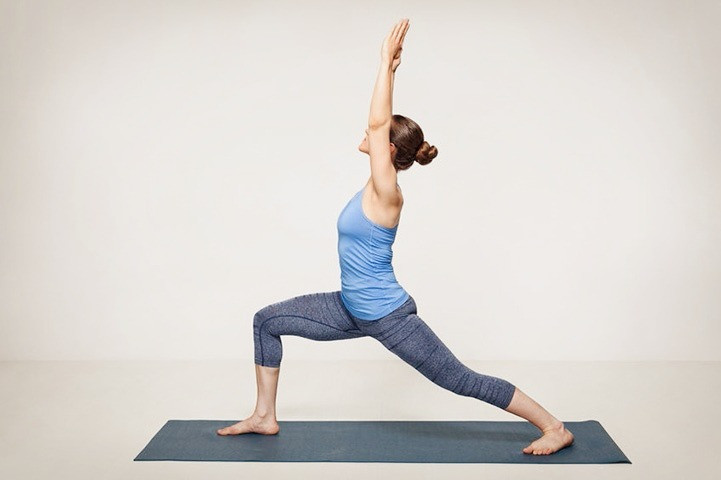
Warrior two on the mountain there are a couple of yoga poses that embody Ganesha’s resilient strength and fearlessness. one among these postures is Virabhadrasana or Warrior II.

A yoga posture like Warrior II emphasizes a connection to the basis chakra.

The expansive, stable qualities of Warrior 2 make it the right posture to represent Ganesha’s immense strength. Before embarking on your day or an adventure, you’ll want to practice this pose inspired by one of the foremost well-known Hindu gods.

HANUMAN

Another easily distinguishable Hindu god is Hanuman, the deity depicted as a monkey. Hanuman represents the perfect devotee of the gods. Meditate on Hanuman as a logo of strength, perseverance, and devotion. To embody Hanuman is to embody absolute love and dedication. Yoga is usually considered the practice of having the ability to regulate one’s mind. Since the five senses are the gateway to the mind, Hanuman is that the god of sensory control.

His attributes are often related to extraordinary strength, as long as he believes within the cause!

Hanuman is usually called upon in times of trouble. He teaches us about the unlimited power that lies within the human heart. When we direct our energies to god, as shown within the epic tale Ramayana, anything is feasible.

Hanuman is that the god of:

  • Perseverance
  • Dedication
  • Commitment

YOGA POSTURE: HANUMANASANA
Known as ‘the splits’ Hanumanasana is one posture that needs tons of dedication and therefore the patience of a saint to master.

The monkey god Hanuman represents devotion, selfless service, dedication, and indomitable willpower. The physical posture, Hanumanasana, represents his ability to leap great distances. During the battle between Rama and Ravana within the Ramayana, Hanuman jumped from India to Lanka to comfort Sita.

In the story, he brought Sita a hoop from Rama to remind her of the love that they had for her. Hanuman was so loyal towards Rama, that when offered a gift for his bravery and dedication to Rama and Sita. He asked only to be ready to still serve them. As you practice Hanumanasana, visualize yourself, closing the space between yourself and your goals.


INTERNATIONAL YOGA DAY: JOURNEY OF THE SELF,THROUGH THE SELF, TO THE SELF

Yoga is an invaluable gift from our ancient tradition. Yoga embodies unity of mind and body, thought and action, a holistic approach that is valuable to our health and our well-being. Yoga is not just about exercise; it is a way to discover the sense of oneness with yourself, the world and the nature. It helps to maintain the health of not only our physical body but also our mind and soul. Just a simple act of meditation can help relieve many problems such as stress, anxiety diabetes, depression and much more. We human beings are often worried about their mental and physical health. But we never pay heed to exercises or activities due to the busy lifestyle. Later we will complaint and curse our destiny. It’s in our hands to create a good and healthy environment for us. There are lots of benefits and we will get to know it’s impeccable results only when we do. Start by doing giving some time for your mental peace.

 Every yoga asana has various health benefits of its own. Especially in these times where one cannot go outdoors, it only increases the importance of yoga to keep oneself fit. Early morning yoga helps in good blood circulation and oxygen inhalation in our body. lt makes us free from daily life stress and pushes us forward to do our daily works with utmost concentration. By doing so, we can lead a healthy happy life with our family. Emphasis yoga! Practice It! Stay fit!

HISTORY OF YOGA:

Yoga is considered to be an ancient practice that originated 5,000 years ago in India. Yoga was developed as a way to interconnect the mind, body and soul to step closer into enlightenment. As the practice became popular in the west, it became popularized as an exercise and relaxation method, with claims to help the body’s general well-being, alleviate physical injuries and chronic pain.

The idea of International Yoga Day was first proposed by Prime Minister Narendra Modi on September 27, 2014, during his speech at the UN General Assembly, where a resolution to establish June 21 as International Yoga Day was introduced by India’s Ambassador, Asoke Kumar Mukerji. The date of June 21 was chosen as it is the Summer Solstice, the day where there is the most sun out of every other day of the year.

2021 Theme: Yoga for well-being

The Day will be marked at a time when COVID-19 pandemic continues to upend lives and livelihoods of people globally. 

Beyond its immediate impact on physical health, the COVID-19 pandemic has also exacerbated psychological suffering and mental health problems, including depression and anxiety, as pandemic-related restrictions continue in various forms in many countries. This has highlighted the urgent need to address the mental health dimension of the pandemic, in addition to the physical health aspects. 

The message of Yoga in promoting both the physical and mental well-being of humanity has never been more relevant. A growing trend of people around the world embracing Yoga to stay healthy and rejuvenated and to fight social isolation and depression has been witnessed during the pandemic. Yoga is also playing a significant role in the psycho-social care and rehabilitation of COVID-19 patients in quarantine and isolation. It is particularly helpful in allaying their fears and anxiety.

On this International Yoga Day, let us not forget our roots and make use of this wonderful gift from our ancestors to the fullest.

YOGA: FOR A HEALTHY BODY AND A CALM MIND

On this day seven years ago, the United Nations on 11th December 2014 announced 21st June as the international yoga day. The aim behind it was to “globally raise awareness regarding the benefits of practicing yoga”.

All About Yoga: Poses, Types, Benefits, and More | Everyday Health


Yoga, in the words of late practitioner B.K.S Iyengar is a way of maintaining a balanced attitude in day-to-day life and endows skill in the performance of one’s actions.

Since the onset of the pandemic followed by a nationwide lockdown, the amount of physical activity performed by an individual has declined at an alarming rate. The gyms shut down while the permission to leave the house only for essentials has made the human body quite lethargic and stiff. But yoga is one of the few ways where an individual can maintain their physical and mental health without the need of stepping out of the house.

So, on this yoga day, let’s talk about a couple of asanas that help one with weight loss.

Using yoga for weight loss is a pretty debatable topic. Many believe it alone can’t promote weight loss unless it’s combined with a healthy diet. By combining yoga with a healthy diet not only does it helps in losing weight but also keeps the mind and the body healthy. 

One of the reasons for weight gain is neither binge eating nor lack of physical activities but stress. Stress can have a disastrous effect on one’s mind and body. It often reveals itself in the form of insomnia, anxiety, lack of concentration and pain. Combining yoga with stress management techniques; not only helps in weight loss but also helps in maintaining good physical and mental health.

Talking about the asanas, they don’t immediately produce a result as the poses are simple but, they focus more on increasing body flexibility, improving concentration, and building one’s muscle tone. Once the body gets used to it, only then it starts to show the results. The asanas used for weight loss are as follows.

1. Chaturangadandasana (the plank pose)

How to Do Low Plank (Chaturanga Dandasana)

Chaturangadandasana or the plank pose mainly to strengthens the core muscles. The benefits of this asana are contradictory to the way it’s performed. To perform this, you have to hug your elbows to your side while making sure your upper arms are parallel to the floor. 

2. Virabhadrasana (the warrior pose)

Warrior Pose (Veerabhadrasana or Virabhadrasana) | The Art of Living

Virabhadrasana or the warrior pose helps in toning the thighs and shoulders while increasing one’s concentration. It also improves the balance of the body and tones the back end, arms and legs. While contracting abdominal muscles while holding the pose helps in attaining a flat belly. It works more effectively the longer one can hold this pose. 

3. Trikonasana (the triangle pose)

Triangle Pose (Trikonasana) | Yoga Garden San Francisco Bay Area

Trikonasana or the triangle pose helps in improving digestion and reducing fat accumulation in the belly and waist. This pose improves the blood circulation in the entire body and, its unique lateral motion helps to burn belly and waist fat while strengthening the thigh muscles and the hamstrings. 

4. Adho Mukha Svanasana (the downward dog pose)

How to Do Downward Facing Dog (Adho Mukha Svanasana)

Adho Mukha Svanasana or the downward dog pose benefits the body by toning it and strengthening the arms, thighs, back and hamstring. It also improves blood circulation, and the concentration when one holds the pose concentrates solely on breathing.

5. Sarvangasana (the shoulder stand)

How to do Sarvangasana | Shoulder Stand Step | Benefits Sarvangasana


Sarvangasana or the shoulder stand pose has multiple benefits. It increases strength, and improves digestion of the body and is also known for boosting the metabolism and balancing the thyroid levels. It also strengthens the upper body, legs and abdominal muscles while improving one’s sleeping pattern and respiratory system.
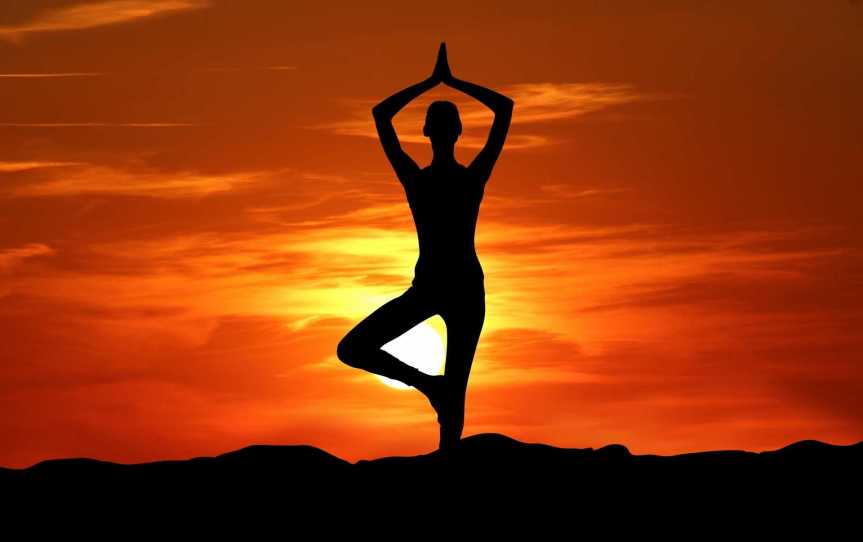
6. Sethu Bandha Sarvangasana (the bridge pose)

How to Do Supported Bridge (Setu Bandha Sarvangasana)


Sethu Bandha Sarvangasana or the bridge pose is excellent for weight loss, glutes and maintaining thyroid levels. This pose helps in toning and strengthen the back muscles, improve digestion and thyroid levels while regulating the hormones and reducing back pain.
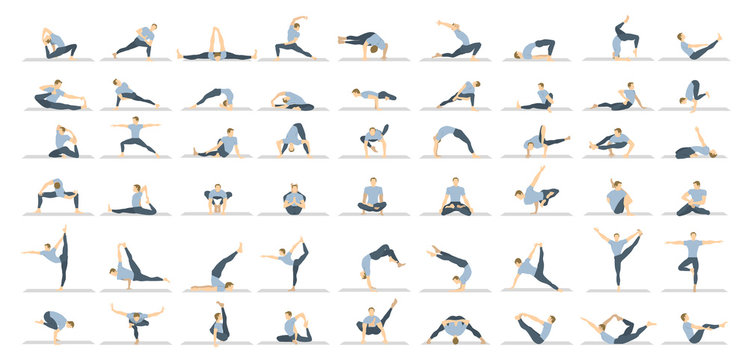
7. Dhanurasana (the bow pose)

HOW TO BOW POSE/ DHANURASANA🎀⁠ ⁠ follow @yogarove⁠ follow @yogarove⁠ ⁠ Bow  pose is a DEEP chest opener a… | How to do yoga, Yoga for beginners, Yoga  poses pictures


Dhanurasana or the bow pose massages the abdominal muscles while strengthening the thighs, chest, and back muscles. This pose stretches the entire body while improving blood circulation.

Yoga, which originated in India, is a revival method for body and mind. It is a traditional form used by people of all age groups who yearn for a healthy body and mind. It benefits every single part of the body and also helps in relaxing the mind. This age-old tradition has been accepted and praised worldwide for its effectiveness and has helped maintain a healthy body and a relaxed mind.

YOGA-Indian heritage

Yoga’s roots began in India thousands of years ago. Yoga is one of the greatest achievements of Indian civilization, which has spread its influence far and wide.
The ancient seers used yoga as a means to explore the exterior and interior world and ultimately achieve the knowledge and wisdom of Vedas, shastras and Upanishads which have been passed down to the world. Yoga was evolved by the ancient Indian Rishis as a practical method for complete physical, mental and spiritual transformation of an individual. Different periods of Indian history can tell the origin of Yoga.
(i) Pre-Vedic period : The excavation of Mohenjodaro and Harappa in Indus Valley reveals that yoga was practiced in some forms during that period. The idols as well as statues which were found in excavation, are in various yogic postures. The language which was used in Indus Valley Civilization, is still unknown to us, but it is sure on the basis of idols that yoga was performed during that period.
(ii)Vedic period : Vedas refer to the oldest “portion of the sacred canon of Hinduism, they are four RIG, ATHARVA, SAMA and YAJUR. The word ‘Yunjate’ used in Rigveda gives the idea of the yoga for sense control. Some concepts of yoga are partially developed from Vedas.
(iii) Upnishads period : It is the upnishads, from which the later parts of Vedas provide the main foundation of Yoga teaching and philosophy known as Vedanta i.e., ‘Absolute reality’ or consciousness. The real basis of yoga can be found in upnishads. Pran and Nadis are discussed in upnishads along with the physiological effects.
(iv) Epic period : Around 6th century B.C. appeared two massive epics; the Ramayana written by Valmiki and the Mahabharata written by Vedavyasa. Various types of yogic practices were used during that period. Bhagavad Gita is perhaps the best known of all yogic scriptures.
(v) Sutra’s period : The backbone is furnished by Patanjali Yoga Sutra. He was rightly called the father of Yoga, who around 200 B.C, compiled, sythesized, modified, systematised and refined yoga in a metaphysical whole.
(vi) Smriti Period : Smrities were written till about 1000 A.D. During this period, of Smriti literature, we find various change in ideas, beliefs, worship and customs. Pranayam and other purification techniques used to occupy a significant place in every ritual of people.
(vii) Medieval Period : In this period, the two cults i.e., Natha cult and Bhakti cult were very famous. The literature of these cult shows that yoga was very popular in these cults. Hathayoga was evolved and became very famous in the Natha cult. The saints of these periods used to do various yogic practices.
(viii) Modem period: Swami Vivekananda made Yoga very popular and continued to spread its knowledge outside India also. Modern men have adopted this oldest science of life as a tool for keeping the systems of the body and mind in good health. Interest in Yoga is again at high pace with good reason. Yoga is the oldest form of personal development in the world, encompassing body, mind and spirit.
Yoga has its roots in the Indus Valley Civilization. The Vedas, Upanishads, the famous epics Ramayana and Mahabharata specially the Gita, Smrities, Yogasutra are authentic evidences of development of Yoga in ancient times. The seeds of yoga were sowed and developed in India and now it is spreading all over the world by Swami Ramdev ji.

International yoga day

Yoga is a physical, mental, and spiritual discipline that originated in India. Yoga is a Sanskrit word that refers to connect or merge, and it represents the integration of body and consciousness. Yoga is a priceless gift from our old tradition. Yoga represents the union of mind and body, thought and action. a holistic approach that is beneficial to our health and well-being. Yoga is more than simply exercise; it is a means of discovering a sense of oneness with yourself, the world, and nature. It is now performed in various forms all around the world and is growing in popularity. Recognizing its universal reach, the United Nations declared 21 June as International Day of Yoga by resolution 69/131 on 11 December 2014. The International Day of Yoga strives to enhance global awareness of the numerous advantages of practicing yoga. India proposed the draught resolution creating the International Day of Yoga, which was approved by a record 175 member countries. Prime Minister Narendra Modi initially mentioned the notion in his speech at the start of the 69th session of the General Assembly.

THEME– The theme for International Yoga Day 2021 is “Yoga for Wellbeing”. The Day will be observed at a time when the COVID-19 pandemic is still wreaking havoc on people’s lives and livelihoods around the world. Beyond its immediate impact on physical health, the COVID-19 pandemic has intensified psychological distress and mental health problems, such as sadness and anxiety, in many countries, since pandemic-related restrictions remain in various forms. This has underlined the critical necessity to treat the pandemic’s mental health dimension in addition to the physical health issues. Yoga’s message of fostering both physical and emotional well-being has never been more relevant. During the pandemic, there has been an increasing trend of people over the world embracing Yoga to keep fit and revitalized, as well as to combat social isolation and depression. Yoga is also being used to help COVID-19 patients in quarantine and isolation with their psychosocial treatment and recovery. It is especially beneficial in calming their concerns and anxiety. Recognizing the importance of Yoga, this year’s International Day of Yoga observance focuses on “Yoga for well-being” – how the practice of Yoga can support the holistic health of every individual.

BENEFITS Yoga has been shown in studies to help with stress relief as well as blood pressure regulation. Individuals suffering from despair and anxiety can benefit from performing it every day. Some yoga asanas that can aid with stress and tension relief are savasana, seated forward twist, staying forward curves, and side stretches. When it comes to increasing your immunity, the simplest strategy is frequently the most successful. Sukhasana — a traditional meditation stance that allows your body to relax and breathe deeply. Furthermore, it can aid in the reduction of stress hormones and the maintenance of a healthy heart rate, which results in a strong immune system that protects the body from a variety of health disorders. Some yoga poses, such as plank pose, headstands, handstands, and side planks, might help enhance your body’s overall ability to work more efficiently daily. Some yoga asanas, such as Surya Namaskar, warrior position, plank posture, and others, are helpful and can help you lose weight if done regularly. Yoga, in addition to enhancing your physical health, can help you improve your mental health and sharpen your mind. It also helps your ability to concentrate. As a result, frequent yoga practice leads to enhanced mood, less depression, higher self-esteem, self-acceptance, and a positive outlook on life.